
BuddhistCatholicContemplativeEvangelicalGeneral ChristianHinduJewishLatter-day SaintMuslimNew VisionsProgressive Christian
Beliefs
- Buddhist
- Catholic
- Contemplative
- Evangelical
- General Christian
- Hindu
- Jewish
- Latter-day Saint
- More Voices
- Muslim
- New Visions
- Pagan
- Progressive Christian
Topics
- Religion News
- Food and Religion
- Sports and Religion
- Religious Art
- Religious Music and Entertainment
- Religious Events
- History and Religion
- Style and Religion
- Politics and Religion
- Women in Religion
- Recreation Outdoors and Religion
- Business Finance and Religion
- Careers Workplace and Religion
- Education and Religion
- Family Parenting and Religion
- Health Fitness and Religion
- Home and Religion
- Relationships and Religion
- Technology and Religion
- Travel and Religion
Columnists
- Buddhist Columnists
- Business Finance and Religion Columnists
- Careers Workplace and Religion Columnists
- Catholic Columnists
- Contemplative Columnists
- Education and Religion Columnists
- Evangelists Columnists
- Family Parenting and Religion Columnists
- General Christian Columnists
- Health Fitness and Religion Columnists
- Hindu Columnists
- History and Religion Columnists
- Home and Religion Columnists
- Jewish Columnists
- More Voices Columnists
- Latter Day Columnists
- Muslim Columnists
- New Visions Columnists
- Nonreligious Columnists
- Pagan Columnists
- Politics and Religion Columnists
- Progressive Columnists
- Recreation Outdoors and Religion Columnists
- Relationships and Religion Columnists
- Religion News Columnists
- Religious Art Columnists
- Religious Events Columnists
- Religious Music and Entertainment Columnists
- Sports and Religion Columnists
- Style and Religion Columnists
- Technology and Religion Columnists
- Travel and Religion Columnists
- Women in Religion Columnists
Resource Library
- 2026 Calendar
- Library of World Religions
- The 100 Most Holy Places on Earth
- Patheos Answers
- Podcasts
- Videos
- Faith Leaders Database
- Anglican Episcopalian
- Bahai
- Baptist
- Buddhism
- Christianity
- Confucianism
- Eastern Orthodoxy
- Hinduism
- Holiness and Pentecostal
- ISKCON
- Islam
- Judaism
- Lutheran
- Methodist
- The Church of Jesus Christ of Latter-day Saints
- New Age
- Paganism
- Presbytarian and Reformed
- Protestantism
- Religion Behind the Scenes
- Roman Catholic
- Scientology
- Shia Islam
- Sikhism
- Sufism
- Sunni Islam
- Taoism
- Zen
- See all religions
Research Tools
 Ad-Free & Subscriber Log-In Subscription Support
Ad-Free & Subscriber Log-In Subscription Support
Follow Patheos 

- Trending:
- Forgiveness
- |
- Marriage
- |
- Consciousness
- |
- Death Penalty
- |
- Election
- |
- Halloween

- Home
- Pagan
- Interview With Kristoffer Hughes
Interview With Kristoffer Hughes
Last updated on: September 14, 2014 at 3:00 pm by John Beckett
Interview With Kristoffer Hughes 2014-09-11T19:19:08-06:00 John Beckett
Patheos Explore the world's faith through different perspectives on religion and spirituality! Patheos has the views of the prevalent religions and spiritualities of the world.
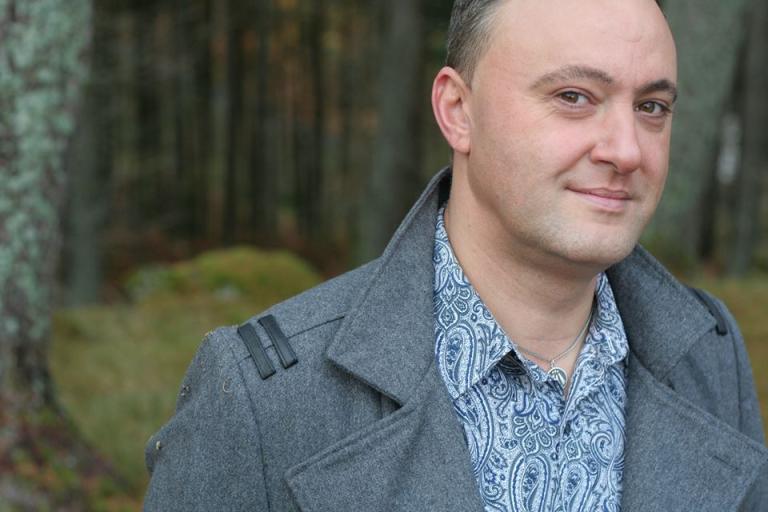
Kristoffer Hughes
Kristoffer Hughes is a native Welsh speaker, born to a Welsh family in the mountains of Snowdonia. He lives on the Island of Anglesey, Wales, the ancestral seat of the British Druids. His love of Celtic literature and traditions guided his path into the exploration and practice of Celtic Paganism. He is the founder and Head of the Anglesey Druid Order and studies with the Order of Bards, Ovates and Druids.
He has worked professionally as a Anatomical Pathology Technologist at public mortuaries throughout the UK for the past 25 years. He is a semi-professional funeral celebrant, officiator and funeral advisor, having written and officiated 25 funerals.
Kris has published five books, including From the Cauldron Born: Exploring the Magic of Welsh Legend & Lore and The Journey Into Spirit: A Pagan’s Perspective On Death, Dying & Bereavement, which was just released in the US.
John: What attracted you to Druidry?
Kristoffer Hughes: It may sound like a cliché, but the concept of Druidry has always been a part of my life. Welsh children are generally brought up to embrace and also participate in the National Eisteddfod of Wales, which is presided over by an Archdruid and a Gorsedd of Druids, ranked into the three traditional divisions of bards, ovates and Druids. However, this is very much a cultural celebration that embraces language, music, the arts and above all, bardic prowess and skill. Ceremony and ritual are a rich aspect of the National Eisteddfod and the Gorsedd, albeit it is not conducted with any religious allegiance to any single tradition. It is Druidry without the spirituality.
Something about the pageantry and drama of it caught my imagination from an early age. It is something I am very much in love with to this day. But more than that, it captured my imagination and caused me to want to peer into the past and discover more about these Druids, who they were and what they did. I had always been in love with the mythologies of this land, many of which contain references to Druids. It was all of this that caused me to step onto the path of spiritual exploration. My initial exploration into Christianity did little to quench my thirst for the spiritual, and I eventually discovered that what I actually sought, what would nourish my spirit, was right here, right beneath my feet.
I didn’t necessarily identify it as ‘Druidry’ per se, and I was oblivious to the rise of Druidry in England and the rest of the Western World. The Eisteddfod seeks to express the Awen, it was all about the Awen for me, I took to a path that we refer to in Wales as ‘Awenyddiaeth’ or the language of Awen – this in turn was to lead me to the worldwide explosion in the interest of Druidry.
What is the heart of your Druidry?
I believe the answer to that question lies in one word – service. With my upbringing influenced by the National Eisteddfod the concept of service was taught to me from an early age. The bards, ovates, Druids and all other participants of the Eisteddfod serve the Awen, they become mouthpieces for the Awen itself. The Druidry that I practice is fundamentally based on the foundation of service – to the wider Druid community and to our local community. The Anglesey Druid Order works with our secular community to serve the island and its population, to promote the island’s rich heritage and ancestry, to educate and inform. It also serves the wider Druid community by offering workshops, ceremonies and teaching. By proxy of all this we serve the gods of this land, what we do is in honour of them and the ancestors, but I fear that subject would fill another book!
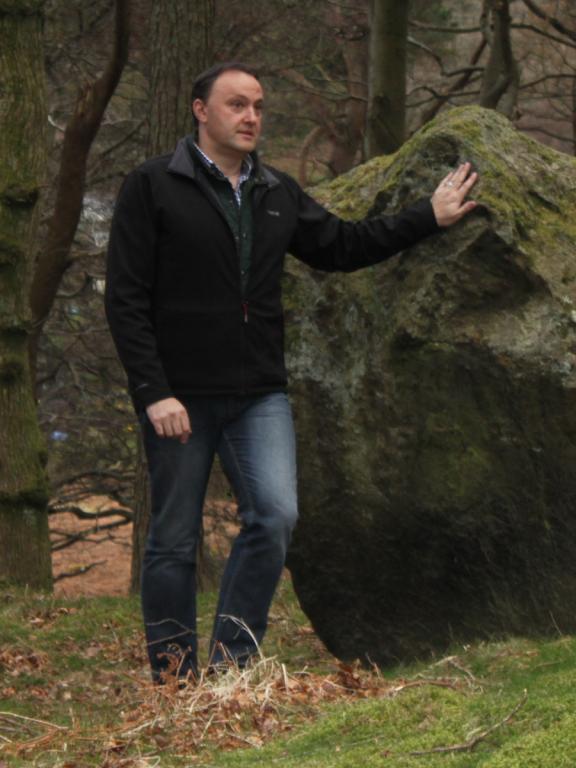 What connections to the land, to Celtic culture, and to the Gods and Goddesses, have you been able to make better or more easily because of your life-long connection to Wales?
The gods, goddesses and mythological archetypes that now form a central aspect of my spiritual practice have always been a part of life. They were there before I was able to articulate them in a spiritual manner. Listening to the old tales of these lands in school was always like hearing news from home; it all tasted and felt so familiar.
I used to make games with Pwyll and Pryderi in the woods at the back of my Grandmothers house; I would battle on a little bridge with the mystical Hafgan pretending that I was Pwyll in Arawn’s form. I would embark on great adventures into the mountains in search of the Twrch Trwyth boar from the legend of Culhwch ac Olwen, although I probably never veered more than a mile from home! I spoke with Math and Gwydion in the woods and with them I would stir a cauldron (well actually an old tin bath!) and summon the maiden of flowers. It was child’s play, sheer imagination and the wonder of invisible friends. I never once considered that these things did not exist – of course they existed, I used to play with them.
The mythical, sacred landscape that the legends sprang from is still my home, it sings of this place, of a connection between a people and its land. One can hear the song of the valleys, the mountains and the forests in the native myths of Wales; they are the history of the heart, the voice of a people that have inhabited this land for millennia. The Druidry that I practice is mytho-centric, wherever I go in my homeland the gods and archetypes are there, written in the landscape, and falling from the lips of our bards. My relationship with the old Celtic gods has only changed slightly; deep down, I am still that same child who would summon them and make games with them in the woods – I genuinely hope that that will never ever change.
Sometimes people speak of the Celts in the past tense, as if referring to something that has been and gone, but we haven’t gone anywhere – we are still here. All of this inspires and strengthens my connection to the land. I am man in love with a place.
What let you know you needed to found a new Druid order?
In 1990 I was one of a handful of individuals who established a small group to explore our native spirituality; we called it Cylch Awenydd – The Circle of Those Who Are Inspired. Whilst we generally just stumbled along an ill-defined track, we actually did learn an awful lot about the significance of Anglesey to the ancient Druids and the richness of culture and spiritual expression that lay just beyond the mists of time.
And then, one blustery winter day I stumbled across the records of the Anglesey Druidical Society who were formed in 1717. This charitable company of wealthy men sought to give something back to the island’s populace, and they did some pretty amazing things, and all under the guise of Druids, albeit in the image of those created by the Romantic Movement. But they did something remarkable: they sought to honor the island’s druidic past.
Suddenly other members of Cylch Awenydd started voicing that perhaps we should establish something that sought to rekindle that spirit, to re-establish a seat of learning. So in 1999 we changed the group’s name and started to formulate our mission for the future – the Urdd Derwyddon Môn (Anglesey Druid Order) was born.
How did you come up with the idea of forming an in-person teaching order, as opposed to a distance-learning order like OBOD?
The Order’s training programme was developed over several years and is continuously evolving. The in-person nature of the course just felt natural and organic. The course is based primarily on the development and nurturing of relationships and the primary one is with our patron deity Môn, the Mother of Wales. We could not fathom how one could be in relationship with Môn fully without actually being here, walking on her skin, and swimming in her waters. Our course was not created to compete with any other structured course or teaching, but to offer an experiential, hands-on, in-person experience of exploring Occult teachings in an incredibly magical place, and a place that has such a position in the history of Druidry. We have absolutely no plans on creating a correspondence course.
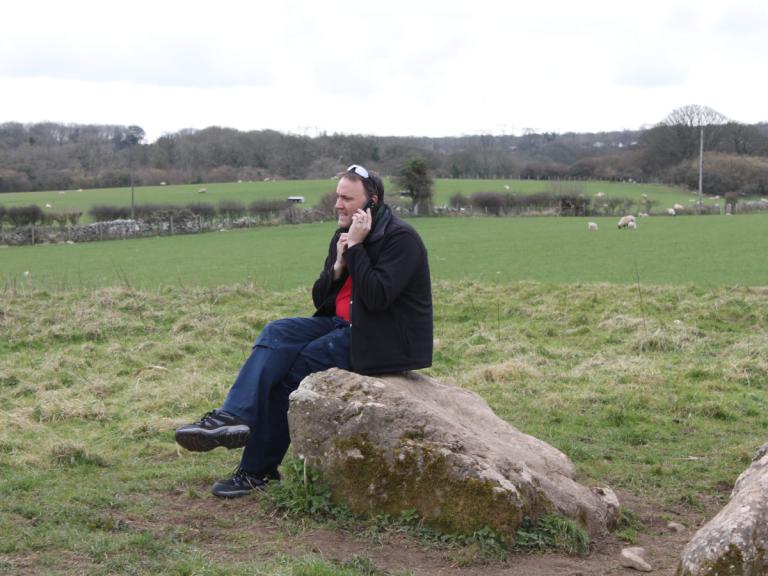
Druids – bridging the ancient and the modern
What have you learned from running a teaching order?
Oh my Gods, where do I even start to answer that question! We only take a maximum of 21 students a year, and every individual’s unique experience of the course brings something new to the table. As facilitators and teachers (there are four of us in total) we learn so much by-proxy of the students’ experience. I absolutely love the moments where someone recounts an experience or a journey into the themes that we explore and I think to myself “How did I not see that! That is amazing!”
The logistics of running a residential, immersive course has taught me a lot about organization, structure and the kind of mundane stuff that goes hand in hand with herding a bunch of Druids. But on a subtle level it is life-changing. The course is classroom based during the day and then in the evenings we engage with the landscape itself in a ritualistic sense, taking the students to meet some of the island’s most remarkable locations. Not only do I get to share this amazing stuff with so many people every year, but I also get to actually do it all over again, seeing things anew each time. You would imagine that the experience would always be the same, but on the contrary, every weekend – whilst the teachings follow the same pattern – the actualization of them is so different. I love it, absolutely love it.
You’ve recently started an Anglesey tour service. Given the large number of ancient sites on the island, how do you help visitors decide what to see in the time they have available?
Offering tours of the island’s sacred sites is something I have always enjoyed doing. For over 20 years I have been guiding tourists and pilgrims to some of the wonderful ancient monuments and sacred places of Anglesey.
In early 2014 I was invited to attend a tourism training day facilitated by the Anglesey County Council and tourist association. It was apparent that nobody was conducting tours that would appeal to those on a spiritual pilgrimage or with an interest in Anglesey’s Pagan heritage; the popular secular tours tend to focus on castles, churches and mills. I realized that I could combine my love of Anglesey with the fact that I love to talk! And so the tours were born.
Thus far they fit into my busy lifestyle rather well, and I thoroughly enjoy gauging what people would like to see and formulating an itinerary based on the amount of time they have on the island. Anglesey has a plethora of ancient, sacred places and many are off the beaten track, my knowledge of these places and their history is something that is a pleasure to share with those wanting to experience the islands magical past.
You work in a public morgue that conducts post mortem examinations on the bodies of the dead on behalf of Her Majesty’s Coroner. How did you get into this work?
Not one single member of my immediate family has any interest in the subtle or the spiritual, I was alone in that respect. I had always been aware of something ‘other’, something on the edge of reason, something that I could not articulate or express fully, but was a part of my experience of the world. I was fortunate to live next to a rather magical wood in the valley where I grew up, but these were more than trees, I could not help but know that they were people too. Alive. I daren’t say anything to anyone, lest they considered me unhinged, so I learnt to keep things close to my chest.
This sensing of the subtle lead me to sense other things, in particular the shifting patterns of death and how it struck the village and the people in it. But what fascinated me more than anything was the manner by which people reacted to death. It made them uncomfortable, they would fidget awkwardly when I questioned them. I was never a morbid child, and would not consider myself to be a morbid individual, but something in my childhood called me into service of the dead – professionally we call that the moment when the hand of the reaper comes about the shoulder and it claims one as someone bound to be in its service.
Human biology and physiology fascinated me; I have a very analytical, scientific mind. The progression to autopsy work seemed quite natural. I started my training as an Anatomical Pathology Technologist in 1990 – since then I have shared my life with the dead.
Do you work with, honor, or worship any particular deities of death, transition, or the Underworld?
I have a particular affinity with Gwyn Ap Nudd who I consider to be a Psychopompic deity / archetype. Within my work in bereavement and also during times of personal bereavement I work closely with Rhiannon.
Your third career is acting, and acting skills can be useful in ritual presentation. How do you make use of your acting skills without feeling like you’re cheapening or profaning or playing at the ritual?
Ritual is the original form of theatre, having some degree of acting skill is important, particularly for projection of the voice and commanding what can sometimes be an audience / participants ranging from dozens to sometimes hundreds of people. I love performing whether on stage or TV or as a speaker and workshop leader – in a sense they are all aspects of performance. The skills are the same in whatever capacity we use them; it is the platform or stage that differs. One aspect is to entertain the other to hold a space in which ritual is undertaken.
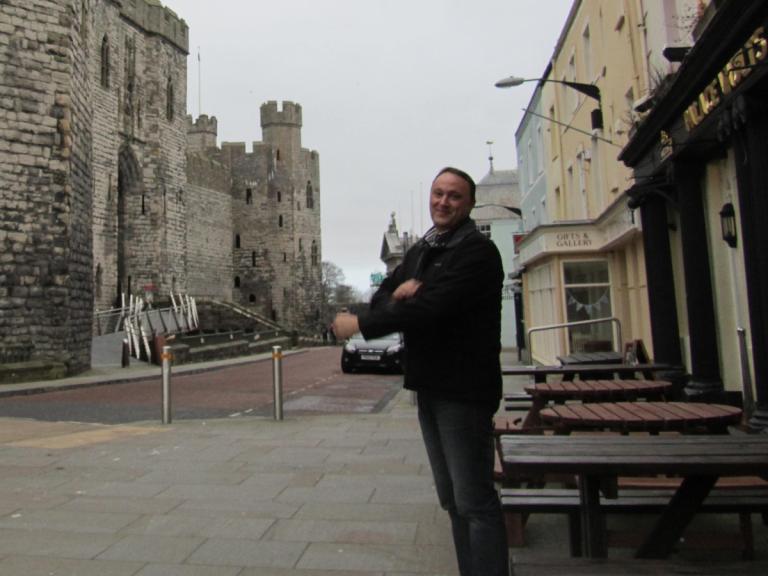 How do you balance the requirements of all three of your careers? How do you keep from overloading yourself?
I rather like the fact that my life has a tripartite structure to it – how Druidic is that! I prefer to be busy: we can rest when we are dead, right? I love that all three aspects of my life are very different; the various masks I wear – depending on the job at hand – brings so much colour and variety to my life. I thrive on being busy. To keep from overloading I will have a crash day, where I permit myself an entire day to do something completely inane and indulgent. Study is wonderful, but sometimes one needs pure brain-dead entertainment, currently it’s ploughing through all six seasons of RuPaul’s Drag Race – how’s that for variety! It appeals to my inner Drag Queen.
How do you balance your job of working with the bodies of the dead with your calling to work with the spirits of the dead?
When I am at work my responsibilities are to protect the dead and give them a voice (in a medical jurisprudence manner) and to care for the bereaved. I have various tools that I employ to ensure that my position as a professional is never compromised by my subtle senses. Primarily and of utmost importance in maintaining my professional integrity and my role as a priest to the dead, is ensuring that the dead are honoured and that the bereaved are offered a safe space to grieve. I would say that I balance the two worlds effectively.
You’re very open about all your careers. Do any of them cause complications for the others?
I have never encountered any prejudice at work or at home. I am quite open about my Druidry and often consulted by the media to speak about it. I am a rather public Pagan. I live in a small community on Anglesey, everybody knows who and what I am – it has never posed a problem or issue. The professional body which governs my career with the dead are also open to my position and invited me to speak at our annual conference in 2013.
I live in Wales and work in England, I never hide who I am and what I practice, thus far all reactions have been positive. Druidry is a quintessential component of Welsh society; we are used to seeing Druids. In 2012 I was invited to speak about Pagan Druidry at the National Eisteddfod, the first time that a Pagan had been given audience at the event. I’m also a gay man; I live with my husband of 23 years in a little Welsh cottage with a cat.
A gay Druid, you’d think I’d really be up against it with that combination – but so far, so good.
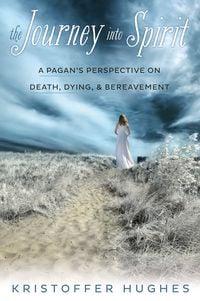 What was the inspiration that led you to write your new book The Journey Into Spirit?
It was the death of my little sister that caused me to start penning the words.
My world fell apart. Rachel was the youngest sibling of four. I adored her. Her death was sudden and unexpected and she left an 8 month child motherless. I had the usual amount of time afforded one for bereavement leave, but it wasn’t as if I was going back to an ordinary job. Still bereft and hurting, I had to deal with other people’s grief. It was perhaps, the most difficult time of my entire career and life. I received bereavement counseling, twice a week to begin with, to help me assimilate the experience and continue to work without falling apart.
The grief counselor suggested I write, and so it started. I needed to voice it, to put the words down on paper, to demonstrate that those who work and live with death are not cold, empty automatons but feeling human beings. But, doing this job brings one into the company and energy of death, and that does something to you, it changes you. I am hopeful that the progression of that journey is demonstrative in my book.
The publisher’s website says Journey is “challenging many status quo beliefs about the afterlife.” Without giving away the whole book, what common beliefs do you think need to be challenged? What do most people (Pagans or otherwise) misunderstand about death?
I could never grasp the Pagan concept of an individual being personality intact in a world that more or less mimics our own – that eternity is informed somehow by the human experience. I could also never fathom the need to learn, to be given lessons – by whom? And what for? None of it sat comfortably with me and my own experience with the dead.
We take a lot of things on face value – they’ve passed over, they’ve gone to the summerlands, we meet again those who we loved – do we, really? Does nature really repeat itself? Where has all that come from and why do people never question it? My book challenges the concept that the apparent identity survives death, and aims to peer into the nature of the permanent identity. It also aims to open channels of discussion, to encourage individuals, families, groups, covens, groves etc. to engage with death in a transformative and positive manner.
How do you deal with the inherent uncertainty around death and what comes after?
I don’t have all the answers – death is the ultimate mystery. This book is deeply personal, and an expression of my relationship with death and bereavement. I hope that I have written a book that will give pause for thought, an opportunity for my readers to engage with and talk about death, to prepare. We will never know for certain, that is why we have spiritual traditions and religions – they exist to provide hope and tools for assimilating the experience of living and dying.
What’s your next big project?
I am currently working on a Tarot deck for my publishers Llewellyn Worldwide – it is called the Celtic Tarot. I am really excited about it. I have always adored working with the Tarot, being a closet Cabbalist (shhh – don’t tell anyone!) it appeals to the Occultist and magician in me. I am working closely with a super talented artist from Wiltshire, it’s an incredible journey.
I am also working on a new proposal for Llewellyn, a book which contains a translation of the Mabinogi and how to work with it.
What are your goals as a Druid over the next few years?
For the foreseeable future I am happy to continue with my work on the island and within the wider Pagan community. The Anglesey Order continues to grow and demands a lot of my time, balancing that with everything else in my life is a full time in its own right, but one that I thoroughly enjoy.
Is there anything else you’d like our readers to know about you and your work?
I am an irreverent, colorful individual, I use humor a lot – I have to, it takes the edge off the horror that I witness every working day. I think I am well known for my rather frivolous nature, a bit of a comic perhaps, I love to make people laugh, after all how many other Druids out there are open about being a Drag Queen from the ankle down? Laughter is such a joyous, transformative energy. For me it’s a coping mechanism, it helps me to make sense of the tragedy and horror that I encounter; symptoms of mankind’s cruelty and malice towards itself.
If living a life in death has taught me anything it is that we cannot cure the world of its sorrows, but we can chose to live with joy. Even when nights are the darkest, when the heart shatters in a red mist of grief and sorrow, the dawn will come. The sun will rise. This life is incredible, and even the terrible things that happen to us are valued by the spirit, they all add to this human experience. But by the gods there is also joy, so much joy!
I love the fact that the word Awen contains the English word ‘Awe’, I am in awe of this life and this world that we live in, and whilst an element of my life is immersed in sorrow and tragedy, a huge chunk of it is filled with glee. I hope that a smattering of this spirit is perceived in my work, that people sense the joy that I glean from the different facets of my life, and that some of that joy rubs off.
Previous Post
September 11, 2014
The Commodification of Humanity
Next Post

September 17, 2014 History is Inspirational Not Authoritative
Browse Our Archives
Select a Category Books Community CUUPS Druidry Foundations and Context Gods and Goddesses Magic Myth Nature Ritual Spiritual Practice Theology Travel Uncategorized Videos
Select a Month October 2026 September 2026 August 2026 July 2026 June 2026 May 2026 April 2026 March 2026 February 2026 January 2026 December 2025 November 2025 October 2025 September 2025 August 2025 July 2025 June 2025 May 2025 April 2025 March 2025 February 2025 January 2025 December 2024 November 2024 October 2024 September 2024 August 2024 July 2024 June 2024 May 2024 April 2024 March 2024 February 2024 January 2024 December 2023 November 2023 October 2023 September 2023 August 2023 July 2023 June 2023 May 2023 April 2023 March 2023 February 2023 January 2023 December 2022 November 2022 October 2022 September 2022 August 2022 July 2022 June 2022 May 2022 April 2022 March 2022 February 2022 January 2022 December 2021 November 2021 October 2021 September 2021 August 2021 July 2021 June 2021 May 2021 April 2021 March 2021 February 2021 January 2021 December 2020 November 2020 October 2020 September 2020 August 2020 July 2020 June 2020 May 2020 April 2020 March 2020 February 2020 January 2020 December 2019 November 2019 October 2019 September 2019 August 2019 July 2019 June 2019 May 2019 April 2019 March 2019 February 2019 January 2019 December 2018 November 2018 October 2018 September 2018 August 2018 July 2018 June 2018 May 2018 April 2018 March 2018 February 2018 January 2018 December 2017 November 2017 October 2017 September 2017 August 2017 July 2017 June 2017 May 2017 April 2017 March 2017 February 2017 January 2017 December 2016 November 2016 October 2016 September 2016 August 2016 July 2016 June 2016 May 2016 April 2016 March 2016 February 2016 January 2016 December 2015 November 2015 October 2015 September 2015 August 2015 July 2015 June 2015 May 2015 April 2015 March 2015 February 2015 January 2015 December 2014 November 2014 October 2014 September 2014 August 2014 July 2014 June 2014 May 2014 April 2014 March 2014 February 2014 January 2014 December 2013 November 2013 October 2013 September 2013 August 2013 July 2013 June 2013 May 2013 April 2013 March 2013 February 2013 January 2013 December 2012 November 2012 October 2012 September 2012 August 2012 July 2012 June 2012 May 2012 April 2012 March 2012 February 2012 January 2012 December 2011 November 2011 October 2011 September 2011 August 2011 July 2011 June 2011 May 2011 April 2011 March 2011 February 2011 January 2011 December 2010 November 2010 October 2010 September 2010 August 2010 July 2010 June 2010 May 2010 April 2010 March 2010 February 2010 January 2010 December 2009 November 2009 October 2009 September 2009 August 2009 July 2009 June 2009 May 2009 April 2009 March 2009 February 2009 January 2009 December 2008 November 2008 October 2008 September 2008 August 2008 July 2008 June 2008
Follow Us!
TAKE THE
Religious Wisdom Quiz
Who did Paul send to check on the Thessalonians when he could not come himself?
Select your answer to see how you score.
Titus Luke Timothy Silas
Related posts from John Beckett




What We Lose When “Ask AI” Becomes A...
TRENDING AT PATHEOS Pagan

The Sermon on the Mount, Part I: Matthew...
The Sermon on the Mount, Part I (Matthew 4:12-5:12) St. Matthew moves...

What's up from Crossway: Reviewing some of their latest A few weeks...

Janie Learns the Way of the Cross: A...
Teaching children about Jesus' Passion can be challenging. Many parents and educators...

Looking For Good Catholic Writing - October 2026
He alone extends the heavens, and he walks upon the waves of...

In "Irreplaceable," our book on vocation and technology, Trevor Sutton and I...

I was strolling through the top floor of the brand new Parthenon...
view all Pagan blogs
Ad-Free & Subscriber Log-In Subscription Support
- About Us
- 2026 Calendar
- Videos
- Podcasts
- Library of World Religions
- Faith In Media Tracker
- Advertise With Us
- Write for Us
- Privacy Policy
- Terms of Service
- Do Not Sell My Data
- Contact Us
- Radiant Digital
- Manage Newsletter Subscriptions
- Unsubscribe From Notifications
- Sitemap
Copyright 2008-2026, Patheos. All rights reserved.
Subscription Support Ad-Free & Subscriber Log-In
Follow Patheos