
BuddhistCatholicContemplativeEvangelicalGeneral ChristianHinduJewishLatter-day SaintMuslimNew VisionsProgressive Christian
Beliefs
- Buddhist
- Catholic
- Contemplative
- Evangelical
- General Christian
- Hindu
- Jewish
- Latter-day Saint
- More Voices
- Muslim
- New Visions
- Pagan
- Progressive Christian
Topics
- Religion News
- Food and Religion
- Sports and Religion
- Religious Art
- Religious Music and Entertainment
- Religious Events
- History and Religion
- Style and Religion
- Politics and Religion
- Women in Religion
- Recreation Outdoors and Religion
- Business Finance and Religion
- Careers Workplace and Religion
- Education and Religion
- Family Parenting and Religion
- Health Fitness and Religion
- Home and Religion
- Relationships and Religion
- Technology and Religion
- Travel and Religion
Columnists
- Buddhist Columnists
- Business Finance and Religion Columnists
- Careers Workplace and Religion Columnists
- Catholic Columnists
- Contemplative Columnists
- Education and Religion Columnists
- Evangelists Columnists
- Family Parenting and Religion Columnists
- General Christian Columnists
- Health Fitness and Religion Columnists
- Hindu Columnists
- History and Religion Columnists
- Home and Religion Columnists
- Jewish Columnists
- More Voices Columnists
- Latter Day Columnists
- Muslim Columnists
- New Visions Columnists
- Nonreligious Columnists
- Pagan Columnists
- Politics and Religion Columnists
- Progressive Columnists
- Recreation Outdoors and Religion Columnists
- Relationships and Religion Columnists
- Religion News Columnists
- Religious Art Columnists
- Religious Events Columnists
- Religious Music and Entertainment Columnists
- Sports and Religion Columnists
- Style and Religion Columnists
- Technology and Religion Columnists
- Travel and Religion Columnists
- Women in Religion Columnists
Resource Library
- 2026 Calendar
- Library of World Religions
- The 100 Most Holy Places on Earth
- Patheos Answers
- Podcasts
- Videos
- Faith Leaders Database
- Anglican Episcopalian
- Bahai
- Baptist
- Buddhism
- Christianity
- Confucianism
- Eastern Orthodoxy
- Hinduism
- Holiness and Pentecostal
- ISKCON
- Islam
- Judaism
- Lutheran
- Methodist
- The Church of Jesus Christ of Latter-day Saints
- New Age
- Paganism
- Presbytarian and Reformed
- Protestantism
- Religion Behind the Scenes
- Roman Catholic
- Scientology
- Shia Islam
- Sikhism
- Sufism
- Sunni Islam
- Taoism
- Zen
- See all religions
Research Tools
 Ad-Free & Subscriber Log-In Subscription Support
Ad-Free & Subscriber Log-In Subscription Support
Follow Patheos 

- Trending:
- Forgiveness
- |
- Marriage
- |
- Consciousness
- |
- Death Penalty
- |
- Election
- |
- Halloween

- Home
- Pagan
- Druids: A Very Brief Introduction
Druids: A Very Brief Introduction
Last updated on: September 3, 2014 at 6:27 pm by John Beckett
Druids: A Very Brief Introduction 2014-09-03T18:27:16-06:00 John Beckett
Patheos Explore the world's faith through different perspectives on religion and spirituality! Patheos has the views of the prevalent religions and spiritualities of the world.
I’m a member of a Druid order. I read Druid books and I go to Druid gatherings. I wear a Druid robe and I introduce myself as a Druid. But just what is a Druid?
In the past week I’ve had multiple questions on Druids and Druidry. That’s usually a sign it’s time for me to blog about the questions and my take on the answers. A full answer requires several books (which I’ll recommend at the end), but here’s a very brief introduction to Druidry as I understand it and as I practice it.
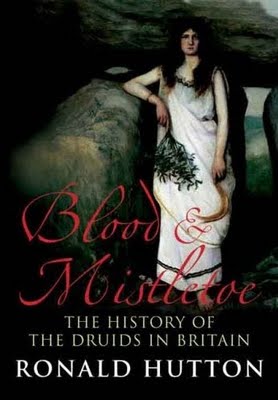 The Ancient Druids
“The Druids may well have been the most prominent magico-religious specialists of some of the peoples of north-western Europe just over a couple of thousand years ago; and that is all we can say of them with reasonable certainty.” – Ronald Hutton, Blood and Mistletoe: the History of the Druids in Britain
While we don’t know much about the ancient Druids, we can make some reasonable assumptions. They were judges, healers, and keepers of records and lore in Celtic lands. They were priests, though how closely they resembled the temple priests of the Greco-Roman world is difficult to say. They were not kings, but they were community leaders, as evidenced by the Romans’ efforts to stamp them out as a source of rebellion against the empire.
The Romans did not wipe them out, but the coming of Christianity crowded them out. Druids lost one role after another, until all that was left were bards who may have known nothing about their priestly predecessors. There were no Druids for a thousand years.
The Revival Druids
As Europe began to emerge from the Middle Ages, people looked back to antiquity to answer the universal questions of “who are we?” and “where did we come from?” For many people, this meant looking back to the Greeks and Romans. But in Britain this also meant looking back to the Druids.
The problem was that while there were ample written accounts of Greece and Rome, there was virtually nothing from pre-Roman Britain. As Hutton points out, this made the Druids a blank slate who could be imagined many ways, from bloodthirsty savages to peaceful Nature worshippers to wise sages.
Eventually, people began calling themselves Druids. Few considered themselves Pagans – they were Christians in a thoroughly Christian environment. William Stukeley (1687 – 1765) performed some of the early surveys of Stonehenge and Avebury and made an attempt to “reconcile Plato and Moses, and the Druid and Christian religion.” In a 1743 publication, he claimed that the Celtic god Lugh, the Egyptian Thoth, and the Greek Hermes were all forms of the Christian Holy Spirit. It was an attempt to make Druids into the forerunners of Christ, the British equivalent of the Hebrew patriarchs of the Old Testament. The end result of the work of Stukeley and others like him was to make the Druids accessible to British and British-influenced culture.
Some of the early Druid orders were fraternal organizations, along the lines of the Freemasons or Oddfellows. Others were cultural societies, dedicated to preserving Welsh culture in the face of English domination. The pictures of Winston Churchill, Princess (now Queen) Elizabeth, and Rowan Williams (the recently retired Archbishop of Canterbury) dressed up in Druid robes are from this type of order.
The Spiritual Druids
By the early 20th century, Darwin’s work on evolution, Biblical scholars’ work on textual criticism, and geologists’ work on the age of the Earth had removed the perceived need to reconcile Druidry to Christianity and the Bible. While monotheistic concepts and the Western Mystery Tradition remained influential, these Druids also drew inspiration from the new field of psychology. They were free to interpret the stories of our pre-Christian ancestors and the even older stone monuments in what they understood to be the original pagan context – or in some new context based on their own personal gnosis. And they were increasingly inspired by Nature.
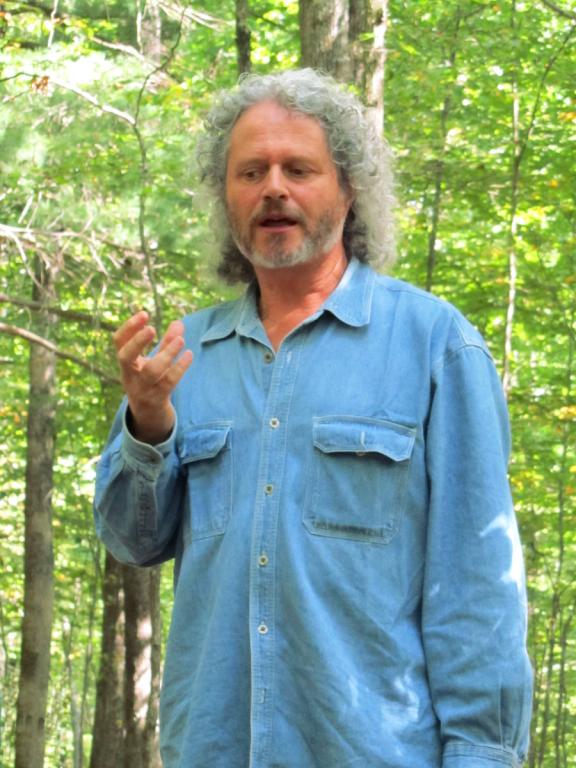
Philip Carr-Gomm at the 2012 East Coast Gathering
Many current Druid orders fall into this category, including the Order of Bards, Ovates and Druids, which is the largest Druid order in the world. When The Druid Network gained status as a charity in the UK in 2010 (a process far more complicated than simply filing 501(c)(3) papers in the US), OBOD Chosen Chief Philip Carr-Gomm asked “is Druidry a religion?” and then answered by saying “it’s all up to you.” At the 2012 East Coast Gathering, Philip pointed out that there are Pagan Druids, Christian Druids, Buddhist Druids, atheist Druids, and Spiritual But Not Religious Druids and he was very happy with that.
I’m a devotional polytheist, but I remain an enthusiastic member of OBOD because the order teaches spiritual techniques that are helpful to anyone with an interest in Celtic lore and a love of Nature… and because I’ve formed many wonderful friendships with my fellow Bards, Ovates and Druids.
The Pagan Druids
Did modern Druids become Pagans, or did modern Pagans become Druids? A little of both, I think. The last part of the 20th century saw Paganism expand beyond Wicca and Ceremonial Magic to include Nature-based beliefs and practices as well as the reimagining of the religions of our ancestors. For some, that was a perfect fit with Druidry.
In the US, the largest Druid order is Ár nDraíocht Féin: A Druid Fellowship. ADF was founded by Isaac Bonewits in 1983 as an intentionally Pagan order. The ADF website says they are “working to combine in-depth scholarship with the inspiration of artistry and spiritual practice to create a powerful modern Paganism.”
Like Paganism as a whole, Pagan Druidry is a movement with multiple centers – it’s hard to describe and impossible to define. It includes polytheists, mystics, animists, non-descript Nature lovers, Celtophiles and many many others.
Further Reading
This “history” is absurdly brief. It’s not intended to tell the whole story of Druidry, just to answer some high-level questions from folks who know little or nothing about it.
If this post sparks some interest, I suggest you read a good introductory book on Druidry. There are three I’ve read and can recommend with no reservations: Druid Mysteries by Philip Carr-Gomm, The Druidry Handbook by John Michael Greer, and Bonewits’s Essential Guide to Druidism by Isaac Bonewits.
Most people will be better off starting with Druid Mysteries. It’s the shortest and easiest to read, particularly for those who are looking for more spirituality than religion. If you’re looking for a how-to book, start with The Druidry Handbook – it was written as a textbook for the Ancient Order of Druids in America. If you know you want a specifically Pagan approach, start with Bonewits’s Essential Guide to Druidism.
Read all three and you’ll get a very good look at Druidry as it’s actually practiced today.
For the history of the Druids, I have three recommendations. A Brief History of the Druids by Peter Berresford Ellis is the best combination of facts and educated guesses for who the ancient Druids were and what they did. The Druids by Ronald Hutton describes how people have imagined Druids in recorded history. And Blood and Mistletoe: the History of the Druids in Britain (also by Hutton) is a thorough historical compilation of what is known about the ancient Druids (which isn’t much) and the revival Druids (which is considerable).
Druid Orders
There are many Druid orders. I’m familiar with three and can recommend them all.
The Order of Bards, Ovates and Druids (OBOD) is the largest Druid order in the world and it has the best correspondence course. If you will be working solitary or if you want a more spiritual approach, consider it. Ár nDraíocht Féin (ADF) is the largest Druid order in the US. If you want the best chance of finding a local grove, or if you want an explicitly Pagan approach, try it. The Ancient Order of Druids in America (AODA) is the most closely aligned with the revival Druids and is best suited for someone who wants to design his or her own study program.
None of these orders are “best” – the question is which one is the best fit for you. I chose OBOD because of their correspondence course and I think I made the right decision. But if I had chosen ADF or AODA, I suspect I’d be saying the same thing about them.
What Is Druidry?
If you’ve read this far, you understand this question doesn’t have a clear-cut answer. I like Thea Worthington’s response: “Druidry is the art of wild wisdom.”
But when asked “what’s a Druid?” I give a three-part answer: a Druid is a storyteller and a keeper of lore. A Druid is a seer and a keeper of wisdom. But most importantly, a Druid is a priest of Nature and the Gods of Nature.
May you find the Druidry that calls to you!

Previous Post
September 1, 2014
Sarajevo, Ferguson, and Powder Kegs
Next Post
September 7, 2014 The Reality of the Gods
Browse Our Archives
Select a Category Books Community CUUPS Druidry Foundations and Context Gods and Goddesses Magic Myth Nature Ritual Spiritual Practice Theology Travel Uncategorized Videos
Select a Month October 2026 September 2026 August 2026 July 2026 June 2026 May 2026 April 2026 March 2026 February 2026 January 2026 December 2025 November 2025 October 2025 September 2025 August 2025 July 2025 June 2025 May 2025 April 2025 March 2025 February 2025 January 2025 December 2024 November 2024 October 2024 September 2024 August 2024 July 2024 June 2024 May 2024 April 2024 March 2024 February 2024 January 2024 December 2023 November 2023 October 2023 September 2023 August 2023 July 2023 June 2023 May 2023 April 2023 March 2023 February 2023 January 2023 December 2022 November 2022 October 2022 September 2022 August 2022 July 2022 June 2022 May 2022 April 2022 March 2022 February 2022 January 2022 December 2021 November 2021 October 2021 September 2021 August 2021 July 2021 June 2021 May 2021 April 2021 March 2021 February 2021 January 2021 December 2020 November 2020 October 2020 September 2020 August 2020 July 2020 June 2020 May 2020 April 2020 March 2020 February 2020 January 2020 December 2019 November 2019 October 2019 September 2019 August 2019 July 2019 June 2019 May 2019 April 2019 March 2019 February 2019 January 2019 December 2018 November 2018 October 2018 September 2018 August 2018 July 2018 June 2018 May 2018 April 2018 March 2018 February 2018 January 2018 December 2017 November 2017 October 2017 September 2017 August 2017 July 2017 June 2017 May 2017 April 2017 March 2017 February 2017 January 2017 December 2016 November 2016 October 2016 September 2016 August 2016 July 2016 June 2016 May 2016 April 2016 March 2016 February 2016 January 2016 December 2015 November 2015 October 2015 September 2015 August 2015 July 2015 June 2015 May 2015 April 2015 March 2015 February 2015 January 2015 December 2014 November 2014 October 2014 September 2014 August 2014 July 2014 June 2014 May 2014 April 2014 March 2014 February 2014 January 2014 December 2013 November 2013 October 2013 September 2013 August 2013 July 2013 June 2013 May 2013 April 2013 March 2013 February 2013 January 2013 December 2012 November 2012 October 2012 September 2012 August 2012 July 2012 June 2012 May 2012 April 2012 March 2012 February 2012 January 2012 December 2011 November 2011 October 2011 September 2011 August 2011 July 2011 June 2011 May 2011 April 2011 March 2011 February 2011 January 2011 December 2010 November 2010 October 2010 September 2010 August 2010 July 2010 June 2010 May 2010 April 2010 March 2010 February 2010 January 2010 December 2009 November 2009 October 2009 September 2009 August 2009 July 2009 June 2009 May 2009 April 2009 March 2009 February 2009 January 2009 December 2008 November 2008 October 2008 September 2008 August 2008 July 2008 June 2008
Follow Us!
TAKE THE
Religious Wisdom Quiz
I will heal their waywardness and love them freely, making them blossom like this flower and fragrant like this tree. What plant and tree are mentioned?
Select your answer to see how you score.
Rose and olive Lebanon Cedar and Lilies Lotus and palm Iris and cypress
Related posts from John Beckett




What We Lose When “Ask AI” Becomes A...
TRENDING AT PATHEOS Pagan

The Sermon on the Mount, Part I: Matthew...
The Sermon on the Mount, Part I (Matthew 4:12-5:12) St. Matthew moves...

What's up from Crossway: Reviewing some of their latest A few weeks...

Janie Learns the Way of the Cross: A...
Teaching children about Jesus' Passion can be challenging. Many parents and educators...

Looking For Good Catholic Writing - October 2026
He alone extends the heavens, and he walks upon the waves of...

In "Irreplaceable," our book on vocation and technology, Trevor Sutton and I...

I was strolling through the top floor of the brand new Parthenon...
view all Pagan blogs
Ad-Free & Subscriber Log-In Subscription Support
- About Us
- 2026 Calendar
- Videos
- Podcasts
- Library of World Religions
- Faith In Media Tracker
- Advertise With Us
- Write for Us
- Privacy Policy
- Terms of Service
- Do Not Sell My Data
- Contact Us
- Radiant Digital
- Manage Newsletter Subscriptions
- Unsubscribe From Notifications
- Sitemap
Copyright 2008-2026, Patheos. All rights reserved.
Subscription Support Ad-Free & Subscriber Log-In
Follow Patheos