
BuddhistCatholicContemplativeEvangelicalGeneral ChristianHinduJewishLatter-day SaintMuslimNew VisionsProgressive Christian
Beliefs
- Buddhist
- Catholic
- Contemplative
- Evangelical
- General Christian
- Hindu
- Jewish
- Latter-day Saint
- More Voices
- Muslim
- New Visions
- Pagan
- Progressive Christian
Topics
- Religion News
- Food and Religion
- Sports and Religion
- Religious Art
- Religious Music and Entertainment
- Religious Events
- History and Religion
- Style and Religion
- Politics and Religion
- Women in Religion
- Recreation Outdoors and Religion
- Business Finance and Religion
- Careers Workplace and Religion
- Education and Religion
- Family Parenting and Religion
- Health Fitness and Religion
- Home and Religion
- Relationships and Religion
- Technology and Religion
- Travel and Religion
Columnists
- Buddhist Columnists
- Business Finance and Religion Columnists
- Careers Workplace and Religion Columnists
- Catholic Columnists
- Contemplative Columnists
- Education and Religion Columnists
- Evangelists Columnists
- Family Parenting and Religion Columnists
- General Christian Columnists
- Health Fitness and Religion Columnists
- Hindu Columnists
- History and Religion Columnists
- Home and Religion Columnists
- Jewish Columnists
- More Voices Columnists
- Latter Day Columnists
- Muslim Columnists
- New Visions Columnists
- Nonreligious Columnists
- Pagan Columnists
- Politics and Religion Columnists
- Progressive Columnists
- Recreation Outdoors and Religion Columnists
- Relationships and Religion Columnists
- Religion News Columnists
- Religious Art Columnists
- Religious Events Columnists
- Religious Music and Entertainment Columnists
- Sports and Religion Columnists
- Style and Religion Columnists
- Technology and Religion Columnists
- Travel and Religion Columnists
- Women in Religion Columnists
Resource Library
- 2026 Calendar
- Library of World Religions
- The 100 Most Holy Places on Earth
- Patheos Answers
- Podcasts
- Videos
- Faith Leaders Database
- Anglican Episcopalian
- Bahai
- Baptist
- Buddhism
- Christianity
- Confucianism
- Eastern Orthodoxy
- Hinduism
- Holiness and Pentecostal
- ISKCON
- Islam
- Judaism
- Lutheran
- Methodist
- The Church of Jesus Christ of Latter-day Saints
- New Age
- Paganism
- Presbytarian and Reformed
- Protestantism
- Religion Behind the Scenes
- Roman Catholic
- Scientology
- Shia Islam
- Sikhism
- Sufism
- Sunni Islam
- Taoism
- Zen
- See all religions
Research Tools
 Ad-Free & Subscriber Log-In Subscription Support
Ad-Free & Subscriber Log-In Subscription Support
Follow Patheos 

- Trending:
- Forgiveness
- |
- Marriage
- |
- Consciousness
- |
- Death Penalty
- |
- Election
- |
- Halloween

- Home
- Pagan
- Rewilding Our World
Rewilding Our World
Last updated on: August 10, 2014 at 3:00 pm by John Beckett
Rewilding Our World 2014-08-09T16:49:18-06:00 John Beckett
Patheos Explore the world's faith through different perspectives on religion and spirituality! Patheos has the views of the prevalent religions and spiritualities of the world.
George Monbiot has a TED talk titled “For more wonder, rewild the world.” He tells how the reintroduction of wolves to Yellowstone National Park has had a dramatic and positive effect on the entire ecosystem. Wolves reduced the number of deer, which allowed overgrazed lands to recover, which allowed trees to grow thicker and taller, which supported increased populations of birds, which has supported a general recovery of biological diversity in the park. The talk is good and worth the 15 minutes it takes to watch it.
I’m aware of the criticisms of TED talks: they emphasize talk instead of action, they oversimplify complicated issues, they’re “church for secular liberals.” And with this talk, some people have challenged the idea that the reintroduction of wolves really has done so much good (see “oversimplify complicated issues”).
But it is no great stretch to see that an environment which evolved over millions of years and had adapted to local conditions over hundreds would be more robust when all its component species are present.
It’s also helpful to remember who removed the wolves in the first place.
Monbiot suggests rewilding more than just national parks. He describes the evolutionary advantages of megafauna in ecosystems and asks “why shouldn’t all of us have a Serengeti on our doorsteps?”
Some places are being or will be rewilded on their own as humans abandon them for political, economic, and environmental reasons. But reintroducing megafauna would require the kind of massive collective action our fractured political systems are no longer able to produce. It’s a nice thought, but see “oversimplify complicated issues.”
What about action on a personal level? How can we rewild our own lives?
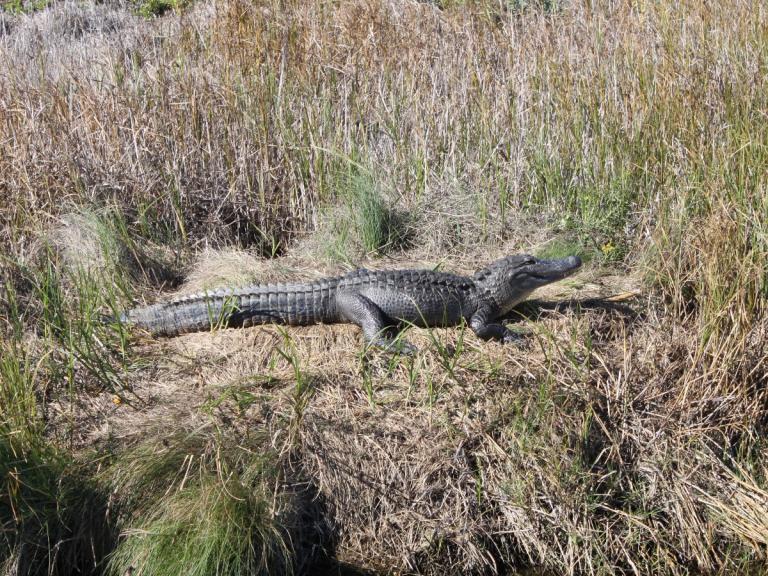
“I didn’t come from any monkey!”
If you discuss evolution in a public forum, you’ll hear this line sooner rather than later. A third of Americans reject the reality of evolution. The standard response is “of course you didn’t – humans didn’t evolve from monkeys, we both shared a common ancestor 25 million years ago.” That’s true, but it doesn’t address the real reason behind the evolution-denier’s emotional declaration.
Some people just can’t comprehend deep time. Changes that are impossible in a brief human lifetime or even in still-brief recorded history are no problem on a cosmic time scale. But if you can’t comprehend the age of the Earth – or if you actively deny it because it conflicts with a literal reading of your sacred text – then evolution isn’t going to make sense.
Others understand that evolution undermines the grand narrative that supports fundamentalist Christianity. If evolution is true then there is no historical Adam and Eve. If there is no historical Adam and Eve then there is no fall of man, no original sin, and no need for atonement. The death of Jesus becomes the state-sponsored murder of an inconvenient radical and not a saving sacrifice. Christianity is no longer the only way, it’s simply one way among many. Faced with the loss of their exclusivity – and fearing they might have gotten something wrong that would send them to the hell they’re sure has to exist – they find it easier to reject the overwhelming evidence for evolution than to reconsider their religious narrative.
For most folks in that 33%, though, the reason is far simpler – they fear the loss of a special and privileged position. It isn’t enough that opposable thumbs, big brains, and capacity for language have put them at the pinnacle of the Natural world, they want to be the sole creatures who are Imago Dei – made in the image of God.
Traditionally, Imago Dei is given as the reason why humans have intrinsic value. But it’s also an excuse to devalue other species and ecosystems. If we’re made in the image of God and they’re not, then we have no obligation to consider their wellbeing – their value is based only on their utility to humans. This has been disastrous for the species we’ve driven to extinction, and as Nature-centered Pagans understand, it’s been bad for humans too.
Evolution removes humans from our special privileged position. Many people don’t like that, to the extent they’ll deny the reality of evolution rather than contemplate the implications of the interrelatedness of all Life.
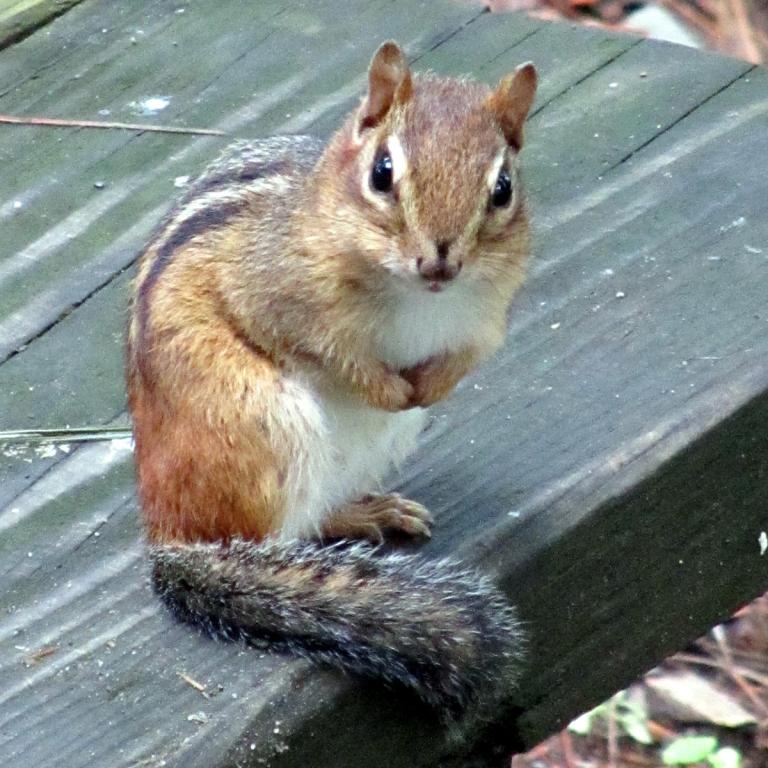
The dog hears the howl of the wolf and remembers what he has never known.
The wild is beautiful and powerful, but it is also unpredictable, uncontrollable, and utterly unconcerned with the fate of any single individual.
The story of civilization is the story of the fight against the wild. Agriculture made food supplies more certain and allowed surpluses to be stored against future famine. Houses gave shelter from the rain and wind. Burning – wood, then coal, then natural gas – gave relief from the cold, and when converted to electricity, relief from the heat. Medicine gave relief from disease… and what is disease but microscopic wild things whose presence is harmful to humans and our preferred species?
On the whole this has been a good thing for humans. Particularly for those of us who are fortunate enough to live in certain parts of the world, our lives are longer, easier, and more secure than ever before. If things seem worse today, it is because we see how good things could be if the benefits of modern society were shared with all and not hoarded by a few.
If things seem worse, it is because every now and then, hurricanes or tornadoes or ebola outbreaks remind us who’s really in control, and it’s not us. Shattered illusions – or shattered pretensions – bring great fear.
Like every other species, we follow our instincts for self-preservation and self-advancement until we run into a hard limit. Unlike other species, we have the intellectual capacity to see these limits before we run full speed into a brick wall. But as the “debate” on climate change shows, many of us prefer to cling to our pleasant illusions, even if those illusions aren’t making our lives better.
The dog hears the howl of the wolf and remembers what he has never known.
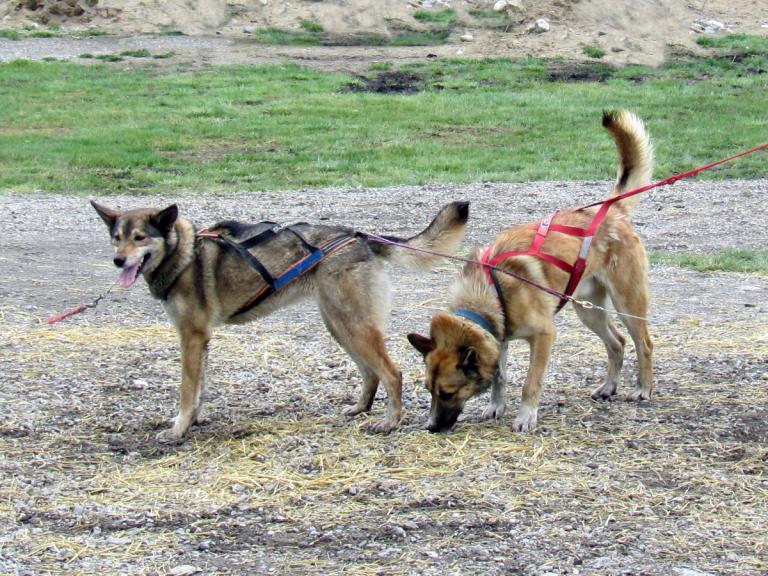
Ten thousand years of civilization have left us with the idea that the wild is something to be feared and controlled, something to drive out of ourselves and pretend we never had it in the first place. That’s certainly been effective – we’ve gone from stone axes to smartphones in the blink of an evolutionary eye. But the pendulum has swung too far and you don’t need a Ph.D in divination to see we’re headed for a serious and unpleasant reversal.
There is an unfortunate and unhelpful idea in some parts of the Pagan community that the ideal state is something called “balance.” Find just the right mix of work and play, the right blend of this and that, and things will go on forever and ever and never change. No more change, no more stress.
If something never changes, it’s because it’s dead, or soon will be.
Moderation – nothing in excess – is a helpful strategy. Balance is an impossible goal and we should be thankful it’s not possible. Boredom is a fate worse than death.
It’s also not possible to cling forever to a privileged position that’s built on lies and illusions.
The wild brings randomness into our lives. It creates situations that are harmful to some and helpful to others. There’s a whole branch of magic that deals with using randomness to our advantage. You may want to learn it before you have great need of it.
The question for us isn’t whether we should try to create a Serengeti on our doorsteps. The question is how we will respond when the wild shows up and knocks on our door… and when it kicks the door off its hinges.
Whether we run into limits or whether Nature asserts Her superior power, whether we seek it out or whether we hide from it, sooner or later the wild will insert itself into our lives. We can cower in its presence, we can scream angrily and impotently into its face, or we can adjust ourselves and our expectations to the new reality and put our opposable thumbs, big brains, and capacity for language to work taking advantage of the opportunities it brings.
Previous Post
August 7, 2014
Nurturing Polytheism
Next Post

August 12, 2014 Rewilding: Privilege and Reality
Browse Our Archives
Select a Category Books Community CUUPS Druidry Foundations and Context Gods and Goddesses Magic Myth Nature Ritual Spiritual Practice Theology Travel Uncategorized Videos
Select a Month October 2026 September 2026 August 2026 July 2026 June 2026 May 2026 April 2026 March 2026 February 2026 January 2026 December 2025 November 2025 October 2025 September 2025 August 2025 July 2025 June 2025 May 2025 April 2025 March 2025 February 2025 January 2025 December 2024 November 2024 October 2024 September 2024 August 2024 July 2024 June 2024 May 2024 April 2024 March 2024 February 2024 January 2024 December 2023 November 2023 October 2023 September 2023 August 2023 July 2023 June 2023 May 2023 April 2023 March 2023 February 2023 January 2023 December 2022 November 2022 October 2022 September 2022 August 2022 July 2022 June 2022 May 2022 April 2022 March 2022 February 2022 January 2022 December 2021 November 2021 October 2021 September 2021 August 2021 July 2021 June 2021 May 2021 April 2021 March 2021 February 2021 January 2021 December 2020 November 2020 October 2020 September 2020 August 2020 July 2020 June 2020 May 2020 April 2020 March 2020 February 2020 January 2020 December 2019 November 2019 October 2019 September 2019 August 2019 July 2019 June 2019 May 2019 April 2019 March 2019 February 2019 January 2019 December 2018 November 2018 October 2018 September 2018 August 2018 July 2018 June 2018 May 2018 April 2018 March 2018 February 2018 January 2018 December 2017 November 2017 October 2017 September 2017 August 2017 July 2017 June 2017 May 2017 April 2017 March 2017 February 2017 January 2017 December 2016 November 2016 October 2016 September 2016 August 2016 July 2016 June 2016 May 2016 April 2016 March 2016 February 2016 January 2016 December 2015 November 2015 October 2015 September 2015 August 2015 July 2015 June 2015 May 2015 April 2015 March 2015 February 2015 January 2015 December 2014 November 2014 October 2014 September 2014 August 2014 July 2014 June 2014 May 2014 April 2014 March 2014 February 2014 January 2014 December 2013 November 2013 October 2013 September 2013 August 2013 July 2013 June 2013 May 2013 April 2013 March 2013 February 2013 January 2013 December 2012 November 2012 October 2012 September 2012 August 2012 July 2012 June 2012 May 2012 April 2012 March 2012 February 2012 January 2012 December 2011 November 2011 October 2011 September 2011 August 2011 July 2011 June 2011 May 2011 April 2011 March 2011 February 2011 January 2011 December 2010 November 2010 October 2010 September 2010 August 2010 July 2010 June 2010 May 2010 April 2010 March 2010 February 2010 January 2010 December 2009 November 2009 October 2009 September 2009 August 2009 July 2009 June 2009 May 2009 April 2009 March 2009 February 2009 January 2009 December 2008 November 2008 October 2008 September 2008 August 2008 July 2008 June 2008
Follow Us!
TAKE THE
Religious Wisdom Quiz
Commanded to go to Nineveh, I fled in the opposite direction on a ship to Tarshish. Who am I?
Select your answer to see how you score.
Jeremiah Jonah Hosea Elijah
Related posts from John Beckett




What We Lose When “Ask AI” Becomes A...
TRENDING AT PATHEOS Pagan

The First Eucharistic Controversy: Christ’s Real Presence
For Catholics, the Eucharist is the source and summit of the Christian...

What a Stop Sign Can Teach Us About...
How to Make a Decision When You Can't Hear God Main point:...

Archdiocese Hosts Military Marriage Retreat in Germany
RASTATT, Germany — The transient military lifestyle, with its frequent deployments and...

Nearly every morning, I make the drive to Detroit with my high-school-age...

The Real AI Story Is Adoption Without Trust
Artificial intelligence has crossed a political threshold. It is no longer a...

A new article, written by Jeff Lindsay and Gale L. Pooley,...
view all Pagan blogs
Ad-Free & Subscriber Log-In Subscription Support
- About Us
- 2026 Calendar
- Videos
- Podcasts
- Library of World Religions
- Faith In Media Tracker
- Advertise With Us
- Write for Us
- Privacy Policy
- Terms of Service
- Do Not Sell My Data
- Contact Us
- Radiant Digital
- Manage Newsletter Subscriptions
- Unsubscribe From Notifications
- Sitemap
Copyright 2008-2026, Patheos. All rights reserved.
Subscription Support Ad-Free & Subscriber Log-In
Follow Patheos