
BuddhistCatholicContemplativeEvangelicalGeneral ChristianHinduJewishLatter-day SaintMuslimNew VisionsProgressive Christian
Beliefs
- Buddhist
- Catholic
- Contemplative
- Evangelical
- General Christian
- Hindu
- Jewish
- Latter-day Saint
- More Voices
- Muslim
- New Visions
- Pagan
- Progressive Christian
Topics
- Religion News
- Food and Religion
- Sports and Religion
- Religious Art
- Religious Music and Entertainment
- Religious Events
- History and Religion
- Style and Religion
- Politics and Religion
- Women in Religion
- Recreation Outdoors and Religion
- Business Finance and Religion
- Careers Workplace and Religion
- Education and Religion
- Family Parenting and Religion
- Health Fitness and Religion
- Home and Religion
- Relationships and Religion
- Technology and Religion
- Travel and Religion
Columnists
- Buddhist Columnists
- Business Finance and Religion Columnists
- Careers Workplace and Religion Columnists
- Catholic Columnists
- Contemplative Columnists
- Education and Religion Columnists
- Evangelists Columnists
- Family Parenting and Religion Columnists
- General Christian Columnists
- Health Fitness and Religion Columnists
- Hindu Columnists
- History and Religion Columnists
- Home and Religion Columnists
- Jewish Columnists
- More Voices Columnists
- Latter Day Columnists
- Muslim Columnists
- New Visions Columnists
- Nonreligious Columnists
- Pagan Columnists
- Politics and Religion Columnists
- Progressive Columnists
- Recreation Outdoors and Religion Columnists
- Relationships and Religion Columnists
- Religion News Columnists
- Religious Art Columnists
- Religious Events Columnists
- Religious Music and Entertainment Columnists
- Sports and Religion Columnists
- Style and Religion Columnists
- Technology and Religion Columnists
- Travel and Religion Columnists
- Women in Religion Columnists
Resource Library
- 2026 Calendar
- Library of World Religions
- The 100 Most Holy Places on Earth
- Patheos Answers
- Podcasts
- Videos
- Faith Leaders Database
- Anglican Episcopalian
- Bahai
- Baptist
- Buddhism
- Christianity
- Confucianism
- Eastern Orthodoxy
- Hinduism
- Holiness and Pentecostal
- ISKCON
- Islam
- Judaism
- Lutheran
- Methodist
- The Church of Jesus Christ of Latter-day Saints
- New Age
- Paganism
- Presbytarian and Reformed
- Protestantism
- Religion Behind the Scenes
- Roman Catholic
- Scientology
- Shia Islam
- Sikhism
- Sufism
- Sunni Islam
- Taoism
- Zen
- See all religions
Research Tools
 Ad-Free & Subscriber Log-In Subscription Support
Ad-Free & Subscriber Log-In Subscription Support
Follow Patheos 

- Trending:
- Forgiveness
- |
- Marriage
- |
- Consciousness
- |
- Death Penalty
- |
- Election
- |
- Halloween

- Home
- Pagan
- Pilgrimage and Convocation
Pilgrimage and Convocation
Last updated on: August 17, 2014 at 3:12 pm by John Beckett
Pilgrimage and Convocation 2014-08-17T15:12:24-06:00 John Beckett
Patheos Explore the world's faith through different perspectives on religion and spirituality! Patheos has the views of the prevalent religions and spiritualities of the world.
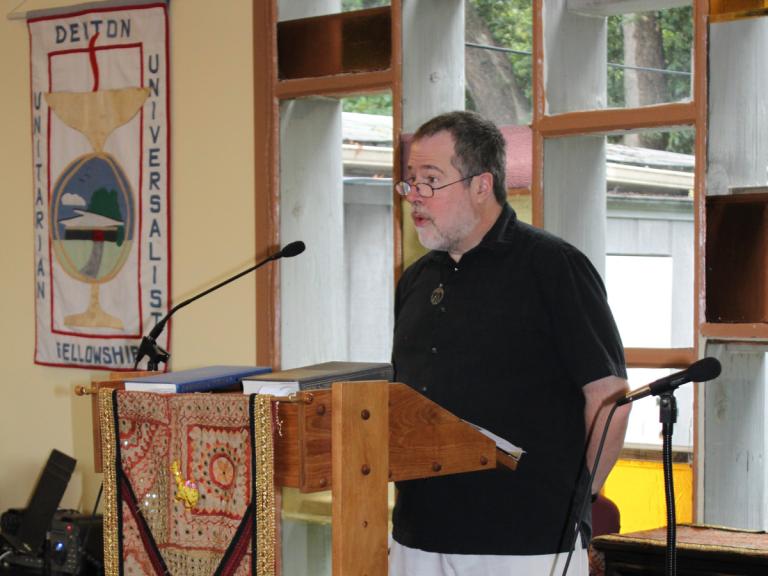
photo by Tesa Morin
Pilgrimage and Convocation
by John Beckett
Denton Unitarian Universalist Fellowship
August 17, 2014
My Introduction to Travel
When I was growing up, my family was blue collar middle class. We had everything we needed and not a lot more. Travel meant piling in an un-air-conditioned car with my parents and my pesky little brother and driving for hours on end to visit relatives. When we got there, my parents sat around and talked while I was left to fend for myself in a basement or a back yard. This did not instill an appreciation for travel in me.
When I got out on my own I told myself I couldn’t afford to travel. I was envious of my friends who went to Europe or on Caribbean cruises, and to be honest, those kinds of trips really were beyond my means. Other trips would have been affordable, but I didn’t see the value in them.
In 1993 I was pushed into a trip to New Orleans that was magical in many ways. That trip is another story for another time, but it showed me what travel could be. Since then, Cathy and I have taken a big trip every year except one, and over the past few years we’ve added a smaller trip at the Winter holidays in lieu of buying presents for each other.
Travel is relatively easy today – you can drive from San Antonio to El Paso in under eight hours. In the early days of Texas, it could take six weeks. The situation was similar in most parts of the world. But despite the costs, difficulties, and dangers of travel, there has always been one reason ordinary people as well as the rich and powerful have undertaken long journeys – religious pilgrimages.
Pilgrimage
For almost 2000 years, Greeks from all over the Mediterranean traveled to Eleusis for initiation in the Mysteries. Jews traveled to Jerusalem to offer sacrifices at the Temple prior to its destruction by the Romans in 70 CE. A pilgrimage to Mecca is one of the Five Pillars of Islam. Geoffrey Chaucer’s Canterbury Tales is set on a pilgrimage to the shrine of St. Thomas Becket at Canterbury Cathedral. There are countless other examples.
The Catholic Encyclopedia says pilgrimages are “journeys made to some place with the purpose of venerating it, or in order to ask there for supernatural aid, or to discharge some religious obligation.” I think that definition is a good start.
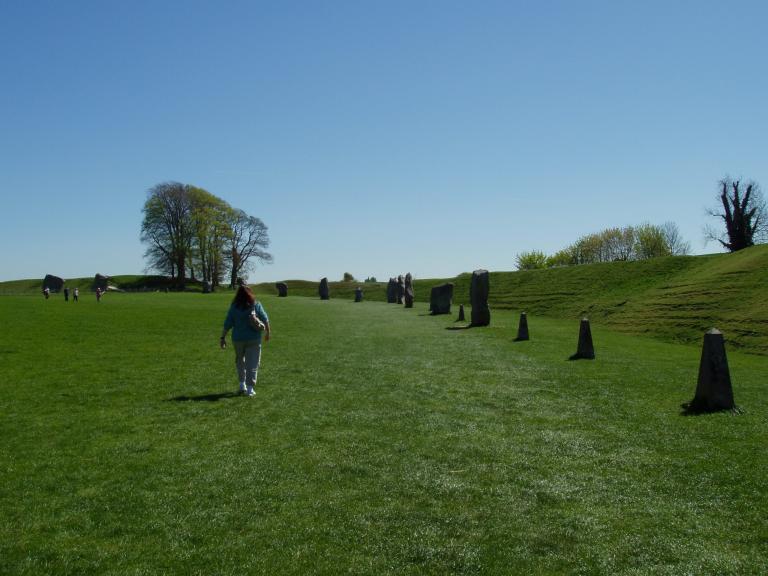
Avebury 2007
There is value in religious tourism – going to some place of religious significance simply to see it. My visit to Westminster Abbey in 2007 was quite informative and even inspirational, but it was not a pilgrimage. Neither was my visit to Stonehenge, which as a Pagan I found more meaningful. My visit to the massive stone circle in Avebury, though – that was quite a pilgrimage. So was my visit to the Isle of Anglesey in Wales earlier this year.
So what is a pilgrimage, and what differentiates it from ordinary travel? A pilgrimage begins with a religious intent. There’s something special about the destination. Pagans like to say “all land is sacred” and the poet Wendell Berry said “there is no unsacred place.” But some places are especially sacred – they’re places of natural power, or places made sacred by important human activities. The pilgrim expects that there will be something special, something extraordinary, something sacred at her destination. There will be something there she can’t find at home, whether that is healing at Lourdes, prayers at the Wailing Wall, bathing in the Ganges, or the return of the light at Newgrange.
These expectations create anticipation. Now, we all know the disappointment that follows unrealistic expectations, but an open-ended hope for a good experience prepares the pilgrim for what will come. And the anticipation provides motivation to do the work that will be required to complete the pilgrimage.
A pilgrimage involves a journey, and the journey can be as important as the visit. Even with planes, trains, and automobiles, the travel will still take longer than the visit to any one site. And while travel is far easier than it once was, it still brings frustrations and hardships. Overcoming them makes reaching the destination all the more meaningful.
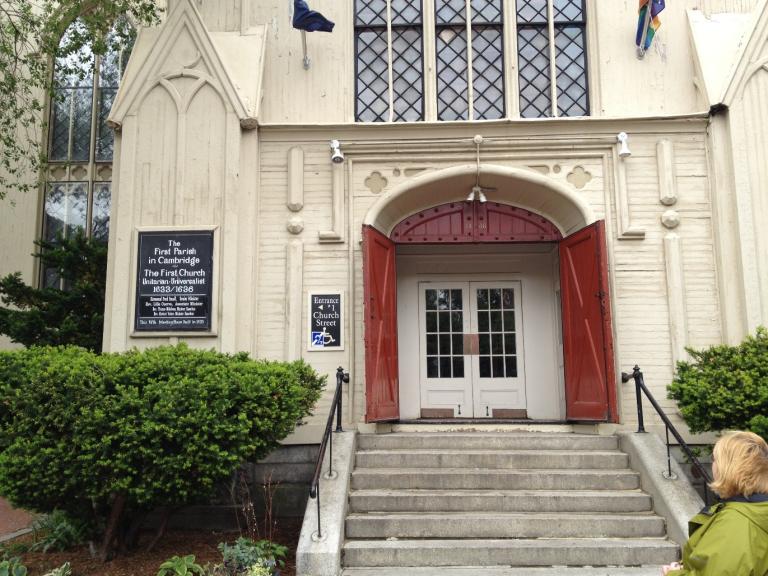
First Parish Cambridge
What do you do when you get there? You’re not there just to see the sights – you’re there to do something. You may participate in a ritual, either individually or with other pilgrims. On those few occasions when my family was traveling on a Sunday, my parents would always find a church for us to attend. I wanted a vacation from church too! But when Cathy and I visited Boston last year, we attended Sunday services at First Parish, Cambridge, a UU church founded in 1633. The service itself would not have been out of place here in Denton. What made it special was worshipping where others have worshipped for almost 400 years.
I have a Catholic friend whose trip to Rome was highlighted by attending mass in St. Peter’s Square. It was an ordinary mass, but it was in a special place, with thousands of others who share her faith, and of course, with a special officiant.
Sometimes the experience you expect isn’t the experience you get. As a modern Druid, I had great expectations for our visit to Anglesey earlier this year. Anglesey was a center of Druid learning in ancient times, and it was the site of the infamous Roman massacre of 61 CE. From the beginning, I had planned to slip away for a few minutes on our last morning there and commune with the spirits of the place. I was hoping for a connection to the ancient Druids and perhaps a vision of a past life. There was a stone circle in what was essentially the back yard of our hotel. It’s a modern circle built for bardic gatherings, but it’s still a stone circle on the Isle of Anglesey – it was clear that was where I was supposed to do my communion with the place.
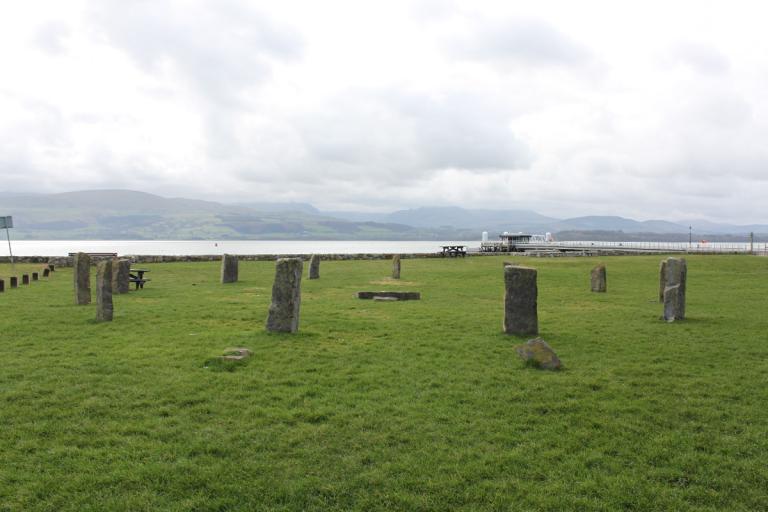
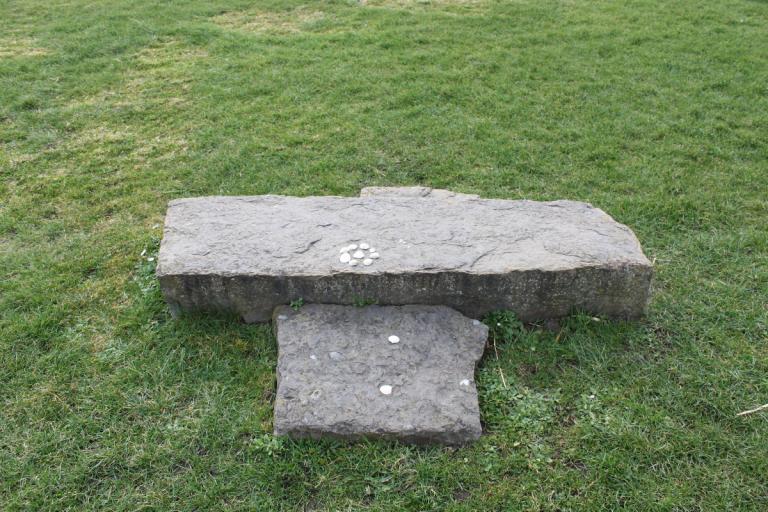
Beaumaris Gorsedd Circle
In a light, cold rain, I approached the circle and poured a libation at the entrance. I walked the circle clockwise and then moved to the center stone. What I experienced wasn’t a past life memory or really any connection to the past. Rather, it was an offer and a challenge to step up, both literally and figuratively, and to embody the spirit of that great place in my daily life back here.
This was not the experience I was expecting. This was not comfort and healing. It was inspiring, but in a “get your butt in gear” way, not with any visions of wisdom and peace being dispensed from on high.
What do you say to an experience that is not what you expected and perhaps not what you wanted? What do you say to an experience that challenges rather than comforts? If your trip was a pilgrimage and not tourism, if it was driven by a religious impulse, you say yes.
When your experience is over, your pilgrimage is not done – you’ve still got the return trip. And as with the journey to the pilgrimage site, the journey home can bring its own challenges and its own rewards. Mostly, though, the trip home gives you time to process the experience. What does it mean? What did you learn? And perhaps most importantly, how are you going to incorporate it into your life?
Convocation
There is another form of religiously motivated travel – convocation. The word simply means a large formal assembly – a retreat or a workshop or a business meeting. The UUA has its annual General Assembly, and our regions and districts have various camps, educational events, and other opportunities to gather in an environment that is distinctly Unitarian Universalist.
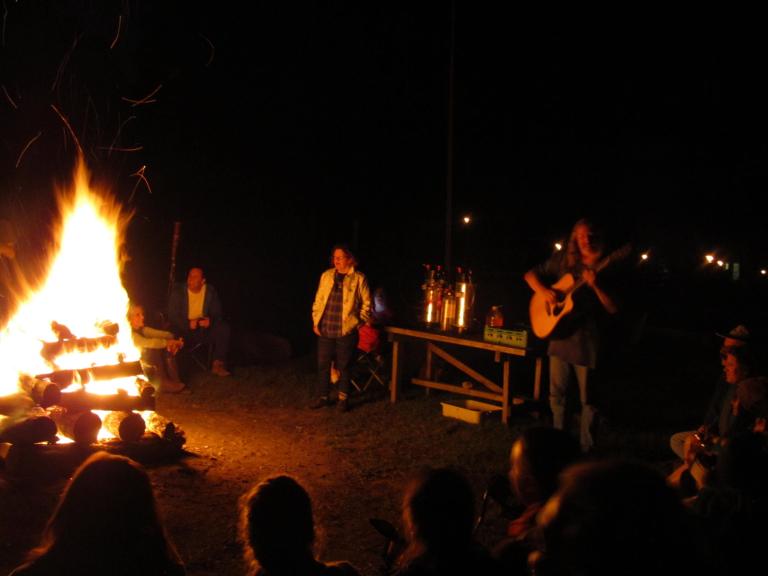
2013 OBOD East Coast Gathering
Each September for the last three years I’ve travelled to eastern Pennsylvania for the East Coast Gathering of the Order of Bards, Ovates and Druids. About a hundred Druids from all over the country and a few from elsewhere gather for a four day weekend at what is normally a girls’ summer camp. There are rituals and workshops, guest speakers, and evenings around the camp fire singing, telling stories, and drinking mead. It’s a beautiful site and I’d enjoy getting away for a few days no matter what the excuse. But the reason I keep going back year after year is the opportunity to immerse myself in Druidry for four days straight.
There are conversations that take place at the East Coast Gathering that some of our members simply can’t have any other place. People can let their guard down and share their spiritual journeys, talk about their projects and their ideas, their hopes and fears for the future. They discuss the nature of the gods and what comes after death, and their thoughts are as diverse as any group of UUs. These are the kind of conversations many of us are reluctant to have in the ordinary world for fear of being seen as odd or nuts or worse.
Social media has made it easier to connect with friends from around the world, but there is no substitute for seeing someone face to face and having a real, live conversation over a cup of tea.
Some convocations are retreats and some are workshops, but some are working business meetings. Our General Assembly has its plenary sessions where various reports and motions are considered, debated, and voted on. This may sound boring compared to the inspirational religious experiences of pilgrimages and the soul-nurturing fellowship of retreats, and many times it is. That doesn’t mean it’s not important.
In 325 CE the Roman Emperor Constantine sent out a call for all Christian bishops to participate in a council to settle various disagreements within the still-new Christian church – the nature of the relationship between the Father and the Son and the date of Easter being the most prominent. 1800 bishops were invited to participate in the council. 300 showed up. Those 300 bishops made decisions that are still in effect today. What would the Council of Nicaea have been like if the other 1500 bishops attended?
The standard Christian position is that the Council was guided by the Holy Spirit and thus would have reached the same conclusions no matter who was involved. Perhaps. Others say those 300 bishops were a representative sample of Christian thought at the time and thus reached the same conclusions as if Constantine had polled all of Christendom. Perhaps. Still others argue that those who made the long and difficult journey to Nicaea (in what is now northern Turkey) were the most invested and most passionate and therefore would have carried the argument no matter who attended. Perhaps.
The Council of Nicaea decided key matters of theology and issued a creed that is still in use by Catholic, Protestant, and Orthodox Christians after almost 1700 years. What would the Nicene Creed be if more than 300 bishops had participated? We’ll never know. Here’s what we do know: major decisions were made by those who showed up.
Whether it’s a religious convocation, a congregational meeting, or a political debate, ultimately someone has to decide. If you choose to participate, the decision may go for you or it may go against you. If you choose not to participate, the decision will be made without you. Decisions are made by those who show up.
Travel Now
If there’s a pilgrimage that calls to you, I have one suggestion – do it now. If you have issues that simply do not allow you to travel, then plan for the time when you can. But otherwise, go now. You never know when a particular pilgrimage will no longer be possible.
I have wanted to visit Egypt for as long as I can remember. First it was The Ten Commandments and The Mummy movies. Now it’s my religious work with the deities of ancient Egypt. I’ve seen bits and pieces of Egypt in the touring exhibits that came to museums in Fort Worth and Dallas. I’ve seen other artifacts in London and Istanbul. Those have been meaningful and even powerful. But I want to see the Pyramids, the Sphinx, and the Nile for myself. I want to stand in the ancient temples and whisper prayers to Isis, Osiris, and Amun Ra.
But a trip to Egypt has always been one of those things I planned to do “some day.” It’s always been too expensive, too difficult, and now, too dangerous. I’m hoping to go to Egypt in 2016, or if the political situation is still unsettled, in 2018. But “some day” has an expiration date, a date that is closer for some destinations than for others.
I’m now well into my 50s, and accommodations I once saw as luxuries I now see as necessities. Not because my tastes have changed, but because my body has changed. I used to could sleep anywhere – now a night in a bad bed may have my back in pain for days. I can still spend all day walking around a city or countryside, but if I do I’ll need a rest day tomorrow. Keep in mind that many sites of religious significance and natural beauty are in hard-to-reach locations. I could go back to Stonehenge when I’m 90, but I don’t know that I want to be hiking or even bussing through the Egyptian desert if I’m going to be more concerned with my physical condition than with the places I’m visiting.
Pilgrimages are not vacations and challenges are to be expected. Your body, your threshold of discomfort and your tolerance of risk will vary. But for all of us, there will come a day when travel is no longer possible.
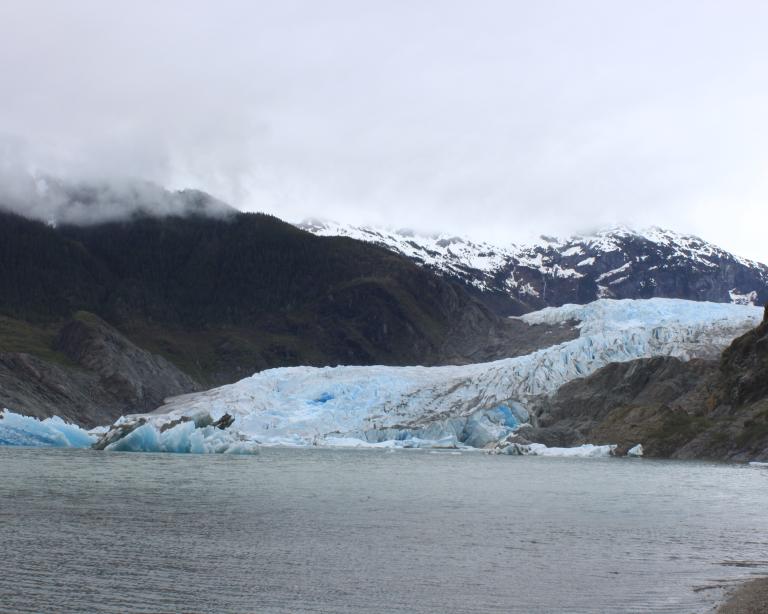
Mendenhall Glacier, Juneau – 2012
If you want to see the glaciers of Alaska, go now – they’re melting. If you want to see the jungles of the Amazon, go now – they’re being developed at an alarming rate. Neither are likely to disappear in the immediate future, but they are changing rapidly. If you want to see the Buddhas of Bamiyan, you can’t – the Taliban blew them up in 2001. If a pilgrimage calls to you, go before “some day” becomes “I wish I had.”
Pilgrimage Ideas
Pilgrimages are very personal things. A journey that is extremely meaningful to me may not interest you at all, and vice versa. But there are some destinations that will be of interest to many UUs, and not all of them involve long and expensive travel.
For Unitarian Universalists, there is no better place for a pilgrimage than Boston. You can visit UUA headquarters, but that always struck me as a working office and not a sacred site. But do visit King’s Chapel. It was founded in 1686 and the current building was opened in 1754. It’s a Unitarian Christian church using a modified Anglican liturgy, and it is a member of the UUA. Visit First Parish in Cambridge. It was founded in 1633 and the current building was opened in 1833.
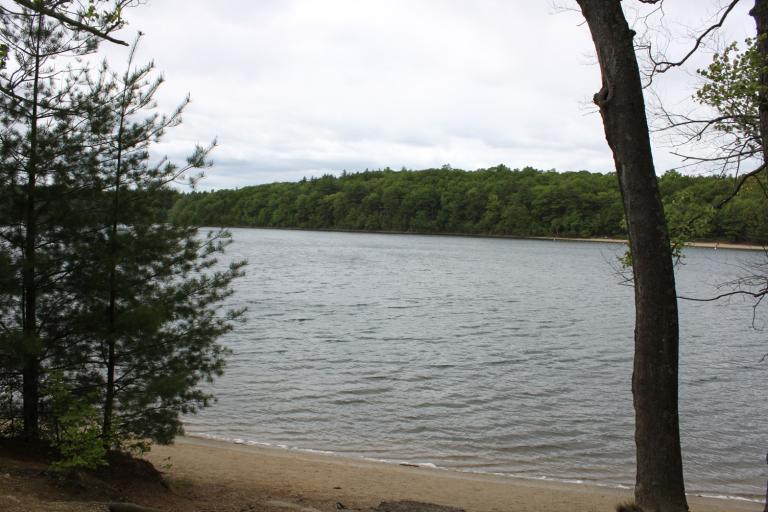
Walden Pond
Drive out to Walden, see the statue of Henry David Thoreau and the replica of his famous cabin. Walk around Walden Pond – you don’t have to think very hard to understand why Thoreau chose this site for his two year experiment in simplicity.
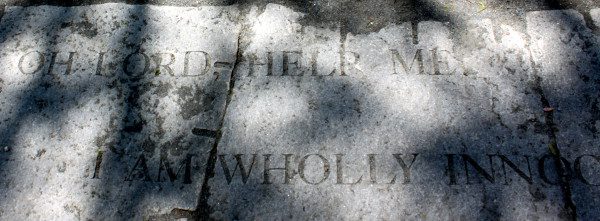
Take a side trip to Salem, which is closer to Boston than Denton is to Dallas. Salem is a tourist town that milks the witch theme for all it’s worth – set your expectations accordingly. But pay a visit to the Witch Trials Memorial. Read the pleas of the condemned engraved on the stones, and remember that even today people are killed for things they did not do.
 About six hours east of here is Poverty Point. This was home to the mound building people who lived here 3500 years ago. At first glance it’s unimpressive: a series of low ridges that could be overlooked if not for the mowing patterns, and a couple of earth mounds that are out of place on the flat land but not so obvious as to scream “monument!”
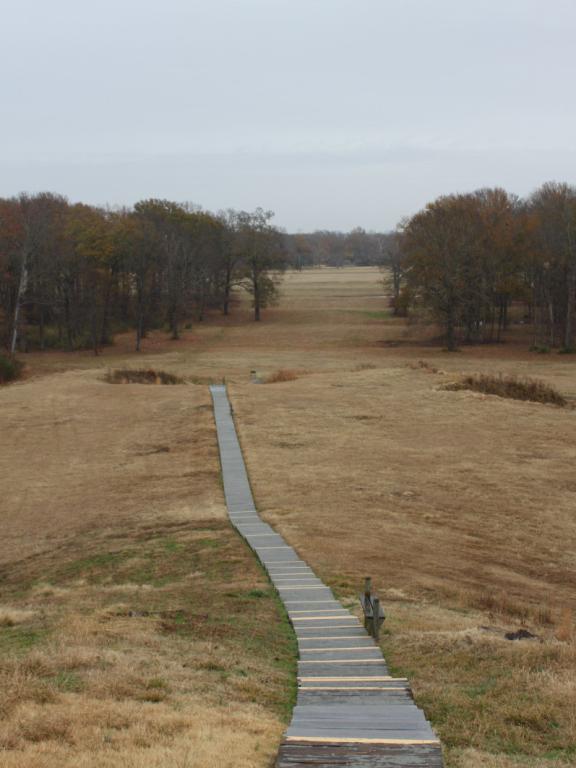
Poverty Point
But between 1600 and 1100 BCE, hundreds of people lived here, part of a culture that stretched for hundreds of miles up and down the Mississippi River. They had no earthmoving equipment, no pack animals and no wheeled carts. They had only baskets and people – the mounds would have taken years to build. Why did they make the investment of time and effort?
Go to Poverty Point. Climb the stairs to the top of the largest mound. Look around at the surrounding countryside. Let your focus shift and try to imagine what you would have seen if you had been there over 3000 years ago. Think about how the people lived. What did they know that we’ve forgotten?
Less than two hours south of here is Dinosaur Valley State Park. 110 million years ago this area was the shoreline of a shallow sea and home to several species of dinosaurs. They left their footprints in the lime-based mud and the prints were quickly covered with a layer of clay, preserving them for eons. In 1908 the footprints were uncovered by a flood and they’re visible today in the Paluxy River, especially in times of drought when the river is running low and clear.
Go to Dinosaur Valley. Stand in the footprints of the huge dinosaurs. Listen. Contemplate just how old the Earth really is, and just how new we humans really are. Think about the dinosaurs and how their world changed so suddenly and so drastically. You can do that anywhere, but there’s something special about doing it where there is such a tangible connection to creatures who lived so long ago.
The Wider Cost of Travel
Travel is easier and more affordable than it’s ever been, but travel still has costs, including environmental costs. All forms of transportation produce greenhouse gasses and air travel is especially dirty. You may wish to offset the pollution of your trip by planting trees or by cutting back on fossil fuel use in other areas of your life.
There are some places we are loving to death – they are being harmed by the sheer volume of people visiting them. High entrance fees and timed tickets are not simply designed to manage large crowds, they’re also designed to reduce them. The caves of Lascaux and their famous Paleolithic paintings have been closed since 1963. The humidity and carbon dioxide produced by human visitors would have destroyed in a few decades what had been preserved for 15,000 years.
Pilgrimages aren’t logical things. We’re moved to go places we’ve never seen by forces we don’t understand to have experiences we can’t explain. The call to pilgrimage wants what it wants. But to the extent you have a choice in how to respond to your call, I encourage you to consider lesser-known sites. They’re typically not as big and not as visually impressive, and they can be harder to reach. But these places can be just as powerful as the better-known sites, and they typically have far fewer visitors. I’m sure my Catholic friend had a memorable experience of mass with thousands of others in St. Peter’s Square. But I’ll never forget visiting Anglesey with a party of six, and standing in the center of that circle, alone, and not.
Previous Post
August 14, 2014
Nine Things I Think
Next Post
August 19, 2014 Setting The World Straight
Browse Our Archives
Select a Category Books Community CUUPS Druidry Foundations and Context Gods and Goddesses Magic Myth Nature Ritual Spiritual Practice Theology Travel Uncategorized Videos
Select a Month October 2026 September 2026 August 2026 July 2026 June 2026 May 2026 April 2026 March 2026 February 2026 January 2026 December 2025 November 2025 October 2025 September 2025 August 2025 July 2025 June 2025 May 2025 April 2025 March 2025 February 2025 January 2025 December 2024 November 2024 October 2024 September 2024 August 2024 July 2024 June 2024 May 2024 April 2024 March 2024 February 2024 January 2024 December 2023 November 2023 October 2023 September 2023 August 2023 July 2023 June 2023 May 2023 April 2023 March 2023 February 2023 January 2023 December 2022 November 2022 October 2022 September 2022 August 2022 July 2022 June 2022 May 2022 April 2022 March 2022 February 2022 January 2022 December 2021 November 2021 October 2021 September 2021 August 2021 July 2021 June 2021 May 2021 April 2021 March 2021 February 2021 January 2021 December 2020 November 2020 October 2020 September 2020 August 2020 July 2020 June 2020 May 2020 April 2020 March 2020 February 2020 January 2020 December 2019 November 2019 October 2019 September 2019 August 2019 July 2019 June 2019 May 2019 April 2019 March 2019 February 2019 January 2019 December 2018 November 2018 October 2018 September 2018 August 2018 July 2018 June 2018 May 2018 April 2018 March 2018 February 2018 January 2018 December 2017 November 2017 October 2017 September 2017 August 2017 July 2017 June 2017 May 2017 April 2017 March 2017 February 2017 January 2017 December 2016 November 2016 October 2016 September 2016 August 2016 July 2016 June 2016 May 2016 April 2016 March 2016 February 2016 January 2016 December 2015 November 2015 October 2015 September 2015 August 2015 July 2015 June 2015 May 2015 April 2015 March 2015 February 2015 January 2015 December 2014 November 2014 October 2014 September 2014 August 2014 July 2014 June 2014 May 2014 April 2014 March 2014 February 2014 January 2014 December 2013 November 2013 October 2013 September 2013 August 2013 July 2013 June 2013 May 2013 April 2013 March 2013 February 2013 January 2013 December 2012 November 2012 October 2012 September 2012 August 2012 July 2012 June 2012 May 2012 April 2012 March 2012 February 2012 January 2012 December 2011 November 2011 October 2011 September 2011 August 2011 July 2011 June 2011 May 2011 April 2011 March 2011 February 2011 January 2011 December 2010 November 2010 October 2010 September 2010 August 2010 July 2010 June 2010 May 2010 April 2010 March 2010 February 2010 January 2010 December 2009 November 2009 October 2009 September 2009 August 2009 July 2009 June 2009 May 2009 April 2009 March 2009 February 2009 January 2009 December 2008 November 2008 October 2008 September 2008 August 2008 July 2008 June 2008
Follow Us!
TAKE THE
Religious Wisdom Quiz
What mountain was the site of Elijah's showdown with Baal's prophets?
Select your answer to see how you score.
Mount Sinai Mount Tabor Mount Carmel Mount Hermon
Related posts from John Beckett




What We Lose When “Ask AI” Becomes A...
TRENDING AT PATHEOS Pagan

How to Make a Decision When You Can't...
Main point: It’s much more valuable to stay close to God so...

Archdiocese Hosts Military Marriage Retreat in Germany
RASTATT, Germany — The transient military lifestyle, with its frequent deployments and...

Nearly every morning, I make the drive to Detroit with my high-school-age...

The Real AI Story Is Adoption Without Trust
Artificial intelligence has crossed a political threshold. It is no longer a...

A new article, written by Jeff Lindsay and Gale L. Pooley,...

Swimfan: Forgotten Aughts Pleasures
This is a recovery effort. In 2002, My Big Fat Greek Wedding...
view all Pagan blogs
Ad-Free & Subscriber Log-In Subscription Support
- About Us
- 2026 Calendar
- Videos
- Podcasts
- Library of World Religions
- Faith In Media Tracker
- Advertise With Us
- Write for Us
- Privacy Policy
- Terms of Service
- Do Not Sell My Data
- Contact Us
- Radiant Digital
- Manage Newsletter Subscriptions
- Unsubscribe From Notifications
- Sitemap
Copyright 2008-2026, Patheos. All rights reserved.
Subscription Support Ad-Free & Subscriber Log-In
Follow Patheos