
BuddhistCatholicContemplativeEvangelicalGeneral ChristianHinduJewishLatter-day SaintMuslimNew VisionsProgressive Christian
Beliefs
- Buddhist
- Catholic
- Contemplative
- Evangelical
- General Christian
- Hindu
- Jewish
- Latter-day Saint
- More Voices
- Muslim
- New Visions
- Pagan
- Progressive Christian
Topics
- Religion News
- Food and Religion
- Sports and Religion
- Religious Art
- Religious Music and Entertainment
- Religious Events
- History and Religion
- Style and Religion
- Politics and Religion
- Women in Religion
- Recreation Outdoors and Religion
- Business Finance and Religion
- Careers Workplace and Religion
- Education and Religion
- Family Parenting and Religion
- Health Fitness and Religion
- Home and Religion
- Relationships and Religion
- Technology and Religion
- Travel and Religion
Columnists
- Buddhist Columnists
- Business Finance and Religion Columnists
- Careers Workplace and Religion Columnists
- Catholic Columnists
- Contemplative Columnists
- Education and Religion Columnists
- Evangelists Columnists
- Family Parenting and Religion Columnists
- General Christian Columnists
- Health Fitness and Religion Columnists
- Hindu Columnists
- History and Religion Columnists
- Home and Religion Columnists
- Jewish Columnists
- More Voices Columnists
- Latter Day Columnists
- Muslim Columnists
- New Visions Columnists
- Nonreligious Columnists
- Pagan Columnists
- Politics and Religion Columnists
- Progressive Columnists
- Recreation Outdoors and Religion Columnists
- Relationships and Religion Columnists
- Religion News Columnists
- Religious Art Columnists
- Religious Events Columnists
- Religious Music and Entertainment Columnists
- Sports and Religion Columnists
- Style and Religion Columnists
- Technology and Religion Columnists
- Travel and Religion Columnists
- Women in Religion Columnists
Resource Library
- 2026 Calendar
- Library of World Religions
- The 100 Most Holy Places on Earth
- Patheos Answers
- Podcasts
- Videos
- Faith Leaders Database
- Anglican Episcopalian
- Bahai
- Baptist
- Buddhism
- Christianity
- Confucianism
- Eastern Orthodoxy
- Hinduism
- Holiness and Pentecostal
- ISKCON
- Islam
- Judaism
- Lutheran
- Methodist
- The Church of Jesus Christ of Latter-day Saints
- New Age
- Paganism
- Presbytarian and Reformed
- Protestantism
- Religion Behind the Scenes
- Roman Catholic
- Scientology
- Shia Islam
- Sikhism
- Sufism
- Sunni Islam
- Taoism
- Zen
- See all religions
Research Tools
 Ad-Free & Subscriber Log-In Subscription Support
Ad-Free & Subscriber Log-In Subscription Support
Follow Patheos 

- Trending:
- Forgiveness
- |
- Marriage
- |
- Consciousness
- |
- Death Penalty
- |
- Election
- |
- Halloween

- Home
- Pagan
- Nurturing Polytheism
Nurturing Polytheism
Last updated on: August 7, 2014 at 5:27 pm by John Beckett
Nurturing Polytheism 2014-08-07T17:27:05-06:00 John Beckett
Patheos Explore the world's faith through different perspectives on religion and spirituality! Patheos has the views of the prevalent religions and spiritualities of the world.
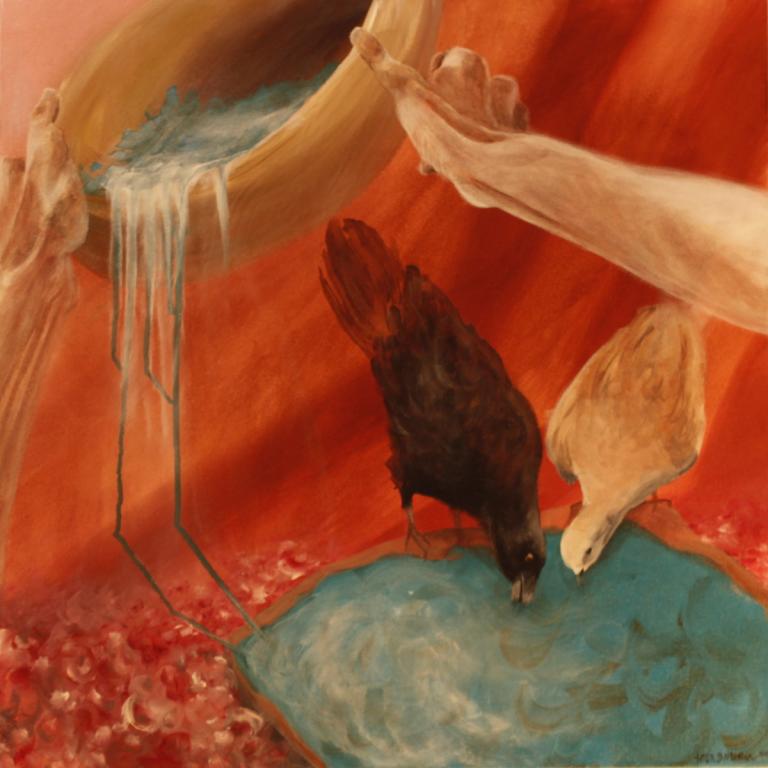 The response to the Portrait of Danu was overwhelmingly positive, even if the volume wasn’t what it is when I write on controversial topics. Friends and other commenters thought the painting was beautiful – I obviously agree.
But in a private comment, a very knowledgeable Pagan friend (who wishes to remain anonymous) said:
Thanks for the post on Danu today. it’s nice to see advocacy of devotion to a Mother Goddess from a polytheist perspective. Sometimes it seems like the nurturing Goddesses and Gods are largely ignored in polytheist-identified circles.
I hadn’t thought about that, but my friend is right. A quick, informal survey of devotional polytheist blogs, books, and social media conversations shows a focus on deities of sovereignty, of transformation, of inspiration, of crafts, and of battle. Mother Goddesses and other nurturing deities? It wouldn’t be accurate to say They’re absent, but They’re certainly in the minority.
Why is that, and what does it mean?
Aggressive Gods are more aggressive. If we accept the basic polytheistic concept that Gods are independent beings with goals, desires, and personalities of Their own, then it stands to reason that Gods with more aggressive personalities would be more active in calling priests and other devotees. Nurturing deities are worshipped less because They’ve called fewer worshippers.
Until someone figures out a way to survey Olympus and its many equivalents in other pantheons we have no way of knowing whether this is true or not, but it’s a reasonable projection.
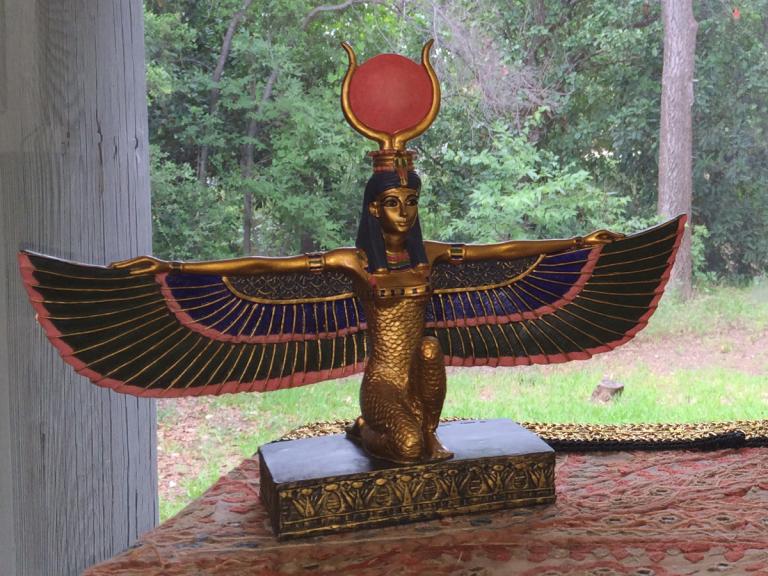 There aren’t that many nurturing deities. I’m reminded of the meme I see going around Facebook with some regularity: “Jesus loves you – Odin wants you to grow up.” Read the stories of the Old Gods – how many Great Mothers and Devoted Fathers do you see? There’s Isis, for sure. And probably Demeter. I see Danu as a nurturing Mother Goddess, but there are no stories of Her, so it’s hard to say.
The ancient world was a much more harsh place than the 21st century West. Perhaps our ancestors needed more nurturing deities, but what they wanted was victory over enemies, good hunts and harvests, wisdom, love, and a successful family to continue their names after they were gone. Nurturing adults wasn’t high on their list of priorities and that’s reflected in the Gods they worshipped.
The Gods are complex beings. We tend to put Gods into nice little boxes that explain who They are and what They do in just a few words. But how well can you be described in just a few words? How much more complex are Gods who are older, wiser, and more powerful than humans?
While there aren’t a lot of purely nurturing deities, many deities can be a loving mentor or caregiver… at least when They see fit to do so. Cernunnos is a Wild God who has shown me what it means to be strong and free, but I have experienced Him as a nurturing God as well. When I think of His role (one of His roles, not His complete identity) as God of the Forest and Lord of the Animals I can’t imagine how He could not be a nurturing God. If you love these places and the creatures who live in them, you want to nurture and protect them.
Some people take this too far. I’ve seen a Facebook group recently that worships Morrigan as a nurturing Mother Goddess. Morrigan is a very complex deity, but nothing I’ve read or experienced has given me any indication nurturing is part of who She is… unless you consider guiding souls of the dead to the Otherworld to be nurturing.
Those who seek nurturing Goddesses and Gods may never make it to devotional polytheism. I want to be careful not to imply that devotional polytheism is at the top of some hierarchy of theological models or that monotheism to duotheism to soft polytheism to hard polytheism is a natural progression from less-right to more-right. That was my experience, though, and given how entrenched monotheism is in our wider culture I think it’s a common experience.
Those who most value nurturing may find what they’re looking for in the Triple Goddess of Wicca or in a generic Great Mother. That many devotional polytheists find that view inadequate isn’t the point – the point is that many people who would “advocate devotion to a Mother Goddess from a polytheist perspective” simply never become polytheists.
Some of us desire aggressive Gods. I’m reluctant to expand on this because I haven’t given it much thought in my own life. Cernunnos has always been near me. Danu presented Herself to me at a time when I needed Her connection to Life. I approached Morrigan because I needed Her assistance – She later approached me to pay my debts. I understand the concept of of approaching a warrior deity because you have battles to fight and you want the strength of Herakles or the wisdom of Athena. But my friend’s comment implies some of us simply desire to have aggressive Gods in our lives, and I see how that conclusion could be reached.
And yet…
The Anomalous Thracian is a priest of Sabazios, who is described as:
a Solar-Chthonic nomadic Thracian mountain warrior horseman god of ecstasy, oracle and nocturnal thunderstorms, associated with all manner of mystical, totemic, and esoteric symbols, tools, and practices. Among His most prominent associations is the serpent, a spear or thyrsus-staff and His primary sacrificial animal, which seems to shift geo-culturally between the horned ram and the bull.
In other words, not a nurturing God.
This past Summer Solstice witnessed the 28 Miracles of Sabazios – 28 Argentine Boa Constrictors born from a Temple serpent who should not have been pregnant, but obviously was. They are considered the children of Sabazios and are treated “with the respect befitting living, incarnated divinities.”
That’s the religious side. The practical side is that there are now 28 new baby snakes that have to be cared for. Boas are among the snakes that give birth to live young, but they do not feed their young like mammals and birds.
While I’m no ophiophobe, I am not particularly fond of snakes. But I have greatly enjoyed the Anomalous Thracian’s on-going accounts of caring for the 28 Miracles: monitoring their progress, feeding them at appropriate times and taking extreme measures to provide for one young snake who didn’t care for the standard offerings. Building habitats, and figuring out the most ethical and most economical way to feed all these snakes. Keeping meticulous records for both practical and sacred purposes.
In other words, nurturing. Sabazios may not be a nurturer, but He has inspired nurturing in His priest.
So what does all this mean? Honestly, I’m not sure, even though I find this sort of theological speculation incredibly fascinating. I do think Mother Goddesses are underrepresented in devotional polytheism. It’s worthwhile to ask ourselves if They’re underrepresented in our lives, and if so, whether we might be better served by adding Someone to our regular devotions.
But I’m sure of one thing: what matters is that we honor the Gods who call to us, no matter who – and what – They are.
Previous Post

August 5, 2014
Pagan Priests, Pagan Ministers
Next Post

August 10, 2014 Rewilding Our World
Browse Our Archives
Select a Category Books Community CUUPS Druidry Foundations and Context Gods and Goddesses Magic Myth Nature Ritual Spiritual Practice Theology Travel Uncategorized Videos
Select a Month October 2026 September 2026 August 2026 July 2026 June 2026 May 2026 April 2026 March 2026 February 2026 January 2026 December 2025 November 2025 October 2025 September 2025 August 2025 July 2025 June 2025 May 2025 April 2025 March 2025 February 2025 January 2025 December 2024 November 2024 October 2024 September 2024 August 2024 July 2024 June 2024 May 2024 April 2024 March 2024 February 2024 January 2024 December 2023 November 2023 October 2023 September 2023 August 2023 July 2023 June 2023 May 2023 April 2023 March 2023 February 2023 January 2023 December 2022 November 2022 October 2022 September 2022 August 2022 July 2022 June 2022 May 2022 April 2022 March 2022 February 2022 January 2022 December 2021 November 2021 October 2021 September 2021 August 2021 July 2021 June 2021 May 2021 April 2021 March 2021 February 2021 January 2021 December 2020 November 2020 October 2020 September 2020 August 2020 July 2020 June 2020 May 2020 April 2020 March 2020 February 2020 January 2020 December 2019 November 2019 October 2019 September 2019 August 2019 July 2019 June 2019 May 2019 April 2019 March 2019 February 2019 January 2019 December 2018 November 2018 October 2018 September 2018 August 2018 July 2018 June 2018 May 2018 April 2018 March 2018 February 2018 January 2018 December 2017 November 2017 October 2017 September 2017 August 2017 July 2017 June 2017 May 2017 April 2017 March 2017 February 2017 January 2017 December 2016 November 2016 October 2016 September 2016 August 2016 July 2016 June 2016 May 2016 April 2016 March 2016 February 2016 January 2016 December 2015 November 2015 October 2015 September 2015 August 2015 July 2015 June 2015 May 2015 April 2015 March 2015 February 2015 January 2015 December 2014 November 2014 October 2014 September 2014 August 2014 July 2014 June 2014 May 2014 April 2014 March 2014 February 2014 January 2014 December 2013 November 2013 October 2013 September 2013 August 2013 July 2013 June 2013 May 2013 April 2013 March 2013 February 2013 January 2013 December 2012 November 2012 October 2012 September 2012 August 2012 July 2012 June 2012 May 2012 April 2012 March 2012 February 2012 January 2012 December 2011 November 2011 October 2011 September 2011 August 2011 July 2011 June 2011 May 2011 April 2011 March 2011 February 2011 January 2011 December 2010 November 2010 October 2010 September 2010 August 2010 July 2010 June 2010 May 2010 April 2010 March 2010 February 2010 January 2010 December 2009 November 2009 October 2009 September 2009 August 2009 July 2009 June 2009 May 2009 April 2009 March 2009 February 2009 January 2009 December 2008 November 2008 October 2008 September 2008 August 2008 July 2008 June 2008
Follow Us!
TAKE THE
Religious Wisdom Quiz
Which book comes immediately before Psalms in the Bible?
Select your answer to see how you score.
Job Proverbs Ecclesiastes Song of Songs
Related posts from John Beckett




What We Lose When “Ask AI” Becomes A...
TRENDING AT PATHEOS Pagan

The First Eucharistic Controversy: Christ’s Real Presence
For Catholics, the Eucharist is the source and summit of the Christian...

How to Make a Decision When You Can't...
Main point: It’s much more valuable to stay close to God so...

Archdiocese Hosts Military Marriage Retreat in Germany
RASTATT, Germany — The transient military lifestyle, with its frequent deployments and...

Nearly every morning, I make the drive to Detroit with my high-school-age...

The Real AI Story Is Adoption Without Trust
Artificial intelligence has crossed a political threshold. It is no longer a...

A new article, written by Jeff Lindsay and Gale L. Pooley,...
view all Pagan blogs
Ad-Free & Subscriber Log-In Subscription Support
- About Us
- 2026 Calendar
- Videos
- Podcasts
- Library of World Religions
- Faith In Media Tracker
- Advertise With Us
- Write for Us
- Privacy Policy
- Terms of Service
- Do Not Sell My Data
- Contact Us
- Radiant Digital
- Manage Newsletter Subscriptions
- Unsubscribe From Notifications
- Sitemap
Copyright 2008-2026, Patheos. All rights reserved.
Subscription Support Ad-Free & Subscriber Log-In
Follow Patheos