
BuddhistCatholicContemplativeEvangelicalGeneral ChristianHinduJewishLatter-day SaintMuslimNew VisionsProgressive Christian
Beliefs
- Buddhist
- Catholic
- Contemplative
- Evangelical
- General Christian
- Hindu
- Jewish
- Latter-day Saint
- More Voices
- Muslim
- New Visions
- Pagan
- Progressive Christian
Topics
- Religion News
- Food and Religion
- Sports and Religion
- Religious Art
- Religious Music and Entertainment
- Religious Events
- History and Religion
- Style and Religion
- Politics and Religion
- Women in Religion
- Recreation Outdoors and Religion
- Business Finance and Religion
- Careers Workplace and Religion
- Education and Religion
- Family Parenting and Religion
- Health Fitness and Religion
- Home and Religion
- Relationships and Religion
- Technology and Religion
- Travel and Religion
Columnists
- Buddhist Columnists
- Business Finance and Religion Columnists
- Careers Workplace and Religion Columnists
- Catholic Columnists
- Contemplative Columnists
- Education and Religion Columnists
- Evangelists Columnists
- Family Parenting and Religion Columnists
- General Christian Columnists
- Health Fitness and Religion Columnists
- Hindu Columnists
- History and Religion Columnists
- Home and Religion Columnists
- Jewish Columnists
- More Voices Columnists
- Latter Day Columnists
- Muslim Columnists
- New Visions Columnists
- Nonreligious Columnists
- Pagan Columnists
- Politics and Religion Columnists
- Progressive Columnists
- Recreation Outdoors and Religion Columnists
- Relationships and Religion Columnists
- Religion News Columnists
- Religious Art Columnists
- Religious Events Columnists
- Religious Music and Entertainment Columnists
- Sports and Religion Columnists
- Style and Religion Columnists
- Technology and Religion Columnists
- Travel and Religion Columnists
- Women in Religion Columnists
Resource Library
- 2026 Calendar
- Library of World Religions
- The 100 Most Holy Places on Earth
- Patheos Answers
- Podcasts
- Videos
- Faith Leaders Database
- Anglican Episcopalian
- Bahai
- Baptist
- Buddhism
- Christianity
- Confucianism
- Eastern Orthodoxy
- Hinduism
- Holiness and Pentecostal
- ISKCON
- Islam
- Judaism
- Lutheran
- Methodist
- The Church of Jesus Christ of Latter-day Saints
- New Age
- Paganism
- Presbytarian and Reformed
- Protestantism
- Religion Behind the Scenes
- Roman Catholic
- Scientology
- Shia Islam
- Sikhism
- Sufism
- Sunni Islam
- Taoism
- Zen
- See all religions
Research Tools
 Ad-Free & Subscriber Log-In Subscription Support
Ad-Free & Subscriber Log-In Subscription Support
Follow Patheos 

- Trending:
- Forgiveness
- |
- Marriage
- |
- Consciousness
- |
- Death Penalty
- |
- Election
- |
- Halloween

- Home
- Pagan
- Paying Pagan Clergy – An Organic Approach
Paying Pagan Clergy – An Organic Approach
Last updated on: July 8, 2014 at 5:30 pm by John Beckett
Paying Pagan Clergy – An Organic Approach 2014-07-08T17:30:51-06:00 John Beckett
Patheos Explore the world's faith through different perspectives on religion and spirituality! Patheos has the views of the prevalent religions and spiritualities of the world.
Over on Pagan Square, David Oliver Kling has a long essay advocating for full-time paid Pagan clergy. Though as I write this the essay itself has no comments, it’s generated quite a bit of discussion on social media. Most of it falls into two camps: those who say Pagan priests perform valuable services for which they should be compensated, and those whose sense of egalitarianism is threatened by anything resembling ecclesial hierarchy. Both camps have valid points, but I think both are missing the big picture.
Kling’s essay is a rebuttal of John Michael Greer’s Witches & Pagans column titled “A Bad Case of Methodist Envy: Copying Christian Models of Clergy is a Pagan Dead End.” I studied with John Michael Greer for three years and he ordained me as a Gnostic priest. This topic came up in my studies and we discussed it, though not in great detail. While I agree with Kling’s point that we should not reject something just because Christians do it, Greer’s argument that Pagans should take care to avoid mindlessly copying mainline Protestants (because they’re the primary religious model many of us are accustomed to) is a valid concern.
I have a lot of family and friends who are Methodists – they’re good people doing some good work, they just need to get their church on the right side of the marriage equality debate. But like the rest of the mainline Protestant denominations, they’ve been declining numerically since the 1950s with no end in sight. Copying their structures just because they’re familiar is not likely to be a successful strategy.
 This is harder than you might think. Fellow Patheos Pagan blogger Niki Whiting describes the difficulty of reimagining religion in her excellent essay on narrative theology, where she says “I’m still sailing in a monotheistic boat, only with polytheist paint. Paganism, of any kind, ought to be like diving in to the waters and swimming.”
That’s the situation where we find ourselves. Rather than going point to point like Kling’s essay, I’d rather talk about where we are and where we’re headed.
Voluntary Association
I wish it was unnecessary to say this, but every time this issue comes up someone goes on a rant about how every Pagan is a priest or priestess and clergy only exists to take people’s money and tell them what to do. So let me start by saying that if you’re happy with your back yard coven where everything is done by consensus, then I’m happy for you. If you’re happy being a solitary Druid and you have no need for a grove or an order, I’m happy for you.
But as Brendan Myers made clear in The Earth, The Gods and The Soul, Pagan ideas need Pagan institutions in order to flourish: “Without organizational support, ideas tend to take the form of strongly and/or poetically expressed propositions, and rather little else.” Those of us who are trying to grow that organizational support are doing so on a voluntary basis. If you don’t like it, you don’t have to participate and you can keep right on doing what you’re doing.
Define Priesthood
The only full-time “professional Pagans” I know are the handful of people who manage to make a very modest living with some combination of writing books, teaching classes, providing spiritual direction, and making personal appearances. While some of those folks are priests, I certainly wouldn’t use that mix of activities as a model for priesthood.
Last month I blogged about priesthood in a modern, Pagan, polytheistic setting. I said there are three main things priests do: serve the Gods, act as mediators for the Gods, and serve their communities. It’s been a popular post and if you haven’t read it I think it’s worth your time to do so, but for our purposes today what’s important is that none of those three things require a full-time commitment. Plenty of priests support their non-paying Pagan work with paying secular work.
That’s not the only way or even the best way. Obviously, if I didn’t have a regular job I’d have more time for my priestly work. Obviously, those who work demanding jobs or multiple jobs may not have much time and energy for any priestly work.
But the role of a priest is determined by the call of the Gods and the needs of the community, not by the community’s ability or willingness to support full-time religious professionals.
Who’s Going To Pay?
We can talk all we want about full-time paid Pagan clergy, but at this point all we can do is talk. From our mainline Protestant friends, we know it takes a congregation of about a hundred to be able to afford a full-time minister. Maybe a few less, if other expenses are low and the congregation has several high givers, but maybe a lot more, if the congregation has other priorities or if a significant percentage of its members are very young or very old.
How many local Pagan groups have a hundred members? We can’t copy the clergy model of the Methodists because we don’t have their numbers or their tradition of pledging and we aren’t going to have either any time soon.
It’s worth remembering that Gerald Gardner was living on a British civil service pension when he started promoting Wicca. OBOD founder Ross Nichols worked his entire life as an educator.
Reciprocity, Reciprocity, Reciprocity
The fact that our communities can’t pay for full-time priests doesn’t mean we should never pay our priests. If a priest performs a professional service for you, you should expect to pay for it, the same as you pay your doctor, plumber, or hair stylist. Creating and leading handfastings, child naming ceremonies, funerals and other rites of passage requires work.
If you’re a member of Denton CUUPS or one of my OBOD groups, I’ll be happy to officiate your wedding at no charge. You’re part of my community, you support the same institutions and events I support, and you’ve probably done favors for me over the years. But if you’re a more distant friend or acquaintance we don’t have that pre-established reciprocity. Show me you value my time as much as the time of the florist and the cake decorator.
My priestly friends know I’m not shy about pestering them with questions. Conversations with colleagues is one of the ways we’re advancing the general levels of skill, knowledge and competency within our various priesthoods. But if I ask one of them to do a service for me – divination, ritual work, counseling – then I expect to pay them for their time.
Likewise, I answer almost every e-mail I receive. If someone is looking for suggestions on how to get started in Druidry or how to discern which spiritual path they should follow or how to form a CUUPS group, I’ll do my best to help them find the right direction. But if you want my professional services in one-on-one spiritual direction or coaching or ritual work, expect to compensate me for my time. (I’ve also found that those with no financial investment tend to have significantly less commitment to their studies and practice, but that’s beyond the scope of this post.)
Growing Organic Structures
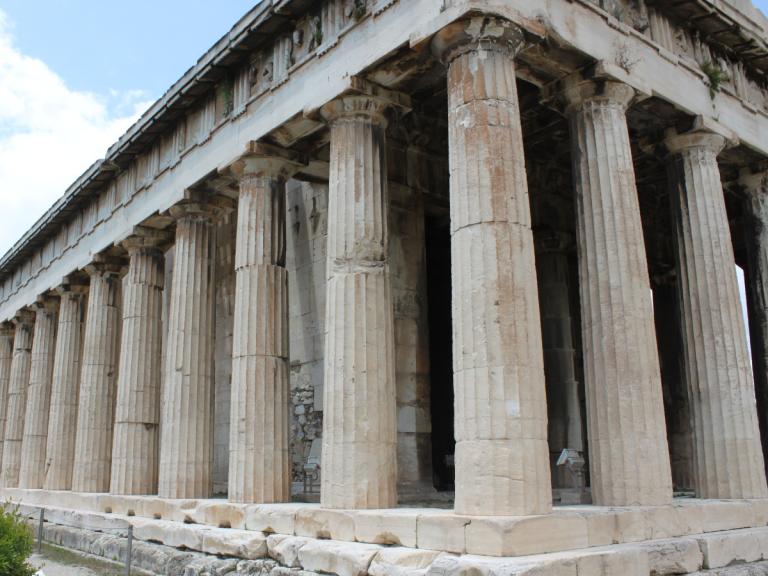 I love temples. I’d love to see paid Pagan clergy, even if I never draw a single paycheck from the local Assembly of the Old Gods. But permanent temples and paid clergy represent a huge investment in infrastructure, an investment that virtually no contemporary Pagan group can afford. The storefront Pagan community center model has been a resounding failure. There are many reasons for these failures (some general, some specific to each attempt), but the core problem is that they put means ahead of ends.
The primary goals of a priest are to honor the Gods and to serve the community. Making a living at priestcraft is different goal. It’s a valid goal, but it’s secondary to honoring the Gods and serving the community.
I believe the first sustainable full-time priesthood will emerge from a group that does an outstanding job of honoring the gods and serving the community.
Anyone can set up a shrine in their house. And if what is most important is honoring the Gods, then honoring Them at a household shrine you can afford is far better than overextending yourself for a temple you can’t afford.
When a priesthood grows to a certain point it will have the resources to expand its shrine. “You keep the statues and I’ll keep the wall hangings and someone else will keep the tables and on the high days we’ll rent a city park or a UU church and hold public services.”
We’re starting to see this now on a small scale – priesthoods devoted to specific deities or groups of deities are being formed. They’re developing devotional practices and establishing shrines: the Coru Cathubodua (dedicated to the Morrigan) and the rebuilding of the priesthood of Hermes are two examples. There are others I know of and I’m certain there are many more I know nothing about.
Some of these priesthoods will fail – they’ll misplace their priorities or misread the desires of their patron or never develop a critical mass to survive the death of their founders.
But some will succeed. Some will expand beyond the sworn priests to include lay followers – people with a devotion to the patron deity and Their goals but whose calling does not include priestly duties. Shrines will outgrow living rooms and back yards and find spaces of their own. Some of those dedicated spaces will become temples.
Eventually, the temples will grow to the point they’ll need a full-time priest or two, and their supporters will decide it’s important enough to make the kind of offerings necessary to make it possible.
Will those priests do the kind of officiating, counseling and advocacy work that Protestant ministers do today? Maybe, maybe not. Maybe the polytheistic priesthoods of the Pagan future will split the roles of celebrant and sacrificer. Maybe advocacy and activism will be seen as a lay function rather than a priestly one. Maybe the priests and priestesses of 2114 will resemble Buddhist monks more than Methodist ministers.
I don’t know – I can’t see that far into the future.
What I do know is that paid Pagan clergy is a means, not an end.
The ends, the goals of Pagan priesthood, are to serve the Gods, to mediate for the Gods, and to serve the community. Let’s focus on the ends and let the means sort themselves out.

the Beaumaris Gorsedd Circle, Anglesey, Wales – an old concept rebuilt for the present
Previous Post

July 6, 2014
Exercising Your Will
Next Post

July 10, 2014 A Meditation on Air
Browse Our Archives
Select a Category Books Community CUUPS Druidry Foundations and Context Gods and Goddesses Magic Myth Nature Ritual Spiritual Practice Theology Travel Uncategorized Videos
Select a Month October 2026 September 2026 August 2026 July 2026 June 2026 May 2026 April 2026 March 2026 February 2026 January 2026 December 2025 November 2025 October 2025 September 2025 August 2025 July 2025 June 2025 May 2025 April 2025 March 2025 February 2025 January 2025 December 2024 November 2024 October 2024 September 2024 August 2024 July 2024 June 2024 May 2024 April 2024 March 2024 February 2024 January 2024 December 2023 November 2023 October 2023 September 2023 August 2023 July 2023 June 2023 May 2023 April 2023 March 2023 February 2023 January 2023 December 2022 November 2022 October 2022 September 2022 August 2022 July 2022 June 2022 May 2022 April 2022 March 2022 February 2022 January 2022 December 2021 November 2021 October 2021 September 2021 August 2021 July 2021 June 2021 May 2021 April 2021 March 2021 February 2021 January 2021 December 2020 November 2020 October 2020 September 2020 August 2020 July 2020 June 2020 May 2020 April 2020 March 2020 February 2020 January 2020 December 2019 November 2019 October 2019 September 2019 August 2019 July 2019 June 2019 May 2019 April 2019 March 2019 February 2019 January 2019 December 2018 November 2018 October 2018 September 2018 August 2018 July 2018 June 2018 May 2018 April 2018 March 2018 February 2018 January 2018 December 2017 November 2017 October 2017 September 2017 August 2017 July 2017 June 2017 May 2017 April 2017 March 2017 February 2017 January 2017 December 2016 November 2016 October 2016 September 2016 August 2016 July 2016 June 2016 May 2016 April 2016 March 2016 February 2016 January 2016 December 2015 November 2015 October 2015 September 2015 August 2015 July 2015 June 2015 May 2015 April 2015 March 2015 February 2015 January 2015 December 2014 November 2014 October 2014 September 2014 August 2014 July 2014 June 2014 May 2014 April 2014 March 2014 February 2014 January 2014 December 2013 November 2013 October 2013 September 2013 August 2013 July 2013 June 2013 May 2013 April 2013 March 2013 February 2013 January 2013 December 2012 November 2012 October 2012 September 2012 August 2012 July 2012 June 2012 May 2012 April 2012 March 2012 February 2012 January 2012 December 2011 November 2011 October 2011 September 2011 August 2011 July 2011 June 2011 May 2011 April 2011 March 2011 February 2011 January 2011 December 2010 November 2010 October 2010 September 2010 August 2010 July 2010 June 2010 May 2010 April 2010 March 2010 February 2010 January 2010 December 2009 November 2009 October 2009 September 2009 August 2009 July 2009 June 2009 May 2009 April 2009 March 2009 February 2009 January 2009 December 2008 November 2008 October 2008 September 2008 August 2008 July 2008 June 2008
Follow Us!
TAKE THE
Religious Wisdom Quiz
How did Job's life end according to the book?
Select your answer to see how you score.
He became a king He went to Egypt He died in misery He lived many more years and prospered
Related posts from John Beckett


The Vampire Films of Jean Rollin


Bo French Doesn’t Understand Texas
TRENDING AT PATHEOS Pagan

When Halloween Unmasks Married Hearts
Written by Dr. David K. Ewen from Eternal Truth Bible College Behind...

Aristotle. He’s been called the father of logic, the father of the...

Methodist Central Hall and Westminster Abbey
Situated on the same square is Methodist Central Hall and Westminster Abbey. ...

57th Dove Awards Honor Dolly Parton, Crown New...
On gospel music’s biggest night, the 57th annual GMA Dove Awards honored...

The First Eucharistic Controversy: Christ’s Real Presence
For Catholics, the Eucharist is the source and summit of the Christian...

What a Stop Sign Can Teach Us About...
How to Make a Decision When You Can't Hear God Main point:...
view all Pagan blogs
Ad-Free & Subscriber Log-In Subscription Support
- About Us
- 2026 Calendar
- Videos
- Podcasts
- Library of World Religions
- Faith In Media Tracker
- Advertise With Us
- Write for Us
- Privacy Policy
- Terms of Service
- Do Not Sell My Data
- Contact Us
- Radiant Digital
- Manage Newsletter Subscriptions
- Unsubscribe From Notifications
- Sitemap
Copyright 2008-2026, Patheos. All rights reserved.
Subscription Support Ad-Free & Subscriber Log-In
Follow Patheos