
BuddhistCatholicContemplativeEvangelicalGeneral ChristianHinduJewishLatter-day SaintMuslimNew VisionsProgressive Christian
Beliefs
- Buddhist
- Catholic
- Contemplative
- Evangelical
- General Christian
- Hindu
- Jewish
- Latter-day Saint
- More Voices
- Muslim
- New Visions
- Pagan
- Progressive Christian
Topics
- Religion News
- Food and Religion
- Sports and Religion
- Religious Art
- Religious Music and Entertainment
- Religious Events
- History and Religion
- Style and Religion
- Politics and Religion
- Women in Religion
- Recreation Outdoors and Religion
- Business Finance and Religion
- Careers Workplace and Religion
- Education and Religion
- Family Parenting and Religion
- Health Fitness and Religion
- Home and Religion
- Relationships and Religion
- Technology and Religion
- Travel and Religion
Columnists
- Buddhist Columnists
- Business Finance and Religion Columnists
- Careers Workplace and Religion Columnists
- Catholic Columnists
- Contemplative Columnists
- Education and Religion Columnists
- Evangelists Columnists
- Family Parenting and Religion Columnists
- General Christian Columnists
- Health Fitness and Religion Columnists
- Hindu Columnists
- History and Religion Columnists
- Home and Religion Columnists
- Jewish Columnists
- More Voices Columnists
- Latter Day Columnists
- Muslim Columnists
- New Visions Columnists
- Nonreligious Columnists
- Pagan Columnists
- Politics and Religion Columnists
- Progressive Columnists
- Recreation Outdoors and Religion Columnists
- Relationships and Religion Columnists
- Religion News Columnists
- Religious Art Columnists
- Religious Events Columnists
- Religious Music and Entertainment Columnists
- Sports and Religion Columnists
- Style and Religion Columnists
- Technology and Religion Columnists
- Travel and Religion Columnists
- Women in Religion Columnists
Resource Library
- 2026 Calendar
- Library of World Religions
- The 100 Most Holy Places on Earth
- Patheos Answers
- Podcasts
- Videos
- Faith Leaders Database
- Anglican Episcopalian
- Bahai
- Baptist
- Buddhism
- Christianity
- Confucianism
- Eastern Orthodoxy
- Hinduism
- Holiness and Pentecostal
- ISKCON
- Islam
- Judaism
- Lutheran
- Methodist
- The Church of Jesus Christ of Latter-day Saints
- New Age
- Paganism
- Presbytarian and Reformed
- Protestantism
- Religion Behind the Scenes
- Roman Catholic
- Scientology
- Shia Islam
- Sikhism
- Sufism
- Sunni Islam
- Taoism
- Zen
- See all religions
Research Tools
 Ad-Free & Subscriber Log-In Subscription Support
Ad-Free & Subscriber Log-In Subscription Support
Follow Patheos 

- Trending:
- Forgiveness
- |
- Marriage
- |
- Consciousness
- |
- Death Penalty
- |
- Election
- |
- Halloween

- Home
- Pagan
- Newgrange
Newgrange
Last updated on: March 30, 2014 at 3:00 pm by John Beckett
Newgrange 2014-03-29T11:19:32-06:00 John Beckett
Patheos Explore the world's faith through different perspectives on religion and spirituality! Patheos has the views of the prevalent religions and spiritualities of the world.
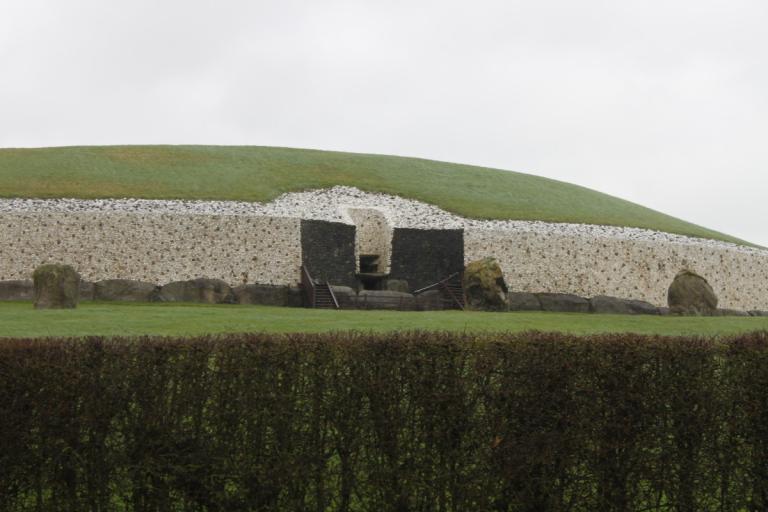
Newgrange
Our original plans called for us to visit Newgrange on the Spring Equinox. While Newgrange is famously aligned to sunrise on the Winter Solstice, nearby Knowth (which is aligned to the Equinoxes – maybe) doesn’t open to the public till April, and just being in the Brú Na Bóinne area seemed special enough. Unfortunately, mechanical problems with a rental car forced us to change our plans, and we ended up visiting Newgrange on a bus tour as the last major stop of our trip.
That was a disappointment for our Equinox observations, but neither the rescheduled date nor the rain and wind on the day of our visit could dampen the wonder and awe of Newgrange.
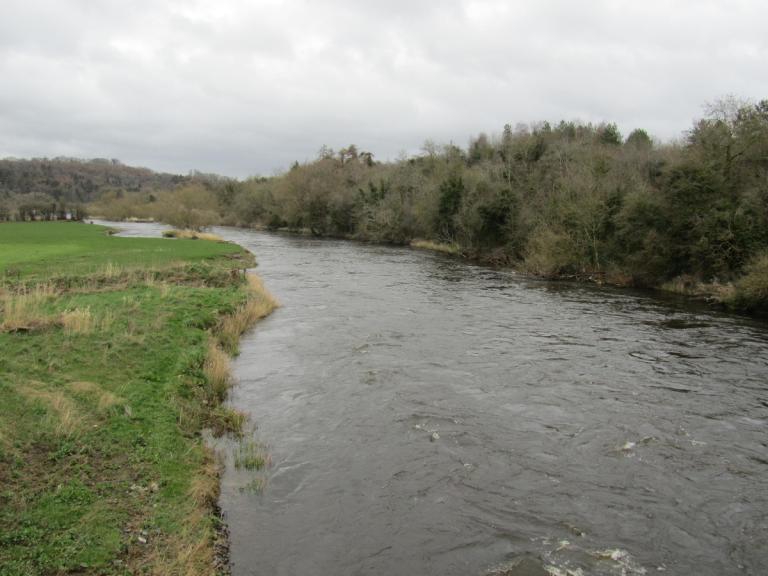
the River Boyne
Brú Na Bóinne (the name means “palace of the Boyne”) dates to about 3200 BCE – older than both Stonehenge and the pyramids of Egypt. There are about 40 burial mounds in the area, of which Newgrange is the largest and best explored. Many of the smaller mounds haven’t been excavated. The name Newgrange means “new farm” – the name was given to the area by Cistercian monks in the Middle Ages to differentiate it from their old farms.
Newgrange was built in the Neolithic period, without metal tools. Some of the stones came from a beach 12 miles away, while others were brought from more distant locations. No mortar was used in the construction – after over 5000 years it still doesn’t leak.
Newgrange is a passage tomb laid out in cruciform shape. The long entranceway climbs about two meters, though I wouldn’t have noticed it if the guide hadn’t pointed it out – the elevation change is what allows the sunlight entering the roofbox to illuminate the floor on the Winter Solstice. The entrance passage opens onto a main chamber with three side chambers to the left, center, and right. Each chamber has a basin stone that was likely used to hold the remains of the dead.
We don’t know with certainty why Newgrange was built or how it was used, and the Newgrange guide did an excellent job of differentiating between what we know and what we think is likely. My favorite explanation is that those who died during the year were placed in the tomb. On the Winter Solstice, the sunlight illuminated the remains, sending the dead on to the Otherworld. Then the remains were removed and buried elsewhere.
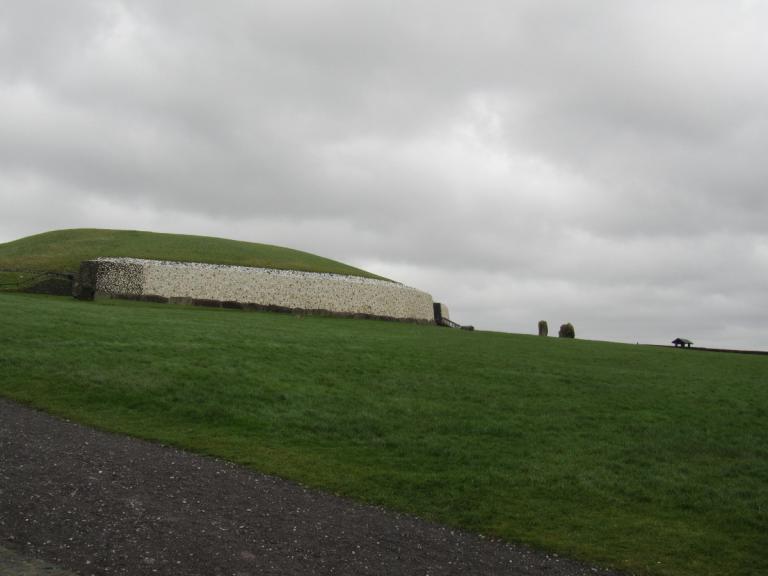
Newgrange, viewed from the site entrance
And then one year, people simply stopped coming. Again, we don’t know why. What we do know is that no living human entered the tomb for around 3500 years, until it was rediscovered in 1699. The roof box wasn’t rediscovered until 1967.
Today, access to Newgrange is allowed only via the Brú Na Bóinne Visitor Centre. Tickets are sold for timed access, to limit the number of people in the tomb and the impact victors can have on the site. The tour takes about an hour, of which perhaps 15 minutes is actually inside the mound.
As you walk up a fairly steep hill to the entrance, the size and beauty of the mound is overwhelming. The white quartz stones on the front are a reconstruction by Professor Michael O’Kelly in the 1970s. The stones were found at the site – the ancient people obviously used them for something. What we have is O’Kelly’s best guess – others have speculated the quartz stones formed a paved walkway. I like O’Kelly’s reconstruction – it may not be authentic, but it makes the mound look more like a temple.
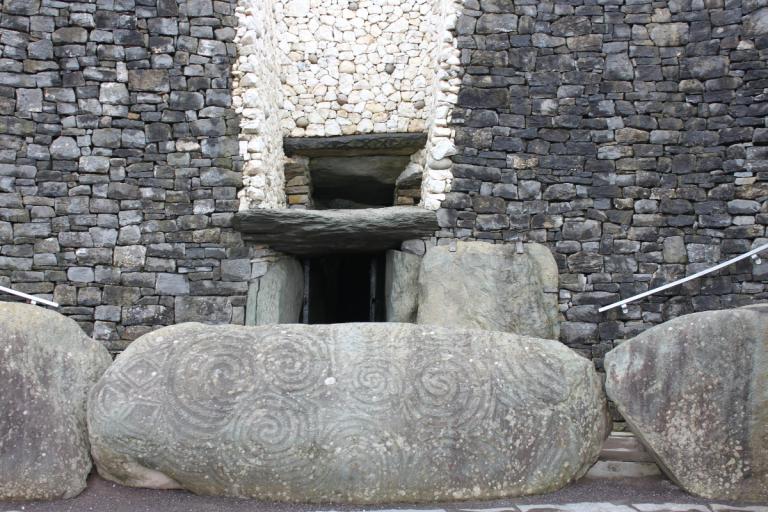
the entrance kerbstone
The famous kerbstone with spirals and lozenges guards the entrance. In ancient times the only way to get in was by climbing over the kerbstone – now there’s a nice set of wooden stairs. What do the carvings mean? Again, we don’t know. Perhaps it’s just a pretty design. Perhaps it’s a map of the area. Perhaps it’s a representation of the cosmos. My favorite speculation is that it’s a representation of what is seen during certain altered states of consciousness.
Photography is strictly forbidden inside the tomb. The passage is low and tight, but not excessively so. The carvings on the inside are fascinating, if not as impressive as the spirals of the main kerbstone. After everyone got in, the guide pointed out some of the highlights and talked about what we do and don’t know about Newgrange. Her speculation (clearly labeled as such) on the possible religious aspects of the tomb struck me as honest, informed, and most of all, respectful.
Electric lights have been installed inside the tomb, to allow safe entry and to illuminate the main chambers. For a brief moment, the lights were turned off, allowing everyone to experience the total darkness. Then a light representing the Sun was turned on, giving an approximation of what it’s like to be inside Newgrange on the morning of the Winter Solstice.
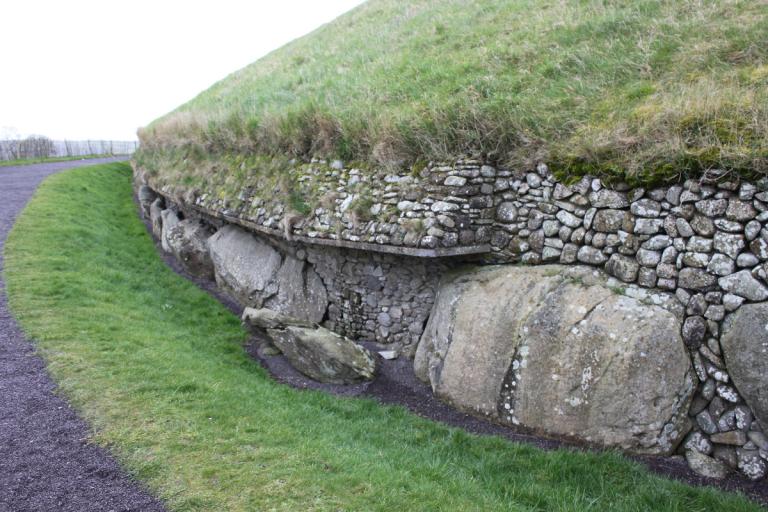
kerbstones on the rear of Newgrange
My strongest experience of Newgrange wasn’t the recreation of the Sun illuminating the passage – that was too brief and there were too many people inside the chamber. My strongest experience was the mound itself. While touching the artwork is forbidden (and with good reason), it’s almost impossible to not touch the stone walls – there were too many people in too small a space.
The stones felt soft and permeable, like I could sink into them and fall straight into the Otherworld. They were inviting and welcoming. This is a place of my ancestors: perhaps my ancestors of blood, certainly my ancestors of spirit. It calls me to remember them, to connect to them, to honor them… and to remember that some day, I will join them.
I had a similar experience at two tombs on Anglesey, though not at some of the others.
It’s important to remember – at least, it’s important to me – that while Newgrange may have been a temple, it was not used for daily or weekly worship. It was a special place entered only at special times… and likely, only by special people. I’m joyously thankful I got to visit Newgrange, but my work is here, in this world, among the living.
Blessings to those who built this marvelous place, to those who – however briefly – inhabited it, to those who preserved and restored it, and to those maintain it as a treasure for generations to come.
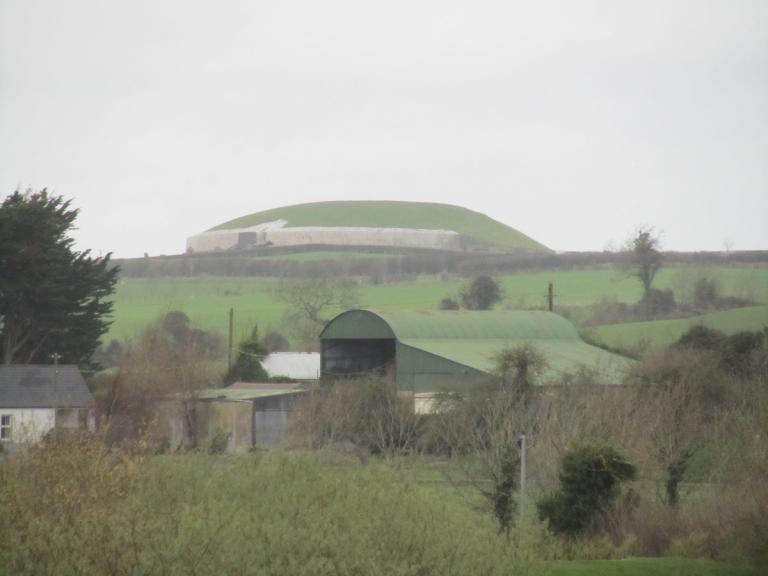
Newgrange, as seen from the entrance to the Visitor Centre
Previous Post
March 27, 2014
A Journey To The Isles
Next Post
April 1, 2014 Anglesey
Browse Our Archives
Select a Category Books Community CUUPS Druidry Foundations and Context Gods and Goddesses Magic Myth Nature Ritual Spiritual Practice Theology Travel Uncategorized Videos
Select a Month October 2026 September 2026 August 2026 July 2026 June 2026 May 2026 April 2026 March 2026 February 2026 January 2026 December 2025 November 2025 October 2025 September 2025 August 2025 July 2025 June 2025 May 2025 April 2025 March 2025 February 2025 January 2025 December 2024 November 2024 October 2024 September 2024 August 2024 July 2024 June 2024 May 2024 April 2024 March 2024 February 2024 January 2024 December 2023 November 2023 October 2023 September 2023 August 2023 July 2023 June 2023 May 2023 April 2023 March 2023 February 2023 January 2023 December 2022 November 2022 October 2022 September 2022 August 2022 July 2022 June 2022 May 2022 April 2022 March 2022 February 2022 January 2022 December 2021 November 2021 October 2021 September 2021 August 2021 July 2021 June 2021 May 2021 April 2021 March 2021 February 2021 January 2021 December 2020 November 2020 October 2020 September 2020 August 2020 July 2020 June 2020 May 2020 April 2020 March 2020 February 2020 January 2020 December 2019 November 2019 October 2019 September 2019 August 2019 July 2019 June 2019 May 2019 April 2019 March 2019 February 2019 January 2019 December 2018 November 2018 October 2018 September 2018 August 2018 July 2018 June 2018 May 2018 April 2018 March 2018 February 2018 January 2018 December 2017 November 2017 October 2017 September 2017 August 2017 July 2017 June 2017 May 2017 April 2017 March 2017 February 2017 January 2017 December 2016 November 2016 October 2016 September 2016 August 2016 July 2016 June 2016 May 2016 April 2016 March 2016 February 2016 January 2016 December 2015 November 2015 October 2015 September 2015 August 2015 July 2015 June 2015 May 2015 April 2015 March 2015 February 2015 January 2015 December 2014 November 2014 October 2014 September 2014 August 2014 July 2014 June 2014 May 2014 April 2014 March 2014 February 2014 January 2014 December 2013 November 2013 October 2013 September 2013 August 2013 July 2013 June 2013 May 2013 April 2013 March 2013 February 2013 January 2013 December 2012 November 2012 October 2012 September 2012 August 2012 July 2012 June 2012 May 2012 April 2012 March 2012 February 2012 January 2012 December 2011 November 2011 October 2011 September 2011 August 2011 July 2011 June 2011 May 2011 April 2011 March 2011 February 2011 January 2011 December 2010 November 2010 October 2010 September 2010 August 2010 July 2010 June 2010 May 2010 April 2010 March 2010 February 2010 January 2010 December 2009 November 2009 October 2009 September 2009 August 2009 July 2009 June 2009 May 2009 April 2009 March 2009 February 2009 January 2009 December 2008 November 2008 October 2008 September 2008 August 2008 July 2008 June 2008
Follow Us!
TAKE THE
Religious Wisdom Quiz
Cast your bread upon the waters and after many days you will find it again. What does this encourage?
Select your answer to see how you score.
Fishing Generosity Patience Sharing
Related posts from John Beckett




What We Lose When “Ask AI” Becomes A...
TRENDING AT PATHEOS Pagan

When Halloween Unmasks Married Hearts
Written by Dr. David K. Ewen from Eternal Truth Bible College Behind...

Aristotle. He’s been called the father of logic, the father of the...

Methodist Central Hall and Westminster Abbey
Situated on the same square is Methodist Central Hall and Westminster Abbey. ...

57th Dove Awards Honor Dolly Parton, Crown New...
On gospel music’s biggest night, the 57th annual GMA Dove Awards honored...

The First Eucharistic Controversy: Christ’s Real Presence
For Catholics, the Eucharist is the source and summit of the Christian...

What a Stop Sign Can Teach Us About...
How to Make a Decision When You Can't Hear God Main point:...
view all Pagan blogs
Ad-Free & Subscriber Log-In Subscription Support
- About Us
- 2026 Calendar
- Videos
- Podcasts
- Library of World Religions
- Faith In Media Tracker
- Advertise With Us
- Write for Us
- Privacy Policy
- Terms of Service
- Do Not Sell My Data
- Contact Us
- Radiant Digital
- Manage Newsletter Subscriptions
- Unsubscribe From Notifications
- Sitemap
Copyright 2008-2026, Patheos. All rights reserved.
Subscription Support Ad-Free & Subscriber Log-In
Follow Patheos