
BuddhistCatholicContemplativeEvangelicalGeneral ChristianHinduJewishLatter-day SaintMuslimNew VisionsProgressive Christian
Beliefs
- Buddhist
- Catholic
- Contemplative
- Evangelical
- General Christian
- Hindu
- Jewish
- Latter-day Saint
- More Voices
- Muslim
- New Visions
- Pagan
- Progressive Christian
Topics
- Religion News
- Food and Religion
- Sports and Religion
- Religious Art
- Religious Music and Entertainment
- Religious Events
- History and Religion
- Style and Religion
- Politics and Religion
- Women in Religion
- Recreation Outdoors and Religion
- Business Finance and Religion
- Careers Workplace and Religion
- Education and Religion
- Family Parenting and Religion
- Health Fitness and Religion
- Home and Religion
- Relationships and Religion
- Technology and Religion
- Travel and Religion
Columnists
- Buddhist Columnists
- Business Finance and Religion Columnists
- Careers Workplace and Religion Columnists
- Catholic Columnists
- Contemplative Columnists
- Education and Religion Columnists
- Evangelists Columnists
- Family Parenting and Religion Columnists
- General Christian Columnists
- Health Fitness and Religion Columnists
- Hindu Columnists
- History and Religion Columnists
- Home and Religion Columnists
- Jewish Columnists
- More Voices Columnists
- Latter Day Columnists
- Muslim Columnists
- New Visions Columnists
- Nonreligious Columnists
- Pagan Columnists
- Politics and Religion Columnists
- Progressive Columnists
- Recreation Outdoors and Religion Columnists
- Relationships and Religion Columnists
- Religion News Columnists
- Religious Art Columnists
- Religious Events Columnists
- Religious Music and Entertainment Columnists
- Sports and Religion Columnists
- Style and Religion Columnists
- Technology and Religion Columnists
- Travel and Religion Columnists
- Women in Religion Columnists
Resource Library
- 2026 Calendar
- Library of World Religions
- The 100 Most Holy Places on Earth
- Patheos Answers
- Podcasts
- Videos
- Faith Leaders Database
- Anglican Episcopalian
- Bahai
- Baptist
- Buddhism
- Christianity
- Confucianism
- Eastern Orthodoxy
- Hinduism
- Holiness and Pentecostal
- ISKCON
- Islam
- Judaism
- Lutheran
- Methodist
- The Church of Jesus Christ of Latter-day Saints
- New Age
- Paganism
- Presbytarian and Reformed
- Protestantism
- Religion Behind the Scenes
- Roman Catholic
- Scientology
- Shia Islam
- Sikhism
- Sufism
- Sunni Islam
- Taoism
- Zen
- See all religions
Research Tools
 Ad-Free & Subscriber Log-In Subscription Support
Ad-Free & Subscriber Log-In Subscription Support
Follow Patheos 

- Trending:
- Forgiveness
- |
- Marriage
- |
- Consciousness
- |
- Death Penalty
- |
- Election
- |
- Halloween

- Home
- Pagan
- The Earth, The Gods and The Soul
The Earth, The Gods and The Soul
Last updated on: February 6, 2014 at 4:27 pm by John Beckett
The Earth, The Gods and The Soul 2014-02-06T16:27:02-06:00 John Beckett
Patheos Explore the world's faith through different perspectives on religion and spirituality! Patheos has the views of the prevalent religions and spiritualities of the world.
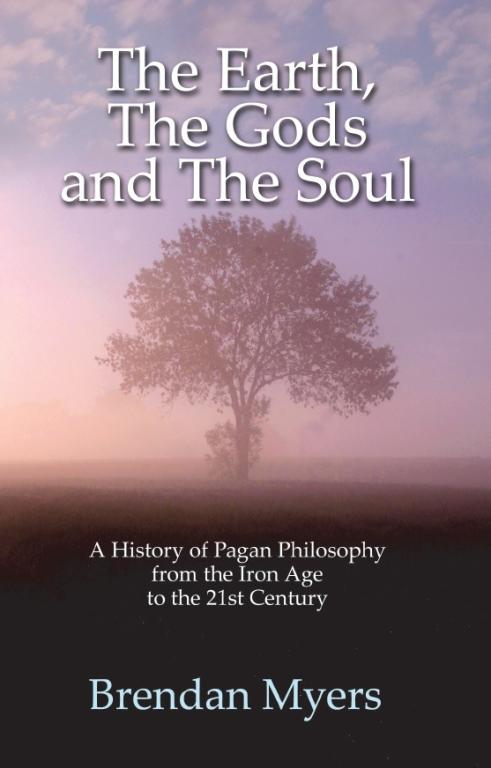 The Earth, The Gods and The Soul – A History of Pagan Philosophy from the Iron Age to the 21st Century
by Brendan Myers
published by Moon Books, November 2013
326 pages
$15.74 in paperback, $7.69 on Kindle
The days when the English majors’ charge of “barbarian engineer” was accurate were over many years ago. Yes, I spent most of my time in college studying technical and business subjects, but my education didn’t stop with graduation. Between reading, listening, traveling, and a lot of thinking, I’ve learned enough history, psychology, anthropology, linguistics, religion, art and music to more than make up for my lack of liberal arts coursework.
Not so with philosophy. Other than what I’ve picked up in my religious studies, my philosophical education doesn’t extend much beyond two sophomore level courses I took 30 years ago. It’s not that I don’t like philosophy so much as there’s always been something I’d rather read instead. Still, it’s a hole in my working knowledge – a hole that needs to be filled.

Dr. Brendan Myers
So when I heard Brendan Myers preview his new book The Earth, The Gods and The Soul – A History of Pagan Philosophy from the Iron Age to the 21st Century on The Wigglian Way podcast back in September, I knew I’d have to read it. I just had to find the time.
I finally made the time and I’m very glad I did.
The Earth, The Gods and The Soul is organized into seven major divisions: an “Overture” and six “Movements” based roughly on time. Within these movements are 63 sections on key philosophers and philosophical ideas, some a page or two, others six or eight. The structure makes for very easy reading.
A small book that covers over 2500 years of thought can’t dive too deeply into any of it. Brendan clearly understands he’s writing for a general audience so he begins with a statement of purpose:
The point of a philosophical spirit is to rely primarily upon one’s own thinking. The philosophical spirit is not satisfied to simply accept what it is told, no matter how much prestige the teller seems to have. This is true even if the teller is a god.
No one is served or benefitted by believing in false or faulty ideas.
The first movement “Brainy Barbarians” covers the thinking of the Anglo-Saxons, the Norse, and the Irish. The material we have from them isn’t exactly philosophy – it doesn’t wrestle with ideas and test them with reason. But it does present their wisdom and ethics – their ideas about what is good and right.
When it comes to the ancient Druids, Brendan says “there are things that are known, if not with certainty.” He presents no new information about them, but unlike some historians, he draws reasonable conclusions based on what we do know – an approach that as a modern Druid I find helpful.
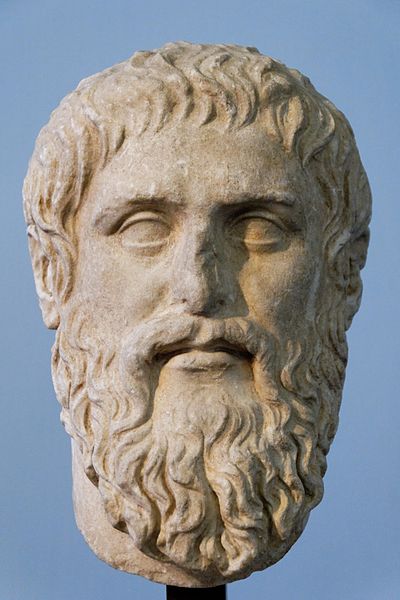
Plato – photo by Marie-Lan Nguyen via Wikimedia Commons

“Philosophy and the City” covers the well-known (and some not-so-well-known) philosophers of Greece and Rome: Pythagoras, Heraclitus, Socrates, Plato, and Aristotle. Myers gives a section to Diotima of Mantinea (4th century BCE), one of the very few women philosophers of her era – “Socrates describes her as one of his most influential teachers.” He also covers three of the major philosophical schools: the Stoics, the Epicureans, the Neo-Platonists.
This is where The Earth, The Gods and The Soul was most helpful to me. I had heard of most of these philosophers, but I couldn’t tell you much about them. The book gave me a high-level look at them and their ideas, plus a look at how those ideas have influenced philosophers, theologians and ordinary people down to this day.
Most of us know that Christianity became the official religion of the Roman Empire in 380 CE. What we forget is that pagan philosophy continued actively for another 200 years, until “in 590 CE, Emperor Justinian I ordered the closure of all the philosophy schools, because he thought they were an intellectual threat to Christian teachings.” At this point pagan philosophy was frozen. It popped up occasionally – usually when Christian writers were accused of being insufficiently orthodox – but it was no longer a living thing.
Pagan philosophy began to return during the Renaissance. Myers quotes historian Jocelyn Godwin, who said “I do not suppose that anyone in the fifteenth or sixteenth centuries was a pagan, in the sense of rejecting Christianity and adopting a pre-Christian religion… What I do suggest is that some people during this period ‘dreamed’ of being pagans.”
I like Brendan’s explanation better:
To put it simply, people got tired of the austerities of Christian discipline and the misanthropy of the Doctrine of Original Sin. They maintained the appearance of being committed Christians, of course … But they dramatized for themselves a world that never knew Original Sin, and so still existed in a state of original blessing. In that imagined world it was no sin to ‘dance, sing, feast, make music, and love’ … and despite the heroic efforts of puritanical counter-Renaissance activists like Savonarola, the box would never be shut again.
“Pantheism in the Age of Reason” covers the philosophers who are the forerunners of modern Paganism. John Toland (1670-1722) described God as “the Mind, if you please, and the Soul of the universe … not separated from the Universe itself, but by a Distinction of Reason alone.” Ross Nichols considered Toland the first Chosen Chief in the line that would become the Order of Bard, Ovates and Druids. There is no evidence that’s true, but if Toland wasn’t a Druid, he was certainly Druid-friendly.
This movement also includes the American thinkers Ralph Waldo Emerson, Henry David Thoreau, John Muir, and Walt Whitman. Their ideas on Nature and the sacredness of Nature still influence religious and secular environmentalists alike.
“Resurgence, Reinvention, Rebirth” covers the people behind the beginnings of modern Paganism in the late 19th and early 20th centuries: Helena Blavatsky, James Frazer, Robert Graves and Gerald Gardner. Myers deconstructs “The Charge of the Goddess,” which he credits to Doreen Valiente, borrowing from Theosophy, Leland’s Aradia, and Aleister Crowley.
The Charge of the Goddess asserts universalism, pantheism, immanence, virtue ethics, neighborly love, intelligent self-interest, a little bit of humanism, and some good old fashioned hedonism. A fitting testament, perhaps, for a self-consciously pagan movement. Interestingly, almost all these ideas were in some way represented in the ancient pagan world.
As for Uncle Al himself, Brendan says “The only part of Crowley’s work which seems to me genuinely original is the cloth of occultism and magic in which he dresses everything.” He also says something that fits far too many writers and leaders in all religions:
One must remember Nietzsche’s warning: ‘Those who know they are deep strive for clarity. Those who would like to seem deep to the crowd strive for obscurity.’
“The Birth of American Feminist Witchcraft” marked a major event in Pagan philosophy.
After Justinian closed the philosophy schools in the sixth century, pagan philosophy lost its access to institutions, and thus lost its capacity to sustain a developing tradition. But in the 1970s, with the introduction of second-wave feminism, that capacity returned.
With the support of these new institutions, Pagan philosophy was no longer limited to repeating the ideas of the classics:
Pagan philosophy from the dark ages until the middle of the twentieth century had been about only three things: pantheism, Neo-Platonism, and Humanism, corresponding to the earth, the gods, and the soul. Now it could also be about a fourth thing: power, especially the dynamics of male and female power, and the just and unjust exercise of political power.
The other major stream in revived Pagan philosophy is “The Rise of Eco-Spirituality.” Though much of tribal religion is focused on the tribe itself, “ancient people sometimes worshipped the actual features of their natural landscapes … religious devotion to natural immensities wasn’t just a figure of speech … But by the late Roman period the eye of piety had mostly turned away from the earth.”
This began to change partly in response to the wild beauty of the New World and partly in response to the pollution and desecration brought on by the Industrial Revolution. Myers quotes Aldo Leopold (1887-1948), who said “a thing is right when it tends to preserve the integrity, stability, and beauty of the biotic community. It is wrong when it tends otherwise.”
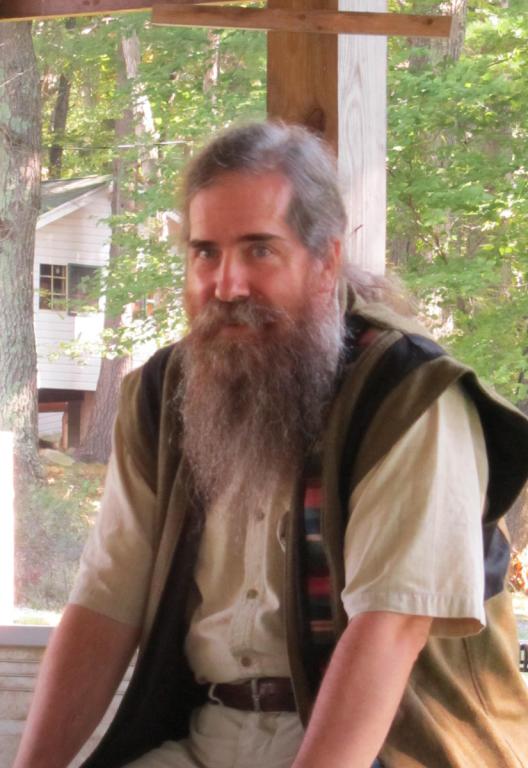
John Michael Greer
“Living Voices” is a survey of influential Pagans and Pagan ideas alive today. It includes the rise of virtue ethics, Starhawk and political activism, Emma Restall Orr and animism, John Michael Greer and A World Full of Gods, Michael York, Vivianne Crowley, and Patheos Pagan contributor Gus diZerega.
The final movement “A Commentary” reiterates the need for functioning institutions: “Without organizational support, ideas tend to take the form of strongly and/or poetically expressed propositions, and rather little else.”
It also speaks of “The Will to Dwell in an Enchanted World”
The world is enchanted … its mysteriousness is not its hidden-ness: its mysteriousness is in the way that however much we discover, there is always more to discover … an interesting world is a world with an inexhaustible supply of revelation and immensity. I think that people cannot live without something in the world that is interesting like this.
The Earth, The Gods and The Soul is the philosophy book I needed to read. It gave me a good introduction to classical philosophy, taught me some key ideas, gave me references to follow for more in-depth reading, and perhaps most importantly, showed me the philosophical heritage of many of the ideas I live by and promote here on this blog.
I usually end a book review with a quote from the author, but in this case I think it’s better to end with a quote from ADF Archdruid Kirk Thomas, who, in his review on Amazon, said “The only question for modern Pagans becomes, where do we go from here?”
Previous Post

February 4, 2014
Why I Am a Devotional Polytheist
Next Post

February 9, 2014 Thoughts on Death
Browse Our Archives
Select a Category Books Community CUUPS Druidry Foundations and Context Gods and Goddesses Magic Myth Nature Ritual Spiritual Practice Theology Travel Uncategorized Videos
Select a Month October 2026 September 2026 August 2026 July 2026 June 2026 May 2026 April 2026 March 2026 February 2026 January 2026 December 2025 November 2025 October 2025 September 2025 August 2025 July 2025 June 2025 May 2025 April 2025 March 2025 February 2025 January 2025 December 2024 November 2024 October 2024 September 2024 August 2024 July 2024 June 2024 May 2024 April 2024 March 2024 February 2024 January 2024 December 2023 November 2023 October 2023 September 2023 August 2023 July 2023 June 2023 May 2023 April 2023 March 2023 February 2023 January 2023 December 2022 November 2022 October 2022 September 2022 August 2022 July 2022 June 2022 May 2022 April 2022 March 2022 February 2022 January 2022 December 2021 November 2021 October 2021 September 2021 August 2021 July 2021 June 2021 May 2021 April 2021 March 2021 February 2021 January 2021 December 2020 November 2020 October 2020 September 2020 August 2020 July 2020 June 2020 May 2020 April 2020 March 2020 February 2020 January 2020 December 2019 November 2019 October 2019 September 2019 August 2019 July 2019 June 2019 May 2019 April 2019 March 2019 February 2019 January 2019 December 2018 November 2018 October 2018 September 2018 August 2018 July 2018 June 2018 May 2018 April 2018 March 2018 February 2018 January 2018 December 2017 November 2017 October 2017 September 2017 August 2017 July 2017 June 2017 May 2017 April 2017 March 2017 February 2017 January 2017 December 2016 November 2016 October 2016 September 2016 August 2016 July 2016 June 2016 May 2016 April 2016 March 2016 February 2016 January 2016 December 2015 November 2015 October 2015 September 2015 August 2015 July 2015 June 2015 May 2015 April 2015 March 2015 February 2015 January 2015 December 2014 November 2014 October 2014 September 2014 August 2014 July 2014 June 2014 May 2014 April 2014 March 2014 February 2014 January 2014 December 2013 November 2013 October 2013 September 2013 August 2013 July 2013 June 2013 May 2013 April 2013 March 2013 February 2013 January 2013 December 2012 November 2012 October 2012 September 2012 August 2012 July 2012 June 2012 May 2012 April 2012 March 2012 February 2012 January 2012 December 2011 November 2011 October 2011 September 2011 August 2011 July 2011 June 2011 May 2011 April 2011 March 2011 February 2011 January 2011 December 2010 November 2010 October 2010 September 2010 August 2010 July 2010 June 2010 May 2010 April 2010 March 2010 February 2010 January 2010 December 2009 November 2009 October 2009 September 2009 August 2009 July 2009 June 2009 May 2009 April 2009 March 2009 February 2009 January 2009 December 2008 November 2008 October 2008 September 2008 August 2008 July 2008 June 2008
Follow Us!
TAKE THE
Religious Wisdom Quiz
In 1 Peter, what will the proven genuineness of faith result in?
Select your answer to see how you score.
Praise, glory and honor when Jesus is revealed Blessings Salvation Eternal life
Related posts from John Beckett




What We Lose When “Ask AI” Becomes A...
TRENDING AT PATHEOS Pagan

Swimfan: Forgotten Aughts Pleasures
This is a recovery effort. In 2002, My Big Fat Greek Wedding...

Top Three Anti-Catholic Lies About Catholicism
This is my initial transcript for the video, "THE 3 WORST...

Pope Leo Celebrates Mass for Nurses & Docs...
I don't have any idea how he did it, but Pope Leo...

The Sermon on the Mount, Part I: Matthew...
The Sermon on the Mount, Part I (Matthew 4:12-5:12) St. Matthew moves...

What's up from Crossway: Reviewing some of their latest A few weeks...

Janie Learns the Way of the Cross: A...
Teaching children about Jesus' Passion can be challenging. Many parents and educators...
view all Pagan blogs
Ad-Free & Subscriber Log-In Subscription Support
- About Us
- 2026 Calendar
- Videos
- Podcasts
- Library of World Religions
- Faith In Media Tracker
- Advertise With Us
- Write for Us
- Privacy Policy
- Terms of Service
- Do Not Sell My Data
- Contact Us
- Radiant Digital
- Manage Newsletter Subscriptions
- Unsubscribe From Notifications
- Sitemap
Copyright 2008-2026, Patheos. All rights reserved.
Subscription Support Ad-Free & Subscriber Log-In
Follow Patheos