
BuddhistCatholicContemplativeEvangelicalGeneral ChristianHinduJewishLatter-day SaintMuslimNew VisionsProgressive Christian
Beliefs
- Buddhist
- Catholic
- Contemplative
- Evangelical
- General Christian
- Hindu
- Jewish
- Latter-day Saint
- More Voices
- Muslim
- New Visions
- Pagan
- Progressive Christian
Topics
- Religion News
- Food and Religion
- Sports and Religion
- Religious Art
- Religious Music and Entertainment
- Religious Events
- History and Religion
- Style and Religion
- Politics and Religion
- Women in Religion
- Recreation Outdoors and Religion
- Business Finance and Religion
- Careers Workplace and Religion
- Education and Religion
- Family Parenting and Religion
- Health Fitness and Religion
- Home and Religion
- Relationships and Religion
- Technology and Religion
- Travel and Religion
Columnists
- Buddhist Columnists
- Business Finance and Religion Columnists
- Careers Workplace and Religion Columnists
- Catholic Columnists
- Contemplative Columnists
- Education and Religion Columnists
- Evangelists Columnists
- Family Parenting and Religion Columnists
- General Christian Columnists
- Health Fitness and Religion Columnists
- Hindu Columnists
- History and Religion Columnists
- Home and Religion Columnists
- Jewish Columnists
- More Voices Columnists
- Latter Day Columnists
- Muslim Columnists
- New Visions Columnists
- Nonreligious Columnists
- Pagan Columnists
- Politics and Religion Columnists
- Progressive Columnists
- Recreation Outdoors and Religion Columnists
- Relationships and Religion Columnists
- Religion News Columnists
- Religious Art Columnists
- Religious Events Columnists
- Religious Music and Entertainment Columnists
- Sports and Religion Columnists
- Style and Religion Columnists
- Technology and Religion Columnists
- Travel and Religion Columnists
- Women in Religion Columnists
Resource Library
- 2026 Calendar
- Library of World Religions
- The 100 Most Holy Places on Earth
- Patheos Answers
- Podcasts
- Videos
- Faith Leaders Database
- Anglican Episcopalian
- Bahai
- Baptist
- Buddhism
- Christianity
- Confucianism
- Eastern Orthodoxy
- Hinduism
- Holiness and Pentecostal
- ISKCON
- Islam
- Judaism
- Lutheran
- Methodist
- The Church of Jesus Christ of Latter-day Saints
- New Age
- Paganism
- Presbytarian and Reformed
- Protestantism
- Religion Behind the Scenes
- Roman Catholic
- Scientology
- Shia Islam
- Sikhism
- Sufism
- Sunni Islam
- Taoism
- Zen
- See all religions
Research Tools
 Ad-Free & Subscriber Log-In Subscription Support
Ad-Free & Subscriber Log-In Subscription Support
Follow Patheos 

- Trending:
- Forgiveness
- |
- Marriage
- |
- Consciousness
- |
- Death Penalty
- |
- Election
- |
- Halloween

- Home
- Pagan
- Pagan Worship
Pagan Worship
Last updated on: January 9, 2014 at 6:34 pm by John Beckett
Pagan Worship 2014-01-09T18:34:03-06:00 John Beckett
Patheos Explore the world's faith through different perspectives on religion and spirituality! Patheos has the views of the prevalent religions and spiritualities of the world.
In my contribution to the recent discussion on polytheistic theology, I made several references to worship:
Do you worship Poseidon or do you worship The Sea?
Both are beautiful and powerful and I stand in awe of both. It seems reasonable to me to worship both.
If you say “I’m a polytheist: I worship The Land, The Sky and The Sea” then I have no argument with you even though your approach is not enough for me.
The more I work with the Gods as individuals – the more I pray, worship, meditate, make offerings and especially the more I listen to Them – the more Their reality is evident to me and the more meaningful my life becomes.
In the comments, Y.A. Warren asked for my definition of worship. My answer was “the expression of honor and devotion to that which we find most worthy.” I think that’s a useful definition, but the question really deserves a deeper exploration.
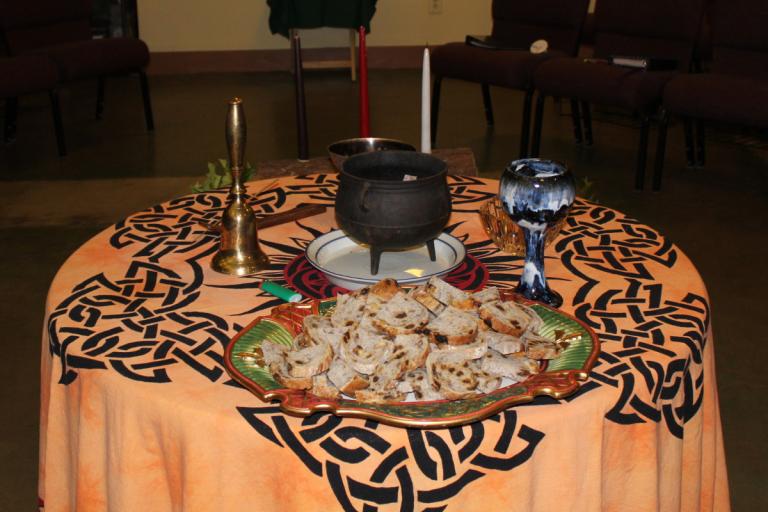 The dictionary definition of worship lists its common meaning: “reverence offered a divine being or supernatural power.” What is more helpful is the word origin: “from Old English weorthscipe worthiness, respect, from weorth worthy, worth + –scipe -ship.” Worship, at its core, is an expression of respect and a statement of worth.
As a polytheist, a UU, and a religious liberal, it’s not my place to tell you the proper way to express your respect, nor what is worthy of it. As a Druid and a priest it is my place to describe forms of worship that have been found useful, and to hold a mirror to forms of worship that have been found unhelpful.
Who you worship, what you worship, and how you worship is an important decision that is ultimately yours. It deserves your mindful consideration.
What worship isn’t
Worship is not celebration. Dancing the Maypole is not worship. A Lughnasadh feast is not worship. These are religious activities and they can be very worthy activities. But there is no expression of honor and devotion, no offering of reverence.
There was a time when many UU churches, uncomfortable with the Christian connotations of worship, called their Sunday services “the Celebration of Life.” I imagine some still do, but most I’ve been around have returned to calling it worship. Celebrating life is good, but there is also a need to recognize and honor something greater than ourselves – whether that something is seen in a theistic sense or not.
Worship is not submission. Now certainly, if your view of the Divine is that your God is all-everything and we are scum, then your worship will likely involve submission. But if you agree that every creature has inherent dignity and worth – and sovereignty – then there is no reason why a heart-felt expression of honor and devotion need include submission, much less self-deprecation.
The Gods are greater than us – they are older, stronger and wiser. It is proper for us to acknowledge their greatness in our worship. But in my experience, they do not have fragile egos that need constant praise and they do not want sheep for followers. We have sovereignty before the Gods even if we are not their equals. Render honor and respect, not submission.
There are some Pagans who say they are called to submit, who say they are owned by a deity. It’s not my place to challenge that relationship. I simply say it is not common and has not been part of my experience.
Worship is not appeasement. The idea that the Gods are obsessed with your sins is just as unhelpful as the idea that the Gods are here to make your life easier and more fulfilling. Both good things and bad things usually have ordinary causes and the randomness of life is just that – random. The Westboro Baptist Church doesn’t just have bad politics and a complete lack of compassion, they have bad theology too.
Now, if you have offended a God you will need to make amends. “I didn’t mean anything by it” is no excuse. Some Pagan traditions have rules of purity that must be followed. Some deities require certain offerings or reject others. Oath-breaking or geis-breaking – intentional or not – is particularly serious. “I’m sorry, I won’t do it again” is a good start, but it’s rarely enough… but that’s another post for another time.
Deity-centered worship
Pagan worship is nothing if not diverse. My intention is neither to list every form it takes nor to attempt to force it all into some ill-fitting universal template. This is my worship and the worship of many other polytheistic Pagans.
Morpheus Ravenna had an excellent post last month titled “Gods with Agency: Ritual theory for polytheists.” I think worship rituals can have more goals and take more forms than Morpheus proposes, but I’m in strong agreement with her basic premise: the Gods are real, so we should treat them as real beings with their own wants, needs, areas of responsibility and especially with the ability to choose what they will and won’t do. Morpheus says:
If our Gods are real, and They have agency, They are making a choice whether or not to respond to our calls. They are making a choice whether or not to engage, to help us, to be present. We can’t be treating them like a tool you put back on a shelf when you don’t need it, and then expecting Them to come and wield Their agency for our benefit!
Since the Gods are real and they have agency, we invite them to our worship ceremonies. We neither command them nor assume they’ll just show up. You wouldn’t summon the head of your order or the originator of your tradition to a ceremony, even if it was in his or her honor. This is part of the hospitality of Pagan worship.
If you were inviting a honored guest into your home, you’d clean the house and you’d dress up. You’d set out some of her favorite things. You’d play his music. And you’d offer her food and drink – not as a sacrifice, but as an act of hospitality. We honor the Gods with human hospitality not because we think they’re human, but because as humans that’s the only way we can relate to them.
We offer honor and praise, not because they need to be reminded of how great they are, but because we do.
We’ve discussed the definition of worship but not it’s purpose. The purpose of worship is to form and strengthen reciprocal relationships with the Gods. Sometimes this is a straightforward quid pro quo. More frequently it’s similar to the way we form relationships with other humans – again, not because the Gods are just like us, but because we’re human and this is how we are. We get to know each other, we learn their stories, they see what we’re willing and able to do, and we learn how our interests coincide.
What do the Gods need from us? Perhaps they need someone to tell their stories. Perhaps they need someone to deliver their messages, or simply to let people know they’re still here. More frequently, they need people to help move the world to be more in alignment with their values and their virtues.
Over time our relationships with other people tend to become very casual. However, I find that over time polytheists tend to become more respectful. As I’ve had more direct experience of various Gods and Goddesses I’ve become more aware of just how far beyond me they are. My experiences have moved me to greater awe and greater reverence.
 Nature-centered worship
Most of my formal worship revolves around the Gods. But Nature also has inherent dignity and worth. Nature has sovereignty and agency. Nature is worthy of our honor and respect.
We don’t have to invite Nature to join our worship – Nature is always here. We simply have to invite ourselves to experience Nature first-hand – to go outside and look at the sky, hug the trees, smell the flowers and dig in the dirt.
Nature-centered worship has the same purpose as deity-centered worship – to form and strengthen reciprocal relationships. Just as it is us who need to be reminded of the power and sovereignty of the Gods, so it is us who need to be reminded of the power and sovereignty of Nature. The result of our worship is caring for Nature as the Great Mother she is rather than as a collection of resources to be exploited. It is a respect for other species and ecosystems and an ordering of our lives to respect their sovereignty.
Be careful what you worship
Ralph Waldo Emerson said:
The Gods we worship write their names on our faces; be sure of that. And a man will worship something … That which dominates will determine his life and character. Therefore it behooves us to be careful what we worship, for what we are worshipping we are becoming.
So many in our mainstream culture worship celebrities and mindless entertainment. Others worship money and power. Still others worship a God who insists only he has sovereignty. I find none of those worthy of honor and respect.
I worship the Gods who call to me, who challenge me to live according to their virtues and to assist with their work. And I worship Nature, the Mother of us all, of whom we are a part. These I find worthy of honor and respect.
Blessed be the Gods.
Blessed be Nature.
Previous Post

January 7, 2014
This Year Has Goals
Next Post

January 12, 2014 Vision of a Pagan Future
Browse Our Archives
Select a Category Books Community CUUPS Druidry Foundations and Context Gods and Goddesses Magic Myth Nature Ritual Spiritual Practice Theology Travel Uncategorized Videos
Select a Month October 2026 September 2026 August 2026 July 2026 June 2026 May 2026 April 2026 March 2026 February 2026 January 2026 December 2025 November 2025 October 2025 September 2025 August 2025 July 2025 June 2025 May 2025 April 2025 March 2025 February 2025 January 2025 December 2024 November 2024 October 2024 September 2024 August 2024 July 2024 June 2024 May 2024 April 2024 March 2024 February 2024 January 2024 December 2023 November 2023 October 2023 September 2023 August 2023 July 2023 June 2023 May 2023 April 2023 March 2023 February 2023 January 2023 December 2022 November 2022 October 2022 September 2022 August 2022 July 2022 June 2022 May 2022 April 2022 March 2022 February 2022 January 2022 December 2021 November 2021 October 2021 September 2021 August 2021 July 2021 June 2021 May 2021 April 2021 March 2021 February 2021 January 2021 December 2020 November 2020 October 2020 September 2020 August 2020 July 2020 June 2020 May 2020 April 2020 March 2020 February 2020 January 2020 December 2019 November 2019 October 2019 September 2019 August 2019 July 2019 June 2019 May 2019 April 2019 March 2019 February 2019 January 2019 December 2018 November 2018 October 2018 September 2018 August 2018 July 2018 June 2018 May 2018 April 2018 March 2018 February 2018 January 2018 December 2017 November 2017 October 2017 September 2017 August 2017 July 2017 June 2017 May 2017 April 2017 March 2017 February 2017 January 2017 December 2016 November 2016 October 2016 September 2016 August 2016 July 2016 June 2016 May 2016 April 2016 March 2016 February 2016 January 2016 December 2015 November 2015 October 2015 September 2015 August 2015 July 2015 June 2015 May 2015 April 2015 March 2015 February 2015 January 2015 December 2014 November 2014 October 2014 September 2014 August 2014 July 2014 June 2014 May 2014 April 2014 March 2014 February 2014 January 2014 December 2013 November 2013 October 2013 September 2013 August 2013 July 2013 June 2013 May 2013 April 2013 March 2013 February 2013 January 2013 December 2012 November 2012 October 2012 September 2012 August 2012 July 2012 June 2012 May 2012 April 2012 March 2012 February 2012 January 2012 December 2011 November 2011 October 2011 September 2011 August 2011 July 2011 June 2011 May 2011 April 2011 March 2011 February 2011 January 2011 December 2010 November 2010 October 2010 September 2010 August 2010 July 2010 June 2010 May 2010 April 2010 March 2010 February 2010 January 2010 December 2009 November 2009 October 2009 September 2009 August 2009 July 2009 June 2009 May 2009 April 2009 March 2009 February 2009 January 2009 December 2008 November 2008 October 2008 September 2008 August 2008 July 2008 June 2008
Follow Us!
TAKE THE
Religious Wisdom Quiz
I smashed a clay jar in the Valley of Ben Hinnom to illustrate coming destruction. What did this dramatic act symbolize?
Select your answer to see how you score.
The breaking of Jerusalem The end of idolatry The captivity Breaking the covenant
Related posts from John Beckett




What We Lose When “Ask AI” Becomes A...
TRENDING AT PATHEOS Pagan

The First Eucharistic Controversy: Christ’s Real Presence
For Catholics, the Eucharist is the source and summit of the Christian...

How to Make a Decision When You Can't...
Main point: It’s much more valuable to stay close to God so...

Archdiocese Hosts Military Marriage Retreat in Germany
RASTATT, Germany — The transient military lifestyle, with its frequent deployments and...

Nearly every morning, I make the drive to Detroit with my high-school-age...

The Real AI Story Is Adoption Without Trust
Artificial intelligence has crossed a political threshold. It is no longer a...

A new article, written by Jeff Lindsay and Gale L. Pooley,...
view all Pagan blogs
Ad-Free & Subscriber Log-In Subscription Support
- About Us
- 2026 Calendar
- Videos
- Podcasts
- Library of World Religions
- Faith In Media Tracker
- Advertise With Us
- Write for Us
- Privacy Policy
- Terms of Service
- Do Not Sell My Data
- Contact Us
- Radiant Digital
- Manage Newsletter Subscriptions
- Unsubscribe From Notifications
- Sitemap
Copyright 2008-2026, Patheos. All rights reserved.
Subscription Support Ad-Free & Subscriber Log-In
Follow Patheos