
BuddhistCatholicContemplativeEvangelicalGeneral ChristianHinduJewishLatter-day SaintMuslimNew VisionsProgressive Christian
Beliefs
- Buddhist
- Catholic
- Contemplative
- Evangelical
- General Christian
- Hindu
- Jewish
- Latter-day Saint
- More Voices
- Muslim
- New Visions
- Pagan
- Progressive Christian
Topics
- Religion News
- Food and Religion
- Sports and Religion
- Religious Art
- Religious Music and Entertainment
- Religious Events
- History and Religion
- Style and Religion
- Politics and Religion
- Women in Religion
- Recreation Outdoors and Religion
- Business Finance and Religion
- Careers Workplace and Religion
- Education and Religion
- Family Parenting and Religion
- Health Fitness and Religion
- Home and Religion
- Relationships and Religion
- Technology and Religion
- Travel and Religion
Columnists
- Buddhist Columnists
- Business Finance and Religion Columnists
- Careers Workplace and Religion Columnists
- Catholic Columnists
- Contemplative Columnists
- Education and Religion Columnists
- Evangelists Columnists
- Family Parenting and Religion Columnists
- General Christian Columnists
- Health Fitness and Religion Columnists
- Hindu Columnists
- History and Religion Columnists
- Home and Religion Columnists
- Jewish Columnists
- More Voices Columnists
- Latter Day Columnists
- Muslim Columnists
- New Visions Columnists
- Nonreligious Columnists
- Pagan Columnists
- Politics and Religion Columnists
- Progressive Columnists
- Recreation Outdoors and Religion Columnists
- Relationships and Religion Columnists
- Religion News Columnists
- Religious Art Columnists
- Religious Events Columnists
- Religious Music and Entertainment Columnists
- Sports and Religion Columnists
- Style and Religion Columnists
- Technology and Religion Columnists
- Travel and Religion Columnists
- Women in Religion Columnists
Resource Library
- 2026 Calendar
- Library of World Religions
- The 100 Most Holy Places on Earth
- Patheos Answers
- Podcasts
- Videos
- Faith Leaders Database
- Anglican Episcopalian
- Bahai
- Baptist
- Buddhism
- Christianity
- Confucianism
- Eastern Orthodoxy
- Hinduism
- Holiness and Pentecostal
- ISKCON
- Islam
- Judaism
- Lutheran
- Methodist
- The Church of Jesus Christ of Latter-day Saints
- New Age
- Paganism
- Presbytarian and Reformed
- Protestantism
- Religion Behind the Scenes
- Roman Catholic
- Scientology
- Shia Islam
- Sikhism
- Sufism
- Sunni Islam
- Taoism
- Zen
- See all religions
Research Tools
 Ad-Free & Subscriber Log-In Subscription Support
Ad-Free & Subscriber Log-In Subscription Support
Follow Patheos 

- Trending:
- Forgiveness
- |
- Marriage
- |
- Consciousness
- |
- Death Penalty
- |
- Election
- |
- Halloween

- Home
- Pagan
- Lessons From the Marathon
Lessons From the Marathon
Last updated on: December 12, 2013 at 5:00 pm by John Beckett
Lessons From the Marathon 2013-12-11T19:13:35-06:00 John Beckett
Patheos Explore the world's faith through different perspectives on religion and spirituality! Patheos has the views of the prevalent religions and spiritualities of the world.
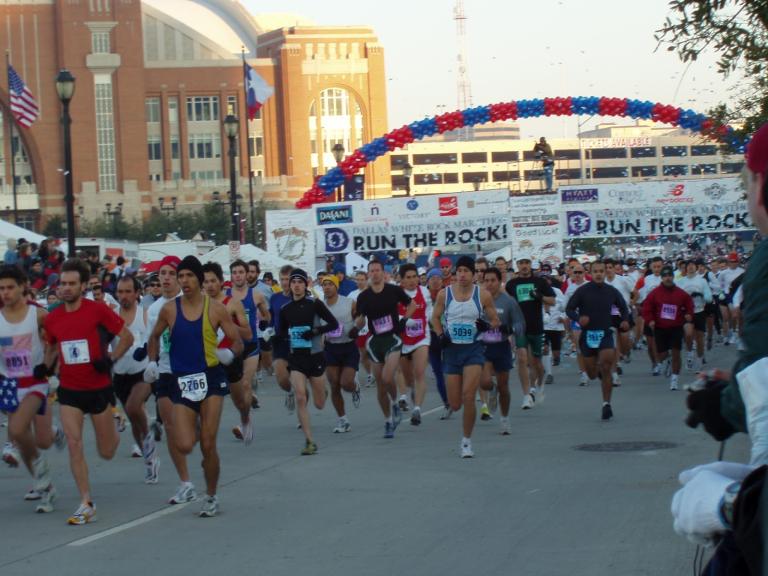
the start of the 2003 Dallas White Rock Marathon
This Saturday marks ten years since I ran my second and final marathon. Though injuries and weight gain forced me to stop running long ago, my brief running “career” remains one of my most meaningful personal achievements.
Last year I told my running story in the context of a wider discussion on fat and health. Go read it if you’re interested – here’s an excerpt.
Growing up I always felt like I was inferior because I wasn’t an athlete. Running changed all that. I still wasn’t very fast, but with amateur distance running you don’t have to be fast. You just have to keep going. I gradually stretched out from a mile to two to three. When I ran four miles for the first time in my life at the age of 36 I knew I was on to something. I went from exercising to training. I kept training logs. I bought running clothes. I started signing up for races. I was doing something “normal” people couldn’t (or wouldn’t) do. I was finally an athlete.
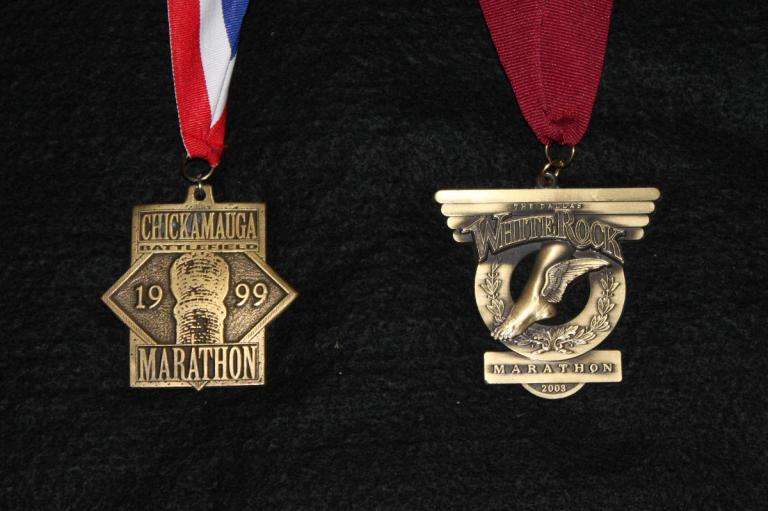
In 1999 I ran 20 to 40 miles per week. That November I ran the Chickamauga Battlefield Marathon in 3 hours and 58 minutes. I was thrilled, and I had dreams of qualifying for the Boston Marathon.
Two months later I had my first serious running injury – plantar fasciitis.
Over the next five years I kept running while I tried various combinations of rest, stretching, orthotics, medication and ice treatments. My mileage went down and my weight went up. I ran the Dallas White Rock Marathon in December 2003 in 4:20.
By then more than my right foot was hurting. I was constantly tired and I was tired of training. I kept cutting back and cutting back and my weight was creeping up. The last entry in my running log was a 7 mile run on September 19, 2004. I kept meaning to pick it up again, but I never did.
Ten years feels like a significant anniversary. It also feels like it’s been long enough to make some useful observations on what I learned from the whole process.
The human body is a magical thing. The magical tradition has its stories of wonder working mystics, stories that even those of us who practice diligently view with a skeptical eye. But every year, hundreds of thousands of ordinary people run a distance (26.2 miles) most of us find impossible. It’s not for nothing that the inspiration for the modern marathon – the story of Pheidippides running from Marathon to Athens to report that the invading Persians had been defeated – ended with the runner dropping dead.
In a recent post I gave the classic definition of magic: “the Science and Art of causing Change to occur in conformity with Will.” Training for a marathon is a magical working. It makes you wonder what else we think is impossible is merely improbable, awaiting only the proper application of science, art, and will to manifest it in this world.
The human body has limits. Any system eventually runs up against its limits. The marathon is infamous for “the wall” – the point at which the body exhausts its supply of glycogen and no longer has the energy to keep running at the previous pace. That’s generally around 20 miles. I breezed by 20 miles in both my marathons, then hit the wall at 22 and had to slow drastically.
There are individual limits and there are cumulative limits. I ran into a limit on training – if I ran enough to complete a marathon, I got injured. That’s the knife edge elite athletes must walk. Train just a bit too hard and you get injured. Train just a bit too light and you get beat.
Your limits are usually far beyond what you think they are, but when you reach them, they’re real.
The value of sustained, consistent practice cannot be overstated. There are “couch to 5K” programs all over the country that can take a sedentary but otherwise healthy person from doing nothing to running 3.1 miles in a few months. There are “5K to marathon” programs that will take a novice runner to a marathon finisher in several more. These program are built on a commitment to run 3 or 4 days a week, every week. All the rest – diet and stretching recommendations, group runs, charity fundraising, goal races – are tricks to keep the aspiring runner running regularly. You can skip a run here and there, but skip a week and you’ll find yourself more than a week behind schedule.
Try to move beyond simply finishing to finishing in a certain time and more training is required. You may need years of gradually increasing mileage to reach your ultimate goals.
How long do you think a virtuoso musician has practiced? A martial arts master? A great ritual leader?
How long do you think those wonder working mystics have practiced?
Becoming competent at anything is a matter of a little regular practice. Being as good as you can be? That takes much longer.
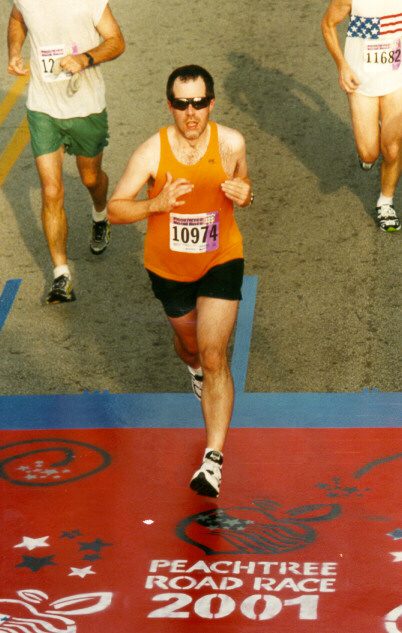 Don’t quit. We’ve all heard “the first step is the hardest.” If you’re dealing with fear, sometimes that’s true. Most times, though, the first day’s running is easy. What’s hard is getting out there on the second day when you’re stiff and sore and still a little tired from yesterday. What’s hard is going out there day after day, week after week, in heat and cold, rain and snow, and doing what you said you wanted to do. I wanted the experience of running a marathon, so I kept it up.
Starting a Pagan practice is easy. What’s hard is sitting in meditation night after night. What’s hard is making regular offerings and devotions. What’s hard is engaging in reflection and contemplation and study and all the things that fall under the category of spiritual practice. But if you want to be a competent Druid or Witch or other Pagan practitioner, keep it up.
Know when to quit. Some things – and some people – are part of your life forever. Other things and other people come in and even though they’re meaningful and helpful they aren’t meant to last. Clinging to things past their time is rarely helpful.
Running let me be an athlete for a few years – I can’t tell you how important that was for me. But if I was still trying to be an athlete I wouldn’t have the time and energy to be the Druid I’m called to be… not to mention the fact that my body was telling me it’s not cut out for regular distance running.
I still walk regularly. It’s good exercise, it’s low impact, and I enjoy it. It’s part of my regular spiritual practice. But I’m not an athlete any more.
There is value in doing something for yourself. Distance running is perhaps the most solitary of sports. While it’s easy to start, getting better requires a significant commitment in training time, recovery time, diet, and the constant demand of the schedule. These commitments can have an impact on friends and family who don’t share your passion. And then there are the killjoys who claim that runners are narcissists who waste time on themselves.
Anything can be overdone. But proper self-care is a necessity if your life is to be as effective and as meaningful as it can be. We need the basic necessities of life. We also need art, music, good food, and love. All of us need exercise – some of us need training and competition.
Proper self-care equips us and energizes us for service to our gods, our communities, and our world.
Sometimes I wonder if things would have turned out differently if I had never gone past a half marathon. Could I have avoided injury and kept running? Or would I have stopped even sooner without the carrot of the marathon constantly in front of me? I suppose I’ll never know.
But I know this: running gave me some great experiences and taught me some valuable lessons.
Previous Post

December 10, 2013
Five Ritualists at Dinner
Next Post

December 15, 2013 Pagan Unity
Browse Our Archives
Select a Category Books Community CUUPS Druidry Foundations and Context Gods and Goddesses Magic Myth Nature Ritual Spiritual Practice Theology Travel Uncategorized Videos
Select a Month October 2026 September 2026 August 2026 July 2026 June 2026 May 2026 April 2026 March 2026 February 2026 January 2026 December 2025 November 2025 October 2025 September 2025 August 2025 July 2025 June 2025 May 2025 April 2025 March 2025 February 2025 January 2025 December 2024 November 2024 October 2024 September 2024 August 2024 July 2024 June 2024 May 2024 April 2024 March 2024 February 2024 January 2024 December 2023 November 2023 October 2023 September 2023 August 2023 July 2023 June 2023 May 2023 April 2023 March 2023 February 2023 January 2023 December 2022 November 2022 October 2022 September 2022 August 2022 July 2022 June 2022 May 2022 April 2022 March 2022 February 2022 January 2022 December 2021 November 2021 October 2021 September 2021 August 2021 July 2021 June 2021 May 2021 April 2021 March 2021 February 2021 January 2021 December 2020 November 2020 October 2020 September 2020 August 2020 July 2020 June 2020 May 2020 April 2020 March 2020 February 2020 January 2020 December 2019 November 2019 October 2019 September 2019 August 2019 July 2019 June 2019 May 2019 April 2019 March 2019 February 2019 January 2019 December 2018 November 2018 October 2018 September 2018 August 2018 July 2018 June 2018 May 2018 April 2018 March 2018 February 2018 January 2018 December 2017 November 2017 October 2017 September 2017 August 2017 July 2017 June 2017 May 2017 April 2017 March 2017 February 2017 January 2017 December 2016 November 2016 October 2016 September 2016 August 2016 July 2016 June 2016 May 2016 April 2016 March 2016 February 2016 January 2016 December 2015 November 2015 October 2015 September 2015 August 2015 July 2015 June 2015 May 2015 April 2015 March 2015 February 2015 January 2015 December 2014 November 2014 October 2014 September 2014 August 2014 July 2014 June 2014 May 2014 April 2014 March 2014 February 2014 January 2014 December 2013 November 2013 October 2013 September 2013 August 2013 July 2013 June 2013 May 2013 April 2013 March 2013 February 2013 January 2013 December 2012 November 2012 October 2012 September 2012 August 2012 July 2012 June 2012 May 2012 April 2012 March 2012 February 2012 January 2012 December 2011 November 2011 October 2011 September 2011 August 2011 July 2011 June 2011 May 2011 April 2011 March 2011 February 2011 January 2011 December 2010 November 2010 October 2010 September 2010 August 2010 July 2010 June 2010 May 2010 April 2010 March 2010 February 2010 January 2010 December 2009 November 2009 October 2009 September 2009 August 2009 July 2009 June 2009 May 2009 April 2009 March 2009 February 2009 January 2009 December 2008 November 2008 October 2008 September 2008 August 2008 July 2008 June 2008
Follow Us!
TAKE THE
Religious Wisdom Quiz
What analogy does Jesus use for believers in Matthew 5:13-14?
Select your answer to see how you score.
Gold and silver Bread and water A tree and its fruit Salt and light
Related posts from John Beckett




What We Lose When “Ask AI” Becomes A...
TRENDING AT PATHEOS Pagan

Swimfan: Forgotten Aughts Pleasures
This is a recovery effort. In 2002, My Big Fat Greek Wedding...

Top Three Anti-Catholic Lies About Catholicism
This is my initial transcript for the video, "THE 3 WORST...

Pope Leo Celebrates Mass for Nurses & Docs...
I don't have any idea how he did it, but Pope Leo...

The Sermon on the Mount, Part I: Matthew...
The Sermon on the Mount, Part I (Matthew 4:12-5:12) St. Matthew moves...

What's up from Crossway: Reviewing some of their latest A few weeks...

Janie Learns the Way of the Cross: A...
Teaching children about Jesus' Passion can be challenging. Many parents and educators...
view all Pagan blogs
Ad-Free & Subscriber Log-In Subscription Support
- About Us
- 2026 Calendar
- Videos
- Podcasts
- Library of World Religions
- Faith In Media Tracker
- Advertise With Us
- Write for Us
- Privacy Policy
- Terms of Service
- Do Not Sell My Data
- Contact Us
- Radiant Digital
- Manage Newsletter Subscriptions
- Unsubscribe From Notifications
- Sitemap
Copyright 2008-2026, Patheos. All rights reserved.
Subscription Support Ad-Free & Subscriber Log-In
Follow Patheos