
BuddhistCatholicContemplativeEvangelicalGeneral ChristianHinduJewishLatter-day SaintMuslimNew VisionsProgressive Christian
Beliefs
- Buddhist
- Catholic
- Contemplative
- Evangelical
- General Christian
- Hindu
- Jewish
- Latter-day Saint
- More Voices
- Muslim
- New Visions
- Pagan
- Progressive Christian
Topics
- Religion News
- Food and Religion
- Sports and Religion
- Religious Art
- Religious Music and Entertainment
- Religious Events
- History and Religion
- Style and Religion
- Politics and Religion
- Women in Religion
- Recreation Outdoors and Religion
- Business Finance and Religion
- Careers Workplace and Religion
- Education and Religion
- Family Parenting and Religion
- Health Fitness and Religion
- Home and Religion
- Relationships and Religion
- Technology and Religion
- Travel and Religion
Columnists
- Buddhist Columnists
- Business Finance and Religion Columnists
- Careers Workplace and Religion Columnists
- Catholic Columnists
- Contemplative Columnists
- Education and Religion Columnists
- Evangelists Columnists
- Family Parenting and Religion Columnists
- General Christian Columnists
- Health Fitness and Religion Columnists
- Hindu Columnists
- History and Religion Columnists
- Home and Religion Columnists
- Jewish Columnists
- More Voices Columnists
- Latter Day Columnists
- Muslim Columnists
- New Visions Columnists
- Nonreligious Columnists
- Pagan Columnists
- Politics and Religion Columnists
- Progressive Columnists
- Recreation Outdoors and Religion Columnists
- Relationships and Religion Columnists
- Religion News Columnists
- Religious Art Columnists
- Religious Events Columnists
- Religious Music and Entertainment Columnists
- Sports and Religion Columnists
- Style and Religion Columnists
- Technology and Religion Columnists
- Travel and Religion Columnists
- Women in Religion Columnists
Resource Library
- 2026 Calendar
- Library of World Religions
- The 100 Most Holy Places on Earth
- Patheos Answers
- Podcasts
- Videos
- Faith Leaders Database
- Anglican Episcopalian
- Bahai
- Baptist
- Buddhism
- Christianity
- Confucianism
- Eastern Orthodoxy
- Hinduism
- Holiness and Pentecostal
- ISKCON
- Islam
- Judaism
- Lutheran
- Methodist
- The Church of Jesus Christ of Latter-day Saints
- New Age
- Paganism
- Presbytarian and Reformed
- Protestantism
- Religion Behind the Scenes
- Roman Catholic
- Scientology
- Shia Islam
- Sikhism
- Sufism
- Sunni Islam
- Taoism
- Zen
- See all religions
Research Tools
 Ad-Free & Subscriber Log-In Subscription Support
Ad-Free & Subscriber Log-In Subscription Support
Follow Patheos 

- Trending:
- Forgiveness
- |
- Marriage
- |
- Consciousness
- |
- Death Penalty
- |
- Election
- |
- Halloween

- Home
- Pagan
- Dreams of a Druid College
Dreams of a Druid College
Last updated on: December 8, 2013 at 9:36 pm by John Beckett
Dreams of a Druid College 2013-12-08T21:36:17-06:00 John Beckett
Patheos Explore the world's faith through different perspectives on religion and spirituality! Patheos has the views of the prevalent religions and spiritualities of the world.
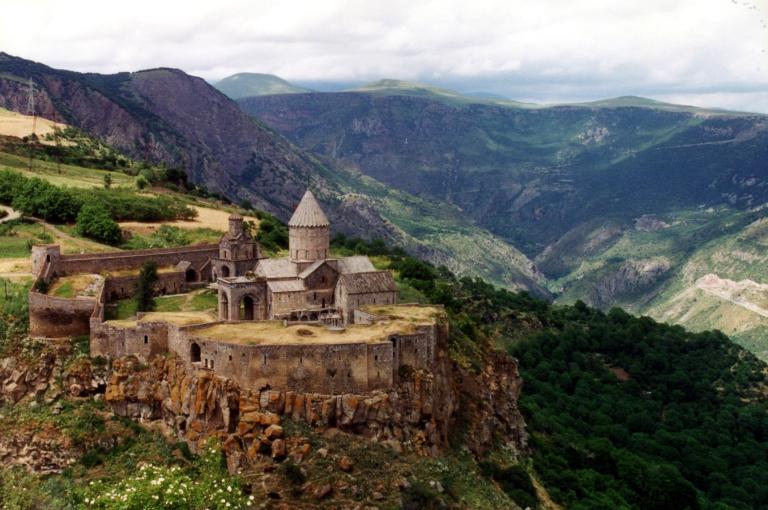
Tatev Monastery in Armenia. Photo via Wikimedia Commons.

Sometimes I dream of a Druid college.
Part ancient monastery and part modern university, it would be a place where Druids, Witches, and other Pagans would come to learn from and with the best and brightest. Most would come for a short time, studying advanced topics, deepening their practices and then returning to their communities to teach and serve. Some would stay longer, researching and experimenting and documenting their findings to share with the college and the wider community. Others would be permanent residents, maintaining continuity across generations and insuring proper rites were performed to keep the institution committed to its mission.
There would be groves and temples, laboratories and classrooms, libraries and workrooms. And perhaps most importantly, there would be a dining room serving coffee and tea during the day and mead and ale at night, stimulating the kind of freeform conversations that are always pleasant, frequently enlightening and occasionally bring forth ideas that change the world.
For now, ignore the tremendous infrastructure costs and the army of house elves that would be required to maintain such a college – this is a dream, remember? But it’s a dream rooted in a very real desire – the desire for Pagans who have learned and practiced the basics to take on the challenges of deeper and more advanced subjects.
It’s also a desire for a college: a community of peers. Members of a local grove or coven or other group can be great friends and co-religionists, and together you can honor the gods and work great magic. But go deep enough and eventually you run past where the average Witch wants to go. That doesn’t mean they’re not serious about magic or not dedicated to the gods. It means they’ve reached the limit of what they want to do and what they’re called to do. If you want to go further you have to go alone… and that presents its own difficulties.
I can talk about Nature to anyone. I can talk about worshipping the Horned God to most Pagans. But if I want to discuss my ecstatic experiences of Cernunnos during divine possession, there are far fewer people who will understand what I’m talking about, and fewer still who can offer helpful observations and suggestions.
There won’t be a Druid college in this world any time soon, but the kind of support it would bring is a real need here and now. What are growing Pagans to do?
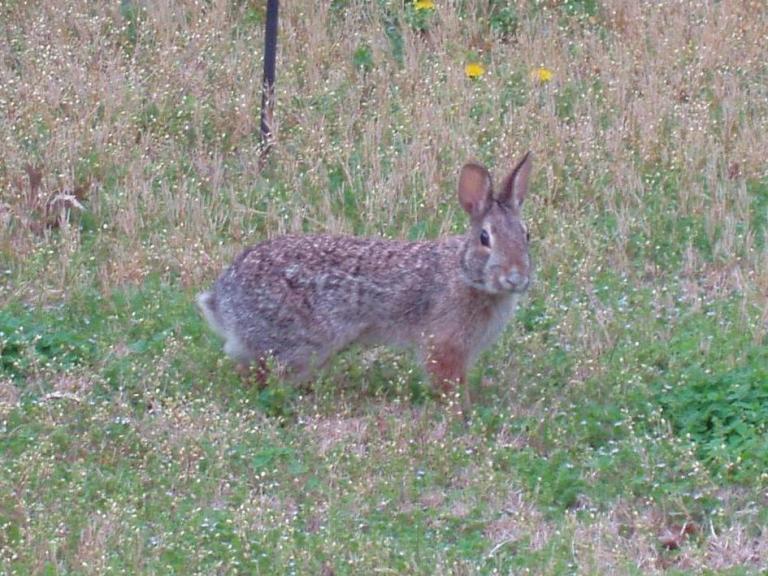 Ask yourself the question: why do you want to grow? Uncontrolled growth is not a good thing, whether you’re talking about cancer cells in the body or suburban sprawl or rabbits who multiply in the absence of predators.
Are you trying to better navigate the challenges of the world? Are you trying to change the world? Are you trying to transcend the world? Any of those can be a good reason, but your approach will be different depending on why you want to grow and what you want to grow into.
One of the first places most people look for help with growth is published authors and well-known teachers. It’s a natural impulse. I mean, if they’re writing about Paganism and teaching Paganism they must know a lot about Paganism, right?
Generally, yes. There are some Big Name Pagans whose work I don’t particularly care for, but most are experienced and knowledgeable. The problem is that most of them make their living as authors and teachers, and the vast majority of demand for Pagan books and classes is from beginners. If they want to pay the rent they have keep cranking out introductory books because that’s what sells.
Few Big Name Pagans actively seek students – they don’t have the time for them. But some do spiritual consulting work. If you’ve moved into the intermediate stage of your practice, do you really need a teacher to assign work and check your progress? Or could a consulting session every two or three months answer your questions and keep you moving forward along your path? If you’ve found a particular teacher to be helpful with books or classes, ask about spiritual consultation.
Be prepared to pay for it. An hour spent talking with you is an hour not spent writing books or doing something else that pays the bills. The Christian minister or priest you could call on for free when you were growing up was paid by their church… and even they have limits.
If you’re looking for a good example of what an advanced Pagan looks like, the Big Name Pagans who do this for a living may not be your best role models. Check out the Lesser Name Pagans and see what they’re doing.
I read every blog on the Patheos Pagan channel. I don’t read every post by every writer, but some I do, and I scan the main page every day to see what’s new that might be interesting. I read The Wild Hunt every day. Most of these blogs have blogrolls – more people who can serve as role models and more people who can inspire and inform you as you try to move forward.
If you’re an intermediate to advanced Pagan, these are your peers. See what they’re doing. Comment on their blogs. Follow them on Facebook. At its best (i.e. – when it’s not overloaded with pictures of cats and George Takei memes) social media can be a virtual Druid pub. Talk to people, learn who’s an expert on what. I like to think I’m a pretty good ritualist, but when I have questions I go to Jason Mankey. One of the reasons I interviewed Sharon Knight was because I wanted to draw on her musical expertise.
Everybody’s different. I’m not much for idle chatter and I don’t post a lot of details of my life on Facebook. But ask a Pagan-oriented question or raise a Druid-oriented issue and I’ll type all night.
Not every Pagan with a blog is someone you want to follow. If you’re at the intermediate stage you should have no problem figuring out who knows what they’re talking about and who doesn’t. And not every knowledgeable Pagan writes on a regular basis – some because the obligations of family and paying jobs don’t leave them enough time, others because they’re too busy doing Paganism to write about Paganism.
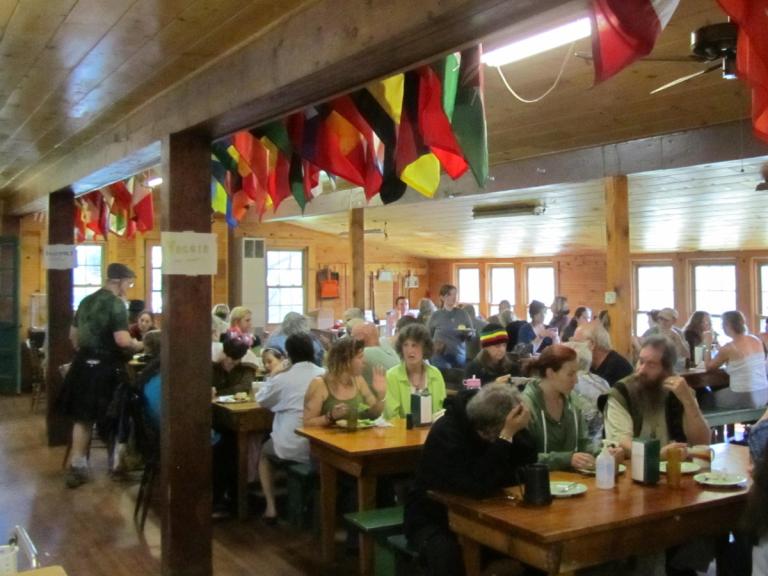
lunch at the 2012 East Coast Gathering
If you have a chance to meet your peers in person, do it. As much as I enjoyed meeting and listening to Philip Carr-Gomm and John Michael Greer at the 2012 OBOD East Coast Gathering, what I enjoyed most were the conversations with my fellow Druids. As I wrote at the time:
I think my favorite part of whole gathering was the conversation. People shared their spiritual journeys, talked about their projects and their ideas, their hopes and fears for the future, discussed the nature of the gods and what comes after death. We talked about our groves and seed groups and for a few of us, our CUUPS groups. We had the kind of conversations we’re reluctant to have in the ordinary world for fear of being seen as odd or nuts or worse.
Remember – many of your fellow intermediate Pagans are just as introverted as you are. They also yearn for deep conversation just as much as you do.
Our attempts to learn and grow in the intermediate and advanced stages are not helped by our contemporary model of education. Our many years of schooling tell us we must have a teacher, who will present the material to be learned in the appropriate combinations at the appropriate time and who will validate that we have learned what we need to learn, after which we’ll move up to the next grade.
But so much of what I’ve learned in my Pagan studies has been self-directed. Or it’s been inspired by something I read or heard from a Big Name Pagan or a Lesser Name Pagan in an informal setting. There have been periods when I worked diligently and felt like I was making no progress, and there have been times when skills and experiences and opportunities have appeared seemingly out of nowhere. Learning comes in many ways and our contemporary academic model is only one of them.
The only constant has been the work I put in up front. There is no substitute for in-depth study and practice.
There is also no substitute for like minded people working together and talking to each other. When you can’t find that conversation in the physical world, seek it out virtually. It’s not the same, but it’s still helpful.
Sometimes I dream of a Druid college.
Previous Post

December 5, 2013
The Twelve Days of Solstice
Next Post

December 10, 2013 Five Ritualists at Dinner
Browse Our Archives
Select a Category Books Community CUUPS Druidry Foundations and Context Gods and Goddesses Magic Myth Nature Ritual Spiritual Practice Theology Travel Uncategorized Videos
Select a Month October 2026 September 2026 August 2026 July 2026 June 2026 May 2026 April 2026 March 2026 February 2026 January 2026 December 2025 November 2025 October 2025 September 2025 August 2025 July 2025 June 2025 May 2025 April 2025 March 2025 February 2025 January 2025 December 2024 November 2024 October 2024 September 2024 August 2024 July 2024 June 2024 May 2024 April 2024 March 2024 February 2024 January 2024 December 2023 November 2023 October 2023 September 2023 August 2023 July 2023 June 2023 May 2023 April 2023 March 2023 February 2023 January 2023 December 2022 November 2022 October 2022 September 2022 August 2022 July 2022 June 2022 May 2022 April 2022 March 2022 February 2022 January 2022 December 2021 November 2021 October 2021 September 2021 August 2021 July 2021 June 2021 May 2021 April 2021 March 2021 February 2021 January 2021 December 2020 November 2020 October 2020 September 2020 August 2020 July 2020 June 2020 May 2020 April 2020 March 2020 February 2020 January 2020 December 2019 November 2019 October 2019 September 2019 August 2019 July 2019 June 2019 May 2019 April 2019 March 2019 February 2019 January 2019 December 2018 November 2018 October 2018 September 2018 August 2018 July 2018 June 2018 May 2018 April 2018 March 2018 February 2018 January 2018 December 2017 November 2017 October 2017 September 2017 August 2017 July 2017 June 2017 May 2017 April 2017 March 2017 February 2017 January 2017 December 2016 November 2016 October 2016 September 2016 August 2016 July 2016 June 2016 May 2016 April 2016 March 2016 February 2016 January 2016 December 2015 November 2015 October 2015 September 2015 August 2015 July 2015 June 2015 May 2015 April 2015 March 2015 February 2015 January 2015 December 2014 November 2014 October 2014 September 2014 August 2014 July 2014 June 2014 May 2014 April 2014 March 2014 February 2014 January 2014 December 2013 November 2013 October 2013 September 2013 August 2013 July 2013 June 2013 May 2013 April 2013 March 2013 February 2013 January 2013 December 2012 November 2012 October 2012 September 2012 August 2012 July 2012 June 2012 May 2012 April 2012 March 2012 February 2012 January 2012 December 2011 November 2011 October 2011 September 2011 August 2011 July 2011 June 2011 May 2011 April 2011 March 2011 February 2011 January 2011 December 2010 November 2010 October 2010 September 2010 August 2010 July 2010 June 2010 May 2010 April 2010 March 2010 February 2010 January 2010 December 2009 November 2009 October 2009 September 2009 August 2009 July 2009 June 2009 May 2009 April 2009 March 2009 February 2009 January 2009 December 2008 November 2008 October 2008 September 2008 August 2008 July 2008 June 2008
Follow Us!
TAKE THE
Religious Wisdom Quiz
Which empire destroyed the First Temple in Jerusalem?
Select your answer to see how you score.
Persian Empire Assyrian Empire Babylonian Empire Roman Empire
Related posts from John Beckett




What We Lose When “Ask AI” Becomes A...
TRENDING AT PATHEOS Pagan

The First Eucharistic Controversy: Christ’s Real Presence
For Catholics, the Eucharist is the source and summit of the Christian...

How to Make a Decision When You Can't...
Main point: It’s much more valuable to stay close to God so...

Archdiocese Hosts Military Marriage Retreat in Germany
RASTATT, Germany — The transient military lifestyle, with its frequent deployments and...

Nearly every morning, I make the drive to Detroit with my high-school-age...

The Real AI Story Is Adoption Without Trust
Artificial intelligence has crossed a political threshold. It is no longer a...

A new article, written by Jeff Lindsay and Gale L. Pooley,...
view all Pagan blogs
Ad-Free & Subscriber Log-In Subscription Support
- About Us
- 2026 Calendar
- Videos
- Podcasts
- Library of World Religions
- Faith In Media Tracker
- Advertise With Us
- Write for Us
- Privacy Policy
- Terms of Service
- Do Not Sell My Data
- Contact Us
- Radiant Digital
- Manage Newsletter Subscriptions
- Unsubscribe From Notifications
- Sitemap
Copyright 2008-2026, Patheos. All rights reserved.
Subscription Support Ad-Free & Subscriber Log-In
Follow Patheos