
BuddhistCatholicContemplativeEvangelicalGeneral ChristianHinduJewishLatter-day SaintMuslimNew VisionsProgressive Christian
Beliefs
- Buddhist
- Catholic
- Contemplative
- Evangelical
- General Christian
- Hindu
- Jewish
- Latter-day Saint
- More Voices
- Muslim
- New Visions
- Pagan
- Progressive Christian
Topics
- Religion News
- Food and Religion
- Sports and Religion
- Religious Art
- Religious Music and Entertainment
- Religious Events
- History and Religion
- Style and Religion
- Politics and Religion
- Women in Religion
- Recreation Outdoors and Religion
- Business Finance and Religion
- Careers Workplace and Religion
- Education and Religion
- Family Parenting and Religion
- Health Fitness and Religion
- Home and Religion
- Relationships and Religion
- Technology and Religion
- Travel and Religion
Columnists
- Buddhist Columnists
- Business Finance and Religion Columnists
- Careers Workplace and Religion Columnists
- Catholic Columnists
- Contemplative Columnists
- Education and Religion Columnists
- Evangelists Columnists
- Family Parenting and Religion Columnists
- General Christian Columnists
- Health Fitness and Religion Columnists
- Hindu Columnists
- History and Religion Columnists
- Home and Religion Columnists
- Jewish Columnists
- More Voices Columnists
- Latter Day Columnists
- Muslim Columnists
- New Visions Columnists
- Nonreligious Columnists
- Pagan Columnists
- Politics and Religion Columnists
- Progressive Columnists
- Recreation Outdoors and Religion Columnists
- Relationships and Religion Columnists
- Religion News Columnists
- Religious Art Columnists
- Religious Events Columnists
- Religious Music and Entertainment Columnists
- Sports and Religion Columnists
- Style and Religion Columnists
- Technology and Religion Columnists
- Travel and Religion Columnists
- Women in Religion Columnists
Resource Library
- 2026 Calendar
- Library of World Religions
- The 100 Most Holy Places on Earth
- Patheos Answers
- Podcasts
- Videos
- Faith Leaders Database
- Anglican Episcopalian
- Bahai
- Baptist
- Buddhism
- Christianity
- Confucianism
- Eastern Orthodoxy
- Hinduism
- Holiness and Pentecostal
- ISKCON
- Islam
- Judaism
- Lutheran
- Methodist
- The Church of Jesus Christ of Latter-day Saints
- New Age
- Paganism
- Presbytarian and Reformed
- Protestantism
- Religion Behind the Scenes
- Roman Catholic
- Scientology
- Shia Islam
- Sikhism
- Sufism
- Sunni Islam
- Taoism
- Zen
- See all religions
Research Tools
 Ad-Free & Subscriber Log-In Subscription Support
Ad-Free & Subscriber Log-In Subscription Support
Follow Patheos 

- Trending:
- Forgiveness
- |
- Marriage
- |
- Consciousness
- |
- Death Penalty
- |
- Election
- |
- Halloween

- Home
- Pagan
- Religious Buyer’s Remorse
Religious Buyer’s Remorse
Last updated on: October 15, 2013 at 4:19 pm by John Beckett
Religious Buyer’s Remorse 2013-10-14T19:35:53-06:00 John Beckett
Patheos Explore the world's faith through different perspectives on religion and spirituality! Patheos has the views of the prevalent religions and spiritualities of the world.
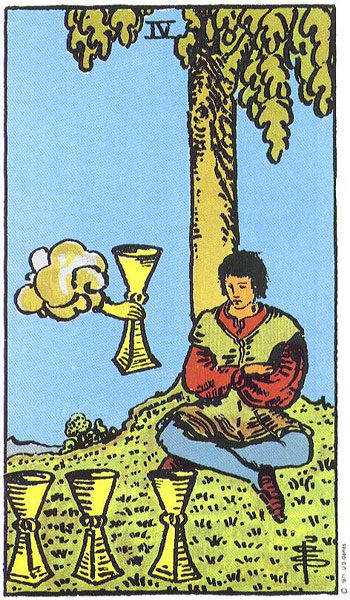
a offer is presented: choose
We who are living in 21st century America have more religious options than ever before in the history of the world. Thanks to legal protections for religious freedom, a free flow of books and other information, and the connections made possible by the internet, if a religion is being practiced or has ever been practiced you can practice it here and now.
That’s a good thing, right? Isn’t “more choices are always better” a fundamental axiom of American life? As someone who found the religion of my childhood to be at odds with my core values and who is participating in the re-creation of a tradition that disappeared for over a thousand years, I’m thankful we have this wonderful opportunity.
But these seemingly unlimited options don’t come without cost. It takes time to investigate the beliefs and practices of a new religion, to learn its history and customs, and to see how well they work in practice. It takes more time to compare one religion to another, and to make sure you’re making a decision based on religious reasons and not because the Unitarians have good coffee or the Methodists have a great sound system.
Even if you conduct an exhaustive study, how can you be sure you made the right decision? Let’s ignore the religions that claim exclusivity (which I would do anyway – religious certainty is not possible). Choosing a sub-optimal religion won’t send you to hell, but it can make your life less rich, less satisfying, and less helpful than choosing a religion to which you are better suited.
So while it is good we have the freedom and ability to find the religious path that best matches our individual needs, interests, and religious experiences, these overwhelming choices can create stress. There’s a term for this stress – buyer’s remorse.
Wikipedia has a good definition of buyer’s remorse:
Buyer’s remorse is the sense of regret after having made a purchase. It … is thought to stem from cognitive dissonance, specifically post-decision dissonance, that arises when a person must make a difficult decision, such as a heavily invested purchase between two similarly appealing alternatives.
Buyer’s remorse isn’t so much about thinking what you chose was wrong as thinking another choice would have been better. I’m happy as a Pagan, but I’m envious of the organizational structure of the Catholic church. On stressful days I think I’d be better off as a Buddhist. Nadia Bolz-Weber reminds me of the power of the message of Jesus. My many Feri friends make me wonder if I’d be a better Pagan if I had their training and experiences. And even within my chosen tradition of Druidry, my hard polytheism would be a better fit in ADF than in OBOD.
In an environment where we are truly free to choose, religious buyer’s remorse is inevitable. How can we deal with it effectively?
First, a religion isn’t a commodity. It’s part of what you are, who you are, and whose you are. Despite what the evil sorcerers of Madison Avenue would like you to believe, the clothes you wear and the car you drive are not. As much as parts of other religions appeal to me, at my core I’m not a Catholic or a Buddhist or a Feri witch.
In America we tell our children they can be anything they want to be. It’s a nice thought, but it’s only partially true. You can play at anything you want to be, you can dress up like anything you want to be, but you can only be who you are.
Who are you? Whose are you? What fills your soul with joy and your life with inspiration? What are you called to do? Who are you called to serve?
Part of accepting the glorious imperfection that is you is accepting the gloriously imperfect religion to which you are called. Religious buyer’s remorse may be inevitable, but ultimately it’s irrelevant. You are what and who and whose you are.
Next, are you sure those things that give you buyer’s remorse can’t be found in your own tradition? Nobody does structure like the Catholics, but we Druids have some decent structures ourselves – there’s a reason Druid traditions are called orders. You don’t have to be a Buddhist to meditate. And while I’ll never learn the secrets of Feri, I’ve learned some pretty strong magic and had some very strong religious experiences.
Conversely, if you’re a Lutheran who really wants to practice magic, there’s a long tradition of Christian esotericism. Many liberal Christians are embracing the Divine Feminine, through the Marys or through God the Mother or both. And while I’m a polytheist, there’s a whole branch of Paganism by and for non-theists.
All religions are not the same and not elements can be found in all traditions. And some things just can’t be combined – you can worship Jesus and Thor, but don’t expect the Baptists to accept you (nor will the Heathens). But dig just below the surface and you’re likely to find that what you think you’re missing can be found within your own religion.
Nostalgia is not buyer’s remorse. I had a difficult time growing up in a small Baptist church, but I can still appreciate gospel music (in small quantities, anyway) and I can admire the power and effectiveness of good preaching even if I don’t agree with the sermon content. And Bach (an addition from my later Christian days) is beautiful by any standards. I have some fond memories of my previous religion, but they are memories, and the path leads forward, not backward.
Finally, remember that what you get out of a religion is directly proportional to what you put into that religion. Spiritual maturity does not come by dashing down one path and then back to another, it comes from committing yourself to one path and then following it as far as you can. There may be some trial and error involved early on, but when you find the place where you belong, when you hear the gods who call to you, when your soul whispers “this is it” then give that path your all.
Just as we need not attack other religions to be committed to our own, neither must we abandon our path when we see something meaningful in another tradition. Buyer’s remorse may be inevitable in this massive marketplace of religions, but it need not cause us to abandon our calling, our home, and our true will.
Previous Post

October 13, 2013
Hearing the Call
Next Post

October 17, 2013 Responding to a Dysfunctional Society
Browse Our Archives
Select a Category Books Community CUUPS Druidry Foundations and Context Gods and Goddesses Magic Myth Nature Ritual Spiritual Practice Theology Travel Uncategorized Videos
Select a Month October 2026 September 2026 August 2026 July 2026 June 2026 May 2026 April 2026 March 2026 February 2026 January 2026 December 2025 November 2025 October 2025 September 2025 August 2025 July 2025 June 2025 May 2025 April 2025 March 2025 February 2025 January 2025 December 2024 November 2024 October 2024 September 2024 August 2024 July 2024 June 2024 May 2024 April 2024 March 2024 February 2024 January 2024 December 2023 November 2023 October 2023 September 2023 August 2023 July 2023 June 2023 May 2023 April 2023 March 2023 February 2023 January 2023 December 2022 November 2022 October 2022 September 2022 August 2022 July 2022 June 2022 May 2022 April 2022 March 2022 February 2022 January 2022 December 2021 November 2021 October 2021 September 2021 August 2021 July 2021 June 2021 May 2021 April 2021 March 2021 February 2021 January 2021 December 2020 November 2020 October 2020 September 2020 August 2020 July 2020 June 2020 May 2020 April 2020 March 2020 February 2020 January 2020 December 2019 November 2019 October 2019 September 2019 August 2019 July 2019 June 2019 May 2019 April 2019 March 2019 February 2019 January 2019 December 2018 November 2018 October 2018 September 2018 August 2018 July 2018 June 2018 May 2018 April 2018 March 2018 February 2018 January 2018 December 2017 November 2017 October 2017 September 2017 August 2017 July 2017 June 2017 May 2017 April 2017 March 2017 February 2017 January 2017 December 2016 November 2016 October 2016 September 2016 August 2016 July 2016 June 2016 May 2016 April 2016 March 2016 February 2016 January 2016 December 2015 November 2015 October 2015 September 2015 August 2015 July 2015 June 2015 May 2015 April 2015 March 2015 February 2015 January 2015 December 2014 November 2014 October 2014 September 2014 August 2014 July 2014 June 2014 May 2014 April 2014 March 2014 February 2014 January 2014 December 2013 November 2013 October 2013 September 2013 August 2013 July 2013 June 2013 May 2013 April 2013 March 2013 February 2013 January 2013 December 2012 November 2012 October 2012 September 2012 August 2012 July 2012 June 2012 May 2012 April 2012 March 2012 February 2012 January 2012 December 2011 November 2011 October 2011 September 2011 August 2011 July 2011 June 2011 May 2011 April 2011 March 2011 February 2011 January 2011 December 2010 November 2010 October 2010 September 2010 August 2010 July 2010 June 2010 May 2010 April 2010 March 2010 February 2010 January 2010 December 2009 November 2009 October 2009 September 2009 August 2009 July 2009 June 2009 May 2009 April 2009 March 2009 February 2009 January 2009 December 2008 November 2008 October 2008 September 2008 August 2008 July 2008 June 2008
Follow Us!
TAKE THE
Religious Wisdom Quiz
What does James say someone who doubts is like?
Select your answer to see how you score.
A wave of the sea, blown and tossed by the wind A house built on sand A leaf falling from a tree A sheep without a shepherd
Related posts from John Beckett




What We Lose When “Ask AI” Becomes A...
TRENDING AT PATHEOS Pagan

A new article, written by Jeff Lindsay and Gale L. Pooley,...

Swimfan: Forgotten Aughts Pleasures
This is a recovery effort. In 2002, My Big Fat Greek Wedding...

Top Three Anti-Catholic Lies About Catholicism
This is my initial transcript for the video, "THE 3 WORST...

Pope Leo Celebrates Mass for Nurses & Docs...
I don't have any idea how he did it, but Pope Leo...

The Sermon on the Mount, Part I: Matthew...
The Sermon on the Mount, Part I (Matthew 4:12-5:12) St. Matthew moves...

What's up from Crossway: Reviewing some of their latest A few weeks...
view all Pagan blogs
Ad-Free & Subscriber Log-In Subscription Support
- About Us
- 2026 Calendar
- Videos
- Podcasts
- Library of World Religions
- Faith In Media Tracker
- Advertise With Us
- Write for Us
- Privacy Policy
- Terms of Service
- Do Not Sell My Data
- Contact Us
- Radiant Digital
- Manage Newsletter Subscriptions
- Unsubscribe From Notifications
- Sitemap
Copyright 2008-2026, Patheos. All rights reserved.
Subscription Support Ad-Free & Subscriber Log-In
Follow Patheos