
BuddhistCatholicContemplativeEvangelicalGeneral ChristianHinduJewishLatter-day SaintMuslimNew VisionsProgressive Christian
Beliefs
- Buddhist
- Catholic
- Contemplative
- Evangelical
- General Christian
- Hindu
- Jewish
- Latter-day Saint
- More Voices
- Muslim
- New Visions
- Pagan
- Progressive Christian
Topics
- Religion News
- Food and Religion
- Sports and Religion
- Religious Art
- Religious Music and Entertainment
- Religious Events
- History and Religion
- Style and Religion
- Politics and Religion
- Women in Religion
- Recreation Outdoors and Religion
- Business Finance and Religion
- Careers Workplace and Religion
- Education and Religion
- Family Parenting and Religion
- Health Fitness and Religion
- Home and Religion
- Relationships and Religion
- Technology and Religion
- Travel and Religion
Columnists
- Buddhist Columnists
- Business Finance and Religion Columnists
- Careers Workplace and Religion Columnists
- Catholic Columnists
- Contemplative Columnists
- Education and Religion Columnists
- Evangelists Columnists
- Family Parenting and Religion Columnists
- General Christian Columnists
- Health Fitness and Religion Columnists
- Hindu Columnists
- History and Religion Columnists
- Home and Religion Columnists
- Jewish Columnists
- More Voices Columnists
- Latter Day Columnists
- Muslim Columnists
- New Visions Columnists
- Nonreligious Columnists
- Pagan Columnists
- Politics and Religion Columnists
- Progressive Columnists
- Recreation Outdoors and Religion Columnists
- Relationships and Religion Columnists
- Religion News Columnists
- Religious Art Columnists
- Religious Events Columnists
- Religious Music and Entertainment Columnists
- Sports and Religion Columnists
- Style and Religion Columnists
- Technology and Religion Columnists
- Travel and Religion Columnists
- Women in Religion Columnists
Resource Library
- 2026 Calendar
- Library of World Religions
- The 100 Most Holy Places on Earth
- Patheos Answers
- Podcasts
- Videos
- Faith Leaders Database
- Anglican Episcopalian
- Bahai
- Baptist
- Buddhism
- Christianity
- Confucianism
- Eastern Orthodoxy
- Hinduism
- Holiness and Pentecostal
- ISKCON
- Islam
- Judaism
- Lutheran
- Methodist
- The Church of Jesus Christ of Latter-day Saints
- New Age
- Paganism
- Presbytarian and Reformed
- Protestantism
- Religion Behind the Scenes
- Roman Catholic
- Scientology
- Shia Islam
- Sikhism
- Sufism
- Sunni Islam
- Taoism
- Zen
- See all religions
Research Tools
 Ad-Free & Subscriber Log-In Subscription Support
Ad-Free & Subscriber Log-In Subscription Support
Follow Patheos 

- Trending:
- Forgiveness
- |
- Marriage
- |
- Consciousness
- |
- Death Penalty
- |
- Election
- |
- Halloween

- Home
- Pagan
- Do the Work and Trust the Process
Do the Work and Trust the Process
Last updated on: September 29, 2013 at 4:06 pm by John Beckett
Do the Work and Trust the Process 2013-09-29T16:06:13-06:00 John Beckett
Patheos Explore the world's faith through different perspectives on religion and spirituality! Patheos has the views of the prevalent religions and spiritualities of the world.
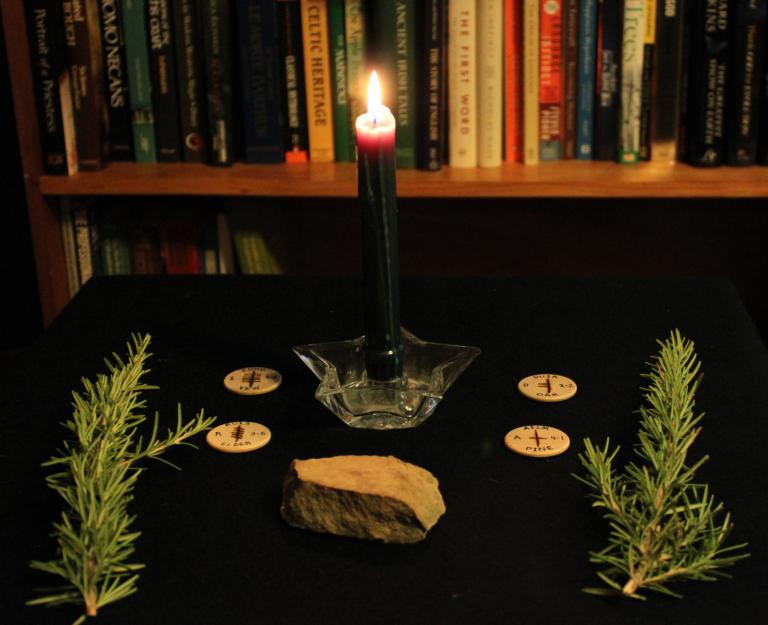 Initiations in OBOD are powerful ceremonies that transmit mystical knowledge and wisdom to the candidates, but they are not the primary transformative process of the order. They are an introduction to a grade, not a culmination of that grade.
At last weekend’s East Coast Gathering, we initiated 12 Bards into the Grove of the Ovates. These new Ovates have a lot of work ahead of them and all the ones I talked with understood that. If you’ve been around long enough to complete the Bardic grade – particularly if you’ve attended an OBOD gathering or two – you understand the Ovate grade is challenging. It was by far the most challenging for me.
Chosen Chief Philip Carr-Gomm has a long essay on the historical and contemporary role of Ovates on the OBOD website. Referencing the Ovate’s role as healer, Philip says:
How is the Ovate Way of relevance to us today? The fact that many healers – of both body and soul – find Druidry helpful lies in its ability to open the Self to something more than just the personal. The story of psychotherapy illustrates this point, and suggests that we can place Druidry, and the work of the Ovates in particular, at the leading edge of psyche (soul) therapies.
And of course, before you can heal others you must first heal yourself. This is the work of the initiate in any of the many expressions of the Western Mystery Tradition. While this blog post is written in the context of the Ovate grade of the Order of Bards, Ovates and Druids, what follows is applicable to anyone attempting to refine his or her soul through esoteric practice.
To the new Ovates and to intermediate practitioners of all traditions I say do the work and trust the process.
* * * * * * * * *
I’m an industrial engineer – my paid-work career has been focused on building efficient, effective processes. Industrial processes can’t depend on exceptional individuals – I can’t design a process that requires a man with the strength of a weight lifter or a woman with the endurance of a long distance runner. I have to design them to be workable by the next moderately healthy, reasonably intelligent person who walks in the door. Good processes use the right tools and the right methods to produce the right results.
If you want to become a long distance runner, you have to have a few basic physical prerequisites – but just a few. There are lots of “couch to 5K” training programs that will turn healthy non-athletes into runners in a few months. There are 5K to marathon programs that will turn casual runners into marathon finishers in a few more months. Good processes use the right training program to produce the right results – do the work and the results will follow.
Someone who has reached the Ovate grade – or for folks in a non-OBOD setting, someone with an intermediate knowledge of myth and spiritual practice – has the necessary skills to do the work. If you feel like you’re not good enough, smart enough, spiritual enough, magical enough – you are. You demonstrated that by completing the Bardic grade (what do you need to start the Bardic grade? A willingness to begin).
The process is contained in the gwersi – the (nominally) weekly lessons of the Ovate grade, containing our unique combination of stories, poetry, history, ritual, and practice. Follow the process – work diligently through the gwersi – and the results will come. Do the work and trust the process.
How can you be confident the process works? It worked for you in the Bardic grade, didn’t it? The Ovate grade is deeper and more intense, but the basic process is the same. The Ovate process worked for me and for thousands of other Ovate graduates. I can’t tell you exactly how it worked, in part because it’s a secret, but mainly because it’s a mystery that cannot be adequately described in words.
I never took a break from my Ovate studies and they still took me 25 months to complete. Based on my conversations with other OBOD folks, I think the average is slightly longer. If it takes you two or three or five years, that doesn’t mean you’re failing. It means that’s how long it takes for you. Here’s an excerpt from a letter I wrote to my Ovate tutor in January 2008:
As I work through the Ovate material, I’m finding that it’s just not possible to move through the Gwersi at any regular pace. Where I could pretty much work through the earlier material at one Gwers per week, these inevitably take longer – there are multiple meditations, and some of them raise as many questions as they answer. That’s neither a complaint nor a self-criticism – just the reason why I’m not moving as quickly as I was before.
Do the work and trust the process.
Druidry is usually thought of as a Nature-centered practice, but the Ovate grade contains much that is Self-centered. That, combined with the distance learning program of OBOD, makes the Ovate studies a solitary thing. But while you must do the work for yourself, you need not do it alone. You have your OBOD tutor for help. You also have your fellow Ovates, both those who are studying the gwersi at the same time and those who have finished them. Non-OBOD folks can draw on the experience of students and elders in their own traditions and groups. This is one of the reasons I recommend everyone find a group to practice with – no matter how good a hermit you are, there are times when all of us need the support of someone who has walked or is walking the same path.
The process of transformation can be slow. Keep a journal and write in it regularly. It may seem like nothing is happening, but that’s only above the surface. Deep inside, mystical processes are at work. Many times I feel like nothing has changed, but then I look back at something I wrote a year or two or ten ago and I realize what was cloudy is now clear, and that I’m now stronger and more capable than I was.
To the new Ovates beginning the journey within, to the new Bards taking the first steps on this magnificent path, to the new Druids learning to lead, and to everyone seeking to learn and grow, I say do the work and trust the process.
Previous Post

September 25, 2013
The Currents of Life
Next Post

October 1, 2013 Government Shutdown and the Willow Pentagram
Browse Our Archives
Select a Category Books Community CUUPS Druidry Foundations and Context Gods and Goddesses Magic Myth Nature Ritual Spiritual Practice Theology Travel Uncategorized Videos
Select a Month October 2026 September 2026 August 2026 July 2026 June 2026 May 2026 April 2026 March 2026 February 2026 January 2026 December 2025 November 2025 October 2025 September 2025 August 2025 July 2025 June 2025 May 2025 April 2025 March 2025 February 2025 January 2025 December 2024 November 2024 October 2024 September 2024 August 2024 July 2024 June 2024 May 2024 April 2024 March 2024 February 2024 January 2024 December 2023 November 2023 October 2023 September 2023 August 2023 July 2023 June 2023 May 2023 April 2023 March 2023 February 2023 January 2023 December 2022 November 2022 October 2022 September 2022 August 2022 July 2022 June 2022 May 2022 April 2022 March 2022 February 2022 January 2022 December 2021 November 2021 October 2021 September 2021 August 2021 July 2021 June 2021 May 2021 April 2021 March 2021 February 2021 January 2021 December 2020 November 2020 October 2020 September 2020 August 2020 July 2020 June 2020 May 2020 April 2020 March 2020 February 2020 January 2020 December 2019 November 2019 October 2019 September 2019 August 2019 July 2019 June 2019 May 2019 April 2019 March 2019 February 2019 January 2019 December 2018 November 2018 October 2018 September 2018 August 2018 July 2018 June 2018 May 2018 April 2018 March 2018 February 2018 January 2018 December 2017 November 2017 October 2017 September 2017 August 2017 July 2017 June 2017 May 2017 April 2017 March 2017 February 2017 January 2017 December 2016 November 2016 October 2016 September 2016 August 2016 July 2016 June 2016 May 2016 April 2016 March 2016 February 2016 January 2016 December 2015 November 2015 October 2015 September 2015 August 2015 July 2015 June 2015 May 2015 April 2015 March 2015 February 2015 January 2015 December 2014 November 2014 October 2014 September 2014 August 2014 July 2014 June 2014 May 2014 April 2014 March 2014 February 2014 January 2014 December 2013 November 2013 October 2013 September 2013 August 2013 July 2013 June 2013 May 2013 April 2013 March 2013 February 2013 January 2013 December 2012 November 2012 October 2012 September 2012 August 2012 July 2012 June 2012 May 2012 April 2012 March 2012 February 2012 January 2012 December 2011 November 2011 October 2011 September 2011 August 2011 July 2011 June 2011 May 2011 April 2011 March 2011 February 2011 January 2011 December 2010 November 2010 October 2010 September 2010 August 2010 July 2010 June 2010 May 2010 April 2010 March 2010 February 2010 January 2010 December 2009 November 2009 October 2009 September 2009 August 2009 July 2009 June 2009 May 2009 April 2009 March 2009 February 2009 January 2009 December 2008 November 2008 October 2008 September 2008 August 2008 July 2008 June 2008
Follow Us!
TAKE THE
Religious Wisdom Quiz
According to 2 Peter, what is the Lord not slow in keeping?
Select your answer to see how you score.
His promise His commandments His mercy His judgment
Related posts from John Beckett




What We Lose When “Ask AI” Becomes A...
TRENDING AT PATHEOS Pagan

The First Eucharistic Controversy: Christ’s Real Presence
For Catholics, the Eucharist is the source and summit of the Christian...

How to Make a Decision When You Can't...
Main point: It’s much more valuable to stay close to God so...

Archdiocese Hosts Military Marriage Retreat in Germany
RASTATT, Germany — The transient military lifestyle, with its frequent deployments and...

Nearly every morning, I make the drive to Detroit with my high-school-age...

The Real AI Story Is Adoption Without Trust
Artificial intelligence has crossed a political threshold. It is no longer a...

A new article, written by Jeff Lindsay and Gale L. Pooley,...
view all Pagan blogs
Ad-Free & Subscriber Log-In Subscription Support
- About Us
- 2026 Calendar
- Videos
- Podcasts
- Library of World Religions
- Faith In Media Tracker
- Advertise With Us
- Write for Us
- Privacy Policy
- Terms of Service
- Do Not Sell My Data
- Contact Us
- Radiant Digital
- Manage Newsletter Subscriptions
- Unsubscribe From Notifications
- Sitemap
Copyright 2008-2026, Patheos. All rights reserved.
Subscription Support Ad-Free & Subscriber Log-In
Follow Patheos