
BuddhistCatholicContemplativeEvangelicalGeneral ChristianHinduJewishLatter-day SaintMuslimNew VisionsProgressive Christian
Beliefs
- Buddhist
- Catholic
- Contemplative
- Evangelical
- General Christian
- Hindu
- Jewish
- Latter-day Saint
- More Voices
- Muslim
- New Visions
- Pagan
- Progressive Christian
Topics
- Religion News
- Food and Religion
- Sports and Religion
- Religious Art
- Religious Music and Entertainment
- Religious Events
- History and Religion
- Style and Religion
- Politics and Religion
- Women in Religion
- Recreation Outdoors and Religion
- Business Finance and Religion
- Careers Workplace and Religion
- Education and Religion
- Family Parenting and Religion
- Health Fitness and Religion
- Home and Religion
- Relationships and Religion
- Technology and Religion
- Travel and Religion
Columnists
- Buddhist Columnists
- Business Finance and Religion Columnists
- Careers Workplace and Religion Columnists
- Catholic Columnists
- Contemplative Columnists
- Education and Religion Columnists
- Evangelists Columnists
- Family Parenting and Religion Columnists
- General Christian Columnists
- Health Fitness and Religion Columnists
- Hindu Columnists
- History and Religion Columnists
- Home and Religion Columnists
- Jewish Columnists
- More Voices Columnists
- Latter Day Columnists
- Muslim Columnists
- New Visions Columnists
- Nonreligious Columnists
- Pagan Columnists
- Politics and Religion Columnists
- Progressive Columnists
- Recreation Outdoors and Religion Columnists
- Relationships and Religion Columnists
- Religion News Columnists
- Religious Art Columnists
- Religious Events Columnists
- Religious Music and Entertainment Columnists
- Sports and Religion Columnists
- Style and Religion Columnists
- Technology and Religion Columnists
- Travel and Religion Columnists
- Women in Religion Columnists
Resource Library
- 2026 Calendar
- Library of World Religions
- The 100 Most Holy Places on Earth
- Patheos Answers
- Podcasts
- Videos
- Faith Leaders Database
- Anglican Episcopalian
- Bahai
- Baptist
- Buddhism
- Christianity
- Confucianism
- Eastern Orthodoxy
- Hinduism
- Holiness and Pentecostal
- ISKCON
- Islam
- Judaism
- Lutheran
- Methodist
- The Church of Jesus Christ of Latter-day Saints
- New Age
- Paganism
- Presbytarian and Reformed
- Protestantism
- Religion Behind the Scenes
- Roman Catholic
- Scientology
- Shia Islam
- Sikhism
- Sufism
- Sunni Islam
- Taoism
- Zen
- See all religions
Research Tools
 Ad-Free & Subscriber Log-In Subscription Support
Ad-Free & Subscriber Log-In Subscription Support
Follow Patheos 

- Trending:
- Forgiveness
- |
- Marriage
- |
- Consciousness
- |
- Death Penalty
- |
- Election
- |
- Halloween

- Home
- Pagan
- The Challenges of Free Will
The Challenges of Free Will
Last updated on: August 6, 2013 at 5:13 pm by John Beckett
The Challenges of Free Will 2013-08-06T17:13:38-06:00 John Beckett
Patheos Explore the world's faith through different perspectives on religion and spirituality! Patheos has the views of the prevalent religions and spiritualities of the world.
Last week I made a strong case for acting as though we have free will even though we can’t be sure if we do or not. I really do think it’s the best way to order your life. But like so many strong statements, the fact that it’s generally true doesn’t mean it’s always true.
Msironen left a comment that illustrates this complexity, first quoting me and then adding his concerns:
“But as I said in the post, whether we have free will or only the illusion of free will, we’re better off ordering our lives as though we do.”
I’m not so sure. For one, it seems to encourage a vindictive justice system rather than a rehabilitative one.
I had started a follow-up post to explore some of the implications of free will, but then I got distracted by Fire in the Head and by a certain Forest God. Now it’s time to take another look at the problems presented by free will and how we can best handle them.
Much of what we think of as “fate” or as “stuff happen” is simply the cumulative consequences of the choices we make in life. This leads some people to take a rather hard-line view – you are where you are only because of your choices. And if you chose to be here, why do I have any obligation to help you out of a bad situation?
But this is only one side of the coin of free will. Your will and your choices don’t operate in a vacuum. The society in which we live and work is influenced by many factors, including the will and choices of people who are far more powerful than you are. You can control your actions but you cannot guarantee the results will be what you want.
“In its majestic equality, the law forbids rich and poor alike to sleep under bridges, beg in the streets, and steal loaves of bread” – Anatole France
A strict interpretation of free will can lead to a retributive justice system. If I think you freely chose to harm me, I’m not likely to resist my evolutionary urge to strike back. I’m likely to want to lock you up, ignore your mental illness or substance abuse or or abusive background and thus do nothing to help prevent a similar occurrence when you get out of prison. This isn’t helpful to society.
A strict interpretation of free will can cause us to blame the victim. “You were walking alone downtown late at night? What did you expect would happen?” A little cautiousness is a good thing, but if you are robbed or raped the fault lies with the robber or rapist, not with the victim.
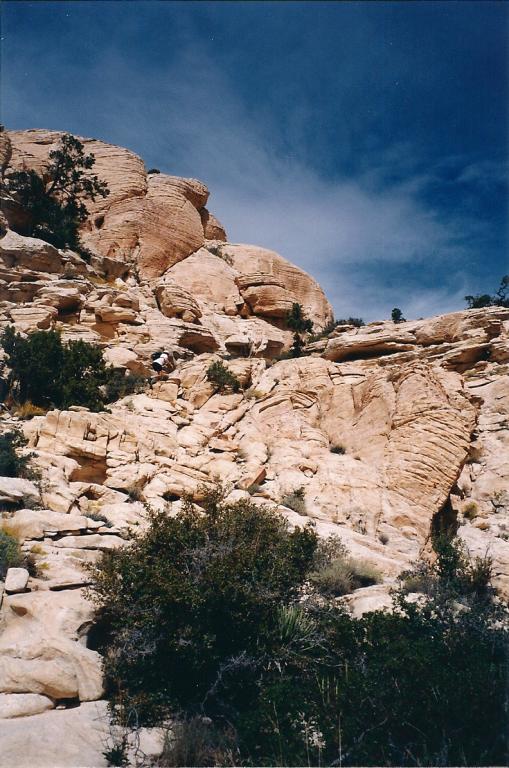
Expecting everyone to scramble up these rocks is neither fair nor reasonable. But if you can, the experience is amazing.
Perhaps most importantly, a strict interpretation of free will can cause us to focus too much attention on individuals and not enough on systems. I’m sure you’ve seen the petitions going around Facebook – some of which have been enacted into law – calling for mandatory drug testing for all welfare recipients. The core problem isn’t that drug testing violates welfare recipients’ rights. It does, but that’s not the core problem. The core problem is the idea that people need welfare because they’re on drugs. I’m sure that’s true for some, but whenever this has been tried, the testing has cost more money than it’s saved. This simplistic approach assumes people are poor only because of poor decisions and ignores lack of jobs, inadequate education, discrimination and the oppressive environment of poor neighborhoods.
That exceptional individuals can overcome these systemic obstacles doesn’t mean those obstacles aren’t real. Focusing solely on individual behavior and ignoring system problems is little more than a rationalization for supporting a system that works well for some but is harmful to others. In some cases, people are so emotionally invested in the system (or so afraid of any change) they argue for it even though it does not serve their own interests – see the current debates on taxes, health care reform and financial regulation.
Now, let me return to my original proposition: “Whether we have free will or not, we are far better off ordering our lives as though we do.” This is true where you are concerned. Act as though everything in your life depends on the choices you make and the actions you take.
Use your brain – if you contributed 10% of the problem and others contributed 90%, don’t beat yourself up over it. On the other hand, even if you’re totally blameless, your best chance of improving a bad situation is to exercise your free will to make it better.
Don’t ignore the system. Do you need to learn to work within it? Or is it unjust and corrupt and needs to be replaced? If so, can you do more good working from within the system or from outside it? These questions don’t have easy answers – ignore political rhetoric and figure out what’s best.
However, while you can exercise your free will to take control of your own situation, you can’t do that for someone else – and you can’t insist they do so either. You don’t know what their true will – their calling, their destiny – is. You don’t know what who or what might be opposing their free will. You don’t know how the currents of power are interacting with them. You don’t know what challenges – and what injustices – they face that you’ve never had to deal with.
Have you ever tried to quit smoking? (I haven’t) Have you ever tried to lose weight? (I have) Ever had someone tell you “you just need more will power”? Remember how helpful that wasn’t? That doesn’t mean it’s not a good idea. It means it’s not as simple as those who found it easy make it out to be.
When you’re dealing with yourself, assume your free will is constrained only by your true will and by the limits of the Universe. Have high expectations.
When you’re dealing with others, don’t assume what’s obvious and easy for you is obvious and easy for everyone. Have reasonable expectations.
Does this mean I’m telling you to think you’re better than everybody else? No, at least not in the snobbish, playground-insult sense of the phrase.
But in terms of exercising your free will? In terms of fulfilling your destiny? In terms of living fully and valiantly and heroically?
Yes, I absolutely am.
Previous Post

August 4, 2013
The Cernunnos Ritual
Next Post

August 8, 2013 Returning to Center
Browse Our Archives
Select a Category Books Community CUUPS Druidry Foundations and Context Gods and Goddesses Magic Myth Nature Ritual Spiritual Practice Theology Travel Uncategorized Videos
Select a Month October 2026 September 2026 August 2026 July 2026 June 2026 May 2026 April 2026 March 2026 February 2026 January 2026 December 2025 November 2025 October 2025 September 2025 August 2025 July 2025 June 2025 May 2025 April 2025 March 2025 February 2025 January 2025 December 2024 November 2024 October 2024 September 2024 August 2024 July 2024 June 2024 May 2024 April 2024 March 2024 February 2024 January 2024 December 2023 November 2023 October 2023 September 2023 August 2023 July 2023 June 2023 May 2023 April 2023 March 2023 February 2023 January 2023 December 2022 November 2022 October 2022 September 2022 August 2022 July 2022 June 2022 May 2022 April 2022 March 2022 February 2022 January 2022 December 2021 November 2021 October 2021 September 2021 August 2021 July 2021 June 2021 May 2021 April 2021 March 2021 February 2021 January 2021 December 2020 November 2020 October 2020 September 2020 August 2020 July 2020 June 2020 May 2020 April 2020 March 2020 February 2020 January 2020 December 2019 November 2019 October 2019 September 2019 August 2019 July 2019 June 2019 May 2019 April 2019 March 2019 February 2019 January 2019 December 2018 November 2018 October 2018 September 2018 August 2018 July 2018 June 2018 May 2018 April 2018 March 2018 February 2018 January 2018 December 2017 November 2017 October 2017 September 2017 August 2017 July 2017 June 2017 May 2017 April 2017 March 2017 February 2017 January 2017 December 2016 November 2016 October 2016 September 2016 August 2016 July 2016 June 2016 May 2016 April 2016 March 2016 February 2016 January 2016 December 2015 November 2015 October 2015 September 2015 August 2015 July 2015 June 2015 May 2015 April 2015 March 2015 February 2015 January 2015 December 2014 November 2014 October 2014 September 2014 August 2014 July 2014 June 2014 May 2014 April 2014 March 2014 February 2014 January 2014 December 2013 November 2013 October 2013 September 2013 August 2013 July 2013 June 2013 May 2013 April 2013 March 2013 February 2013 January 2013 December 2012 November 2012 October 2012 September 2012 August 2012 July 2012 June 2012 May 2012 April 2012 March 2012 February 2012 January 2012 December 2011 November 2011 October 2011 September 2011 August 2011 July 2011 June 2011 May 2011 April 2011 March 2011 February 2011 January 2011 December 2010 November 2010 October 2010 September 2010 August 2010 July 2010 June 2010 May 2010 April 2010 March 2010 February 2010 January 2010 December 2009 November 2009 October 2009 September 2009 August 2009 July 2009 June 2009 May 2009 April 2009 March 2009 February 2009 January 2009 December 2008 November 2008 October 2008 September 2008 August 2008 July 2008 June 2008
Follow Us!
TAKE THE
Religious Wisdom Quiz
Who said, "Even the wind and the waves obey him!"?
Select your answer to see how you score.
John the Baptist The Roman governor Jesus' disciples The Pharisees
Related posts from John Beckett




What We Lose When “Ask AI” Becomes A...
TRENDING AT PATHEOS Pagan

Methodist Central Hall and Westminster Abbey
Situated on the same square is Methodist Central Hall and Westminster Abbey. ...

57th Dove Awards Honor Dolly Parton, Crown New...
On gospel music’s biggest night, the 57th annual GMA Dove Awards honored...

The First Eucharistic Controversy: Christ’s Real Presence
For Catholics, the Eucharist is the source and summit of the Christian...

What a Stop Sign Can Teach Us About...
How to Make a Decision When You Can't Hear God Main point:...

Archdiocese Hosts Military Marriage Retreat in Germany
RASTATT, Germany — The transient military lifestyle, with its frequent deployments and...

Nearly every morning, I make the drive to Detroit with my high-school-age...
view all Pagan blogs
Ad-Free & Subscriber Log-In Subscription Support
- About Us
- 2026 Calendar
- Videos
- Podcasts
- Library of World Religions
- Faith In Media Tracker
- Advertise With Us
- Write for Us
- Privacy Policy
- Terms of Service
- Do Not Sell My Data
- Contact Us
- Radiant Digital
- Manage Newsletter Subscriptions
- Unsubscribe From Notifications
- Sitemap
Copyright 2008-2026, Patheos. All rights reserved.
Subscription Support Ad-Free & Subscriber Log-In
Follow Patheos