
BuddhistCatholicContemplativeEvangelicalGeneral ChristianHinduJewishLatter-day SaintMuslimNew VisionsProgressive Christian
Beliefs
- Buddhist
- Catholic
- Contemplative
- Evangelical
- General Christian
- Hindu
- Jewish
- Latter-day Saint
- More Voices
- Muslim
- New Visions
- Pagan
- Progressive Christian
Topics
- Religion News
- Food and Religion
- Sports and Religion
- Religious Art
- Religious Music and Entertainment
- Religious Events
- History and Religion
- Style and Religion
- Politics and Religion
- Women in Religion
- Recreation Outdoors and Religion
- Business Finance and Religion
- Careers Workplace and Religion
- Education and Religion
- Family Parenting and Religion
- Health Fitness and Religion
- Home and Religion
- Relationships and Religion
- Technology and Religion
- Travel and Religion
Columnists
- Buddhist Columnists
- Business Finance and Religion Columnists
- Careers Workplace and Religion Columnists
- Catholic Columnists
- Contemplative Columnists
- Education and Religion Columnists
- Evangelists Columnists
- Family Parenting and Religion Columnists
- General Christian Columnists
- Health Fitness and Religion Columnists
- Hindu Columnists
- History and Religion Columnists
- Home and Religion Columnists
- Jewish Columnists
- More Voices Columnists
- Latter Day Columnists
- Muslim Columnists
- New Visions Columnists
- Nonreligious Columnists
- Pagan Columnists
- Politics and Religion Columnists
- Progressive Columnists
- Recreation Outdoors and Religion Columnists
- Relationships and Religion Columnists
- Religion News Columnists
- Religious Art Columnists
- Religious Events Columnists
- Religious Music and Entertainment Columnists
- Sports and Religion Columnists
- Style and Religion Columnists
- Technology and Religion Columnists
- Travel and Religion Columnists
- Women in Religion Columnists
Resource Library
- 2026 Calendar
- Library of World Religions
- The 100 Most Holy Places on Earth
- Patheos Answers
- Podcasts
- Videos
- Faith Leaders Database
- Anglican Episcopalian
- Bahai
- Baptist
- Buddhism
- Christianity
- Confucianism
- Eastern Orthodoxy
- Hinduism
- Holiness and Pentecostal
- ISKCON
- Islam
- Judaism
- Lutheran
- Methodist
- The Church of Jesus Christ of Latter-day Saints
- New Age
- Paganism
- Presbytarian and Reformed
- Protestantism
- Religion Behind the Scenes
- Roman Catholic
- Scientology
- Shia Islam
- Sikhism
- Sufism
- Sunni Islam
- Taoism
- Zen
- See all religions
Research Tools
 Ad-Free & Subscriber Log-In Subscription Support
Ad-Free & Subscriber Log-In Subscription Support
Follow Patheos 

- Trending:
- Forgiveness
- |
- Marriage
- |
- Consciousness
- |
- Death Penalty
- |
- Election
- |
- Halloween

- Home
- Pagan
- Photography and the Sacred
Photography and the Sacred
Last updated on: July 1, 2013 at 5:56 pm by John Beckett
Photography and the Sacred 2013-07-01T17:56:35-06:00 John Beckett
Patheos Explore the world's faith through different perspectives on religion and spirituality! Patheos has the views of the prevalent religions and spiritualities of the world.
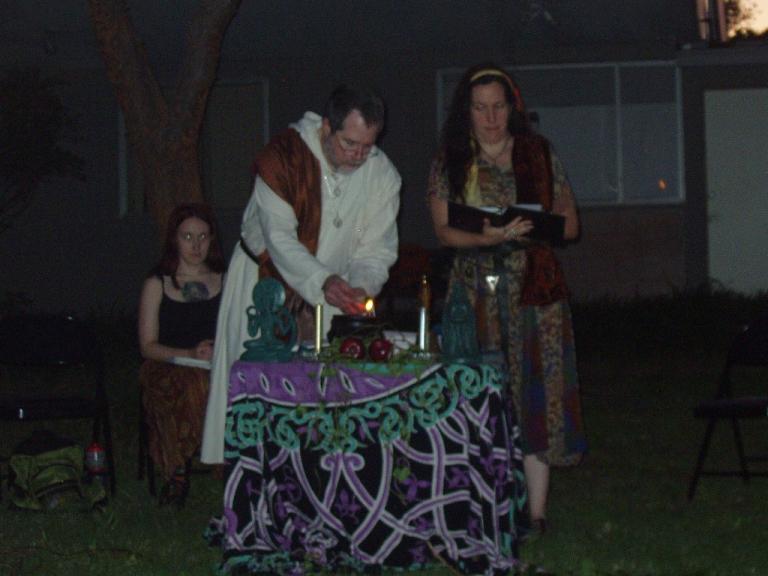 I’m an amateur when it comes to photography. An interested amateur who occasionally takes some good pictures, but an amateur nonetheless. Digital cameras are the best thing that ever happened to me – I can take 100 pictures and be happy if 10 turn out well, whereas in the days of film every shot had to count. Over the years I’ve learned a little about what works and what doesn’t, but I mainly shoot on the automatic setting and l freely admit I don’t know much about photo composition.
Most of the pictures on this blog are mine (if I’m in them, they’re probably Cathy’s). And that raises the question “what is the proper use of photography when it comes to rituals, worship services, sacred sites and sacred events?” Some Pagans are camera-shy due to fears of religious discrimination. Others try to get into every picture they can. Growing up, I couldn’t imagine taking pictures in church. When we were in England in 2007, Westminster Abbey did not allow photography inside the building, but Salisbury Cathedral did.
Last month I read this essay on the Get Religion blog discussing the complications of iPhones at weddings. Then I came across this article on CNN.com claiming that photography is ruining vacations. I’ve been thinking about this on and off over the past few weeks and I have some thoughts for your consideration.
Probably the most common reason to prohibit photography around sacred events and sites is to avoid distractions. We’ve been told over and over that stage performers are bothered by flashes and camera clicks – priests and priestesses can be too. It’s also a distraction to the other attendees. This is particularly important for rituals that involve a shift in consciousness – nothing will bring you back to the ordinary world faster than intrusive technology. I’ve come to expect to hear cameras clicking at weddings, but I’ve been to some where the photographer was in the aisle as the bride was walking to the altar. That struck me as “not right” and for a while, my attention was diverted away from the ceremony and the couple.
When I was at Acadia, I was so focused on taking pictures of the ocean that I forgot to listen to the ocean. It was only when I turned the camera off that I opened myself to the spirits of that place, and to the God of the Sea. I’m glad I did.
Beyond distraction, there’s the issue of profanation – taking the sacred and making it profane, i.e. – ordinary. I’ve written about mystery on numerous occasions – a mystery is something that can’t be explained but can only be experienced. A picture is an explanation. You can look at a picture of a ritual, you can see how the altar was arranged, who was there and maybe even what they were doing. But you can’t feel the energy of the circle. My pictures of the Temple of Artemis can’t convey its overwhelming presence of Life. You think you know, but you can’t really know until you’ve been there. Photography can make someone think they know more about sacred things than they really do, things they can’t know unless they’ve been there, in the circle, as a fully engaged participant.
Whatever else sacred things may be, they are alive. Despite all the tourist hype, Stonehenge is alive. Mesa Verde is alive. Good rituals are alive. And if these things are alive, then they have the inherent sovereignty that belongs to all living things. If we are not careful, if we are not reverent, photography can shift from a way to remember and honor the Sacred to an attempt to possess the Sacred – to claim a slice of it for ourselves, to own a piece of it. Is it any wonder we speak of “capturing” an image? We can possess the Sacred or we can form a relationship with it, but we cannot do both.
These are good reasons to leave your camera at home. But there are also good reasons to take your camera with you.
Perhaps the most important reason is documentation. What did we do? How did we do it? Where did we go? What was there? The human memory is notoriously fallible, especially when we’re actively engaged. Pictures can help us evaluate our rituals, particularly those that involve dramatic presentations. They help us see what everyone else is seeing, which in turn helps us understand what we did well and what needs to improve next time. It also helps when we decide to recycle a ritual after a few years and can’t remember exactly how we did this or set up that.
If I’m honest, I have to admit the biggest reason I like photography at rituals is the opportunity for publicity. It’s important to show people who are ignorant but curious what Pagan ritual looks like in action. No, they can’t fully understand it until they experience it, but they can get an idea of what goes on – and what doesn’t. Beyond that, I’m proud of what we do. Hey Bay Area! Hey Paganistan! Pagans in Texas do some pretty cool stuff too. Hey Iowa! If we can do it so can you.
Particularly when it comes to sacred sites, photography is invaluable in aiding memories. Here I’m talking about more than documentation that helps you remember what happened. I’m talking about images that help you reconnect to an experience. Idols are not gods, but they help us focus our attention on the gods they represent. Likewise, a picture can focus our attention on a place or an experience and help us relive it.
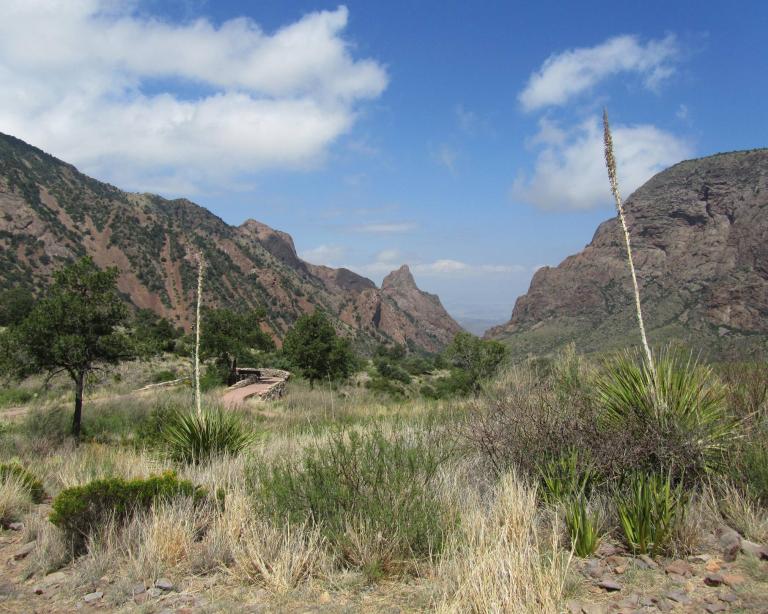 The picture to the right was taken at Big Bend National Park in 2010. For three years it hung on my office wall just behind and above my computer monitor. If things got stressful (and they did many times in 2010), I could look at the picture, reconnect to the beauty and peace of the Chisos Mountains, contemplate the mysteries in the picture (this picture could be a Tarot card!) and feel my blood pressure begin to drop. It wasn’t the same as being there, but it helped. A lot.
Could I have done that remembering without the picture? Yes, but not as well. More importantly, would I have even though to try without the picture to remind me? Out of sight, out of mind…
So, with all these pros and cons, where does this leave the question of cameras at sacred events and sacred sites? As with so many things in life, there are no easy black-or-white answers.
Avoiding distractions – for everyone involved – is paramount. Photographers need to be discreet. Respect those who don’t want to be photographed.
Unless photography is your job, documenting an event or a place is never more important than experiencing it. Take your pictures, but then put the camera down and be fully present. Or experience a place, then photograph it. You can’t do both at once – don’t try.
Why are you taking pictures? To record what you did and to share it with those who couldn’t be there? Or are you trying to capture something that is free, to possess something that is not yours to take?
Some things really are too sacred – too special, too personal, too intimate – to be photographed. When we performed Erin’s initiation last year, we took a few pictures during setup and a few more during the celebration afterwards, but we didn’t even consider taking pictures during the ritual. Is your Full Moon circle too sacred for photographs? Your Samhain ritual? Your coming of age ceremony? The more vulnerable the participants, the more inhibiting a camera can be.
If you have satisfactory answers to these questions and concerns, then shoot and shoot well. Photographs of sacred sites and sacred events can be a treasure for the future. If not, leave the cameras off.
As with all technology, photography is neither good or evil – it all depends on how you use it. Photograph mindfully.
Previous Post
June 28, 2013
Seeking the Mystery
Next Post

July 3, 2013 Preparations and Invocations
Browse Our Archives
Select a Category Books Community CUUPS Druidry Foundations and Context Gods and Goddesses Magic Myth Nature Ritual Spiritual Practice Theology Travel Uncategorized Videos
Select a Month October 2026 September 2026 August 2026 July 2026 June 2026 May 2026 April 2026 March 2026 February 2026 January 2026 December 2025 November 2025 October 2025 September 2025 August 2025 July 2025 June 2025 May 2025 April 2025 March 2025 February 2025 January 2025 December 2024 November 2024 October 2024 September 2024 August 2024 July 2024 June 2024 May 2024 April 2024 March 2024 February 2024 January 2024 December 2023 November 2023 October 2023 September 2023 August 2023 July 2023 June 2023 May 2023 April 2023 March 2023 February 2023 January 2023 December 2022 November 2022 October 2022 September 2022 August 2022 July 2022 June 2022 May 2022 April 2022 March 2022 February 2022 January 2022 December 2021 November 2021 October 2021 September 2021 August 2021 July 2021 June 2021 May 2021 April 2021 March 2021 February 2021 January 2021 December 2020 November 2020 October 2020 September 2020 August 2020 July 2020 June 2020 May 2020 April 2020 March 2020 February 2020 January 2020 December 2019 November 2019 October 2019 September 2019 August 2019 July 2019 June 2019 May 2019 April 2019 March 2019 February 2019 January 2019 December 2018 November 2018 October 2018 September 2018 August 2018 July 2018 June 2018 May 2018 April 2018 March 2018 February 2018 January 2018 December 2017 November 2017 October 2017 September 2017 August 2017 July 2017 June 2017 May 2017 April 2017 March 2017 February 2017 January 2017 December 2016 November 2016 October 2016 September 2016 August 2016 July 2016 June 2016 May 2016 April 2016 March 2016 February 2016 January 2016 December 2015 November 2015 October 2015 September 2015 August 2015 July 2015 June 2015 May 2015 April 2015 March 2015 February 2015 January 2015 December 2014 November 2014 October 2014 September 2014 August 2014 July 2014 June 2014 May 2014 April 2014 March 2014 February 2014 January 2014 December 2013 November 2013 October 2013 September 2013 August 2013 July 2013 June 2013 May 2013 April 2013 March 2013 February 2013 January 2013 December 2012 November 2012 October 2012 September 2012 August 2012 July 2012 June 2012 May 2012 April 2012 March 2012 February 2012 January 2012 December 2011 November 2011 October 2011 September 2011 August 2011 July 2011 June 2011 May 2011 April 2011 March 2011 February 2011 January 2011 December 2010 November 2010 October 2010 September 2010 August 2010 July 2010 June 2010 May 2010 April 2010 March 2010 February 2010 January 2010 December 2009 November 2009 October 2009 September 2009 August 2009 July 2009 June 2009 May 2009 April 2009 March 2009 February 2009 January 2009 December 2008 November 2008 October 2008 September 2008 August 2008 July 2008 June 2008
Follow Us!
TAKE THE
Religious Wisdom Quiz
What covered the sky during Jesus’ crucifixion?
Select your answer to see how you score.
Clouds Rain Darkness Fire
Related posts from John Beckett




What We Lose When “Ask AI” Becomes A...
TRENDING AT PATHEOS Pagan

Nearly every morning, I make the drive to Detroit with my high-school-age...

The Real AI Story Is Adoption Without Trust
Artificial intelligence has crossed a political threshold. It is no longer a...

A new article, written by Jeff Lindsay and Gale L. Pooley,...

Swimfan: Forgotten Aughts Pleasures
This is a recovery effort. In 2002, My Big Fat Greek Wedding...

Top Three Anti-Catholic Lies About Catholicism
This is my initial transcript for the video, "THE 3 WORST...

Pope Leo Celebrates Mass for Nurses & Docs...
I don't have any idea how he did it, but Pope Leo...
view all Pagan blogs
Ad-Free & Subscriber Log-In Subscription Support
- About Us
- 2026 Calendar
- Videos
- Podcasts
- Library of World Religions
- Faith In Media Tracker
- Advertise With Us
- Write for Us
- Privacy Policy
- Terms of Service
- Do Not Sell My Data
- Contact Us
- Radiant Digital
- Manage Newsletter Subscriptions
- Unsubscribe From Notifications
- Sitemap
Copyright 2008-2026, Patheos. All rights reserved.
Subscription Support Ad-Free & Subscriber Log-In
Follow Patheos