
BuddhistCatholicContemplativeEvangelicalGeneral ChristianHinduJewishLatter-day SaintMuslimNew VisionsProgressive Christian
Beliefs
- Buddhist
- Catholic
- Contemplative
- Evangelical
- General Christian
- Hindu
- Jewish
- Latter-day Saint
- More Voices
- Muslim
- New Visions
- Pagan
- Progressive Christian
Topics
- Religion News
- Food and Religion
- Sports and Religion
- Religious Art
- Religious Music and Entertainment
- Religious Events
- History and Religion
- Style and Religion
- Politics and Religion
- Women in Religion
- Recreation Outdoors and Religion
- Business Finance and Religion
- Careers Workplace and Religion
- Education and Religion
- Family Parenting and Religion
- Health Fitness and Religion
- Home and Religion
- Relationships and Religion
- Technology and Religion
- Travel and Religion
Columnists
- Buddhist Columnists
- Business Finance and Religion Columnists
- Careers Workplace and Religion Columnists
- Catholic Columnists
- Contemplative Columnists
- Education and Religion Columnists
- Evangelists Columnists
- Family Parenting and Religion Columnists
- General Christian Columnists
- Health Fitness and Religion Columnists
- Hindu Columnists
- History and Religion Columnists
- Home and Religion Columnists
- Jewish Columnists
- More Voices Columnists
- Latter Day Columnists
- Muslim Columnists
- New Visions Columnists
- Nonreligious Columnists
- Pagan Columnists
- Politics and Religion Columnists
- Progressive Columnists
- Recreation Outdoors and Religion Columnists
- Relationships and Religion Columnists
- Religion News Columnists
- Religious Art Columnists
- Religious Events Columnists
- Religious Music and Entertainment Columnists
- Sports and Religion Columnists
- Style and Religion Columnists
- Technology and Religion Columnists
- Travel and Religion Columnists
- Women in Religion Columnists
Resource Library
- 2026 Calendar
- Library of World Religions
- The 100 Most Holy Places on Earth
- Patheos Answers
- Podcasts
- Videos
- Faith Leaders Database
- Anglican Episcopalian
- Bahai
- Baptist
- Buddhism
- Christianity
- Confucianism
- Eastern Orthodoxy
- Hinduism
- Holiness and Pentecostal
- ISKCON
- Islam
- Judaism
- Lutheran
- Methodist
- The Church of Jesus Christ of Latter-day Saints
- New Age
- Paganism
- Presbytarian and Reformed
- Protestantism
- Religion Behind the Scenes
- Roman Catholic
- Scientology
- Shia Islam
- Sikhism
- Sufism
- Sunni Islam
- Taoism
- Zen
- See all religions
Research Tools
 Ad-Free & Subscriber Log-In Subscription Support
Follow Patheos 

- Trending:
- Advent
- |
- Forgiveness
- |
- Thanksgiving
- |
- Election
- |
- Seasonal Holidays
- |
- Marriage

- Home
- Pagan
- Ronald Hutton and the Paradox of Witchcraft
Ronald Hutton and the Paradox of Witchcraft
Last updated on: April 16, 2013 at 7:04 pm by John Beckett
Ronald Hutton and the Paradox of Witchcraft 2013-04-16T19:04:41-06:00 John Beckett
Patheos Explore the world's faith through different perspectives on religion and spirituality! Patheos has the views of the prevalent religions and spiritualities of the world.

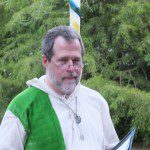
Professor Ronald Hutton at Sacred Lands and Spiritual Landscapes
At the risk of sounding like a fanboy (or perhaps, at the risk of exposing myself for the fanboy I am) the primary reason I went to Sacred Lands and Spiritual Landscapes was Ronald Hutton. I’ve respected his work ever since I read The Triumph of the Moon in 2002 and I’ve enjoyed listening to some of his lectures on Druidcast. He doesn’t come across the ocean very often and when I saw he would be in South Carolina I knew I wanted to go.
He did not disappoint. His two talks were both intellectually stimulating and emotionally engaging, despite his first one being given after being up for 42 straight hours due to flight complications. He answered questions, signed books and talked pleasantly with everyone. When part of our dinner group got put into a back room, he came around and visited with us for a while. Ronald Hutton is as good a person as he is a historian.
Professor Hutton’s current research is on the witch hunts and witch trials of the early modern period. He gave us a preview of his findings and while I’m not going to try to summarize his presentation, I do want to highlight a few of his points as they relate to the subject of magic and witchcraft.
Hutton said “we are the only society that both believes in witchcraft and doesn’t believe in it, and I’d like to keep it that way.”
At the core of witch hunts is the human desire for explanations. Something bad happens and we want to know why… and we want to know who to blame. Couple that with the ancient belief in malefic magic and when crops fail, cows go dry, or children die, people go looking for witches. The practice is far from gone – there are hundreds of witch killings in Africa and Asia every year.
Professor Hutton pointed out that in the time of the great witch hunts, there were very few witch executions in the Celtic countries (Scotland was notorious for witch killings, but they were all in the English-influenced border regions, not in the Highlands). When bad things happened, the Scots, Irish and Welsh blamed it on the faeries, not on the neighbors they didn’t like.
Even in our thoroughly (post) modern society, the belief in magic remains. In her presentation, Sara Amis told of a coworker who discovered Sara read Tarot, assumed she was a witch and asked her to work weather magic for her. When people have a need they look for any way to fill it, even if it doesn’t match what the mainstream society labels as “rational.”
 In his second talk, Professor Hutton used the examples of Stonehenge and Lindow Man to show how the absence of proof leads to speculation that may be very wrong. No one knows why Stonehenge was built or what it was used for. There have been many theories over the centuries, some more likely than others, though none conclusive. In 2008 two separate, highly respected and well-funded groups conducted their own research. One came to the conclusion that Stonehenge was a healing temple, an ancient Celtic version of Lourdes. The other said it was a place for the dead that was rarely entered by the living. Is either explanation right? Is either even close?
Lindow Man is the well-preserved body of a man recovered from a bog in 1984. He was presented by no less an authority than the British Museum as the victim of a human sacrifice from Britain’s pre-Roman days. Yet as Professor Hutton explained (his argument can be found in Blood and Mistletoe, pages 27-28), while that is possible, the evidence is inconclusive. Lindow Man could have been a murder victim or a common execution. And while the dating of the body allows for the possibility Lindow Man died in the pre-Roman era, it’s also possible he died after the Romans left, or at some time during the Roman period.
Who’s right? The only completely accurate answer is We Don’t Know.
You are free to believe Lindow Man was a human sacrifice, or a murder victim, or an executed criminal. That doesn’t mean all interpretations are right. He was only one of those, or possibly something else no one has yet considered. We don’t know and neither do the experts and authorities. In the absence of proof, believe what seems most likely to you and remain open to new evidence and interpretation.
How do magic and witchcraft work? Some magicians insist there are good scientific explanations, or at least there will be once the state of the art of scientific investigation improves in a few generations. Some insist it’s all in your head (although I do love Lon Milo DuQuette’s caveat “you just have no idea how big your head is”). Some say it’s a spiritual operation, the alchemy of changing lead into gold – refining a human into a god. Our fundamentalist detractors say it’s the work of demons out to deceive us. And of course, there are those who say it doesn’t work at all.
Who’s right? Again, the only completely accurate answer is We Don’t Know.
Because there is no definitive explanation of magic and witchcraft we are free to choose the one that is most meaningful and helpful to us. That doesn’t mean any explanation is as good as any other. If we take our craft seriously, we will read and study and practice, and we will write and talk with others. While we will be grounded in tradition, we will change our models and myths as our studies and experiences move us in one direction or another.
Because the mainstream society claims to be rational (though the evidence would strongly indicate otherwise), we are safe to practice magic and witchcraft without fearing that our neighbors will come for us with torches and pitchforks when one of them gets the flu. Although occasionally we come across someone who blames their problems on magical attacks, the law won’t take them seriously and it generally frowns on lynch mobs. I am thankful we live in such a time and place, even as I do my best to re-enchant the world.
Ronald Hutton is right. We are the only society that both believes in witchcraft and doesn’t believe in it, and we need to keep it that way.
Previous Post

April 14, 2013
Sacred Lands and Spiritual Landscapes
Next Post
April 19, 2013 My Defining Moment
Browse Our Archives
Select a Category Books Community CUUPS Druidry Foundations and Context Gods and Goddesses Magic Myth Nature Ritual Spiritual Practice Theology Travel Uncategorized Videos
Select a Month November 2026 October 2026 September 2026 August 2026 July 2026 June 2026 May 2026 April 2026 March 2026 February 2026 January 2026 December 2025 November 2025 October 2025 September 2025 August 2025 July 2025 June 2025 May 2025 April 2025 March 2025 February 2025 January 2025 December 2024 November 2024 October 2024 September 2024 August 2024 July 2024 June 2024 May 2024 April 2024 March 2024 February 2024 January 2024 December 2023 November 2023 October 2023 September 2023 August 2023 July 2023 June 2023 May 2023 April 2023 March 2023 February 2023 January 2023 December 2022 November 2022 October 2022 September 2022 August 2022 July 2022 June 2022 May 2022 April 2022 March 2022 February 2022 January 2022 December 2021 November 2021 October 2021 September 2021 August 2021 July 2021 June 2021 May 2021 April 2021 March 2021 February 2021 January 2021 December 2020 November 2020 October 2020 September 2020 August 2020 July 2020 June 2020 May 2020 April 2020 March 2020 February 2020 January 2020 December 2019 November 2019 October 2019 September 2019 August 2019 July 2019 June 2019 May 2019 April 2019 March 2019 February 2019 January 2019 December 2018 November 2018 October 2018 September 2018 August 2018 July 2018 June 2018 May 2018 April 2018 March 2018 February 2018 January 2018 December 2017 November 2017 October 2017 September 2017 August 2017 July 2017 June 2017 May 2017 April 2017 March 2017 February 2017 January 2017 December 2016 November 2016 October 2016 September 2016 August 2016 July 2016 June 2016 May 2016 April 2016 March 2016 February 2016 January 2016 December 2015 November 2015 October 2015 September 2015 August 2015 July 2015 June 2015 May 2015 April 2015 March 2015 February 2015 January 2015 December 2014 November 2014 October 2014 September 2014 August 2014 July 2014 June 2014 May 2014 April 2014 March 2014 February 2014 January 2014 December 2013 November 2013 October 2013 September 2013 August 2013 July 2013 June 2013 May 2013 April 2013 March 2013 February 2013 January 2013 December 2012 November 2012 October 2012 September 2012 August 2012 July 2012 June 2012 May 2012 April 2012 March 2012 February 2012 January 2012 December 2011 November 2011 October 2011 September 2011 August 2011 July 2011 June 2011 May 2011 April 2011 March 2011 February 2011 January 2011 December 2010 November 2010 October 2010 September 2010 August 2010 July 2010 June 2010 May 2010 April 2010 March 2010 February 2010 January 2010 December 2009 November 2009 October 2009 September 2009 August 2009 July 2009 June 2009 May 2009 April 2009 March 2009 February 2009 January 2009 December 2008 November 2008 October 2008 September 2008 August 2008 July 2008 June 2008
Follow Us!
TAKE THE
Religious Wisdom Quiz
Who said, 'The Lord gives and the Lord takes away'?
Select your answer to see how you score.
Job Solomon David Moses
Related posts from John Beckett
Toward a Sense of Peace and Well-Being
TRENDING AT PATHEOS Pagan

Happy Thanksgiving! I published this Thanksgiving column back in 2017 in...

More Than a Meal: A Messianic Thanksgiving
A Messianic Thanksgiving What if Thanksgiving became more than a meal to...

The Darkening of the Sun, Moon, and Stars
The darkening of the sun and moon and the falling of stars...

Gratitude as the Parent of All Virtues
Giving thanks stems from gratitude. Cicero said that gratitude is the parent...

Make Thanksgiving Bring Family Closer
Written by Dr. David K. Ewen from Eternal Truth Bible College Start...

Ghosts, Spirits, and Wizards in Post-Puritan New England
As it is Thanksgiving, I have a seasonal post concerned with New...
view all Pagan blogs
Ad-Free & Subscriber Log-In Subscription Support
- About Us
- 2026 Calendar
- Videos
- Podcasts
- Library of World Religions
- Faith In Media Tracker
- Advertise With Us
- Write for Us
- Privacy Policy
- Terms of Service
- Do Not Sell My Data
- Contact Us
- Radiant Digital
- Manage Newsletter Subscriptions
- Unsubscribe From Notifications
- Sitemap
Copyright 2008-2026, Patheos, part of the Radiant Digital network of media brands. All rights reserved.
Subscription Support Ad-Free & Subscriber Log-In
Follow Patheos