
BuddhistCatholicContemplativeEvangelicalGeneral ChristianHinduJewishLatter-day SaintMuslimNew VisionsProgressive Christian
Beliefs
- Buddhist
- Catholic
- Contemplative
- Evangelical
- General Christian
- Hindu
- Jewish
- Latter-day Saint
- More Voices
- Muslim
- New Visions
- Pagan
- Progressive Christian
Topics
- Religion News
- Food and Religion
- Sports and Religion
- Religious Art
- Religious Music and Entertainment
- Religious Events
- History and Religion
- Style and Religion
- Politics and Religion
- Women in Religion
- Recreation Outdoors and Religion
- Business Finance and Religion
- Careers Workplace and Religion
- Education and Religion
- Family Parenting and Religion
- Health Fitness and Religion
- Home and Religion
- Relationships and Religion
- Technology and Religion
- Travel and Religion
Columnists
- Buddhist Columnists
- Business Finance and Religion Columnists
- Careers Workplace and Religion Columnists
- Catholic Columnists
- Contemplative Columnists
- Education and Religion Columnists
- Evangelists Columnists
- Family Parenting and Religion Columnists
- General Christian Columnists
- Health Fitness and Religion Columnists
- Hindu Columnists
- History and Religion Columnists
- Home and Religion Columnists
- Jewish Columnists
- More Voices Columnists
- Latter Day Columnists
- Muslim Columnists
- New Visions Columnists
- Nonreligious Columnists
- Pagan Columnists
- Politics and Religion Columnists
- Progressive Columnists
- Recreation Outdoors and Religion Columnists
- Relationships and Religion Columnists
- Religion News Columnists
- Religious Art Columnists
- Religious Events Columnists
- Religious Music and Entertainment Columnists
- Sports and Religion Columnists
- Style and Religion Columnists
- Technology and Religion Columnists
- Travel and Religion Columnists
- Women in Religion Columnists
Resource Library
- 2026 Calendar
- Library of World Religions
- The 100 Most Holy Places on Earth
- Patheos Answers
- Podcasts
- Videos
- Faith Leaders Database
- Anglican Episcopalian
- Bahai
- Baptist
- Buddhism
- Christianity
- Confucianism
- Eastern Orthodoxy
- Hinduism
- Holiness and Pentecostal
- ISKCON
- Islam
- Judaism
- Lutheran
- Methodist
- The Church of Jesus Christ of Latter-day Saints
- New Age
- Paganism
- Presbytarian and Reformed
- Protestantism
- Religion Behind the Scenes
- Roman Catholic
- Scientology
- Shia Islam
- Sikhism
- Sufism
- Sunni Islam
- Taoism
- Zen
- See all religions
Research Tools
 Ad-Free & Subscriber Log-In Subscription Support
Ad-Free & Subscriber Log-In Subscription Support
Follow Patheos 

- Trending:
- Forgiveness
- |
- Marriage
- |
- Consciousness
- |
- Death Penalty
- |
- Election
- |
- Halloween

- Home
- Pagan
- Gods and Fighting Men
Gods and Fighting Men
Last updated on: November 25, 2012 at 5:45 pm by John Beckett
Gods and Fighting Men 2012-11-25T17:45:00-06:00 John Beckett
Patheos Explore the world's faith through different perspectives on religion and spirituality! Patheos has the views of the prevalent religions and spiritualities of the world.
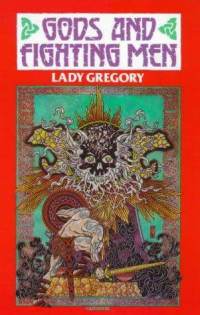
For all my Druid reading I had never read any of the Irish myths. I’ve heard many of them: some in my OBOD studies, some in academic works like Celtic Heritage, and some in songs and rituals. Earlier this year I felt the need to start working with the Irish literature, and when I asked John Michael Greer for suggestions, one of his first was Gods and Fighting Men.
Gods and Fighting Men was written by Lady Augusta Gregory and first published in 1904. It’s her compilation and translation of Irish myths from several sources. As the subtitle indicates it’s divided into two parts, “The Story of the Tuatha De Danaan and of the Fianna of Ireland.”
Several things struck me in reading these stories. The first is that was a society that valued fighting. Their heroes killed hundreds in a single battle and a handful of the Fianna could defeat a whole army. They weren’t celebrating huge conquests like Alexander or Julius Caesar, they were celebrating frequent, low-intensity raiding and retaliation between tribes and cities. This seems consistent with what I’ve read about tribal societies.
The stories place a huge emphasis on honor, keeping your word, and doing the right thing no matter what. People make open ended deals: I give you this, and you’ll give me something of my choosing, at a time I select. You’re then honor-bound to give what’s asked.
The best example of this is Cormac, who bargained with a stranger for a shining branch with nine apples of gold. At the end of the year, the stranger came back and asked for Cormac’s daughter, then his son, and finally his wife. Cormac goes after them, runs into the mists (the transition to the Otherworld) and eventually finds that the stranger was Manannan mac Lir, and that his family has been unharmed and untouched. I think the point is that when you do the right things – when you keep your word no matter what – everything is going to work out OK in the end.
The gods in these stories are the gods of a polytheistic people – very human-like, but more. The Tuatha de Danaan are the children of Danu, but Danu is mentioned only in passing. My [rather limited] understanding is that this is fairly common – many peoples have gods and goddesses who either created the world or founded the tribe and then stepped away, leaving the running of things to their children. In the Egyptian stories Ra created the world, but it is his grandson Osiris who rules the underworld and his great-grandson Horus who rules this world.
I find the role of women to be very interesting. In the stories of the Tuatha De Danaan, goddesses are more or less equal to the gods. There aren’t as many of them and they aren’t as involved in fighting, but they are clearly not second class citizens. As you move what appears to be forward in time, you see female warriors and Druids – not very many of them (they’re rare enough to be called out), but you do see them. As you get into ordinary men and women, women are “obtained” and “given” in marriage, but they’re still independent actors. Moving deeper into the stories of the Fianna, women become less and less important and seem to be relegated to the roles of wife, mother and lover. I’m an engineer, not a psychologist or anthropologist, but it seems to me the stories reflect the tribal memories of a matriarchal society and a pragmatic attitude of “if you can do it, we don’t care what gender you are,” which gradually gave way to a male-dominated society.
I enjoyed the Gods section and it went fairly quickly. The Fianna section slowed down, in part because it wasn’t as interesting to me and in part because reading time got harder to come by. But I really liked the last section, which were conversations between Oisin (who had returned to Ireland after spending hundreds of years in the Other world) and St. Patrick. Patrick constantly tried to convert Oisin, telling him that Finn and the Fianna were being tormented in hell because they weren’t Christians. Oisin steadfastly refused to convert and insisted there was no hell and no devil that could keep Finn and the Fianna under bonds.
I have to wonder when that was written (i.e. – composed). Presumably it’s more recent than the other tales and well into the Christian era. But the writer is very sympathetic to the old beliefs.
It’s been good to read these stories. They’re the closest tangible connection we’ve got to our ancient Celtic ancestors and they’re part of the foundation of Druidry both ancient and contemporary. I’ve picked up bits and pieces here and there over the years, but that’s no substitute for actually reading them.
If you haven’t read these stories I encourage you to do so. Gods and Fighting Men is in the public domain and it’s available on sacred-text.com and as a free Kindle download. It’s also available in hardcover and paperback.
Previous Post

November 22, 2012
Thanksgiving Prayer
Next Post
November 28, 2012 Interdependent Gods
Browse Our Archives
Select a Category Books Community CUUPS Druidry Foundations and Context Gods and Goddesses Magic Myth Nature Ritual Spiritual Practice Theology Travel Uncategorized Videos
Select a Month October 2026 September 2026 August 2026 July 2026 June 2026 May 2026 April 2026 March 2026 February 2026 January 2026 December 2025 November 2025 October 2025 September 2025 August 2025 July 2025 June 2025 May 2025 April 2025 March 2025 February 2025 January 2025 December 2024 November 2024 October 2024 September 2024 August 2024 July 2024 June 2024 May 2024 April 2024 March 2024 February 2024 January 2024 December 2023 November 2023 October 2023 September 2023 August 2023 July 2023 June 2023 May 2023 April 2023 March 2023 February 2023 January 2023 December 2022 November 2022 October 2022 September 2022 August 2022 July 2022 June 2022 May 2022 April 2022 March 2022 February 2022 January 2022 December 2021 November 2021 October 2021 September 2021 August 2021 July 2021 June 2021 May 2021 April 2021 March 2021 February 2021 January 2021 December 2020 November 2020 October 2020 September 2020 August 2020 July 2020 June 2020 May 2020 April 2020 March 2020 February 2020 January 2020 December 2019 November 2019 October 2019 September 2019 August 2019 July 2019 June 2019 May 2019 April 2019 March 2019 February 2019 January 2019 December 2018 November 2018 October 2018 September 2018 August 2018 July 2018 June 2018 May 2018 April 2018 March 2018 February 2018 January 2018 December 2017 November 2017 October 2017 September 2017 August 2017 July 2017 June 2017 May 2017 April 2017 March 2017 February 2017 January 2017 December 2016 November 2016 October 2016 September 2016 August 2016 July 2016 June 2016 May 2016 April 2016 March 2016 February 2016 January 2016 December 2015 November 2015 October 2015 September 2015 August 2015 July 2015 June 2015 May 2015 April 2015 March 2015 February 2015 January 2015 December 2014 November 2014 October 2014 September 2014 August 2014 July 2014 June 2014 May 2014 April 2014 March 2014 February 2014 January 2014 December 2013 November 2013 October 2013 September 2013 August 2013 July 2013 June 2013 May 2013 April 2013 March 2013 February 2013 January 2013 December 2012 November 2012 October 2012 September 2012 August 2012 July 2012 June 2012 May 2012 April 2012 March 2012 February 2012 January 2012 December 2011 November 2011 October 2011 September 2011 August 2011 July 2011 June 2011 May 2011 April 2011 March 2011 February 2011 January 2011 December 2010 November 2010 October 2010 September 2010 August 2010 July 2010 June 2010 May 2010 April 2010 March 2010 February 2010 January 2010 December 2009 November 2009 October 2009 September 2009 August 2009 July 2009 June 2009 May 2009 April 2009 March 2009 February 2009 January 2009 December 2008 November 2008 October 2008 September 2008 August 2008 July 2008 June 2008
Follow Us!
TAKE THE
Religious Wisdom Quiz
I used a tent peg and hammer to kill a fleeing enemy commander while he slept. Who am I?
Select your answer to see how you score.
Jael Deborah Delilah Ruth
Related posts from John Beckett

The Vampire Films of Jean Rollin



Bo French Doesn’t Understand Texas
TRENDING AT PATHEOS Pagan

The First Eucharistic Controversy: Christ’s Real Presence
For Catholics, the Eucharist is the source and summit of the Christian...

How to Make a Decision When You Can't...
Main point: It’s much more valuable to stay close to God so...

Archdiocese Hosts Military Marriage Retreat in Germany
RASTATT, Germany — The transient military lifestyle, with its frequent deployments and...

Nearly every morning, I make the drive to Detroit with my high-school-age...

The Real AI Story Is Adoption Without Trust
Artificial intelligence has crossed a political threshold. It is no longer a...

A new article, written by Jeff Lindsay and Gale L. Pooley,...
view all Pagan blogs
Ad-Free & Subscriber Log-In Subscription Support
- About Us
- 2026 Calendar
- Videos
- Podcasts
- Library of World Religions
- Faith In Media Tracker
- Advertise With Us
- Write for Us
- Privacy Policy
- Terms of Service
- Do Not Sell My Data
- Contact Us
- Radiant Digital
- Manage Newsletter Subscriptions
- Unsubscribe From Notifications
- Sitemap
Copyright 2008-2026, Patheos. All rights reserved.
Subscription Support Ad-Free & Subscriber Log-In
Follow Patheos