
BuddhistCatholicContemplativeEvangelicalGeneral ChristianHinduJewishLatter-day SaintMuslimNew VisionsProgressive Christian
Beliefs
- Buddhist
- Catholic
- Contemplative
- Evangelical
- General Christian
- Hindu
- Jewish
- Latter-day Saint
- More Voices
- Muslim
- New Visions
- Pagan
- Progressive Christian
Topics
- Religion News
- Food and Religion
- Sports and Religion
- Religious Art
- Religious Music and Entertainment
- Religious Events
- History and Religion
- Style and Religion
- Politics and Religion
- Women in Religion
- Recreation Outdoors and Religion
- Business Finance and Religion
- Careers Workplace and Religion
- Education and Religion
- Family Parenting and Religion
- Health Fitness and Religion
- Home and Religion
- Relationships and Religion
- Technology and Religion
- Travel and Religion
Columnists
- Buddhist Columnists
- Business Finance and Religion Columnists
- Careers Workplace and Religion Columnists
- Catholic Columnists
- Contemplative Columnists
- Education and Religion Columnists
- Evangelists Columnists
- Family Parenting and Religion Columnists
- General Christian Columnists
- Health Fitness and Religion Columnists
- Hindu Columnists
- History and Religion Columnists
- Home and Religion Columnists
- Jewish Columnists
- More Voices Columnists
- Latter Day Columnists
- Muslim Columnists
- New Visions Columnists
- Nonreligious Columnists
- Pagan Columnists
- Politics and Religion Columnists
- Progressive Columnists
- Recreation Outdoors and Religion Columnists
- Relationships and Religion Columnists
- Religion News Columnists
- Religious Art Columnists
- Religious Events Columnists
- Religious Music and Entertainment Columnists
- Sports and Religion Columnists
- Style and Religion Columnists
- Technology and Religion Columnists
- Travel and Religion Columnists
- Women in Religion Columnists
Resource Library
- 2026 Calendar
- Library of World Religions
- The 100 Most Holy Places on Earth
- Patheos Answers
- Podcasts
- Videos
- Faith Leaders Database
- Anglican Episcopalian
- Bahai
- Baptist
- Buddhism
- Christianity
- Confucianism
- Eastern Orthodoxy
- Hinduism
- Holiness and Pentecostal
- ISKCON
- Islam
- Judaism
- Lutheran
- Methodist
- The Church of Jesus Christ of Latter-day Saints
- New Age
- Paganism
- Presbytarian and Reformed
- Protestantism
- Religion Behind the Scenes
- Roman Catholic
- Scientology
- Shia Islam
- Sikhism
- Sufism
- Sunni Islam
- Taoism
- Zen
- See all religions
Research Tools
 Ad-Free & Subscriber Log-In Subscription Support
Ad-Free & Subscriber Log-In Subscription Support
Follow Patheos 

- Trending:
- Forgiveness
- |
- Marriage
- |
- Consciousness
- |
- Death Penalty
- |
- Election
- |
- Halloween

- Home
- Pagan
- Apocalypse Not
Apocalypse Not
Last updated on: July 22, 2012 at 6:20 pm by John Beckett
Apocalypse Not 2012-07-22T18:20:00-06:00 John Beckett
Patheos Explore the world's faith through different perspectives on religion and spirituality! Patheos has the views of the prevalent religions and spiritualities of the world.
 Pyramid of the Magician, Uxmal, Yucatan
Apocalypse Not
Denton Unitarian Universalist Fellowship
July 22, 2012
Introduction – The Maya and Their Calendars
For a long time we’ve been warned something big is coming at the end of this year. On December 21, 2012, the Mayan long count calendar comes to an end, and with it, the end of, well, something or other.
The Maya were one of the most sophisticated pre-Columbian civilizations in the Americas. They had a fully developed system of writing, a settled government, and trade with people as far away as Panama and the Caribbean islands. They built huge pyramids, they were expert astronomers, they developed a very precise calendar, and then one day they just vanished.
Except, they didn’t.
It is true their civilization collapsed, and we may never know why. Possibilities include foreign invasions, civil war, epidemics, and climate change. One hypothesis says overpopulation caused the Maya to clear too much land for agriculture, which in turn caused the rainfall patterns to change, resulting in drought and famine.
But the Mayan people are still there, still living where their ancestors lived, and in many cases, still speaking their languages. Mexico recognizes eight variants of the Mayan language and Guatemala recognizes twenty one.
And what of their prophecy of the end of the world or the end of an age or the end of something? Once again, reality isn’t as glamorous as legend. The long count calendar is based on a formal year of 360 days, called a tun. Twenty tun make a katun, twenty katun make a baktun, and thirteen baktun make up the long count cycle of roughly 5125 years. The current cycle began on August 13, 3114 BCE and will end on December 21, 2012.
The long count cycle obviously had some importance to the Maya, but it wasn’t of ultimate importance. While thirteen baktun make up the long count cycle, twenty baktun make a piktun, twenty piktun make a kalabtun, twenty kalabtun make a kinchiltun, and twenty kinchiltun make a alautun, which is a period of over 63 million years. Clearly, the Maya thought big! More importantly, in all their many writings, there is only one reference to the date we call December 21, 2012 – it is vague and says nothing about the end of anything.
Whatever has enthralled our society with the end of the Mayan calendar has very little to do with the Maya and very much to do with our own fascination with apocalyptic prophecies and conspiracies. Debunking them is like treating a fire ant mound. One goes away, but then another one pops up on the other side of your yard.
Author and Archdruid John Michael Greer has written a book titled Apocalypse Not, a survey of apocalyptic prophecies throughout history. We’re going to take a look at what Greer has to say about the origins of the apocalypse meme and why these prophecies persist even though they always fail. And then we’re going to look at the popular expectations for December 21st, think about how we can best respond to them, and how we can channel all that energy into something useful.
Origins of the Apocalypse Meme
A catastrophe – a great disaster – is not an apocalypse. Catastrophes occur from time to time and sometimes they’re even predicted. Great destruction happens, but those who are left pick up and move on.
What makes an apocalypse different isn’t the prophecy or the destruction, it’s what comes afterwards. The word “apocalypse” originated in Greek and means “uncovering” or “revelation.” After the destruction comes the revelation of Truth with a capital T. The biblical Book of Revelation speaks of earthquakes, famine, disease and war, it speaks of rivers of blood. But in the end, it promises a new Heaven and a new Earth where there will be no death and where Christ will reign forever and ever.
You will not find apocalyptic prophecies in tribal or polytheistic societies. They don’t need them. Their gods and goddesses are older, stronger and wiser than humans, but they aren’t all-knowing or all-powerful – or even all-good. Good things happen, bad things happen, the Great Wheel turns and life goes on.
But when monotheism began to develop around 3500 years ago, it ran into a problem that theologians and philosophers have yet to solve – the problem of evil. If there is one God who is all-knowing, all-powerful and all-good, why is there evil in the world? Why is there suffering? If God cannot prevent evil then he is not all-powerful, and if he can prevent it but chooses not to then he is not all-good.
The first large-scale monotheistic religion was Zoroastrianism, which arose in Iran around 1500 BCE. Its prophet, Zarathustra, had a vision in which Ahura Mazda, the god of Truth and Order and the only true god, appeared to him and explained that evil was caused by an evil god and a group of demons who were mostly borrowed from the older Iranian gods.
Zarathustra said life is a struggle between good and evil, but that struggle won’t go on forever. Eventually Ahura Mazda would defeat the forces of evil and “all sorrow, suffering, illness, and death would end forever, the dead would come back to life, and faithful believers in Zarathustra’s teaching would enter into an eternity of bliss, while those who rejected the true faith would be forced to wade through torrents of molten metal and the like.”
Evil, then, was only a temporary condition. Eventually Good would triumph over Evil, all would be made right and scores would be settled. It was a very attractive promise.
Jewish Apocalyptic Writings
As much as purists rant against it, religious syncretism is more a rule of human societies than an exception – something we UUs and our many hyphenated spiritual paths know first-hand. Judaism has fought syncretism perhaps better than any other religion, but even they have not been entirely successful. Judaism as we know it began during the Babylonian captivity of the 6th century BCE, as the Hebrews fought to maintain their religious and cultural identity. They were freed to go back to Palestine by Cyrus the Great when Persia defeated Babylon. And while the Hebrews did not adopt the religion of their liberators, Zoroastrian thought clearly had entered Judaism by the time the Book of Daniel was written.
The Book of Daniel is set during the Babylonian captivity. It was traditionally assumed to have been written during that time and fundamentalists still insist that it was, but mainstream scholars have long agreed it was written four hundred years later, when the Maccabees were getting ready to revolt against their Greek overlords. Part of it tells the story of Daniel, but the core of the book is an apocalyptic prophecy predicting a series of wars and terrible rulers. At the end God will intervene and a Jewish monarch – a messiah – will rule and the dead will return to life.
The message was clear to its intended audience: fight against the oppressors, fight on the side that’s preordained to win, and even if you die you’ll be restored to life when it’s all done. The Maccabean revolt was successful and it is commemorated every year with Hanukkah. The oil that miraculously lasted for eight nights was needed for the re-dedication of the Temple following the victory.
This tradition of apocalyptic literature returned when the Romans conquered Palestine, and the Dead Sea Scrolls contain numerous prophecies and calls to rebellion. The revolt against the Romans was not successful – in 70 CE it was crushed and the Jews scattered to the corners of the world. But the apocalyptic tradition had been established and it made its way into the new upstart religion called Christianity.
The Transition to Christianity
The New Testament may or may not be an accurate historical account of the life of Jesus, but it is certainly an accurate account of what the early Christians who wrote it believed about Jesus. And they believed Jesus was coming back – perhaps in their lifetimes. St. Paul wrote “For the Lord himself shall descend from heaven with a shout, with the voice of the archangel, and with the trump of God: and the dead in Christ shall rise.” (1 Thessalonians 4:16, KJV)
The author of Revelation was traditionally assumed to be the apostle John, but we really don’t know if it was written by him or another John or someone claiming to be the apostle John. It is a classic apocalyptic prophecy in the lineage of Zarathustra and the writer of Daniel, and it describes events so bizarre some have suggested it was a shamanic vision, perhaps enabled or enhanced by hallucinogenic substances. Though it speaks of Babylon that is almost certainly code for the Roman Empire, which by the time Revelation was written had destroyed the Jewish temple and had begun to persecute Christians either because they would not make sacrifices to the Emperor or because they were convenient scapegoats for whatever problems the public was complaining about.
The prophecies of Revelation are somewhat unique. John Michael Greer says it better than I can:
The astonishing detail is that [it] was right. The Roman Empire was, in fact, ravaged by epidemics and earthquakes in the three centuries between John’s vision and the fall of Rome. The terrifying horsemen showed up on schedule – historians call them the Huns. For a thousand years after the Christianization of the Roman Empire, Christianity was the unchallenged faith of the Western world.
John’s vision counts as one of the most spectacularly successful prophecies on record. Thus it’s all the more telling that only a small minority of Christians have ever accepted that they have already come true.
Why have most Christians insisted that the events of Revelation are yet to come? The catastrophe happened but the Truth was never revealed. Jesus has never returned, the dead haven’t risen, and that new Heaven and new Earth are nowhere to be found. Just as importantly, the Book of Revelation has its own supervillian – the Antichrist. Who is the Antichrist? The Bible is rather vague on this, which makes the Antichrist a convenient projection for your enemies. Various kings, emperors and popes have been labeled “Antichrist” since the Middle Ages, including just about every brutal dictator and unpopular President in the last 40 years. And if the Antichrist is on the Earth, then the Rapture can’t be far behind.
Last year when Harold Camping joined a long list of Christians whose prediction of the Rapture turned out to be wrong, a lot of folks on our side of the religious spectrum had fun with it. There was talk of Rapture parties and post-Rapture looting, and the ever-popular bumper sticker asking “after the Rapture, can I have your car?” I had a hard time laughing.
I grew up in small fundamentalist Baptist church, where they preached the Bible was the literal and inerrant Word of God. They sang “Jesus is coming soon, morning or night or noon, many will meet their doom.” They taught that Christians would suddenly disappear from the Earth – and with them, all hope of avoiding eternity in Hell for those left behind.
For a child who was prone to literal thinking, who didn’t yet have the breadth of experience to question what he was taught even if it didn’t seem right, and whose lack of confidence at times verged on paranoia, tales of the Rapture were more terrifying than any horror movie ever made.
If I came home from school and my parents weren’t there, had the Rapture happened? This was before cell phones, the internet and CNN – I had no way to know. Was I going to suffer through the Great Tribulation and then burn in Hell forever?
I can’t tell you how many times the sight of my mother’s car coming up the driveway was the most wonderful thing in the world.
It wasn’t until I was well into my adult years I learned that Catholic, Eastern Orthodox and most mainline Protestant churches reject the whole idea of Rapture and Tribulation. Neither the Baptists nor the Methodists ever told me the concepts of Rapture and Tribulation are at most 300 years old and the doctrine was first proposed by John Nelson Darby in 1827. In the end, though, no amount of reason could erase the fears that were preached to me as a child and burned into my impressionable young mind.
When I became a Pagan, those fears finally went away. When I began to experience the old gods and goddesses, when I met them in meditation and in ritual, when I experienced Oneness for a fleeting but timeless moment, when I developed a connection to the Earth and its rhythms and cycles, then those old fears were finally crowded out.
It took good religious experiences to counteract a very bad religious experience.
The Persistence of the Apocalypse Meme
Apocalyptic prophecies have a 3500 year track record – they have been wrong every single time. Why do they persist?
Why do people take cocaine and heroin, despite their long track records of destroying lives? Because it masks pain and because it feels good. Apocalyptic prophecies make their believers feel good. Like drugs, they may not make their users feel joyous or even happy and they may ultimately kill them, but they do make them feel good.
If you’re being persecuted by the Romans, if your religion is being ridiculed, if you just can’t stand the thought that evildoers are prospering, an apocalyptic prophecy tells you “it’s going to be OK.” Your side is going to win, you’re going to be proved right, you’ll be rewarded for your faithfulness and the people who opposed you will be punished. Back it up with claims of the authority of scripture and of divine revelation and it’s a very intoxicating offer.
We UUs are a diverse bunch. Some of us insist on hard evidence before we’ll believe anything, while others believe things we think are likely but understand aren’t certain. The value of these uncertain, unverifiable beliefs isn’t in their objective truth, since that can’t be established. Their value is in whether or not they’re meaningful and helpful. If belief in an afterlife causes you to stop fearing death and to feel a connection with your departed loved ones, it’s a good thing.
If that belief causes you to stop living here and now and focus only on an afterlife that may or may not happen, that’s a bad thing.
Belief in apocalyptic prophecies may be meaningful, but it is never helpful.
Evolution or Action
While apocalyptic prophecies always fail, catastrophes do happen. Earthquakes and tornadoes happen. 9-11 and Hurricane Katrina happened. Some people died and others had their lives turned upside down. But the righteous weren’t spared, the wicked weren’t punished, and when it was over there was no paradise, no divine justice established. Good things happen, bad things happen, those who are left pick up the pieces and life goes on.
65 million years ago a catastrophe happened – an asteroid struck the Earth and wiped out the giant reptiles who had ruled our planet for over a hundred million years. That catastrophe created an opportunity for an insignificant group of creatures called mammals. We know how that story plays out because we’re part of it. What we often forget is that it took 60 million years for the first human-like creature to appear, and over four million years beyond that to reach the first humans that were more or less like us.
Most of us don’t want to wait a couple million years for natural selection to do its thing, and we rightly want to avoid being among those Martin Luther King criticized for telling the oppressed “to wait for a more convenient season.” In his “Letter From a Birmingham Jail” King wrote: “Human progress never rolls in on wheels of inevitability; it comes through the tireless efforts of men willing to be co-workers with God, and without this hard work, time itself becomes an ally of the forces of social stagnation. … We must use time creatively, in the knowledge that the time is always ripe to do right.”
150 years ago slavery was legal here in Texas. It took a war to change that. 100 years ago women couldn’t vote, and 50 years ago African-Americans technically could but practically couldn’t. It took organizing and marching and campaigning to change that. Just nine years ago private sexual activity between same-sex couples was illegal. It took a Supreme Court case to change that.
There are things in this world that need to change, and we cannot wait for the end of the world to change them. Ahura Mazda isn’t coming to drop Sheriff Joe Arpaio into a river of molten metal. Jesus isn’t coming with a new Earth to replace the one we’ve trashed. UFOs aren’t coming with cures for cancer and the secret to cold fusion.
Does that mean we’re on our own? I like to think our gods and ancestors and the Universe itself are calling us and encouraging us and nudging us in the direction we should go. But no matter where the inspiration comes from, if change is to happen either we will do it or it won’t get done.
On December 21, the world will not end and there will be no great revealing of divine wisdom. What will happen when it’s business as usual on December 22? Three days before Christmas I imagine most folks will blow by it in a mad shopping frenzy. Some will laugh, while a few will secretly breathe a sigh of relief.
Some will be disappointed they were wrong, sad that life simply goes on and upset there is no cosmic get-out-of-jail-free card.
I recently finished reading the memoir of Lon Milo DuQuette, who is one of the most knowledgeable and capable ceremonial magicians of our time. After a lifetime of study and practice, DuQuette says the only thing magic can change is you. That follows the thoughts of the 19th century philosopher Søren Kierkegaard, who said “Prayer does not change God, but changes him who prays.”
Prayer will change you. Meditation will change you. Study will change you. Service will change you. And when you change, the world changes, just a little. When more people change, the world changes a little more. And when enough people change, laws change, business practices change and social customs change. All you can change is you, but all you have to change is you.
Change – Our Part
So back to the Mayan calendar. One long count calendar ends and the next begins – surely that signifies some major change, right?
We like to categorize things and we like clear lines of demarcation. There are ages and eras in human history: the Dark Ages, the Renaissance, the Industrial Age, the Information Age. But figuring out when these ages started and stopped can only be done long after they happen, and even then it’s a very inexact science. Big changes take time.
Those of us who are old enough remember “the dawning of the Age of Aquarius” which promised “Harmony and understanding … and the mind’s true liberation.” It didn’t quite work out that way – it never does. But there is no question the idealism of the 1960s changed our society and our world and continues to change it today, mostly for the better. Can we build on that? Can the fear and anxiety surrounding the Mayan calendar be translated into something productive? As much as we’d all love to see a sudden shift in attitudes and structures, we know Martin Luther King was right: “Human progress never rolls in on wheels of inevitability; it comes through the tireless efforts of men [and women] willing to be co-workers with God.”
Change is in the air but progress is not inevitable. Our society has huge structural problems but all we can change is ourselves. The complexity of the situation can be overwhelming, it can make us think nothing we can do will help, it can make us wish for an apocalypse to establish divine justice… or at least to wipe out all the evil and let us start over.
The good news is that we don’t have to fix it all. We just have to do what we can to help.
Can we be creative? Can we challenge old assumptions – our own old assumptions? Can we not worry about saving the world and just do something new and different to make things a little better for ourselves and for others?
Can we be nurturing? We can’t change other people, but we can make it easier for them to make the changes they want to make. Can we encourage and support our family and friends and neighbors, not to do what we think they ought to do, but to do what they’re called to do?
Can we be protective? Can we look out for our little corner of the Earth? Can we watch over creative attempts at justice and compassion and keep them from being crushed by cynicism before they even get started?
What inspires you to work tirelessly? Where in your life are you a co-worker with God? Where can you be the hands of the Goddess?
Prayer will change you. Meditation will change you. Study will change you. Service will change you. And when you change, the world changes with you.
December 21, 2012
December 21 is also the Winter Solstice – a fact that appears to be a coincidence. The Maya were excellent astronomers and if they wanted to tie their long count calendar to the solstices they certainly were capable of doing so, but we have no indication they did. Remember, this long count started on an August 13. On the evening of Friday, December 21 the Covenant of Unitarian Universalist Pagans will hold our Winter Solstice celebration here. We’ll mark the return of the Sun and we’ll also work to translate the energy around the Mayan calendar into something creative, nurturing and protective. Everyone is invited and I hope you’ll join us.
And if, through chance or fate or act of the gods, for the first time in human history there really is an apocalypse… where else would you rather be?
Benediction
The end of the Mayan calendar is a rare event, but it is no more significant than the end of the calendars we throw away every December 31. The fear surrounding December 21 comes from a 3500 year tradition of apocalyptic prophecies. Like bad drugs, they feel good for a while, but they always, always fail.
As we leave this place and return to the ordinary world, may we remember that great change comes only when ordinary people make many small changes with the only thing they can change: themselves.
Go in peace but first turn and greet those around you, particularly those you do not know.
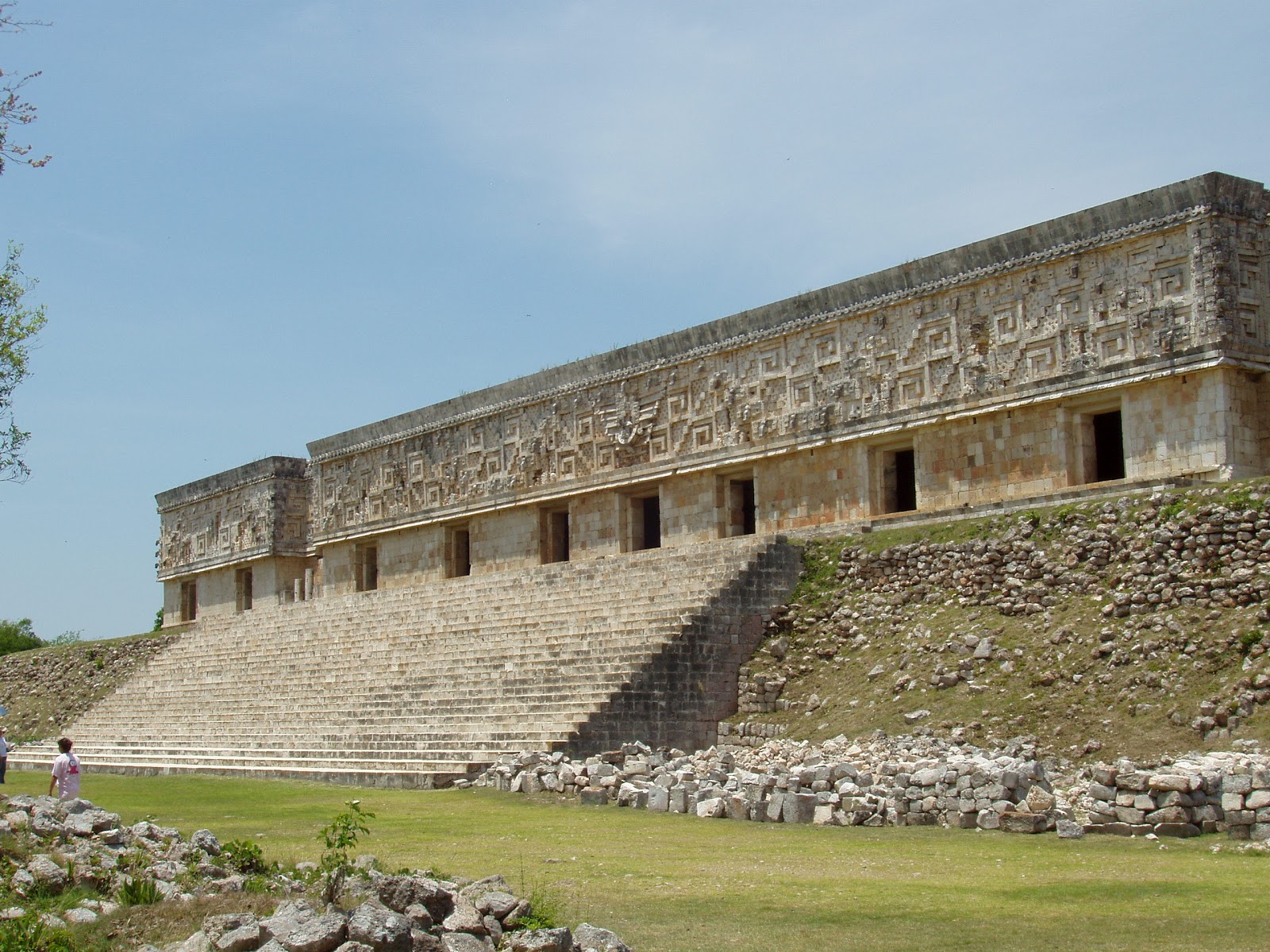 Governor’s Palace, Uxmal, Yucatan
Previous Post

July 20, 2012
Tragedy and Uncertainty
Next Post
July 24, 2012 Fat and Athletes and Expectations
Browse Our Archives
Select a Category Books Community CUUPS Druidry Foundations and Context Gods and Goddesses Magic Myth Nature Ritual Spiritual Practice Theology Travel Uncategorized Videos
Select a Month October 2026 September 2026 August 2026 July 2026 June 2026 May 2026 April 2026 March 2026 February 2026 January 2026 December 2025 November 2025 October 2025 September 2025 August 2025 July 2025 June 2025 May 2025 April 2025 March 2025 February 2025 January 2025 December 2024 November 2024 October 2024 September 2024 August 2024 July 2024 June 2024 May 2024 April 2024 March 2024 February 2024 January 2024 December 2023 November 2023 October 2023 September 2023 August 2023 July 2023 June 2023 May 2023 April 2023 March 2023 February 2023 January 2023 December 2022 November 2022 October 2022 September 2022 August 2022 July 2022 June 2022 May 2022 April 2022 March 2022 February 2022 January 2022 December 2021 November 2021 October 2021 September 2021 August 2021 July 2021 June 2021 May 2021 April 2021 March 2021 February 2021 January 2021 December 2020 November 2020 October 2020 September 2020 August 2020 July 2020 June 2020 May 2020 April 2020 March 2020 February 2020 January 2020 December 2019 November 2019 October 2019 September 2019 August 2019 July 2019 June 2019 May 2019 April 2019 March 2019 February 2019 January 2019 December 2018 November 2018 October 2018 September 2018 August 2018 July 2018 June 2018 May 2018 April 2018 March 2018 February 2018 January 2018 December 2017 November 2017 October 2017 September 2017 August 2017 July 2017 June 2017 May 2017 April 2017 March 2017 February 2017 January 2017 December 2016 November 2016 October 2016 September 2016 August 2016 July 2016 June 2016 May 2016 April 2016 March 2016 February 2016 January 2016 December 2015 November 2015 October 2015 September 2015 August 2015 July 2015 June 2015 May 2015 April 2015 March 2015 February 2015 January 2015 December 2014 November 2014 October 2014 September 2014 August 2014 July 2014 June 2014 May 2014 April 2014 March 2014 February 2014 January 2014 December 2013 November 2013 October 2013 September 2013 August 2013 July 2013 June 2013 May 2013 April 2013 March 2013 February 2013 January 2013 December 2012 November 2012 October 2012 September 2012 August 2012 July 2012 June 2012 May 2012 April 2012 March 2012 February 2012 January 2012 December 2011 November 2011 October 2011 September 2011 August 2011 July 2011 June 2011 May 2011 April 2011 March 2011 February 2011 January 2011 December 2010 November 2010 October 2010 September 2010 August 2010 July 2010 June 2010 May 2010 April 2010 March 2010 February 2010 January 2010 December 2009 November 2009 October 2009 September 2009 August 2009 July 2009 June 2009 May 2009 April 2009 March 2009 February 2009 January 2009 December 2008 November 2008 October 2008 September 2008 August 2008 July 2008 June 2008
Follow Us!
TAKE THE
Religious Wisdom Quiz
True or False: 2 John is addressed to Gaius, the beloved friend.
Select your answer to see how you score.
TRUE FALSE
Related posts from John Beckett

The Vampire Films of Jean Rollin



Bo French Doesn’t Understand Texas
TRENDING AT PATHEOS Pagan

Methodist Central Hall and Westminster Abbey
Situated on the same square is Methodist Central Hall and Westminster Abbey. ...

57th Dove Awards Honor Dolly Parton, Crown New...
On gospel music’s biggest night, the 57th annual GMA Dove Awards honored...

The First Eucharistic Controversy: Christ’s Real Presence
For Catholics, the Eucharist is the source and summit of the Christian...

What a Stop Sign Can Teach Us About...
How to Make a Decision When You Can't Hear God Main point:...

Archdiocese Hosts Military Marriage Retreat in Germany
RASTATT, Germany — The transient military lifestyle, with its frequent deployments and...

Nearly every morning, I make the drive to Detroit with my high-school-age...
view all Pagan blogs
Ad-Free & Subscriber Log-In Subscription Support
- About Us
- 2026 Calendar
- Videos
- Podcasts
- Library of World Religions
- Faith In Media Tracker
- Advertise With Us
- Write for Us
- Privacy Policy
- Terms of Service
- Do Not Sell My Data
- Contact Us
- Radiant Digital
- Manage Newsletter Subscriptions
- Unsubscribe From Notifications
- Sitemap
Copyright 2008-2026, Patheos. All rights reserved.
Subscription Support Ad-Free & Subscriber Log-In
Follow Patheos