
BuddhistCatholicContemplativeEvangelicalGeneral ChristianHinduJewishLatter-day SaintMuslimNew VisionsProgressive Christian
Beliefs
- Buddhist
- Catholic
- Contemplative
- Evangelical
- General Christian
- Hindu
- Jewish
- Latter-day Saint
- More Voices
- Muslim
- New Visions
- Pagan
- Progressive Christian
Topics
- Religion News
- Food and Religion
- Sports and Religion
- Religious Art
- Religious Music and Entertainment
- Religious Events
- History and Religion
- Style and Religion
- Politics and Religion
- Women in Religion
- Recreation Outdoors and Religion
- Business Finance and Religion
- Careers Workplace and Religion
- Education and Religion
- Family Parenting and Religion
- Health Fitness and Religion
- Home and Religion
- Relationships and Religion
- Technology and Religion
- Travel and Religion
Columnists
- Buddhist Columnists
- Business Finance and Religion Columnists
- Careers Workplace and Religion Columnists
- Catholic Columnists
- Contemplative Columnists
- Education and Religion Columnists
- Evangelists Columnists
- Family Parenting and Religion Columnists
- General Christian Columnists
- Health Fitness and Religion Columnists
- Hindu Columnists
- History and Religion Columnists
- Home and Religion Columnists
- Jewish Columnists
- More Voices Columnists
- Latter Day Columnists
- Muslim Columnists
- New Visions Columnists
- Nonreligious Columnists
- Pagan Columnists
- Politics and Religion Columnists
- Progressive Columnists
- Recreation Outdoors and Religion Columnists
- Relationships and Religion Columnists
- Religion News Columnists
- Religious Art Columnists
- Religious Events Columnists
- Religious Music and Entertainment Columnists
- Sports and Religion Columnists
- Style and Religion Columnists
- Technology and Religion Columnists
- Travel and Religion Columnists
- Women in Religion Columnists
Resource Library
- 2026 Calendar
- Library of World Religions
- The 100 Most Holy Places on Earth
- Patheos Answers
- Podcasts
- Videos
- Faith Leaders Database
- Anglican Episcopalian
- Bahai
- Baptist
- Buddhism
- Christianity
- Confucianism
- Eastern Orthodoxy
- Hinduism
- Holiness and Pentecostal
- ISKCON
- Islam
- Judaism
- Lutheran
- Methodist
- The Church of Jesus Christ of Latter-day Saints
- New Age
- Paganism
- Presbytarian and Reformed
- Protestantism
- Religion Behind the Scenes
- Roman Catholic
- Scientology
- Shia Islam
- Sikhism
- Sufism
- Sunni Islam
- Taoism
- Zen
- See all religions
Research Tools
 Ad-Free & Subscriber Log-In Subscription Support
Ad-Free & Subscriber Log-In Subscription Support
Follow Patheos 

- Trending:
- Forgiveness
- |
- Marriage
- |
- Consciousness
- |
- Death Penalty
- |
- Election
- |
- Halloween

- Home
- Pagan
- Learning Tarot
Learning Tarot
Last updated on: March 22, 2012 at 7:16 pm by John Beckett
Learning Tarot 2012-03-22T19:16:00-06:00 John Beckett
Patheos Explore the world's faith through different perspectives on religion and spirituality! Patheos has the views of the prevalent religions and spiritualities of the world.
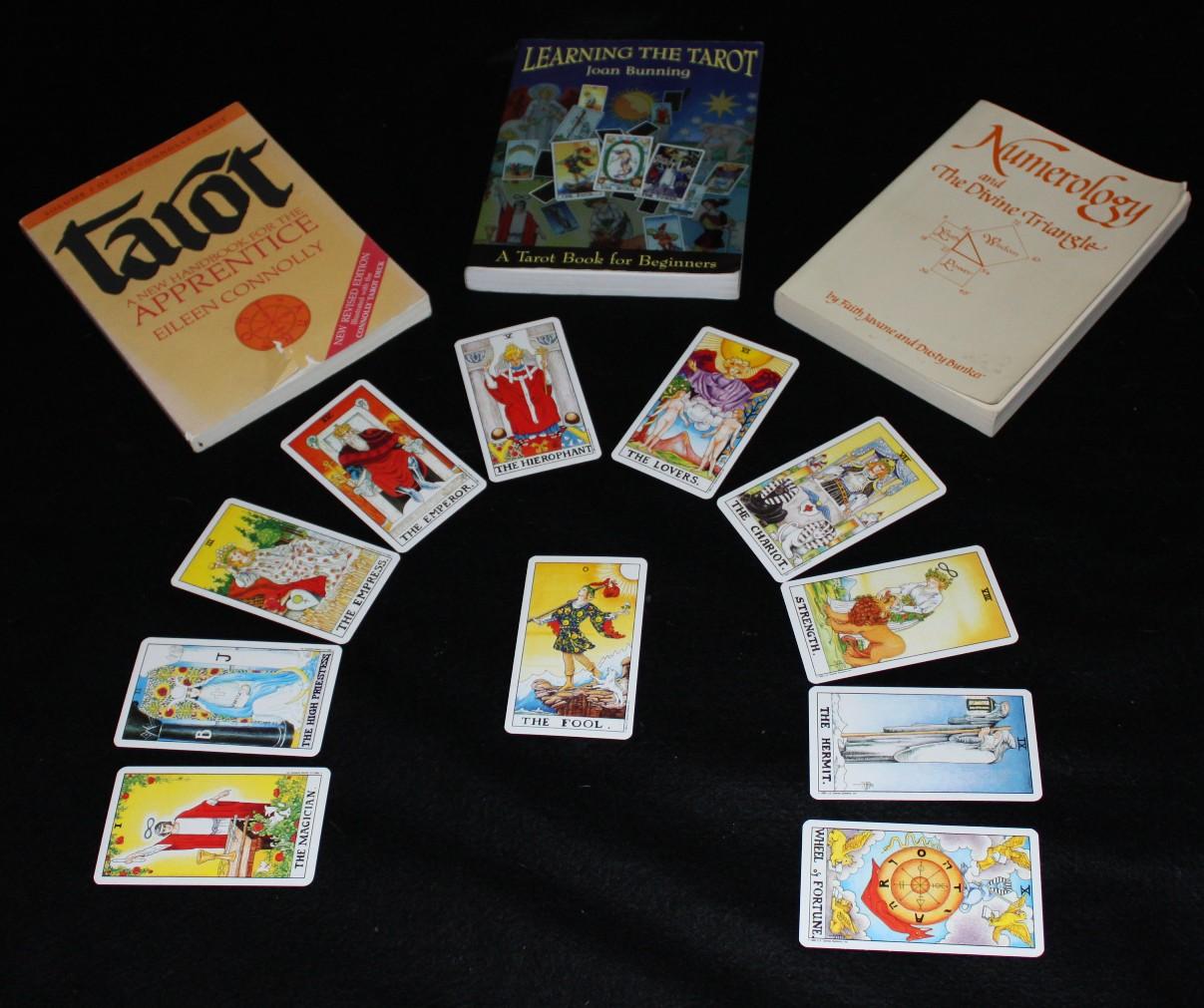
Denton CUUPS had our first Introduction to Tarot class last night. We have quite a few true beginners and this was the first time I’ve been in a Tarot class in five years – it was a good reminder of what it takes to truly learn Tarot. Or perhaps I should say, what it took for me to learn Tarot.
All of the experts I’ve consulted have told me the same thing: messages come through the cards, not from the cards. They talk about paying attention to your intuition, being open to guidance from Spirit, and listening with more than ears. But when you’re staring at these beautifully complex pictures it’s hard to do anything beyond wondering “now what does that mean?”
I struggled with Tarot for many years before I finally learned enough to read effectively. I would start a reading, try to interpret the cards intuitively, hit a roadblock and go running back to the little white book… which would break the flow of the reading. I read books and I practiced and I still couldn’t get it.
When I took Dolores’ Tarot class in 2007 two things happened. First, I had a knowledgeable, experienced Tarot reader explaining things and when I hit something I didn’t understand I could ask questions. But I also finally spent enough time with the cards that I learned their standard meanings. I didn’t have to go running back to a book to look up something any more. I could look at a card, remember its basic meaning, put it into the context of this reading (its position and interactions with other cards and with the querent) and be open to messages coming through the cards.
It’s like learning to drive a car. When you’re 16 and just starting out, you’re constantly thinking “speed up” “slow down” “am I in my lane?” “check the mirrors” “where’s my turn?” “there it is – signal, slow down, get over” and so on. At some point all these operations become automatic – you don’t have to think about them any more. Assuming you learned good driving habits, you become a much safer driver because you don’t have to think about all the steps involved in driving. That lets you spend your time looking out for the morons who should be thinking about safe driving steps but aren’t.
So, how do you learn the basic meanings of the cards? The little white books that come with most Tarot decks are worse than useless – they give you a few interpretations with no explanation of how they were developed. They don’t teach you the connection betweens the pictures and the meanings.
Dolores teaches primarily from two books: Numerology and the Divine Triangle by Faith Javane and Dusty Bunker (1979) and Tarot: A New Handbook for the Apprentice by Eileen Connolly (1986). Both of these are good, but – along with the classic Rider-Waite deck – they are steeped in Jewish and Christian mysticism. If that works for you, great. It doesn’t work for me, probably because I grew up in a fundamentalist Christian church and those connections haven’t been completely severed.
My favorite Tarot reference is Learning the Tarot by Joan Bunning (1998). It approaches Tarot from a non-religious standpoint. And it has the best explanation of card pairs and combinations I’ve come across. I worked through that book just like it was a textbook: read the chapter, do the exercises, review the material, then move on to the next chapter.
For me, it took reading good books AND practicing on my own AND taking Dolores’ class before I finally “got it.” Your mileage may vary.
Another thing we discussed last night was ethics. When you’re reading for someone else, you’re in a position of power – and in a position to learn very sensitive things. This calls for a strong commitment to ethics.
The American Tarot Association has a very good Code of Ethics, while the Tarot Certification Board of America has a Client Bill of Rights that is also good. Even if you never read for money – even if you never read for anyone other than yourself – it will be helpful to familiarize yourself with these codes and think about the reasoning behind them.
The most obvious ethical consideration is confidence. Whatever you learn in a reading – whether it’s something you see in the cards or something the querent tells you – must be held in strictest confidence.
Respect the people who aren’t there. Some readers will not answer any questions dealing with anyone other than the querent. If someone wants to know if their spouse is cheating on them, you can dig into why the querent suspects cheating, what various signs might mean, and what core issues are at the heart of the matter, but it is grossly unfair to both parties to say “yes s/he is” or “no s/he isn’t” – even if your trusted spirit guide is screaming in your ear.
Which brings us to another ethical consideration – know your limits. You’re a Tarot reader, not Google, not a fortune teller and not a spy satellite. You can guide the querent with intuition and wisdom, but you can’t provide hard facts – divination doesn’t work that way. Also know that you aren’t a doctor, lawyer, or psychologist (unless you are, in which case you’d better be segregating your services). If people need help you’re not qualified to give, refer them to appropriate professionals.
But the most important ethical consideration is to remember that what you read and hear and see is a reflection of what will be, not what must be. If you don’t like the outcome of a reading, take action to create a different outcome. Too often predictions become reality not because of fate or divine preordination but because we order our lives as though what is predicted (or more frequently, what we fear) must come to pass. And so it does.
Revelation is not sealed and we have free will. The Tarot tells us where we’re going, but if we understand its purposes and processes, it will also point us in directions that will bring more favorable outcomes.
I’m happy to be diving into the Tarot again. I’m more than a bit out of practice and I’m looking forward to getting comfortable with reading and with exploring the mysteries expressed in the cards.
Previous Post

March 19, 2012
An Instant of Balance
Next Post
March 24, 2012 The Hunger Games
Browse Our Archives
Select a Category Books Community CUUPS Druidry Foundations and Context Gods and Goddesses Magic Myth Nature Ritual Spiritual Practice Theology Travel Uncategorized Videos
Select a Month October 2026 September 2026 August 2026 July 2026 June 2026 May 2026 April 2026 March 2026 February 2026 January 2026 December 2025 November 2025 October 2025 September 2025 August 2025 July 2025 June 2025 May 2025 April 2025 March 2025 February 2025 January 2025 December 2024 November 2024 October 2024 September 2024 August 2024 July 2024 June 2024 May 2024 April 2024 March 2024 February 2024 January 2024 December 2023 November 2023 October 2023 September 2023 August 2023 July 2023 June 2023 May 2023 April 2023 March 2023 February 2023 January 2023 December 2022 November 2022 October 2022 September 2022 August 2022 July 2022 June 2022 May 2022 April 2022 March 2022 February 2022 January 2022 December 2021 November 2021 October 2021 September 2021 August 2021 July 2021 June 2021 May 2021 April 2021 March 2021 February 2021 January 2021 December 2020 November 2020 October 2020 September 2020 August 2020 July 2020 June 2020 May 2020 April 2020 March 2020 February 2020 January 2020 December 2019 November 2019 October 2019 September 2019 August 2019 July 2019 June 2019 May 2019 April 2019 March 2019 February 2019 January 2019 December 2018 November 2018 October 2018 September 2018 August 2018 July 2018 June 2018 May 2018 April 2018 March 2018 February 2018 January 2018 December 2017 November 2017 October 2017 September 2017 August 2017 July 2017 June 2017 May 2017 April 2017 March 2017 February 2017 January 2017 December 2016 November 2016 October 2016 September 2016 August 2016 July 2016 June 2016 May 2016 April 2016 March 2016 February 2016 January 2016 December 2015 November 2015 October 2015 September 2015 August 2015 July 2015 June 2015 May 2015 April 2015 March 2015 February 2015 January 2015 December 2014 November 2014 October 2014 September 2014 August 2014 July 2014 June 2014 May 2014 April 2014 March 2014 February 2014 January 2014 December 2013 November 2013 October 2013 September 2013 August 2013 July 2013 June 2013 May 2013 April 2013 March 2013 February 2013 January 2013 December 2012 November 2012 October 2012 September 2012 August 2012 July 2012 June 2012 May 2012 April 2012 March 2012 February 2012 January 2012 December 2011 November 2011 October 2011 September 2011 August 2011 July 2011 June 2011 May 2011 April 2011 March 2011 February 2011 January 2011 December 2010 November 2010 October 2010 September 2010 August 2010 July 2010 June 2010 May 2010 April 2010 March 2010 February 2010 January 2010 December 2009 November 2009 October 2009 September 2009 August 2009 July 2009 June 2009 May 2009 April 2009 March 2009 February 2009 January 2009 December 2008 November 2008 October 2008 September 2008 August 2008 July 2008 June 2008
Follow Us!
TAKE THE
Religious Wisdom Quiz
Who predicted the fall of Tyre?
Select your answer to see how you score.
Daniel Jeremiah Isaiah Ezekiel
Related posts from John Beckett
The Pillar of the Boatmen: the Ancient Monument...

The Vampire Films of Jean Rollin


TRENDING AT PATHEOS Pagan

The Problem with False Prophets
Miller’s Station UMC| 10/18/26| Anchor Verse: Jeremiah 23: 1, 9-23 I...

Emotion in Early Christianity by Andrew Crislip
Andrew Crislip’s Emotion in Early Christianity examines an often overlooked dimension of...

16 Spiritual Touchstones for a More Grounded Life
After decades of spiritual study, here are 16 principles I try...

Catholic Evangelization: Sharing Your Faith Every Day
Welcome back to the Graceful Awakening mini-series called, “From Faith to Mission.” ...

The Pillar of the Boatmen: the Ancient Monument...
The Pillar of the Boatmen is a Romano-Gaulish sculpture that dates from...

In one sense walking into Westminster Abbey is like walking down the...
view all Pagan blogs
Ad-Free & Subscriber Log-In Subscription Support
- About Us
- 2026 Calendar
- Videos
- Podcasts
- Library of World Religions
- Faith In Media Tracker
- Advertise With Us
- Write for Us
- Privacy Policy
- Terms of Service
- Do Not Sell My Data
- Contact Us
- Radiant Digital
- Manage Newsletter Subscriptions
- Unsubscribe From Notifications
- Sitemap
Copyright 2008-2026, Patheos. All rights reserved.
Subscription Support Ad-Free & Subscriber Log-In
Follow Patheos