
BuddhistCatholicContemplativeEvangelicalGeneral ChristianHinduJewishLatter-day SaintMuslimNew VisionsProgressive Christian
Beliefs
- Buddhist
- Catholic
- Contemplative
- Evangelical
- General Christian
- Hindu
- Jewish
- Latter-day Saint
- More Voices
- Muslim
- New Visions
- Pagan
- Progressive Christian
Topics
- Religion News
- Food and Religion
- Sports and Religion
- Religious Art
- Religious Music and Entertainment
- Religious Events
- History and Religion
- Style and Religion
- Politics and Religion
- Women in Religion
- Recreation Outdoors and Religion
- Business Finance and Religion
- Careers Workplace and Religion
- Education and Religion
- Family Parenting and Religion
- Health Fitness and Religion
- Home and Religion
- Relationships and Religion
- Technology and Religion
- Travel and Religion
Columnists
- Buddhist Columnists
- Business Finance and Religion Columnists
- Careers Workplace and Religion Columnists
- Catholic Columnists
- Contemplative Columnists
- Education and Religion Columnists
- Evangelists Columnists
- Family Parenting and Religion Columnists
- General Christian Columnists
- Health Fitness and Religion Columnists
- Hindu Columnists
- History and Religion Columnists
- Home and Religion Columnists
- Jewish Columnists
- More Voices Columnists
- Latter Day Columnists
- Muslim Columnists
- New Visions Columnists
- Nonreligious Columnists
- Pagan Columnists
- Politics and Religion Columnists
- Progressive Columnists
- Recreation Outdoors and Religion Columnists
- Relationships and Religion Columnists
- Religion News Columnists
- Religious Art Columnists
- Religious Events Columnists
- Religious Music and Entertainment Columnists
- Sports and Religion Columnists
- Style and Religion Columnists
- Technology and Religion Columnists
- Travel and Religion Columnists
- Women in Religion Columnists
Resource Library
- 2026 Calendar
- Library of World Religions
- The 100 Most Holy Places on Earth
- Patheos Answers
- Podcasts
- Videos
- Faith Leaders Database
- Anglican Episcopalian
- Bahai
- Baptist
- Buddhism
- Christianity
- Confucianism
- Eastern Orthodoxy
- Hinduism
- Holiness and Pentecostal
- ISKCON
- Islam
- Judaism
- Lutheran
- Methodist
- The Church of Jesus Christ of Latter-day Saints
- New Age
- Paganism
- Presbytarian and Reformed
- Protestantism
- Religion Behind the Scenes
- Roman Catholic
- Scientology
- Shia Islam
- Sikhism
- Sufism
- Sunni Islam
- Taoism
- Zen
- See all religions
Research Tools
 Ad-Free & Subscriber Log-In Subscription Support
Ad-Free & Subscriber Log-In Subscription Support
Follow Patheos 

- Trending:
- Forgiveness
- |
- Marriage
- |
- Consciousness
- |
- Death Penalty
- |
- Election
- |
- Halloween

- Home
- Pagan
- Original Sin
Original Sin
Last updated on: December 30, 2014 at 9:42 pm by John Beckett
Original Sin 2014-12-30T21:42:55-06:00 John Beckett
Patheos Explore the world's faith through different perspectives on religion and spirituality! Patheos has the views of the prevalent religions and spiritualities of the world.
The picture shown here is from an internet church sign generator, not a real church sign. But it was made by a real Unitarian Universalist and it expresses the feelings of many religious liberals: there is no such thing as Original Sin. I was born right the first time, thankyouverymuch. Anna Snoeyenbos, a UU living in Atlanta, has an excellent discussion of this on her blog Deep River Faith.
Original Sin, for those of you who are Sunday School dropouts, is the Christian doctrine that says because Adam and Eve sinned in the Garden of Eden, a “sinful nature” has been inherited by each and every person. Though Original Sin is not defined in the Bible, it is a cornerstone of orthodox Christian belief: we have a sinful nature, therefore we sin, the only atonement for sin is a perfect sacrifice, and since all humans are imperfect, that sacrifice can only be achieved by the Son of God.
Our reason correctly tells us the doctrine of Original Sin is false. There was no historical Adam and Eve, there was no Garden of Eden, there was no first sin. And even if there was, we don’t hold children accountable for the misdeeds of their parents – the U.S. Constitution explicitly prohibits the “corruption of blood.” If this is true – and clearly it is – there is no need for a perfect sacrifice. Al Mohler, President of the Southern Baptist Theological Seminary, uses this as his primary reason to reject scientific evolution despite the overwhelming evidence for it – if there was no historical Adam and Eve, the entire fundamentalist house of cards will fall. It is no surprise that we religious liberals gleefully knock down the card of Original Sin.
Yet our experiences tell us something very different. Our experiences of violence, cruelty and infidelity tell us that something is wrong. Our own struggles with dishonesty, compulsion and addiction remind us that we are most definitely not perfect. Our experiences of guilt, shame and brokenness give lie to the claim that our souls need no salvation. While the doctrine of Original Sin is clearly false, the myth of Original Sin is just as clearly true.
Let’s begin by looking at reality – the reality of evolution. Evolution is concerned (if a blind, intentionless process can be said to be “concerned” with anything) with the propagation of species. If a physical characteristic or an instinctive behavior helps an individual to survive and reproduce better than those individuals who lack that trait, the trait will be passed down to more and more succeeding generations and the species will have a better chance of continuing. The traits that were naturally selected over millions of years of evolution to help us survive in the wild do not necessarily serve us well in the modern world, nor do they necessarily serve us well as we attempt to evolve spiritually.
Left to our instincts we will eat too much. For millions of years food has been scarce – it was to our advantage to eat more than we needed when we could. You simply didn’t know when food would be available again. The ability to eat more than we need and store the excess as fat was a wonderful evolutionary development. But when we live in a society where food is overly abundant, this trait no longer serves us well.
This is one example. Others include sexual infidelity, greed and materialism, and aggression toward other tribes / cultures / nations. I’m sure you can think of many more. They are natural, but so is arsenic – “natural” isn’t synonymous with “good” and “helpful.”
Millions of years of evolutionary genetics and brain chemistry are in constant tension with a couple thousand of years of civilization. This is what St. Paul was unknowingly describing when he said “I do not do the good I want to do, but the evil I do not want to do—this I keep on doing” (Romans 7:19, NIV).
Intellectually knowing this fact is a start, but it only goes so far. We need constant emotional and spiritual reinforcement of our higher goals and principles and constant practice of techniques for achieving them.
The religions of the world have arisen – in part – to provide this reinforcement. Some have strict rules. Others teach techniques for quieting the mind and releasing unhelpful impulses. Still others celebrate these impulses but confine them to ritually prescribed seasons and ceremonies.
Any of these approaches can be effective but none of them are perfect. We are human, we are imperfect, and we will at least occasionally fail – sometimes in ways that are painful for ourselves and for others. We need ways to be reconciled with those who we have harmed or offended, including our own better selves. This may include confession, restitution, an honest and heart-felt recommitment to the practices that help us effectively deal with this evolutionary tension, and a willingness to try new approaches if old ones consistently fail. This is salvation – the restoration of a soul to his or her place in a community and in Life.
The call to reconciliation is like the call to dinner. It is good and it is necessary, but it can be overdone. Some religions overeat – they focus so strongly on sin and salvation they talk of little else; they devise elaborate recipes of Original Sin, guilt, hell and damnation, and divine human sacrifice. This leads us to see ourselves and others as far worse than we really are and ignores the great good we are capable of doing.
The insistence of some religious liberals that we are really perfect but just don’t realize it is the other extreme. It allows our souls to starve while insisting we have no need to eat. This leads us to see ourselves and others as far better than we really are and ignores the great harm we are capable of doing.
The Truth, as is usually the case, lies somewhere in between.
Previous Post

July 2, 2011
Introduction to Pagan Religion Class
Browse Our Archives
Select a Category Books Community CUUPS Druidry Foundations and Context Gods and Goddesses Magic Myth Nature Ritual Spiritual Practice Theology Travel Uncategorized Videos
Select a Month October 2026 September 2026 August 2026 July 2026 June 2026 May 2026 April 2026 March 2026 February 2026 January 2026 December 2025 November 2025 October 2025 September 2025 August 2025 July 2025 June 2025 May 2025 April 2025 March 2025 February 2025 January 2025 December 2024 November 2024 October 2024 September 2024 August 2024 July 2024 June 2024 May 2024 April 2024 March 2024 February 2024 January 2024 December 2023 November 2023 October 2023 September 2023 August 2023 July 2023 June 2023 May 2023 April 2023 March 2023 February 2023 January 2023 December 2022 November 2022 October 2022 September 2022 August 2022 July 2022 June 2022 May 2022 April 2022 March 2022 February 2022 January 2022 December 2021 November 2021 October 2021 September 2021 August 2021 July 2021 June 2021 May 2021 April 2021 March 2021 February 2021 January 2021 December 2020 November 2020 October 2020 September 2020 August 2020 July 2020 June 2020 May 2020 April 2020 March 2020 February 2020 January 2020 December 2019 November 2019 October 2019 September 2019 August 2019 July 2019 June 2019 May 2019 April 2019 March 2019 February 2019 January 2019 December 2018 November 2018 October 2018 September 2018 August 2018 July 2018 June 2018 May 2018 April 2018 March 2018 February 2018 January 2018 December 2017 November 2017 October 2017 September 2017 August 2017 July 2017 June 2017 May 2017 April 2017 March 2017 February 2017 January 2017 December 2016 November 2016 October 2016 September 2016 August 2016 July 2016 June 2016 May 2016 April 2016 March 2016 February 2016 January 2016 December 2015 November 2015 October 2015 September 2015 August 2015 July 2015 June 2015 May 2015 April 2015 March 2015 February 2015 January 2015 December 2014 November 2014 October 2014 September 2014 August 2014 July 2014 June 2014 May 2014 April 2014 March 2014 February 2014 January 2014 December 2013 November 2013 October 2013 September 2013 August 2013 July 2013 June 2013 May 2013 April 2013 March 2013 February 2013 January 2013 December 2012 November 2012 October 2012 September 2012 August 2012 July 2012 June 2012 May 2012 April 2012 March 2012 February 2012 January 2012 December 2011 November 2011 October 2011 September 2011 August 2011 July 2011 June 2011 May 2011 April 2011 March 2011 February 2011 January 2011 December 2010 November 2010 October 2010 September 2010 August 2010 July 2010 June 2010 May 2010 April 2010 March 2010 February 2010 January 2010 December 2009 November 2009 October 2009 September 2009 August 2009 July 2009 June 2009 May 2009 April 2009 March 2009 February 2009 January 2009 December 2008 November 2008 October 2008 September 2008 August 2008 July 2008 June 2008
Follow Us!
TAKE THE
Religious Wisdom Quiz
What does "Boaz" mean in Hebrew?
Select your answer to see how you score.
Righteous One Strength Redeemer God is my salvation
Related posts from John Beckett
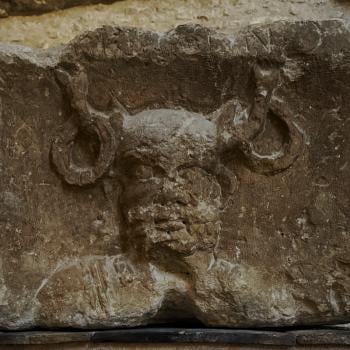
The Pillar of the Boatmen: the Ancient Monument...

The Vampire Films of Jean Rollin


TRENDING AT PATHEOS Pagan

Looking at the Largest Orthodox Cathedral on Earth
There is often a considerable amount of anger and, shall we...

The Problem with False Prophets
Miller’s Station UMC| 10/18/26| Anchor Verse: Jeremiah 23: 1, 9-23 I...

Emotion in Early Christianity by Andrew Crislip
Andrew Crislip’s Emotion in Early Christianity examines an often overlooked dimension of...

16 Spiritual Touchstones for a More Grounded Life
After decades of spiritual study, here are 16 principles I try...

Catholic Evangelization: Sharing Your Faith Every Day
Welcome back to the Graceful Awakening mini-series called, “From Faith to Mission.” ...

The Pillar of the Boatmen: the Ancient Monument...
The Pillar of the Boatmen is a Romano-Gaulish sculpture that dates from...
view all Pagan blogs
Ad-Free & Subscriber Log-In Subscription Support
- About Us
- 2026 Calendar
- Videos
- Podcasts
- Library of World Religions
- Faith In Media Tracker
- Advertise With Us
- Write for Us
- Privacy Policy
- Terms of Service
- Do Not Sell My Data
- Contact Us
- Radiant Digital
- Manage Newsletter Subscriptions
- Unsubscribe From Notifications
- Sitemap
Copyright 2008-2026, Patheos. All rights reserved.
Subscription Support Ad-Free & Subscriber Log-In
Follow Patheos