
BuddhistCatholicContemplativeEvangelicalGeneral ChristianHinduJewishLatter-day SaintMuslimNew VisionsProgressive Christian
Beliefs
- Buddhist
- Catholic
- Contemplative
- Evangelical
- General Christian
- Hindu
- Jewish
- Latter-day Saint
- More Voices
- Muslim
- New Visions
- Pagan
- Progressive Christian
Topics
- Religion News
- Food and Religion
- Sports and Religion
- Religious Art
- Religious Music and Entertainment
- Religious Events
- History and Religion
- Style and Religion
- Politics and Religion
- Women in Religion
- Recreation Outdoors and Religion
- Business Finance and Religion
- Careers Workplace and Religion
- Education and Religion
- Family Parenting and Religion
- Health Fitness and Religion
- Home and Religion
- Relationships and Religion
- Technology and Religion
- Travel and Religion
Columnists
- Buddhist Columnists
- Business Finance and Religion Columnists
- Careers Workplace and Religion Columnists
- Catholic Columnists
- Contemplative Columnists
- Education and Religion Columnists
- Evangelists Columnists
- Family Parenting and Religion Columnists
- General Christian Columnists
- Health Fitness and Religion Columnists
- Hindu Columnists
- History and Religion Columnists
- Home and Religion Columnists
- Jewish Columnists
- More Voices Columnists
- Latter Day Columnists
- Muslim Columnists
- New Visions Columnists
- Nonreligious Columnists
- Pagan Columnists
- Politics and Religion Columnists
- Progressive Columnists
- Recreation Outdoors and Religion Columnists
- Relationships and Religion Columnists
- Religion News Columnists
- Religious Art Columnists
- Religious Events Columnists
- Religious Music and Entertainment Columnists
- Sports and Religion Columnists
- Style and Religion Columnists
- Technology and Religion Columnists
- Travel and Religion Columnists
- Women in Religion Columnists
Resource Library
- 2026 Calendar
- Library of World Religions
- The 100 Most Holy Places on Earth
- Patheos Answers
- Podcasts
- Videos
- Faith Leaders Database
- Anglican Episcopalian
- Bahai
- Baptist
- Buddhism
- Christianity
- Confucianism
- Eastern Orthodoxy
- Hinduism
- Holiness and Pentecostal
- ISKCON
- Islam
- Judaism
- Lutheran
- Methodist
- The Church of Jesus Christ of Latter-day Saints
- New Age
- Paganism
- Presbytarian and Reformed
- Protestantism
- Religion Behind the Scenes
- Roman Catholic
- Scientology
- Shia Islam
- Sikhism
- Sufism
- Sunni Islam
- Taoism
- Zen
- See all religions
Research Tools
 Ad-Free & Subscriber Log-In Subscription Support
Ad-Free & Subscriber Log-In Subscription Support
Follow Patheos 

- Trending:
- Forgiveness
- |
- Marriage
- |
- Consciousness
- |
- Death Penalty
- |
- Election
- |
- Halloween

- Home
- Pagan
- Dangerous Religion
Dangerous Religion
Last updated on: March 6, 2011 at 2:50 pm by John Beckett
Dangerous Religion 2011-03-06T14:50:00-06:00 John Beckett
Patheos Explore the world's faith through different perspectives on religion and spirituality! Patheos has the views of the prevalent religions and spiritualities of the world.
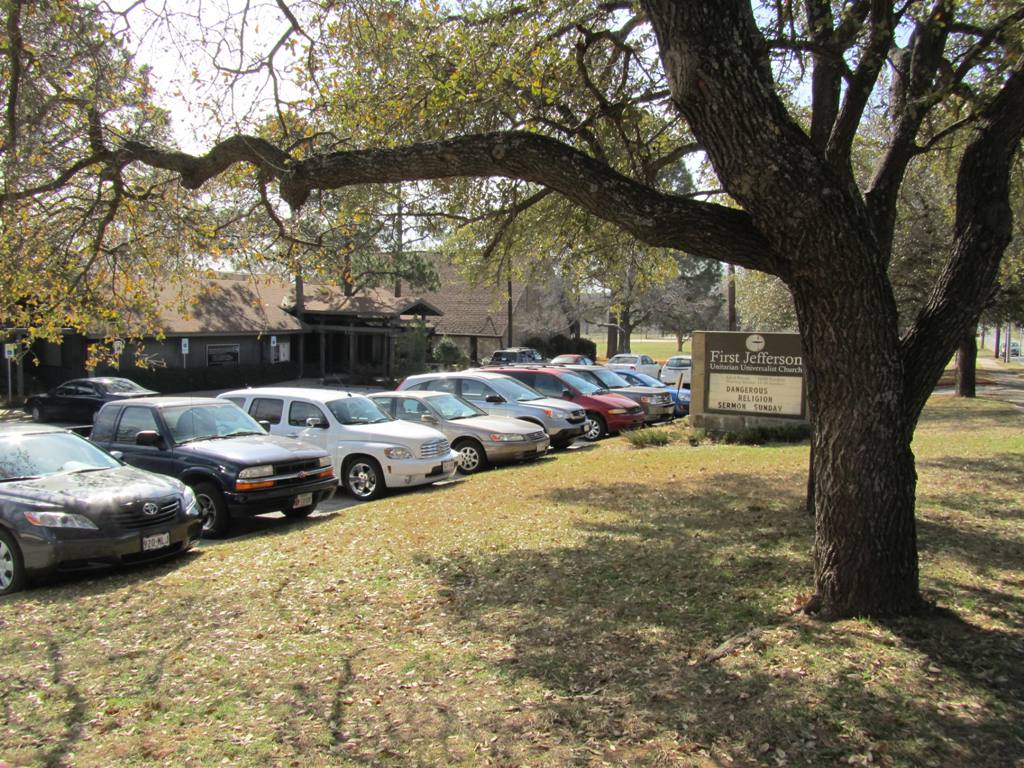
Sermon – Dangerous Religion
by John Beckett
First Jefferson Unitarian Universalist Church
March 6, 2011
Introduction – Lukewarm Religion
I grew up in a small, conservative Baptist church, where they preached the Bible was the literal and inerrant Word of God. When I got old enough to start thinking about that, I realized I had some issues with what they were preaching – issues that eventually led to me become a Unitarian Universalist. I imagine many of you had similar experiences.
Some things seemed like good religion: “Love your God with all your heart and with all your soul and Love your neighbor as yourself.” “Do unto others as you would have them do to you.”
Some things seemed like bad religion, but at least I could understand why they’d say it, such as the prohibition on eating pork.
But sometimes they preached things I just couldn’t understand.
In the Book of Revelation, in the early chapters, before we get into the prophecies that some in our time have turned into apocalyptic pornography, the writer says God sent messages to seven churches of the early Christian world. To one of these churches, God said “I know thy works, that thou art neither cold nor hot: I would thou wert cold or hot. So then because thou art lukewarm, and neither cold nor hot, I will spue thee out of my mouth.”
When I first heard that many years ago, I couldn’t understand it – why would they say that? It’s meaning was clear, but it struck me as unreasonably harsh. Not everyone is cut out to be a religious zealot – why isn’t “good enough” good enough?
Many years later, I understand. Religion that’s lukewarm, unobtrusive and safe doesn’t change lives and it doesn’t change the world. It doesn’t challenge us to examine our beliefs and make sure they’re worthy of our values. It doesn’t challenge us to examine our actions and make sure they’re in alignment with those values. It doesn’t challenge us to get off the couch, get out of the pew, step out of the circle – to get out of our comfort zones and learn or experience or do something new. It doesn’t save our souls or anyone else’s.
Safe religion doesn’t make a difference.
If we want to change the world we have to practice dangerous religion.
Meaning vs. Opium
If most people know nothing else about Karl Marx, they know he said “religion is the opium of the people.” Marx also said “Religion is the sigh of the oppressed creature, the heart of a heartless world, and the soul of soulless conditions.” Marx was ranting against an established religion that reinforced an unjust social and economic order, religion that promised heaven but only if you put up with hell on earth.
“Here, have some more opium and go back to work. It’ll all be better when you’re dead.”
Karl Marx was right to call for the end of that kind of religion, though clearly he didn’t know some of his Unitarian contemporaries, abolitionists and reformers like Theodore Parker, Susan B. Anthony, and Jane Addams. Like them, our religion inspires us to work to end oppression. It also brings us comfort and meaning in difficult situations. But how exactly does that work for us? Unlike folks at some other churches, we can’t say “it’s all part of God’s plan.”
When you’re on your deathbed, what will give you meaning and comfort? That you had a good education? That your beliefs were rational and enlightened? That you appreciated fine music and art and food? Those are all good things, but high class opium is still opium.
What are you doing to make the world a better place here and now? What are you doing to live in harmony with the Earth and all its creatures? What are you doing to experience the Holy, the Sacred, God, Goddess, for yourself, first-hand?
Are you practicing dangerous religion or are you taking spiritual opium?
Caveats
OK, you say, I’ll agree that our religion needs to have some real substance to it, but how can you go advocating “dangerous religion” when so many bad things have been done by religious fanatics?
After the Buddha had been enlightened, he was travelling through India teaching. People could tell there was something different, something special about him. And so one day some people came up to him and asked “are you a god?” And the Buddha replied “no.” “Are you the reincarnation of a god?” “No.” “Are you a wizard or a magician?” “No.” “Are you a man?” “No.” “Well, then what are you?” And the Buddha answered “I am awake.”
We practice dangerous religion, but we practice it wide awake.
Architect and Unitarian Frank Lloyd Wright said “I believe in God, only I spell it Nature.” Some of my strongest and most meaningful religious experiences have come through the wonder and awe of the natural world. But we know water can quench our thirst or it can drown us. Fire can cook our food or it can burn our houses. We may revere Nature as our home or we may worship Nature as Goddess, but when a hurricane is coming we have sense enough to get out of the way. We can admire the mythical wisdom of serpents without handling poisonous snakes based on the literal interpretation of a text of suspect authenticity. Our UU faith is grounded in reason.
From that bedrock of reason comes humility – the understanding that no matter how strongly you believe a concept or a cause or that you’re called to do something, you might be wrong. And if you understand that you might be wrong, you’re not likely to try to force others to follow you against their will, or against their better judgment.
Modern Heathens, who are reviving the beliefs and practices of our Norse and Germanic ancestors, speak of “unverified personal gnosis.” If a goddess comes to you in a dream that message is understood to be for you and you alone. If the message turns out to be helpful, if it is consistent with established beliefs and culture, and if others begin to receive the same message, the group may eventually accept it as received wisdom. But no Heathen expects others to automatically accept their revelations as absolute Truth.
Now there are some folks who are desperately seeking religious certainty, and sadly there is no shortage of religious leaders willing to offer ironclad assurances… in exchange for your free will. But nothing in life is certain: not weather or crops, not health or wealth, not even the ground beneath our feet. Why should religion be any different?
Having faith doesn’t mean you have no doubts. Having faith means doing what your heart tells you is right in spite of your doubts.
We practice dangerous religion, but we practice it wide awake.
What makes religion dangerous – the dramatic stuff
So what’s dangerous about deep, committed, effective religion? We know people who march to a different drummer are frequently targets for those who are afraid of change. Stand up for marriage equality or environmental justice or economic fairness and those with vested interests in the status quo are likely to oppose you. Push hard enough and some may push back violently. Unitarian Universalists will never forget Rev. James Reeb, who was killed in Selma Alabama while working for civil rights.
This coming Friday, March 11, is the 46th anniversary of Rev. Reeb’s death. We are fortunate that few if any of us in this era will face opposition to that extent. There is still real religious bigotry in this country, but most claims of religious persecution – particularly when made by those of the majority religion – show a complete lack of understanding of what some people have to endure to practice their faith. We like to complain about being UUs in Texas and I hear others talking about how hard it is to be a Baptist in Hollywood, but try being a Catholic in China or a Muslim in Israel or a Baha’i in Iran.
I don’t mean to dismiss religious prejudice and discrimination as unimportant. We live in a country that was founded on religious freedom, and we understand that no one is truly free until all are free. We need to continue fighting religious discrimination in the workplace, and we need to continue opposing attempts to favor one religion over all others in the public square.
But the only opposition most of us are likely to encounter is nothing more than garden variety rudeness. There’s a story of an old rabbi who was getting ready to go to an interfaith meeting. A young rabbi was trying to talk him out of it. “I’m worried about you going to that meeting. You’ll be the only Jew there, and most of those ministers think our religion is no good.” The old rabbi just smiled. “What can they do? They will try to convert me. They will fail. Then we’ll sit down, have lunch, and go about doing God’s work.”
The professional campaign operatives who have polarized our political environment have succeeded in convincing the public that if a candidate is seen with a controversial figure, we should assume the candidate embraces everything about him. Think back to the last Presidential election, when Barack Obama was forced to distance himself from Jeremiah Wright. Surely we religious liberals have more sense than to buy into some twisted sense of doctrinal purity. Where we can support our own social action, through organizations like the UU Service Committee, we should do so. But we’re a small movement, and we can’t support every cause and every issue as thoroughly as we’d like. Where we can work with Presbyterians on immigration reform or with Catholics to abolish the death penalty, we should do so. In addition to doing good work, this allows folks to get to know someone from a different religious tradition. You won’t convert them and they won’t convert you, but you’ll both start to put a human face on a group of people you’ve considered “the other.”
As people dedicated to religious freedom, we should continue working for a time when everyone will be judged by his or her actions and not by which god or gods they do or don’t pray to. But we should also give thanks every day that we live in a place and time where we can practice dangerous religion without physical danger to ourselves.
What makes religion dangerous – the likely stuff
One of the most famous shrines of the ancient world was the Temple of Apollo at Delphi. It was the location of the Pythia, a priestess who would sit on a high three-legged stool, gaze into a bowl of oil and water and make predictions based on what she saw. Kings, generals, and common men alike consulted the Oracle of Delphi, seeking her visions of the future and messages from the gods. Her proclamations were mysterious and enigmatic, but filled with truth.
Croesus, the king of Lydia, asked if he should attack Persia. The Oracle’s reply was that if he did, a great empire would fall. Croesus attacked boldly, but it was his own empire that fell.
I’ve always wondered if the priestesses didn’t laugh quietly to themselves at the sight of so many important people making long pilgrimages and bringing expensive offerings for an audience with the Oracle, when some of the greatest wisdom the world has ever known was carved above the doors for all to see. In Greek it was “gnōthi seauton” – in English, we say “know thyself.” If you truly know yourself you have no need of oracles.
The real danger and the real challenge in dangerous religion isn’t “out there” somewhere. It’s in here.
Sit in meditation and you may be confronted by parts of your life you don’t like to look at. I recently heard a Buddhist teacher say that one of his new students was ready to quit after only a few sessions. “Meditation doesn’t work for me – I sit there and my mind races in every direction.” And the teacher said “your mind is always racing in every direction, but you never noticed it until you tried to sit quietly.” Learning to keep our minds focused on the task at hand is hard work.
If you take that “love your neighbor” thing seriously you may find yourself face to face with someone who doesn’t look like you or sound like you or believe like you. He might even belong to a different political party. Can you learn to love him for who he is, what he is, where he is, even if you really want to hide his yard signs? Does the way you live your life bear witness to your highest values as much as your brilliantly articulated debate points?
“This we know – the Earth does not belong to us, we belong to the Earth.” If you take that seriously you may find life a little less convenient. Can you walk or bicycle or take public transportation? Can your next car be smaller and more efficient? Many UUs monitor our purchases and pay close attention to where things come from: we buy organic vegetables, fair trade coffee, products made by union workers or at least not made in a low-cost-country sweatshop. But can you also be mindful about where things will go after you’re done with them? Can you buy not just based on low price but also on low packaging? Can you pass up something because you know it will end up in a landfill? Can you pass up something because you know you don’t really need it?
The Book of Proverbs says “the fear of God is the beginning of wisdom.” Read the entire chapter and you’ll see this is not a demand for unquestioning obedience. Instead, it is a both a celebration of wisdom and a caution to not come before the Holy with trivial matters. In much of our culture we see religion presented as a way to get whatever you want, from the pseudo-Christian “prosperity gospel” to New Age “think and grow rich” schemes. It’s gone so far that few can see the irony in the car commercial featuring Janis Joplin’s cry of “Oh Lord, won’t you buy me a Mercedes Benz?” If we are truly wise, we will learn to tell the difference between the desires of our hearts and the manipulation of our emotions by advertisers. If we are truly wise, we will recognize when we have enough.
The real danger in dangerous religion is to our egos, to our comfort, to our sense of self-importance and self-righteousness. Don’t underestimate how hard they may fight back.
How to proceed
So how do we go about practicing dangerous religion? How do we go about overcoming these very real dangers? We begin with a commitment to daily spiritual practice. We have many priorities screaming for our time – work, school, family, home, entertainment… all good and all necessary. But if we allow them, they will consume all our lives. We must make time for daily practice.
Begin with some basic reading and study, so you can really understand the foundations of your values and beliefs. In many UU congregations, new members are given a copy of Our Chosen Faith. Have you read it? Recently? Have you read works by Channing or Emerson or Thoreau? Hosea Ballou or John Murray? Rebecca Parker or Forrest Church? If you combine your UU faith with Buddhism or Christianity or Paganism read books by their great teachers. Participate in Adult Religious Education. Make your faith an informed faith.
The Unitarians of the 19th century kept journals and diaries as a spiritual practice. They would record mundane events as well as the spectacular, then go back over them, trying to see if they really were living in accordance with their principles. Contemporary UU minister Robert Hardies has said “They pored over their lives like the rabbi over his Torah, convinced that it would yield truth and meaning.”
Spend time in Nature. Observe the trees and birds and squirrels as they move through the seasons. Follow the Sun and the Moon as they move through their cycles. I love the forest and the mountains, but a simple walk around the block can reawaken a love of the Sky above and the Earth below and remind us we share a connection with all living things.
Serve. There come a time for us to move from words to deeds. But like all other forms of spiritual practice, we have to make it a priority, we have to make time for it in our busy schedules. Serve on a committee in your church or in a volunteer agency. Serve meals to the homeless. Pick up trash on the side of the road. Help out in an animal shelter. Giving money is good and very necessary, but nothing will strengthen your faith like making a tangible contribution with your own hands.
Meditate. We spend so much of our time being active – working, reading, talking, thinking. We need a break – and we need dedicated time to simply sit and listen. Not to think, not to judge, but simply to sit, and listen, and observe.
Pray. Prayer has a bit of a bad reputation in our community. Some doubt its effectiveness and some are turned off by those whose prayers resemble a three-year-old in a toy store. But that doesn’t mean prayer has no value.
The Christian mystic Meister Eckhart said “If the only prayer you said in your entire life was ‘thank you,’ that would suffice.” Offering our gratitude reminds us we owe much to our families and communities, to those who grow our food and to the natural world in which we live and breathe. It also reminds us to “count our blessings” and to recognize that no matter how difficult any given day may have been, we still enjoy much. It did not have to be this way, but it is, and for that we can be thankful.
These are things we do on our own as part of our individual spiritual practice. But it’s a rare person who can live a truly spiritual life alone – most of us need the encouragement and reinforcement and accountability that comes from being in community with like-minded folks. We need someone who will listen to our wildest dreams without judgment, someone who will encourage us when we’re down, and someone who will gently let us know when we aren’t living up to our highest values. We need to practice our faith together – in worship, in study, and in service.
Beware the temptation to say “everything is a spiritual practice, my whole life is a spiritual practice.” It can be, if you’re extremely mindful about everything you do and say and think. Very few of us have that level of mindfulness – I certainly don’t. Many people who say this are using it as an excuse for not doing the work of spiritual practice. There is no substitute for doing the work.
Today’s children’s story is far more than a tale of adventure – it’s a story of transformation. Gwion Bach tended the cauldron all night, every night, for a year – and nothing happened. Wisdom comes in its own time. When it did come, it didn’t come to the one for whom it was intended – it came to the one who did the work. Even then, gaining wisdom didn’t solve all Gwion’s problems. He was chased by an angry goddess, changed his identity multiple times, then finally died as Gwion… so he could be reborn as Taliesin.
We overcome the dangers of dangerous religion through dedicated practice. Over months and years, our values and beliefs become second nature. We refine our priorities and we learn to respond to difficult situations as we’d like to respond.
Conclusion
Lukewarm religion is comfortable, inoffensive and safe, but it is spiritual opium, numbing our true desires to live up to our highest calling. Dangerous religion is grounded in reason and humility, and we practice it wide awake. The real dangers are not to life and limb, but to our established patterns of thought and action.
Yes, there are risks in practicing dangerous religion. But there are also rewards, like finding peace with yourself, the fulfillment of serving others, of living in harmony with the Earth, of changing lives and changing society, and of connecting with a Reality that transcends time and space.
Through dedicated practice we learn to live the way we’re called to live and the way our souls want to live, and we begin to build a better world right here right now.
Benediction
The American Buddhist teacher Baker Roshi said “Enlightenment is an accident, but practice makes us accident prone.” As we return to the ordinary world, let us practice dangerous religion, and see what blessed accidents we encounter.
Previous Post

March 3, 2011
Control is an Illusion
Next Post
March 8, 2011 Authority, Part 1
Browse Our Archives
Select a Category Books Community CUUPS Druidry Foundations and Context Gods and Goddesses Magic Myth Nature Ritual Spiritual Practice Theology Travel Uncategorized Videos
Select a Month October 2026 September 2026 August 2026 July 2026 June 2026 May 2026 April 2026 March 2026 February 2026 January 2026 December 2025 November 2025 October 2025 September 2025 August 2025 July 2025 June 2025 May 2025 April 2025 March 2025 February 2025 January 2025 December 2024 November 2024 October 2024 September 2024 August 2024 July 2024 June 2024 May 2024 April 2024 March 2024 February 2024 January 2024 December 2023 November 2023 October 2023 September 2023 August 2023 July 2023 June 2023 May 2023 April 2023 March 2023 February 2023 January 2023 December 2022 November 2022 October 2022 September 2022 August 2022 July 2022 June 2022 May 2022 April 2022 March 2022 February 2022 January 2022 December 2021 November 2021 October 2021 September 2021 August 2021 July 2021 June 2021 May 2021 April 2021 March 2021 February 2021 January 2021 December 2020 November 2020 October 2020 September 2020 August 2020 July 2020 June 2020 May 2020 April 2020 March 2020 February 2020 January 2020 December 2019 November 2019 October 2019 September 2019 August 2019 July 2019 June 2019 May 2019 April 2019 March 2019 February 2019 January 2019 December 2018 November 2018 October 2018 September 2018 August 2018 July 2018 June 2018 May 2018 April 2018 March 2018 February 2018 January 2018 December 2017 November 2017 October 2017 September 2017 August 2017 July 2017 June 2017 May 2017 April 2017 March 2017 February 2017 January 2017 December 2016 November 2016 October 2016 September 2016 August 2016 July 2016 June 2016 May 2016 April 2016 March 2016 February 2016 January 2016 December 2015 November 2015 October 2015 September 2015 August 2015 July 2015 June 2015 May 2015 April 2015 March 2015 February 2015 January 2015 December 2014 November 2014 October 2014 September 2014 August 2014 July 2014 June 2014 May 2014 April 2014 March 2014 February 2014 January 2014 December 2013 November 2013 October 2013 September 2013 August 2013 July 2013 June 2013 May 2013 April 2013 March 2013 February 2013 January 2013 December 2012 November 2012 October 2012 September 2012 August 2012 July 2012 June 2012 May 2012 April 2012 March 2012 February 2012 January 2012 December 2011 November 2011 October 2011 September 2011 August 2011 July 2011 June 2011 May 2011 April 2011 March 2011 February 2011 January 2011 December 2010 November 2010 October 2010 September 2010 August 2010 July 2010 June 2010 May 2010 April 2010 March 2010 February 2010 January 2010 December 2009 November 2009 October 2009 September 2009 August 2009 July 2009 June 2009 May 2009 April 2009 March 2009 February 2009 January 2009 December 2008 November 2008 October 2008 September 2008 August 2008 July 2008 June 2008
Follow Us!
TAKE THE
Religious Wisdom Quiz
What did the biblical measurement of a cubit represent?
Select your answer to see how you score.
Length of forearm Length of foot Length of leg Length of hand
Related posts from John Beckett

The Vampire Films of Jean Rollin



Bo French Doesn’t Understand Texas
TRENDING AT PATHEOS Pagan

57th Dove Awards Honor Dolly Parton, Crown New...
On gospel music’s biggest night, the 57th annual GMA Dove Awards honored...

The First Eucharistic Controversy: Christ’s Real Presence
For Catholics, the Eucharist is the source and summit of the Christian...

What a Stop Sign Can Teach Us About...
How to Make a Decision When You Can't Hear God Main point:...

Archdiocese Hosts Military Marriage Retreat in Germany
RASTATT, Germany — The transient military lifestyle, with its frequent deployments and...

Nearly every morning, I make the drive to Detroit with my high-school-age...

The Real AI Story Is Adoption Without Trust
Artificial intelligence has crossed a political threshold. It is no longer a...
view all Pagan blogs
Ad-Free & Subscriber Log-In Subscription Support
- About Us
- 2026 Calendar
- Videos
- Podcasts
- Library of World Religions
- Faith In Media Tracker
- Advertise With Us
- Write for Us
- Privacy Policy
- Terms of Service
- Do Not Sell My Data
- Contact Us
- Radiant Digital
- Manage Newsletter Subscriptions
- Unsubscribe From Notifications
- Sitemap
Copyright 2008-2026, Patheos. All rights reserved.
Subscription Support Ad-Free & Subscriber Log-In
Follow Patheos