
BuddhistCatholicContemplativeEvangelicalGeneral ChristianHinduJewishLatter-day SaintMuslimNew VisionsProgressive Christian
Beliefs
- Buddhist
- Catholic
- Contemplative
- Evangelical
- General Christian
- Hindu
- Jewish
- Latter-day Saint
- More Voices
- Muslim
- New Visions
- Pagan
- Progressive Christian
Topics
- Religion News
- Food and Religion
- Sports and Religion
- Religious Art
- Religious Music and Entertainment
- Religious Events
- History and Religion
- Style and Religion
- Politics and Religion
- Women in Religion
- Recreation Outdoors and Religion
- Business Finance and Religion
- Careers Workplace and Religion
- Education and Religion
- Family Parenting and Religion
- Health Fitness and Religion
- Home and Religion
- Relationships and Religion
- Technology and Religion
- Travel and Religion
Columnists
- Buddhist Columnists
- Business Finance and Religion Columnists
- Careers Workplace and Religion Columnists
- Catholic Columnists
- Contemplative Columnists
- Education and Religion Columnists
- Evangelists Columnists
- Family Parenting and Religion Columnists
- General Christian Columnists
- Health Fitness and Religion Columnists
- Hindu Columnists
- History and Religion Columnists
- Home and Religion Columnists
- Jewish Columnists
- More Voices Columnists
- Latter Day Columnists
- Muslim Columnists
- New Visions Columnists
- Nonreligious Columnists
- Pagan Columnists
- Politics and Religion Columnists
- Progressive Columnists
- Recreation Outdoors and Religion Columnists
- Relationships and Religion Columnists
- Religion News Columnists
- Religious Art Columnists
- Religious Events Columnists
- Religious Music and Entertainment Columnists
- Sports and Religion Columnists
- Style and Religion Columnists
- Technology and Religion Columnists
- Travel and Religion Columnists
- Women in Religion Columnists
Resource Library
- 2026 Calendar
- Library of World Religions
- The 100 Most Holy Places on Earth
- Patheos Answers
- Podcasts
- Videos
- Faith Leaders Database
- Anglican Episcopalian
- Bahai
- Baptist
- Buddhism
- Christianity
- Confucianism
- Eastern Orthodoxy
- Hinduism
- Holiness and Pentecostal
- ISKCON
- Islam
- Judaism
- Lutheran
- Methodist
- The Church of Jesus Christ of Latter-day Saints
- New Age
- Paganism
- Presbytarian and Reformed
- Protestantism
- Religion Behind the Scenes
- Roman Catholic
- Scientology
- Shia Islam
- Sikhism
- Sufism
- Sunni Islam
- Taoism
- Zen
- See all religions
Research Tools
 Ad-Free & Subscriber Log-In Subscription Support
Ad-Free & Subscriber Log-In Subscription Support
Follow Patheos 

- Trending:
- Forgiveness
- |
- Marriage
- |
- Consciousness
- |
- Death Penalty
- |
- Election
- |
- Halloween

- Home
- Pagan
- Dark Green Religion
Dark Green Religion
Last updated on: May 12, 2013 at 5:01 pm by John Beckett
Dark Green Religion 2013-05-12T17:01:59-06:00 John Beckett
Patheos Explore the world's faith through different perspectives on religion and spirituality! Patheos has the views of the prevalent religions and spiritualities of the world.
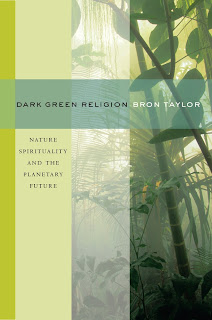 Dark Green Religion is a study of the relatively new religious trend toward viewing the Earth as sacred and acting accordingly. It’s written by Bron Taylor, Professor of Religion and Nature at the University of Florida. I highly recommend it for those interested contemporary nature religions and their origins.
Taylor begins with a cursory definition of religion, but he sees little value in arguing about where to draw lines between religion, parareligion, and religious behavior by those who don’t consider themselves religious. He coined the term “dark green religion” and defines it as “one where nature is sacred, has intrinsic value, and is therefore due reverent care.” He does this to draw a distinction between those who care for the Earth because it has value of its own and those who do so out of a sense of religious obligation like stewardship.
Dark green religion is practiced in both spiritual (supernatural) and naturalist (non-supernatural) forms.
While dark green religion has its oldest roots in the beliefs and practices of indigenous peoples, Taylor begins his historical narrative with the colonization of North America by Europeans. Both the land and the native people were far more “savage” than in Europe, striking the early settlers with fear – as well with as a sense of wonder and awe, that most ancient religious impulse. It began to be expressed in the 19th century with the writings of Ralph Waldo Emerson, Henry David Thoreau, John Muir, and John Burroughs.
Taylor includes this quote from Burroughs: “The forms and creeds of religion change, but the sentiment of religion – the wonder and reverence and love we feel in the presence of the inscrutable universe – persists… If we do not go to church so much as did our fathers, we go to the woods much more, and are much more inclined to make a temple of them than they were.”
In Thoreau, Taylor finds “themes that would become common in dark green religion,” including a life that is undomesticated and free, finding wisdom in nature, connecting laws of nature to justice, an ecocentric moral philosophy, and the interconnectedness of nature and a loyalty to it.
Amidst all the history and philosophy one overriding theme emerges, which to me is still best expressed in the speech attributed to Chief Seattle and quoted in this book:
We know the sap which courses through the trees as we know the blood that courses through our veins. We are part of the earth and it is part of us. The perfumed flowers are our sisters. The bear, the deer, the great eagle, these are our brothers. The rocky crests, the dew in the meadow, the body heat of the pony, and man all belong to the same family.
Given the environmental crises of climate change and unsustainable human population growth, Taylor wonders if dark green religion can become a civic religion for our times. The foundation is in place – he points to green themes in arts and entertainment and to increased environmental consciousness in individuals and even in corporations (I’ve worked for medium to large corporations my entire career – not all of them are soul-sucking bastions of evil). Such a civic religion would “underpin the social norms and behaviors of restraint that are necessary to achieve a sustainable society … providing a system of meaning that can span generations and foster a sense of transgenerational communal identity.” It is clearly possible, but Taylor does not speculate on its probability.
Taylor chose the term “dark” intentionally. Part of this was to emphasize the “deep green” feelings and commitment many have toward Nature. But another part was to acknowledge the shadow side of this trend – those whose love of Nature causes them to act in radical ways (frequently called “environmental extremists” by the politically conservative media) and those who are frightened by its philosophical differences with orthodox Western monotheism.
He thinks the risks are relatively low. While every religion has unbalanced extremists, “the main themes of dark green religion – which include the idea that all living things have intrinsic value – do not easily lend themselves to indifference to human suffering, let alone to virulent streams of religious, ethnic, or territory-based hatred.”
And while “most traditional religions could become green” – something already happening in many churches – Taylor concludes that orthodox theologies, doctrines, creeds and communities are “unlikely to wither away.”
Personally, I don’t care if you behave responsibly and sustainably because you believe the Earth is God’s creation or because you believe the Earth is the body of the Goddess or because you believe this is the only planet we’ve got so we have to take care of it. I just want you to behave responsibly and sustainably.
Taylor ends the books with his personal coda. He says:
Even though I am a naturalist, in the absence of any compelling explanation for the universe as a whole or the life that is in and around me on this little blue planet, I can think of no better term than ‘miracle’ to describe all I perceive. Even the bizarre fact that I am here to perceive it, reflect on it, and share my musing strikes me as nothing less than miraculous … What I have been long looking for is a sensible religion, one that is rationally defensible as well as socially powerful enough to save us from our least-sensible selves.
He concludes, very simply and very humbly, that “dark green religion is a reasonable candidate.”
And I agree.
Previous Post

December 1, 2010
Morrigan
Next Post
December 6, 2010 Desire
Browse Our Archives
Select a Category Books Community CUUPS Druidry Foundations and Context Gods and Goddesses Magic Myth Nature Ritual Spiritual Practice Theology Travel Uncategorized Videos
Select a Month October 2026 September 2026 August 2026 July 2026 June 2026 May 2026 April 2026 March 2026 February 2026 January 2026 December 2025 November 2025 October 2025 September 2025 August 2025 July 2025 June 2025 May 2025 April 2025 March 2025 February 2025 January 2025 December 2024 November 2024 October 2024 September 2024 August 2024 July 2024 June 2024 May 2024 April 2024 March 2024 February 2024 January 2024 December 2023 November 2023 October 2023 September 2023 August 2023 July 2023 June 2023 May 2023 April 2023 March 2023 February 2023 January 2023 December 2022 November 2022 October 2022 September 2022 August 2022 July 2022 June 2022 May 2022 April 2022 March 2022 February 2022 January 2022 December 2021 November 2021 October 2021 September 2021 August 2021 July 2021 June 2021 May 2021 April 2021 March 2021 February 2021 January 2021 December 2020 November 2020 October 2020 September 2020 August 2020 July 2020 June 2020 May 2020 April 2020 March 2020 February 2020 January 2020 December 2019 November 2019 October 2019 September 2019 August 2019 July 2019 June 2019 May 2019 April 2019 March 2019 February 2019 January 2019 December 2018 November 2018 October 2018 September 2018 August 2018 July 2018 June 2018 May 2018 April 2018 March 2018 February 2018 January 2018 December 2017 November 2017 October 2017 September 2017 August 2017 July 2017 June 2017 May 2017 April 2017 March 2017 February 2017 January 2017 December 2016 November 2016 October 2016 September 2016 August 2016 July 2016 June 2016 May 2016 April 2016 March 2016 February 2016 January 2016 December 2015 November 2015 October 2015 September 2015 August 2015 July 2015 June 2015 May 2015 April 2015 March 2015 February 2015 January 2015 December 2014 November 2014 October 2014 September 2014 August 2014 July 2014 June 2014 May 2014 April 2014 March 2014 February 2014 January 2014 December 2013 November 2013 October 2013 September 2013 August 2013 July 2013 June 2013 May 2013 April 2013 March 2013 February 2013 January 2013 December 2012 November 2012 October 2012 September 2012 August 2012 July 2012 June 2012 May 2012 April 2012 March 2012 February 2012 January 2012 December 2011 November 2011 October 2011 September 2011 August 2011 July 2011 June 2011 May 2011 April 2011 March 2011 February 2011 January 2011 December 2010 November 2010 October 2010 September 2010 August 2010 July 2010 June 2010 May 2010 April 2010 March 2010 February 2010 January 2010 December 2009 November 2009 October 2009 September 2009 August 2009 July 2009 June 2009 May 2009 April 2009 March 2009 February 2009 January 2009 December 2008 November 2008 October 2008 September 2008 August 2008 July 2008 June 2008
Follow Us!
TAKE THE
Religious Wisdom Quiz
In James, what is the correct sequence that leads from temptation to death?
Select your answer to see how you score.
Sin, desire, full-grown sin, death Temptation, desire, death, judgment Desire, temptation, sin, death Desire, sin conceived, sin full-grown, death
Related posts from John Beckett


The Bloody Road to Castle Dracula


TRENDING AT PATHEOS Pagan

Catholic Evangelization: Sharing Your Faith Every Day
Welcome back to the Graceful Awakening mini-series called, “From Faith to Mission.” ...

The Pillar of the Boatmen: the Ancient Monument...
The Pillar of the Boatmen is a Romano-Gaulish sculpture that dates from...

In one sense walking into Westminster Abbey is like walking down the...

'Super Scam Me' Exposes AI Jon Bon Jovi...
Leslie Pickett believed she was in a relationship with Jon Bon Jovi....

The Brazilian Remake of Kendricks' 'Flywheel' Opens in...
“Flywheel,” the story that launched the Kendrick Brothers’ filmmaking career is getting...

The Dangers of Gradual Accommodation (Winking at Sin)
Recently, the “law of gradualness” resurfaced during the opening of a weeklong,...
view all Pagan blogs
Ad-Free & Subscriber Log-In Subscription Support
- About Us
- 2026 Calendar
- Videos
- Podcasts
- Library of World Religions
- Faith In Media Tracker
- Advertise With Us
- Write for Us
- Privacy Policy
- Terms of Service
- Do Not Sell My Data
- Contact Us
- Radiant Digital
- Manage Newsletter Subscriptions
- Unsubscribe From Notifications
- Sitemap
Copyright 2008-2026, Patheos. All rights reserved.
Subscription Support Ad-Free & Subscriber Log-In
Follow Patheos