
BuddhistCatholicContemplativeEvangelicalGeneral ChristianHinduJewishLatter-day SaintMuslimNew VisionsProgressive Christian
Beliefs
- Buddhist
- Catholic
- Contemplative
- Evangelical
- General Christian
- Hindu
- Jewish
- Latter-day Saint
- More Voices
- Muslim
- New Visions
- Pagan
- Progressive Christian
Topics
- Religion News
- Food and Religion
- Sports and Religion
- Religious Art
- Religious Music and Entertainment
- Religious Events
- History and Religion
- Style and Religion
- Politics and Religion
- Women in Religion
- Recreation Outdoors and Religion
- Business Finance and Religion
- Careers Workplace and Religion
- Education and Religion
- Family Parenting and Religion
- Health Fitness and Religion
- Home and Religion
- Relationships and Religion
- Technology and Religion
- Travel and Religion
Columnists
- Buddhist Columnists
- Business Finance and Religion Columnists
- Careers Workplace and Religion Columnists
- Catholic Columnists
- Contemplative Columnists
- Education and Religion Columnists
- Evangelists Columnists
- Family Parenting and Religion Columnists
- General Christian Columnists
- Health Fitness and Religion Columnists
- Hindu Columnists
- History and Religion Columnists
- Home and Religion Columnists
- Jewish Columnists
- More Voices Columnists
- Latter Day Columnists
- Muslim Columnists
- New Visions Columnists
- Nonreligious Columnists
- Pagan Columnists
- Politics and Religion Columnists
- Progressive Columnists
- Recreation Outdoors and Religion Columnists
- Relationships and Religion Columnists
- Religion News Columnists
- Religious Art Columnists
- Religious Events Columnists
- Religious Music and Entertainment Columnists
- Sports and Religion Columnists
- Style and Religion Columnists
- Technology and Religion Columnists
- Travel and Religion Columnists
- Women in Religion Columnists
Resource Library
- 2026 Calendar
- Library of World Religions
- The 100 Most Holy Places on Earth
- Patheos Answers
- Podcasts
- Videos
- Faith Leaders Database
- Anglican Episcopalian
- Bahai
- Baptist
- Buddhism
- Christianity
- Confucianism
- Eastern Orthodoxy
- Hinduism
- Holiness and Pentecostal
- ISKCON
- Islam
- Judaism
- Lutheran
- Methodist
- The Church of Jesus Christ of Latter-day Saints
- New Age
- Paganism
- Presbytarian and Reformed
- Protestantism
- Religion Behind the Scenes
- Roman Catholic
- Scientology
- Shia Islam
- Sikhism
- Sufism
- Sunni Islam
- Taoism
- Zen
- See all religions
Research Tools
 Ad-Free & Subscriber Log-In Subscription Support
Ad-Free & Subscriber Log-In Subscription Support
Follow Patheos 

- Trending:
- Forgiveness
- |
- Marriage
- |
- Consciousness
- |
- Death Penalty
- |
- Election
- |
- Halloween
 Joel J. Miller
-
Joel's Books
-
Article Categories
- Home
- Evangelical
- Why you need the church to read your Bible
Why you need the church to read your Bible
Last updated on: April 22, 2014 at 6:42 am by Joel J. Miller
Why you need the church to read your Bible 2014-04-22T06:42:47-05:00 Joel J. Miller
Patheos Explore the world's faith through different perspectives on religion and spirituality! Patheos has the views of the prevalent religions and spiritualities of the world.
It’s easy to bash the church, and there are many that do. Of course most bashers are blithely unaware of the countless things they owe their battered victim, everything from doctrinal formulations they mistakenly assume are plainly explained in the Bible to holidays. What makes December 25 so special, anyway? You’ll need to consult the church on that.
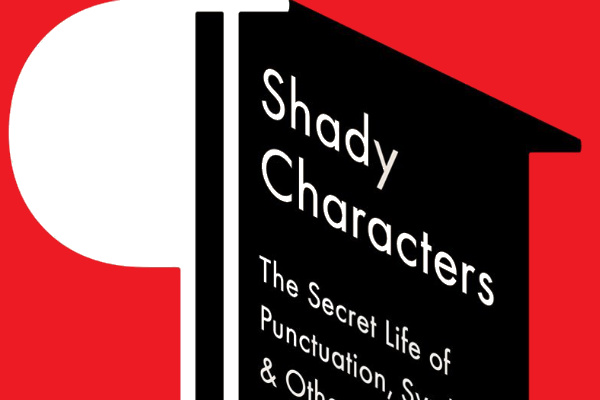
‘Shady Characters’ by Keith Houston
I grew up around Christians who thought that all they needed for their spiritual life was a Bible. Not all of them, of course. But there were those who would be nothing shy of offended if you suggested they owed the church anything or needed it in any fundamental way. The old one-book-on-a-desert-island question was more than a game with them. It was their basic approach to theology — an individual and his or her Bible is all that’s necessary.
But to say that the Bible is the only necessary source for your spirituality or theological pursuits assumes you can actually read it. And it turns out you have the church to thank for that.
Keith Houston teases the story a bit in his book Shady Characters, an amusing and interesting history of punctuation. It may not be the single best book for your desert island stint, but it’s fun stuff for language geeks like me. Addressing our topic here, Houston says, “The emergence of Christianity . . . would change the face of written language on a grand scale. . . .” How exactly?
Whereas paganism relied on oral tradition and its practices varied according to local custom, Christianity emphasized conformity and universal, written scriptures. If Judaism had been the prototypical religion of the Book, cleaving to the written Word of God, Christians embodied this ideal with unprecedented vigor, driving the evolution of punctuation as they built and consolidated a concrete, written dogma. After all, the Word of God had to be transmitted with as little ambiguity as possible. . . . As the new, wordy religion swept through Europe, it drove the development of much of what we take for granted in modern-day writing.
Monks, for instance, invented the paragraph. Archbishop Isidore of Seville gave us the period (or at least the modern use of it), ditto things like colons and question marks. What about spaces between words? You can thank British and Irish clergy for that one. Ever get annoyed by people who WRITE IN ALL UPPERCASE LETTERS? Thank Charlemagne and Alcuin of York, a monk, for a lowercase alphabet. In other words, all the things that make text readable and understandable.
Irenaeus, living before the benefit of these developments, offers an example of why they are so important. The gnostics misread Paul in part, he said, because they didn’t understand the apostle’s phraseology or include the necessary pauses where appropriate — problems greatly mitigated by commas (Against Heresies 3.7).
Of course once in use commas and other grammatical tools had to be applied correctly. Who’s to say where a line should break into a phrase, sentence, or paragraph? Church tradition dictated that as well. While chiding the gnostics, Irenaeus said they failed to listen to the proper reading in church — that is when a deacon or priest would read a passage from the lectionary, providing the correct sense of the passage by adding pauses in the right places. Those more or less standard readings eventually were cemented into place as punctuation became widely employed.
So the next time you think you can have a go at the faith without the great mass of believers who came before, imagine sitting on your desert island, sifting through line after line of that beloved Bible without paragraphs, periods, question marks, and all the rest — or even knowing the right place to put them all even if you had them.
You’d be better off with G. K. Chesterton’s suggestion of one book to have if stranded on a desert island: Thomas’ Guide to Practical Shipbuilding.
Previous Post

December 2, 2013
Why did God create us? Consider the orange peel
Next Post
December 6, 2013 Fun things you find at a Christian publishing house
Browse Our Archives
Select a Category Books Church Life Family Life Misc Prayer Quotes Society Spiritual Growth Theology Uncategorized Video
Select a Month April 2014 March 2014 January 2014 December 2013 November 2013 August 2013 July 2013 June 2013 May 2013 April 2013 March 2013 February 2013 January 2013 December 2012 November 2012 October 2012 September 2012 August 2012 July 2012 June 2012 May 2012 April 2012 March 2012 February 2012 December 2011 November 2011 October 2011 August 2011 July 2011 June 2011 March 2011 February 2011 January 2011 December 2010 October 2010 September 2010 August 2010 July 2010 June 2010 May 2010 September 2009 August 2009 July 2009 May 2009 April 2009 March 2009 November 2008 October 2008 July 2008 June 2008 April 2008 March 2008 February 2008 January 2008 August 2007 June 2007 October 2002 July 2002 November 1999 October 1999
Follow Us!
TAKE THE
Religious Wisdom Quiz
Which Psalm did Moses write?
Select your answer to see how you score.
Psalm 23 Psalm 119 Psalm 90 Psalm 72
Related posts from Joel J. Miller

Does the adulterous woman belong in your Bible?

What Barton and Copeland get wrong about war...

George Orwell and bending the Bible for our...

Read the Bible if you're going to have...
TRENDING AT PATHEOS Evangelical

The REST of Your Life: A Creative Wrestles...
This week I had a conversation with a good friend from church....

How the author of the world's best hymn...
I've been working with John Newton for a while now. This makes...

Long before this Lectio Divina, Psalm 130 - the song - started...

What About the Trees? Another Living Parable
After I finished writing the last article about falling leaves as a...

Why Classical Education Is a Conversation, Not a...
Come and Read: Joy in Classical Education When I was a little...

Cornell University has received a great deal of negative publicity and intense...
view all Evangelical blogs
Ad-Free & Subscriber Log-In Subscription Support
- About Us
- 2026 Calendar
- Videos
- Podcasts
- Library of World Religions
- Faith In Media Tracker
- Advertise With Us
- Write for Us
- Privacy Policy
- Terms of Service
- Do Not Sell My Data
- Contact Us
- Radiant Digital
- Manage Newsletter Subscriptions
- Unsubscribe From Notifications
- Sitemap
Copyright 2008-2026, Patheos. All rights reserved.
Subscription Support Ad-Free & Subscriber Log-In
Follow Patheos