
BuddhistCatholicContemplativeEvangelicalGeneral ChristianHinduJewishLatter-day SaintMuslimNew VisionsProgressive Christian
Beliefs
- Buddhist
- Catholic
- Contemplative
- Evangelical
- General Christian
- Hindu
- Jewish
- Latter-day Saint
- More Voices
- Muslim
- New Visions
- Pagan
- Progressive Christian
Topics
- Religion News
- Food and Religion
- Sports and Religion
- Religious Art
- Religious Music and Entertainment
- Religious Events
- History and Religion
- Style and Religion
- Politics and Religion
- Women in Religion
- Recreation Outdoors and Religion
- Business Finance and Religion
- Careers Workplace and Religion
- Education and Religion
- Family Parenting and Religion
- Health Fitness and Religion
- Home and Religion
- Relationships and Religion
- Technology and Religion
- Travel and Religion
Columnists
- Buddhist Columnists
- Business Finance and Religion Columnists
- Careers Workplace and Religion Columnists
- Catholic Columnists
- Contemplative Columnists
- Education and Religion Columnists
- Evangelists Columnists
- Family Parenting and Religion Columnists
- General Christian Columnists
- Health Fitness and Religion Columnists
- Hindu Columnists
- History and Religion Columnists
- Home and Religion Columnists
- Jewish Columnists
- More Voices Columnists
- Latter Day Columnists
- Muslim Columnists
- New Visions Columnists
- Nonreligious Columnists
- Pagan Columnists
- Politics and Religion Columnists
- Progressive Columnists
- Recreation Outdoors and Religion Columnists
- Relationships and Religion Columnists
- Religion News Columnists
- Religious Art Columnists
- Religious Events Columnists
- Religious Music and Entertainment Columnists
- Sports and Religion Columnists
- Style and Religion Columnists
- Technology and Religion Columnists
- Travel and Religion Columnists
- Women in Religion Columnists
Resource Library
- 2026 Calendar
- Library of World Religions
- The 100 Most Holy Places on Earth
- Patheos Answers
- Podcasts
- Videos
- Faith Leaders Database
- Anglican Episcopalian
- Bahai
- Baptist
- Buddhism
- Christianity
- Confucianism
- Eastern Orthodoxy
- Hinduism
- Holiness and Pentecostal
- ISKCON
- Islam
- Judaism
- Lutheran
- Methodist
- The Church of Jesus Christ of Latter-day Saints
- New Age
- Paganism
- Presbytarian and Reformed
- Protestantism
- Religion Behind the Scenes
- Roman Catholic
- Scientology
- Shia Islam
- Sikhism
- Sufism
- Sunni Islam
- Taoism
- Zen
- See all religions
Research Tools
 Ad-Free & Subscriber Log-In Subscription Support
Ad-Free & Subscriber Log-In Subscription Support
Follow Patheos 

- Trending:
- Forgiveness
- |
- Marriage
- |
- Consciousness
- |
- Death Penalty
- |
- Election
- |
- Halloween
 Joel J. Miller
-
Joel's Books
-
Article Categories
- Home
- Evangelical
- The real story of the Christmas angels
The real story of the Christmas angels
Last updated on: December 24, 2012 at 1:23 pm by Joel J. Miller
The real story of the Christmas angels 2012-12-24T13:23:50-06:00 Joel J. Miller
Patheos Explore the world's faith through different perspectives on religion and spirituality! Patheos has the views of the prevalent religions and spiritualities of the world.

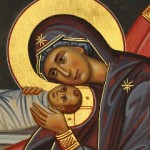
Suceviţa Monastery wall mural, Wikimedia Commons
Luke tells us that on the night Jesus was born, shepherds near Bethlehem were watching their sheep. Suddenly, an angel appeared before them — radiant, shockingly luminescent, and bright. Awash in the otherworldly light, the glory of God pooling around them, the shepherds were terrified.
“Do not be afraid,” said the angel, “for behold, I bring you good tidings of great joy which will be to all people. For there is born to you this day in the city of David a Savior, who is Christ the Lord” (2.10-11).
After telling them how they would recognize the infant Christ, the angel was joined by “a multitude of the heavenly host” (v. 13). If one angel was bright, how about a multitude? The initial flash must have been like an explosion, but the sound of the glorious blast was song:
Glory to God in the highest,
And on earth peace, goodwill toward men! (v. 14)
We focus for obvious reasons on what the news meant and means for people. But we should know that the glad tidings were good for angels too. They weren’t just praising God for the benefit of the shepherds or even us. As I discovered while researching my book Lifted by Angels, they were also praising God for reasons of their own.
Long before Christmas
The Incarnation of Christ made it possible to heal the rift between God and humanity. But long before Christmas God moved to rescue people from the peril into which our first parents had plunged us.
In the ancient Jewish and Christian understanding, God appointed his angels to oversee and govern particular aspects of creation. God employed angels “to exercise providence,” according to Athenagoras of Athens, “so that God may have the universal and general providence of the whole, while the particular parts are provided for by the angels appointed over them” (Plea 24).
Papias, bishop of Hierapolis, was a friend of the bishop and martyr Polycarp and secretary to the apostle John. He said, referring to the angels, “[God] appointed some of them . . . to rule over the administration of the earth, and he ordered them to rule it well” (Fragment 9).
God tasked dominions, powers, authorities, and principalities with overseeing regions, nations, peoples, even cities. Though their specific functions are not much described in Scripture, allusions and references are there. Importantly, particularly for our story here, Deuteronomy’s “Song of Moses” shows God dividing humanity under the angels (32.8, particularly LXX), and Daniel discusses angelic rulers over nations (10.13, 20–21; 12.1).
Working from these biblical passages and their received interpretation, the ancient theologians and preachers of the church saw angels as governing the affairs of people. In his Miscellanies, for instance, Clement of Alexandria, who was born around the year 150, mentioned “regiments of angels . . . distributed over the nations and cities” (6.17). “God Almighty,” wrote Eusebius, the fourth-century bishop of Caesarea, “set over [people] the holy angels to be their leaders and governors like herdsmen and shepherds. . .” (Proof of the Gospel 4.6). And a few centuries later John Damascene said angels “are the guardians of the divisions of the earth . . . they govern all our affairs and bring us succor” (Exposition 2.3).
The Bible gives us a few pictures of God sitting amid these angelic overseers in council. Working from the number of nations as seen in the Scripture, the early Christians numbered the council of angelic rulers at seventy (see Psalm 82, Job 1–2, Genesis 10, Exodus 15.27, and Numbers 33.9).
Myriad angels serve beneath these seventy in their various ministrations — the primary of which is to bring people to a knowledge of God. “The single Providence of the Most High for all commanded the angels to bring all peoples to salvation,” as Pseudo-Dionysius wrote in The Celestial Hierarchy (9.4).
But something went wrong: Satan usurped the government of the angels.
The war in heaven
By the strength of my hand I have done it,
And by my wisdom, for I am prudent;
Also I have removed the boundaries of the people,
And have robbed their treasuries;
So I have put down the inhabitants like a valiant man.
My hand has found like a nest the riches of the people,
And as one gathers eggs that are left,
I have gathered all the earth;
And there was no one who moved his wing,
Nor opened his mouth with even a peep.(Isaiah 10.13-14)
Eusebius identified these words as that of “God’s antagonist, boasting in the strength of his wickedness as he threatens to steal and obliterate the divisions of the nations delivered by the Most High to the angels, and loudly cries that it will spoil the earth, and shake the whole race of men, and change them from their former order.” Humanity consequently became “enslaved by earthly powers and evil spirits instead of the earlier ministers of God” (Proof 4.9).
It was cosmic coup, and humans were pulled evermore to the cause of the insurgency. People became increasingly rebellious and corrupt. Try as they might, the angels could not break or even slow the momentum toward evil first begun in the fall. The angelic assignment, said Papias, “came to nothing” (Fragment 9).
Satan pushed the angels out of their territories and installed demons over the nations. And so we find passages in Scripture that identify pagan deities with demons (see Leviticus 17.7, Deuteronomy 32.17, Psalm 106.37). Sometimes these passages are clearer in the Greek Old Testament; for instance, Psalm 95.5 LXX says, “the gods of the nations are demons” (compare 96.5 Hebrew).
This understanding undoubtedly informs the worldview of writers like Paul. “I imply that what pagans sacrifice, they sacrifice to demons and not to God,” as he says in 1 Corinthians 10.20.
Throughout the Old Testament period the battle waged. “[T]he activity of the demons daily waxed greater,” said Eusebius. And while Israel at first responded to the ministration of angels and “returned to the Light and proclaimed the true Lord,” as Pseudo-Dionysius said (Cel. Hierarchy 9.4), eventually God’s own chosen people succumbed as well.
“[E]ven the Hebrew race was hurried along in the destruction of the godless,” said Eusebius, but “at last the Savior and Physician of the Universe [came] down Himself to men, bringing reinforcement to His angels for the salvation of men”(Proof 4.10).
Reinforcement! This is the source of excitement. This is the reason for cheer. The angels were like long-embattled forces, beleaguered and weary. And at last, here is the answer to their foe. Here is Christ! And so the skies erupted over his birthplace.
Cause for excitement
Christ, God himself, would personally wage war on the demons. “[God] did not,” according to the second-century Epistle to Diognetus, “send [humans] one of his servants or an angel or a ruler or any of those who administer earthly activities or who are entrusted with heavenly affairs, but he sent the craftsman and maker of all things himself” (7.2).
In the Incarnation, God did not send another angel. He sent the Lord of the angels.
Christ’s cosmic counterinsurgency is intense and immediate. He gives his disciples authority over the demons. Then, very significantly, he sends out seventy disciples, a number which corresponds to the number of angelic princes over the nations, thrones which were then occupied by demons. Ancient Christian commentators like Cyril of Alexandria understood this action as revealing Christ’s intent to liberate all the enslaved peoples of the world (Commentary Upon the Gospel According to S. Luke 60).
Before going to the crucifixion where he would conquer death by death, bind Satan and finally liberate humanity through the Resurrection, Jesus pronounced judgment on the usurper: “[N]ow shall the ruler of this world be cast out” (John 12.31).
The coming of Christ is indeed good news — both for us and the angels. Our liberator is here, and the usurper who had oppressed us and frustrated the mission of the angels is finally thrown down. That is why the angels cheer.
Previous Post

December 23, 2012
Islamist constitution spells trouble for Egypt's Christians
Next Post
December 24, 2012 How to read icons of the Nativity
Browse Our Archives
Select a Category Books Church Life Family Life Misc Prayer Quotes Society Spiritual Growth Theology Uncategorized Video
Select a Month April 2014 March 2014 January 2014 December 2013 November 2013 August 2013 July 2013 June 2013 May 2013 April 2013 March 2013 February 2013 January 2013 December 2012 November 2012 October 2012 September 2012 August 2012 July 2012 June 2012 May 2012 April 2012 March 2012 February 2012 December 2011 November 2011 October 2011 August 2011 July 2011 June 2011 March 2011 February 2011 January 2011 December 2010 October 2010 September 2010 August 2010 July 2010 June 2010 May 2010 September 2009 August 2009 July 2009 May 2009 April 2009 March 2009 November 2008 October 2008 July 2008 June 2008 April 2008 March 2008 February 2008 January 2008 August 2007 June 2007 October 2002 July 2002 November 1999 October 1999
Follow Us!
TAKE THE
Religious Wisdom Quiz
Which Gospel records the birth of John the Baptist?
Select your answer to see how you score.
John Mark Matthew Luke
Related posts from Joel J. Miller

Is the Resurrection essential to Christian belief?

Christianity: Use only as directed

What Barton and Copeland get wrong about war...

George Orwell and bending the Bible for our...
TRENDING AT PATHEOS Evangelical

The REST of Your Life: A Creative Wrestles...
This week I had a conversation with a good friend from church....

How the author of the world's best hymn...
I've been working with John Newton for a while now. This makes...

Long before this Lectio Divina, Psalm 130 - the song - started...

What About the Trees? Another Living Parable
After I finished writing the last article about falling leaves as a...

Why Classical Education Is a Conversation, Not a...
Come and Read: Joy in Classical Education When I was a little...

Cornell University has received a great deal of negative publicity and intense...
view all Evangelical blogs
Ad-Free & Subscriber Log-In Subscription Support
- About Us
- 2026 Calendar
- Videos
- Podcasts
- Library of World Religions
- Faith In Media Tracker
- Advertise With Us
- Write for Us
- Privacy Policy
- Terms of Service
- Do Not Sell My Data
- Contact Us
- Radiant Digital
- Manage Newsletter Subscriptions
- Unsubscribe From Notifications
- Sitemap
Copyright 2008-2026, Patheos. All rights reserved.
Subscription Support Ad-Free & Subscriber Log-In
Follow Patheos