
BuddhistCatholicContemplativeEvangelicalGeneral ChristianHinduJewishLatter-day SaintMuslimNew VisionsProgressive Christian
Beliefs
- Buddhist
- Catholic
- Contemplative
- Evangelical
- General Christian
- Hindu
- Jewish
- Latter-day Saint
- More Voices
- Muslim
- New Visions
- Pagan
- Progressive Christian
Topics
- Religion News
- Food and Religion
- Sports and Religion
- Religious Art
- Religious Music and Entertainment
- Religious Events
- History and Religion
- Style and Religion
- Politics and Religion
- Women in Religion
- Recreation Outdoors and Religion
- Business Finance and Religion
- Careers Workplace and Religion
- Education and Religion
- Family Parenting and Religion
- Health Fitness and Religion
- Home and Religion
- Relationships and Religion
- Technology and Religion
- Travel and Religion
Columnists
- Buddhist Columnists
- Business Finance and Religion Columnists
- Careers Workplace and Religion Columnists
- Catholic Columnists
- Contemplative Columnists
- Education and Religion Columnists
- Evangelists Columnists
- Family Parenting and Religion Columnists
- General Christian Columnists
- Health Fitness and Religion Columnists
- Hindu Columnists
- History and Religion Columnists
- Home and Religion Columnists
- Jewish Columnists
- More Voices Columnists
- Latter Day Columnists
- Muslim Columnists
- New Visions Columnists
- Nonreligious Columnists
- Pagan Columnists
- Politics and Religion Columnists
- Progressive Columnists
- Recreation Outdoors and Religion Columnists
- Relationships and Religion Columnists
- Religion News Columnists
- Religious Art Columnists
- Religious Events Columnists
- Religious Music and Entertainment Columnists
- Sports and Religion Columnists
- Style and Religion Columnists
- Technology and Religion Columnists
- Travel and Religion Columnists
- Women in Religion Columnists
Resource Library
- 2026 Calendar
- Library of World Religions
- The 100 Most Holy Places on Earth
- Patheos Answers
- Podcasts
- Videos
- Faith Leaders Database
- Anglican Episcopalian
- Bahai
- Baptist
- Buddhism
- Christianity
- Confucianism
- Eastern Orthodoxy
- Hinduism
- Holiness and Pentecostal
- ISKCON
- Islam
- Judaism
- Lutheran
- Methodist
- The Church of Jesus Christ of Latter-day Saints
- New Age
- Paganism
- Presbytarian and Reformed
- Protestantism
- Religion Behind the Scenes
- Roman Catholic
- Scientology
- Shia Islam
- Sikhism
- Sufism
- Sunni Islam
- Taoism
- Zen
- See all religions
Research Tools
 Ad-Free & Subscriber Log-In Subscription Support
Ad-Free & Subscriber Log-In Subscription Support
Follow Patheos 

- Trending:
- Forgiveness
- |
- Marriage
- |
- Consciousness
- |
- Death Penalty
- |
- Election
- |
- Halloween
 Joel J. Miller
-
Joel's Books
-
Article Categories
- Home
- Evangelical
- Four books by C.S. Lewis you must read
Four books by C.S. Lewis you must read
Last updated on: December 13, 2012 at 12:58 pm by Joel J. Miller
Four books by C.S. Lewis you must read 2012-12-13T12:58:09-06:00 Joel J. Miller
Patheos Explore the world's faith through different perspectives on religion and spirituality! Patheos has the views of the prevalent religions and spiritualities of the world.
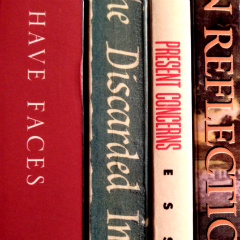
Four Lewis Titles
C.S. Lewis never imagined the lasting influence he would have. “After I’ve been dead five years,” he told his friend Owen Barfield, “no one will read anything I’ve written.” Proving the old prof wrong, last month we marked the forty-ninth year of his passing, and Lewis is read today perhaps more than ever.
Still, this is a reasonable thought for an author. Books are not immortal. They rarely live beyond the generation of their author and earliest readers, and usually they die much sooner than that.
The blood and breath of books are the thoughts and words of readers, the people who animate the pages once an author has let them go. Almost inevitably readers stop thinking and talking about them. When that happens, they fall out of mind and die. Only a handful of special books bridge the generations and find readers to breathe life between their leaves one decade after another, books like—despite his humble self-assessment—Lewis’.
Most any serious Christian reader is familiar with several of Lewis’ titles: Mere Christianity, The Screwtape Letters, Surprised by Joy. The Chronicles of Narnia delight adult and child alike, while others have wrestled to ground more complicated offerings, like The Abolition of Man.
I present here four Lewis books of lesser popularity. The first and second are essay collections published posthumously. The third is an analysis of mediaeval thought and literature. The fourth is a novel. They may not sit as high on someone’s list as, say, The Four Loves or The Horse and his Boy, but they are nonetheless well worth the read.
1. Christian Reflections. Many essays in this collection involve how a Christian should think and interact with currents in the wider world. One reason it’s so useful and enjoyable is that it presents brief treatments of ideas that Lewis elaborated upon elsewhere. Essays like “On Ethics,” “The Poison of Subjectivism,” “The Psalms,” and “Petitionary Prayer” are like seeds that soon flowered into full books. Here the reader has a chance to view them in miniature.
Passages are characteristically insightful, sometimes humorous. In his discussion on “Christianity and Literature,” for instance, Lewis notes, “Boiling an egg is the same process whether you are a Christian or a Pagan.”
2. Present Concerns. This is a later collection than Christian Reflections, and its essays feel more off the cuff. Most were written for magazines and newspapers. And while that could significantly date more than a few, there are gems here unfaded by the news cycle. There is an article on chivalry, for instance, that casts some illuminating color on present conversations about men and prolonged adolescence.
And then there’s this from the essay, “Equality”:
I am a democrat because I believe in the Fall of Man. . . . I do not deserve a share in governing a hen-roost, much less a nation. Nor do most people — all the people who believe advertisements, and think in catchwords, and spread rumors. . . . The real reason for democracy is . . . [m]ankind is so fallen that no man can be trusted with unchecked power over his fellows.
Would that people took such sentiments more seriously.
3. The Discarded Image. This is perhaps a trickier title than the previous two, but it really rewards a close read. Billed as “An Introduction to to Medieval and Renaissance Literature,” it functions as a very accessible introduction to medieval thought and how it intersects with the modern mind.
Given our slavish adherence to naturalistic materialism, Lewis’ analysis provides fresh insight into how models of seeing the world develop and get dropped. I think it’s particularly useful in explaining how contemporaries tend to believe similarly even when they think they are on different pages. There is an unavoidable intellectual interplay — how much of that is affecting us today without our being aware of it?
4. Till We Have Faces. I believe that this is the least popular of Lewis’ novels, but I’ve been gripped by his retelling of the myth of Cupid and Psyche since first reading it two decades ago. I’ve read it several time since and cannot quite exhaust it.
It’s foolish to reduce such a book to a few lines, but here’s risking it. Ultimately, the book turns on the question of possessive love: Can such a love be what it purports to be, or is it really something merely selfish, something ugly, perhaps even something demonic?
It reminds me in this way of Cormac McCarthy’s most emotionally powerful novel, The Road, in which possessive love ultimately disfigures and alienates. In a culture as entitled and self-actualized as ours, such an insight might prove helpful.
There are of course several other lesser-known Lewis titles that warrant renewed attention. Studies in Words is a joy. And, while I’ve only dipped in and out of A Preface to Paradise Lost, what I’ve read is fascinating. But if you’ve not yet picked up any of these four, I’ve already got your weekend planned.
Check this out: How to get your name in Frank Viola’s new book, When the Pages Are Blank: How to Bring the Bible Back to Life.
Previous Post

December 11, 2012
Don't be afraid to ignore yourself
Next Post

December 13, 2012 Is the virgin birth really predicted in the Old Testament?
Browse Our Archives
Select a Category Books Church Life Family Life Misc Prayer Quotes Society Spiritual Growth Theology Uncategorized Video
Select a Month April 2014 March 2014 January 2014 December 2013 November 2013 August 2013 July 2013 June 2013 May 2013 April 2013 March 2013 February 2013 January 2013 December 2012 November 2012 October 2012 September 2012 August 2012 July 2012 June 2012 May 2012 April 2012 March 2012 February 2012 December 2011 November 2011 October 2011 August 2011 July 2011 June 2011 March 2011 February 2011 January 2011 December 2010 October 2010 September 2010 August 2010 July 2010 June 2010 May 2010 September 2009 August 2009 July 2009 May 2009 April 2009 March 2009 November 2008 October 2008 July 2008 June 2008 April 2008 March 2008 February 2008 January 2008 August 2007 June 2007 October 2002 July 2002 November 1999 October 1999
Follow Us!
TAKE THE
Religious Wisdom Quiz
Who said, “Follow me, and I will make you fishers of men”?
Select your answer to see how you score.
Moses Paul Jesus Peter
Related posts from Joel J. Miller

One resource every pastor, scholar, and student needs

Cormac McCarthy and all the broken children of...

One (hard) reason God gives us families

What is Christian literature? God's truth, wherever you...
TRENDING AT PATHEOS Evangelical

The REST of Your Life: A Creative Wrestles...
This week I had a conversation with a good friend from church....

How the author of the world's best hymn...
I've been working with John Newton for a while now. This makes...

Long before this Lectio Divina, Psalm 130 - the song - started...

What About the Trees? Another Living Parable
After I finished writing the last article about falling leaves as a...

Why Classical Education Is a Conversation, Not a...
Come and Read: Joy in Classical Education When I was a little...

Cornell University has received a great deal of negative publicity and intense...
view all Evangelical blogs
Ad-Free & Subscriber Log-In Subscription Support
- About Us
- 2026 Calendar
- Videos
- Podcasts
- Library of World Religions
- Faith In Media Tracker
- Advertise With Us
- Write for Us
- Privacy Policy
- Terms of Service
- Do Not Sell My Data
- Contact Us
- Radiant Digital
- Manage Newsletter Subscriptions
- Unsubscribe From Notifications
- Sitemap
Copyright 2008-2026, Patheos. All rights reserved.
Subscription Support Ad-Free & Subscriber Log-In
Follow Patheos