
BuddhistCatholicContemplativeEvangelicalGeneral ChristianHinduJewishLatter-day SaintMuslimNew VisionsProgressive Christian
Beliefs
- Buddhist
- Catholic
- Contemplative
- Evangelical
- General Christian
- Hindu
- Jewish
- Latter-day Saint
- More Voices
- Muslim
- New Visions
- Pagan
- Progressive Christian
Topics
- Religion News
- Food and Religion
- Sports and Religion
- Religious Art
- Religious Music and Entertainment
- Religious Events
- History and Religion
- Style and Religion
- Politics and Religion
- Women in Religion
- Recreation Outdoors and Religion
- Business Finance and Religion
- Careers Workplace and Religion
- Education and Religion
- Family Parenting and Religion
- Health Fitness and Religion
- Home and Religion
- Relationships and Religion
- Technology and Religion
- Travel and Religion
Columnists
- Buddhist Columnists
- Business Finance and Religion Columnists
- Careers Workplace and Religion Columnists
- Catholic Columnists
- Contemplative Columnists
- Education and Religion Columnists
- Evangelists Columnists
- Family Parenting and Religion Columnists
- General Christian Columnists
- Health Fitness and Religion Columnists
- Hindu Columnists
- History and Religion Columnists
- Home and Religion Columnists
- Jewish Columnists
- More Voices Columnists
- Latter Day Columnists
- Muslim Columnists
- New Visions Columnists
- Nonreligious Columnists
- Pagan Columnists
- Politics and Religion Columnists
- Progressive Columnists
- Recreation Outdoors and Religion Columnists
- Relationships and Religion Columnists
- Religion News Columnists
- Religious Art Columnists
- Religious Events Columnists
- Religious Music and Entertainment Columnists
- Sports and Religion Columnists
- Style and Religion Columnists
- Technology and Religion Columnists
- Travel and Religion Columnists
- Women in Religion Columnists
Resource Library
- 2026 Calendar
- Library of World Religions
- The 100 Most Holy Places on Earth
- Patheos Answers
- Podcasts
- Videos
- Faith Leaders Database
- Anglican Episcopalian
- Bahai
- Baptist
- Buddhism
- Christianity
- Confucianism
- Eastern Orthodoxy
- Hinduism
- Holiness and Pentecostal
- ISKCON
- Islam
- Judaism
- Lutheran
- Methodist
- The Church of Jesus Christ of Latter-day Saints
- New Age
- Paganism
- Presbytarian and Reformed
- Protestantism
- Religion Behind the Scenes
- Roman Catholic
- Scientology
- Shia Islam
- Sikhism
- Sufism
- Sunni Islam
- Taoism
- Zen
- See all religions
Research Tools
 Ad-Free & Subscriber Log-In Subscription Support
Ad-Free & Subscriber Log-In Subscription Support
Follow Patheos 

- Trending:
- Forgiveness
- |
- Marriage
- |
- Consciousness
- |
- Death Penalty
- |
- Election
- |
- Halloween
 Joel J. Miller
-
Joel's Books
-
Article Categories
- Home
- Evangelical
- Dietrich Bonhoeffer and our end-times obsessions
Dietrich Bonhoeffer and our end-times obsessions
Last updated on: December 19, 2012 at 8:55 am by Joel J. Miller
Dietrich Bonhoeffer and our end-times obsessions 2012-12-19T08:55:46-06:00 Joel J. Miller
Patheos Explore the world's faith through different perspectives on religion and spirituality! Patheos has the views of the prevalent religions and spiritualities of the world.
Debaird, Flickr.
If you’ve cancelled your plans on December 21 because the Mayans said the world would end, you’ll be excited to hear that calendar experts have finally announced that nothing will happen after all — except perhaps long lines at military-surplus return counters.
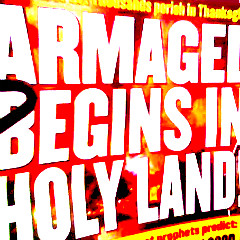
But look on the upside. Now you can use that newfound time to catch up on your reading — maybe thumb through some classics like Harold Camping’s recently overshadowed 1994? Or Hal Lindsey’s forgettable The 1980s: Countdown to Armageddon. Or perhaps the scratchings of William Miller. Or the Watchtower Society. Or Melchior Hoffmann.
They’ve all left their disappointed doomsday devotees. But turning a few pages can be instructive.
Solomon was right: There’s nothing new under the sun, including people eager to see it drop out of the sky. The turn of the first millennium after Christ had everyone buzzing about God rolling up the big scroll. And first-century Judaism sprouted more false messiahs than the San Francisco Bay Area in the 1970s.
Comets and conflagrations. Wars and their rumors. We’re always looking to the end. We are obsessed with it. Not that we don’t have cause. Christians see it in the scripture. We confess it in the creed. But obsession with the eschaton is as unbiblical as it is unhelpful.
Writes Paul, “Now concerning the coming of our Lord Jesus Christ and our assembling to meet him, we beg you, brethren, not to be quickly shaken in mind or excited, either by spirit or by word, or by letter purporting to be from us, to the effect that the day of the Lord has come” (2 Thes 2.1-2).
Paul penned this corrective to the church at Thessaloniki because they had already disregarded his previous teaching. “But as to the times and the seasons,” he said, “you have no need to have anything written to you. For you yourselves know well that the day of the Lord will come like a thief in the night” (1 Thes 5.1-2).
The desire for the end is a human impulse, born from the desire for resolution and closure. We are frail creatures, victims of the vicissitudes of life. We long for a means to settle that tension, to subtract ourselves from the crises in which we find ourselves. And the world seems weary, right? The times seem harder than ever. But practically every generation thinks this. Because we feel the impulse for closure as strongly as we do, we seek its confirmation everywhere — bad weather, bad politics, anything — never realizing that the failed prophets of previous generations were just grasping at the same, lame straws.
Paul told the Thessalonians to be sober and vigilant. And, importantly, he urged them “to aspire to live quietly, to mind your own affairs, and to work with your hands” (1 Thes 4.10-11). Keep your head down, do your work. Just be faithful to the Lord and wait. It may seem boring compared to Armageddon, but that’s the path we’re called to walk.
I’ve long been struck by these words of Dietrich Bonhoeffer:
[I]t only by living completely in this world that one learns to have faith. . . . I mean living unreservedly in life’s duties, problems, successes and failures, experiences and perplexities. In so doing we throw ourselves completely into the arms of God, taking seriously, not our own sufferings, but those of God in the world — watching with Christ in Gethsemane. That, I think, is faith; that is metanoia; and that is how one becomes a man and a Christian. . . . (Letters and Papers from Prison, 369-370)
Life’s duties and problems and perplexities are the things we keep trying to avoid. Nonetheless, they are the things that prove and develop our faith, which is arguably phony until tested by the trials of life.
We’re not meant to bail the world. We’re meant to work with Christ in redeeming it. That won’t happen until we scuttle our desire for escape and embrace Paul’s ethic of work and faithfulness. That is how we live like — and even in a sense become — Christians.
Previous Post

December 17, 2012
Two powerful songs you may have never heard
Next Post

December 19, 2012 In Christ we ascend beyond the angels
Browse Our Archives
Select a Category Books Church Life Family Life Misc Prayer Quotes Society Spiritual Growth Theology Uncategorized Video
Select a Month April 2014 March 2014 January 2014 December 2013 November 2013 August 2013 July 2013 June 2013 May 2013 April 2013 March 2013 February 2013 January 2013 December 2012 November 2012 October 2012 September 2012 August 2012 July 2012 June 2012 May 2012 April 2012 March 2012 February 2012 December 2011 November 2011 October 2011 August 2011 July 2011 June 2011 March 2011 February 2011 January 2011 December 2010 October 2010 September 2010 August 2010 July 2010 June 2010 May 2010 September 2009 August 2009 July 2009 May 2009 April 2009 March 2009 November 2008 October 2008 July 2008 June 2008 April 2008 March 2008 February 2008 January 2008 August 2007 June 2007 October 2002 July 2002 November 1999 October 1999
Follow Us!
TAKE THE
Religious Wisdom Quiz
What city did David capture and make his capital?
Select your answer to see how you score.
Hebron Gibeon Jerusalem Bethlehem
Related posts from Joel J. Miller

Christianity: Use only as directed

What's missing in our conversation about marriage decline

I guess they redid the math: World Vision...

What's so bad about incinerating 15,000 babies?
TRENDING AT PATHEOS Evangelical

The REST of Your Life: A Creative Wrestles...
This week I had a conversation with a good friend from church....

How the author of the world's best hymn...
I've been working with John Newton for a while now. This makes...

Long before this Lectio Divina, Psalm 130 - the song - started...

What About the Trees? Another Living Parable
After I finished writing the last article about falling leaves as a...

Why Classical Education Is a Conversation, Not a...
Come and Read: Joy in Classical Education When I was a little...

Cornell University has received a great deal of negative publicity and intense...
view all Evangelical blogs
Ad-Free & Subscriber Log-In Subscription Support
- About Us
- 2026 Calendar
- Videos
- Podcasts
- Library of World Religions
- Faith In Media Tracker
- Advertise With Us
- Write for Us
- Privacy Policy
- Terms of Service
- Do Not Sell My Data
- Contact Us
- Radiant Digital
- Manage Newsletter Subscriptions
- Unsubscribe From Notifications
- Sitemap
Copyright 2008-2026, Patheos. All rights reserved.
Subscription Support Ad-Free & Subscriber Log-In
Follow Patheos