
BuddhistCatholicContemplativeEvangelicalGeneral ChristianHinduJewishLatter-day SaintMuslimNew VisionsProgressive Christian
Beliefs
- Buddhist
- Catholic
- Contemplative
- Evangelical
- General Christian
- Hindu
- Jewish
- Latter-day Saint
- More Voices
- Muslim
- New Visions
- Pagan
- Progressive Christian
Topics
- Religion News
- Food and Religion
- Sports and Religion
- Religious Art
- Religious Music and Entertainment
- Religious Events
- History and Religion
- Style and Religion
- Politics and Religion
- Women in Religion
- Recreation Outdoors and Religion
- Business Finance and Religion
- Careers Workplace and Religion
- Education and Religion
- Family Parenting and Religion
- Health Fitness and Religion
- Home and Religion
- Relationships and Religion
- Technology and Religion
- Travel and Religion
Columnists
- Buddhist Columnists
- Business Finance and Religion Columnists
- Careers Workplace and Religion Columnists
- Catholic Columnists
- Contemplative Columnists
- Education and Religion Columnists
- Evangelists Columnists
- Family Parenting and Religion Columnists
- General Christian Columnists
- Health Fitness and Religion Columnists
- Hindu Columnists
- History and Religion Columnists
- Home and Religion Columnists
- Jewish Columnists
- More Voices Columnists
- Latter Day Columnists
- Muslim Columnists
- New Visions Columnists
- Nonreligious Columnists
- Pagan Columnists
- Politics and Religion Columnists
- Progressive Columnists
- Recreation Outdoors and Religion Columnists
- Relationships and Religion Columnists
- Religion News Columnists
- Religious Art Columnists
- Religious Events Columnists
- Religious Music and Entertainment Columnists
- Sports and Religion Columnists
- Style and Religion Columnists
- Technology and Religion Columnists
- Travel and Religion Columnists
- Women in Religion Columnists
Resource Library
- 2026 Calendar
- Library of World Religions
- The 100 Most Holy Places on Earth
- Patheos Answers
- Podcasts
- Videos
- Faith Leaders Database
- Anglican Episcopalian
- Bahai
- Baptist
- Buddhism
- Christianity
- Confucianism
- Eastern Orthodoxy
- Hinduism
- Holiness and Pentecostal
- ISKCON
- Islam
- Judaism
- Lutheran
- Methodist
- The Church of Jesus Christ of Latter-day Saints
- New Age
- Paganism
- Presbytarian and Reformed
- Protestantism
- Religion Behind the Scenes
- Roman Catholic
- Scientology
- Shia Islam
- Sikhism
- Sufism
- Sunni Islam
- Taoism
- Zen
- See all religions
Research Tools
 Ad-Free & Subscriber Log-In Subscription Support
Ad-Free & Subscriber Log-In Subscription Support
Follow Patheos 

- Trending:
- Forgiveness
- |
- Marriage
- |
- Consciousness
- |
- Death Penalty
- |
- Election
- |
- Halloween
 Joel J. Miller
-
Joel's Books
-
Article Categories
- Home
- Evangelical
- The true state of Christian persecution in Iran
The true state of Christian persecution in Iran
Last updated on: December 8, 2012 at 7:10 pm by Joel J. Miller
The true state of Christian persecution in Iran 2012-12-08T19:10:26-06:00 Joel J. Miller
Patheos Explore the world's faith through different perspectives on religion and spirituality! Patheos has the views of the prevalent religions and spiritualities of the world.
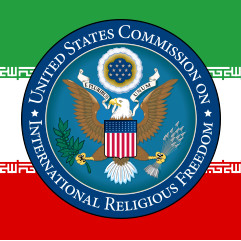
Iranian flag and USCIRF seal
I posted Friday about religious persecution in several countries, particularly Syria, Iran, and North Korea.
An Iranian reader objected to the way I had characterized the situation in Iran. I responded to his comment but think it would be good for readers to see this material directly, rather than allowing it to get overlooked in the comments.
As I mention in Friday’s post, the UN has expressed concern that over 300 Christians have been arrested since 2010 and that churches are being pressured to report their membership to authorities — presumably so the state can keep tabs on them.
The United States Commission on International Religious Freedom has expressed concern on the same issues and has elaborated upon them and the general tenor of anti-Christian sentiment in Iran.
The USCIRF lists Iran as a “Country of Particular Concern.”
The following extracts are from pages 78, 81-82, and 85-86 of the 2012 report. I apologize in advance for their length, particularly the last, but they are useful for getting a sense of what Christians (and other religious minorities) face the country.
The government of Iran continues to engage in systematic, ongoing, and egregious violations of religious freedom, including prolonged detention, torture, and executions based primarily or entirely upon the religion of the accused. Iran is a constitutional, theocratic republic that discriminates against its citizens on the basis of religion or belief. During the past year, religious freedom conditions continued to deteriorate, especially for religious minorities, most notably Baha’is, as well as Christians and Sufi Muslims, and physical attacks, harassment, detention, arrests, and imprisonment intensified. Even the recognized non-Muslim religious minorities protected under Iran‘s constitution — Jews, Armenian and Assyrian Christians, and Zoroastrians — faced increasing discrimination, arrests, and imprisonment. Majority Shi’a and minority Sunni Muslims, including clerics who dissent, were intimidated, harassed, and detained. Dissidents and human rights defenders were increasingly subject to abuse and several were sentenced to death and even executed for the capital crime of “waging war against God.” Heightened anti-Semitism and repeated Holocaust denials by senior government officials have increased fear among Iran’s Jewish community. Since the 1979 Iranian revolution, members of minority religious communities have fled Iran in significant numbers for fear of persecution.
The constitution of Iran formally recognizes Christians, Jews, and Zoroastrians as protected religious minorities who may worship freely and have autonomy over their own matters of personal status (e.g., marriage, divorce, and inheritance). Nevertheless, the primacy of Islam and Islamic laws and institutions adversely affects the rights and status of non-Muslims and the recognized religious minorities live, in effect, as second class citizens.
During the reporting period, the number of incidents of Iranian authorities raiding church services, harassing and threatening church members, and arresting, convicting, and imprisoning worshippers and church leaders increased significantly. Christians, particularly Evangelical and other Protestants, are subject to harassment, arrests, close surveillance, and imprisonment; many are reported to have fled the country. Indigenous Assyrian and Armenian Christian religious leaders also have been targeted. Since becoming president, Iranian President Mahmoud Ahmadinejad has called for an end to the development of Christianity in Iran. The government requires Evangelical Christian groups to submit congregational membership lists.
Since June 2010, approximately 300 Christians have been arbitrarily arrested and detained throughout the country, including in Arak, Bandar Abbas, Bandar Mahshahr, Ardabil, Tabriz, Khoramabad, Mashhad, Hamadan, Rasht, Shiraz, Isfahan, and Elam. In cases involving offenses based on religious belief, Iranian authorities typically release prisoners, but leave the charges against them or their convictions in place in order to be able to threaten them with reimprisonment at any future time. On February 8, 2012, Iranian authorities raided a house church gathering in Shiraz, confiscated religious materials, and arrested 10 Christian converts. At the end of the reporting period, at least seven remain in detention without charge. In late December 2011, Iranian authorities raided an Assemblies of God church in Ahvaz, southwestern Iran, and arrested all attendees. While most were released within days, pastor Farhad Sabokroh and another member reportedly were released on bail after serving two months in prison. No charges have been filed.
In September 2011, several leaders of a Christian house church network in various parts of the country were arrested. Behnam Irani, a 41-year-old pastor from Karaj, Iran, was convicted of crimes against national security in January 2011 and sentenced to one year in prison. He started serving his sentence in May 2011 and learned in October that he would have to serve five years in connection with a previous conviction.
In April 2011 in the northern Iranian city of Bandar Anzali, 11 members of the Church of Iran were arrested and charged with “acting against national security” and consuming alcohol. The following month, all 11 were tried and acquitted by a Revolutionary court on grounds that the group was performing a legitimate private religious ceremony protected under Article 13 of the constitution.
In December 2010 and January 2011 alone, approximately 120 Christians were arrested. While most were released within days, at the end of the reporting period, a number of pastors remain jailed amid reports of physical and emotional abuse. For example, Farshid Fathi and Noorollah Qabitizade, two Christian converts arrested in December 2010, remain in prison without charge, and have spent a number of months in solitary confinement. Pastor Mehdi Furutan was arrested in January 2011 and charged with crimes against national security and blasphemy against Islam. Although acquitted on the blasphemy charge and released on bail a month later, Furutan was sentenced to one year in prison. He began serving his sentence in September 2011.
In September 2010, pastor Vahik Abrahamian, his wife Sonia Keshish-Avanesian, Arash Kermanjani, and Arezo Teymouri were arrested at Abrahamian‘s home in Hamadan. All four were held in solitary confinement for 40 days and reportedly suffered physical abuse and psychological pressure. The four were charged with propagating Christianity, opposing the Islamic Republic, and having contact with exiled opposition figures. Kermanjani, Teymouri, and Ketish-Avanesian were released in April 2011 and Abrahamian in August 2011.
In June 2010, Christian pastor Behrouz Sadegh-Khanjani, Mohammad Baliad, Parviz Khalaj, and Nazly Beliad were arrested on charges of apostasy, holding political meetings, blasphemy, and “crimes against the Islamic order.” The Revolutionary Court in Shiraz found the four men guilty of crimes against the Islamic order and sentenced each to one year in prison. After serving eight months, they were released on bail in February 2011. In September 2011, a Shiraz appeals court upheld a one-year sentence on another charge of “propaganda against the regime” against the same four individuals, as well as against a fifth Christian, Amin Afshar Manesh.
Christian pastor Yousef Nadarkhani, jailed since October 2009, was sentenced to death for apostasy in November 2010 by a court in Gilan province. Prosecutors acknowledged he had never been a Muslim as an adult but said the apostasy law still applies because he has Islamic ancestry. Rejecting his appeal in June 2011, the court suspended the sentence contingent upon his recanting his faith, which he refused to do during hearings in September. At the end of the reporting period, he remains imprisoned, reportedly awaiting an opinion from Supreme Leader Khamenei, although unconfirmed reports surfaced in February 2012 that a provincial court had renewed Nadarkhani‘s execution order. According to human rights groups, Iran‘s judiciary has ordered the verdict to be delayed, possibly until late 2012, hoping that he will recant at some point before then.
Rhetoric from political and religious leaders demonizing and insulting the Christian community also has increased significantly. In August 2011, 6,500 Bibles were confiscated as they were being transported between the cities of Zanjan and Ahbar in the northwestern province. Commenting on the confiscation, a high-level government official said that Christian missionaries were attempting to deceive people, especially the youth, with an expensive propaganda campaign. In January 2011, the governor of Tehran, Morteza Tamaddon, publicly referred to detained Christians as “deviant” and “corrupt” and vowed to identify and detain more. He likened Evangelical Christians to the Taliban and accused them of placing “themselves within the religion of Islam like a pest and under the cover of Christianity and with the support of England they have designed a movement.”
As many are aware, Yousef Nadarkhani has since been freed.
Unfortunately, the tables are still stacked against Christians and other religious minorities. The human-rights attorney who secured Nadarkhani’s release was himself recently imprisoned. Along with the recent “arrest and imprisonment of several prominent human rights defenders, journalists and political activists,” the UN Human Rights Office says, “[t]his appears to reflect a further severe clamp down on critical voices in the country.”
We should certainly celebrate with Nadarkhani. We should also pray for those still enduring repression and persecution for their beliefs.
Previous Post
December 7, 2012
Christians under attack in Syria, Iran, N. Korea
Next Post
December 9, 2012 Why celebrate the conception of Mary?
Browse Our Archives
Select a Category Books Church Life Family Life Misc Prayer Quotes Society Spiritual Growth Theology Uncategorized Video
Select a Month April 2014 March 2014 January 2014 December 2013 November 2013 August 2013 July 2013 June 2013 May 2013 April 2013 March 2013 February 2013 January 2013 December 2012 November 2012 October 2012 September 2012 August 2012 July 2012 June 2012 May 2012 April 2012 March 2012 February 2012 December 2011 November 2011 October 2011 August 2011 July 2011 June 2011 March 2011 February 2011 January 2011 December 2010 October 2010 September 2010 August 2010 July 2010 June 2010 May 2010 September 2009 August 2009 July 2009 May 2009 April 2009 March 2009 November 2008 October 2008 July 2008 June 2008 April 2008 March 2008 February 2008 January 2008 August 2007 June 2007 October 2002 July 2002 November 1999 October 1999
Follow Us!
TAKE THE
Religious Wisdom Quiz
What traveling companion of Paul was a physician and historian, writing two New Testament books?
Select your answer to see how you score.
Luke Barnabas Silas Mark
Related posts from Joel J. Miller

Does the adulterous woman belong in your Bible?

Why you need the church to read your...

Windows to heaven: Icons in church

The problem with virtual communion
TRENDING AT PATHEOS Evangelical

The REST of Your Life: A Creative Wrestles...
This week I had a conversation with a good friend from church....

How the author of the world's best hymn...
I've been working with John Newton for a while now. This makes...

Long before this Lectio Divina, Psalm 130 - the song - started...

What About the Trees? Another Living Parable
After I finished writing the last article about falling leaves as a...

Why Classical Education Is a Conversation, Not a...
Come and Read: Joy in Classical Education When I was a little...

Cornell University has received a great deal of negative publicity and intense...
view all Evangelical blogs
Ad-Free & Subscriber Log-In Subscription Support
- About Us
- 2026 Calendar
- Videos
- Podcasts
- Library of World Religions
- Faith In Media Tracker
- Advertise With Us
- Write for Us
- Privacy Policy
- Terms of Service
- Do Not Sell My Data
- Contact Us
- Radiant Digital
- Manage Newsletter Subscriptions
- Unsubscribe From Notifications
- Sitemap
Copyright 2008-2026, Patheos. All rights reserved.
Subscription Support Ad-Free & Subscriber Log-In
Follow Patheos