
BuddhistCatholicContemplativeEvangelicalGeneral ChristianHinduJewishLatter-day SaintMuslimNew VisionsProgressive Christian
Beliefs
- Buddhist
- Catholic
- Contemplative
- Evangelical
- General Christian
- Hindu
- Jewish
- Latter-day Saint
- More Voices
- Muslim
- New Visions
- Pagan
- Progressive Christian
Topics
- Religion News
- Food and Religion
- Sports and Religion
- Religious Art
- Religious Music and Entertainment
- Religious Events
- History and Religion
- Style and Religion
- Politics and Religion
- Women in Religion
- Recreation Outdoors and Religion
- Business Finance and Religion
- Careers Workplace and Religion
- Education and Religion
- Family Parenting and Religion
- Health Fitness and Religion
- Home and Religion
- Relationships and Religion
- Technology and Religion
- Travel and Religion
Columnists
- Buddhist Columnists
- Business Finance and Religion Columnists
- Careers Workplace and Religion Columnists
- Catholic Columnists
- Contemplative Columnists
- Education and Religion Columnists
- Evangelists Columnists
- Family Parenting and Religion Columnists
- General Christian Columnists
- Health Fitness and Religion Columnists
- Hindu Columnists
- History and Religion Columnists
- Home and Religion Columnists
- Jewish Columnists
- More Voices Columnists
- Latter Day Columnists
- Muslim Columnists
- New Visions Columnists
- Nonreligious Columnists
- Pagan Columnists
- Politics and Religion Columnists
- Progressive Columnists
- Recreation Outdoors and Religion Columnists
- Relationships and Religion Columnists
- Religion News Columnists
- Religious Art Columnists
- Religious Events Columnists
- Religious Music and Entertainment Columnists
- Sports and Religion Columnists
- Style and Religion Columnists
- Technology and Religion Columnists
- Travel and Religion Columnists
- Women in Religion Columnists
Resource Library
- 2026 Calendar
- Library of World Religions
- The 100 Most Holy Places on Earth
- Patheos Answers
- Podcasts
- Videos
- Faith Leaders Database
- Anglican Episcopalian
- Bahai
- Baptist
- Buddhism
- Christianity
- Confucianism
- Eastern Orthodoxy
- Hinduism
- Holiness and Pentecostal
- ISKCON
- Islam
- Judaism
- Lutheran
- Methodist
- The Church of Jesus Christ of Latter-day Saints
- New Age
- Paganism
- Presbytarian and Reformed
- Protestantism
- Religion Behind the Scenes
- Roman Catholic
- Scientology
- Shia Islam
- Sikhism
- Sufism
- Sunni Islam
- Taoism
- Zen
- See all religions
Research Tools
 Ad-Free & Subscriber Log-In Subscription Support
Ad-Free & Subscriber Log-In Subscription Support
Follow Patheos 

- Trending:
- Forgiveness
- |
- Marriage
- |
- Consciousness
- |
- Death Penalty
- |
- Election
- |
- Halloween
 Joel J. Miller
-
Joel's Books
-
Article Categories
- Home
- Evangelical
- Where you go to meet with God
Where you go to meet with God
Last updated on: November 9, 2012 at 4:54 am by Joel J. Miller
Where you go to meet with God 2012-11-09T04:54:25-06:00 Joel J. Miller
Patheos Explore the world's faith through different perspectives on religion and spirituality! Patheos has the views of the prevalent religions and spiritualities of the world.
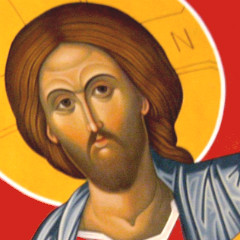
И. Максим, Flickr
During the Last Supper the disciple Philip asked Jesus show him God. “Lord,” he said, as recorded by John’s gospel, “show us the Father, and we shall be satisfied” (14.8).
Did Philip know what he was asking? Surely he was aware that Moses asked a similar question, to see God’s glory. “[Y]ou cannot see my face,” answered the Lord, “for man shall not see me and live” (Ex 33.20).
God allowed Moses a glimpse nonetheless, but not directly. Instead of seeing the Lord’s face, Moses was permitted a glance of his fleeting form as God passed in front of him — his afterglow, as I once heard it said.
No one has seen God
But, as the text plainly says, it was not a full revelation of the divine.
Moses’ theophany was a vision of God, who, in the words of fourth-century Spanish poet Prudentius, “qualifie[d] himself and put on the shape of an angel,” as all such divine encounters in the Hebrew scripture are understood. Direct view of God never occurred.
John reminds his readers of this at the beginning of his gospel. “No one has ever seen God,” he writes (1.18). And that includes Moses.
This is a significant theme for John; it’s a theme that runs through his book. In chapter 5, for instance, he reiterates the same point, this time quoting Jesus himself: “[God’s] voice you have never heard, his form you have never seen. . .” (v. 37). And again in chapter 6, Jesus says, “No one has seen the Father. . .” (v. 46).
So where does that leave Philip? Where does that leave us?
Measured in the heart
John draws us to contemplate the divine transcendence, the otherness of God. He is not like us. “God cannot be measured in the heart,” as Irenaeus of Lyons said, “and incomprehensible is He in the mind. . .” (Against Heresies 4.19.2).
To comprehend something means to know its limits, its boundaries — to measure it in the mind, as Irenaeus would say. Since God has no limits, he is unbounded and likewise incomprehensible. No one, in short, can see him.
“He is the Father,” wrote Prudentius in “whom no eye has ever had force to reach . . . and who does not put on the form of man nor qualify the infinity of his Godhead by assuming countenance or mode.”
The Father does not, but Christ, as the second person of the Trinity, does.
Known by love
God cannot be known in his glory, as Moses discovered, but he can be known through his love, and we encounter that love in Jesus Christ.
“[A]s regards His greatness, [God] is indeed unknown to all who have been made by him,” said Irenaeus, “but as regards His love, He is always known through Him by whose means He ordained all things. Now this is His Word, our Lord Jesus Christ. . .” (Against Heresies 4.20.4).
The theophanies of the Old Testament were glimpses of Christ through the guises of angels. But the Incarnation dispensed with the need for such guises. Christ emptied himself and took on human nature, fully sensible to us. Love bridged the chasm, and the transcendent became eminent.
Seeing God in Christ
Jesus himself hints at this in chapter 12 of John’s gospel.
“And he who sees me sees him who sent me,” says Jesus, though not identifying the sender. John gives us the answer in the rest of the quote. “I have come as light into the world, that whoever believes in me may not remain in darkness” (12.45-46).
The reference to the light takes us back to the first chapter of the gospel, the prologue that ties the Word and the Light to divine activity in the world. In other words, whoever has seen Jesus has seen God — which is exactly the answer Jesus gives Philip.
“Have I been with you so long, and yet you do not know me, Philip?” asks Jesus and then answers, “He who has seen me has seen the Father. . . ” (14.9).
We know the Father through Jesus. We see God in Christ.
“As regards His greatness . . . it is not possible to know God,” said Irenaeus, “but as regards his love . . . this is which leads us to God by His Word. . .” (Against Heresies 4.20.1).
“He is,” says Paul, using very visual vocabulary, “the image of the invisible God” (Col 1.15).
The king in a manger
This is how God does things, isn’t it? The little looms large. The small subversively becomes significant. The last leaps into first. The God of thunder speaks in a still, small voice.
“The prophets, when they appear on our earthly scene, are rarely as expected,” as Malcolm Muggeridge said in A Third Testament. “A king is awaited, and there is a birth in a manger.”
The Incarnation meant that humans could see God and could experience a genuine, saving experience of the divine. But not like we think. Philip, who had been with Jesus from the start, had been looking upon God all along. He just needed the faith to realize it. For him, just like us, Jesus is where we go to meet with God.
Previous Post

November 8, 2012
Celebrating Michael and the archangels
Next Post

November 11, 2012 We are all Protestants now
Browse Our Archives
Select a Category Books Church Life Family Life Misc Prayer Quotes Society Spiritual Growth Theology Uncategorized Video
Select a Month April 2014 March 2014 January 2014 December 2013 November 2013 August 2013 July 2013 June 2013 May 2013 April 2013 March 2013 February 2013 January 2013 December 2012 November 2012 October 2012 September 2012 August 2012 July 2012 June 2012 May 2012 April 2012 March 2012 February 2012 December 2011 November 2011 October 2011 August 2011 July 2011 June 2011 March 2011 February 2011 January 2011 December 2010 October 2010 September 2010 August 2010 July 2010 June 2010 May 2010 September 2009 August 2009 July 2009 May 2009 April 2009 March 2009 November 2008 October 2008 July 2008 June 2008 April 2008 March 2008 February 2008 January 2008 August 2007 June 2007 October 2002 July 2002 November 1999 October 1999
Follow Us!
TAKE THE
Religious Wisdom Quiz
What does Romans say is the result of justification by faith?
Select your answer to see how you score.
We receive eternal life We have peace with God We become righteous We are saved from wrath
Related posts from Joel J. Miller

Is the Resurrection essential to Christian belief?

What Barton and Copeland get wrong about war...

George Orwell and bending the Bible for our...

Doh! Archbishop of Canterbury forgets what it means...
TRENDING AT PATHEOS Evangelical

The REST of Your Life: A Creative Wrestles...
This week I had a conversation with a good friend from church....

How the author of the world's best hymn...
I've been working with John Newton for a while now. This makes...

Long before this Lectio Divina, Psalm 130 - the song - started...

What About the Trees? Another Living Parable
After I finished writing the last article about falling leaves as a...

Why Classical Education Is a Conversation, Not a...
Come and Read: Joy in Classical Education When I was a little...

Cornell University has received a great deal of negative publicity and intense...
view all Evangelical blogs
Ad-Free & Subscriber Log-In Subscription Support
- About Us
- 2026 Calendar
- Videos
- Podcasts
- Library of World Religions
- Faith In Media Tracker
- Advertise With Us
- Write for Us
- Privacy Policy
- Terms of Service
- Do Not Sell My Data
- Contact Us
- Radiant Digital
- Manage Newsletter Subscriptions
- Unsubscribe From Notifications
- Sitemap
Copyright 2008-2026, Patheos. All rights reserved.
Subscription Support Ad-Free & Subscriber Log-In
Follow Patheos