
BuddhistCatholicContemplativeEvangelicalGeneral ChristianHinduJewishLatter-day SaintMuslimNew VisionsProgressive Christian
Beliefs
- Buddhist
- Catholic
- Contemplative
- Evangelical
- General Christian
- Hindu
- Jewish
- Latter-day Saint
- More Voices
- Muslim
- New Visions
- Pagan
- Progressive Christian
Topics
- Religion News
- Food and Religion
- Sports and Religion
- Religious Art
- Religious Music and Entertainment
- Religious Events
- History and Religion
- Style and Religion
- Politics and Religion
- Women in Religion
- Recreation Outdoors and Religion
- Business Finance and Religion
- Careers Workplace and Religion
- Education and Religion
- Family Parenting and Religion
- Health Fitness and Religion
- Home and Religion
- Relationships and Religion
- Technology and Religion
- Travel and Religion
Columnists
- Buddhist Columnists
- Business Finance and Religion Columnists
- Careers Workplace and Religion Columnists
- Catholic Columnists
- Contemplative Columnists
- Education and Religion Columnists
- Evangelists Columnists
- Family Parenting and Religion Columnists
- General Christian Columnists
- Health Fitness and Religion Columnists
- Hindu Columnists
- History and Religion Columnists
- Home and Religion Columnists
- Jewish Columnists
- More Voices Columnists
- Latter Day Columnists
- Muslim Columnists
- New Visions Columnists
- Nonreligious Columnists
- Pagan Columnists
- Politics and Religion Columnists
- Progressive Columnists
- Recreation Outdoors and Religion Columnists
- Relationships and Religion Columnists
- Religion News Columnists
- Religious Art Columnists
- Religious Events Columnists
- Religious Music and Entertainment Columnists
- Sports and Religion Columnists
- Style and Religion Columnists
- Technology and Religion Columnists
- Travel and Religion Columnists
- Women in Religion Columnists
Resource Library
- 2026 Calendar
- Library of World Religions
- The 100 Most Holy Places on Earth
- Patheos Answers
- Podcasts
- Videos
- Faith Leaders Database
- Anglican Episcopalian
- Bahai
- Baptist
- Buddhism
- Christianity
- Confucianism
- Eastern Orthodoxy
- Hinduism
- Holiness and Pentecostal
- ISKCON
- Islam
- Judaism
- Lutheran
- Methodist
- The Church of Jesus Christ of Latter-day Saints
- New Age
- Paganism
- Presbytarian and Reformed
- Protestantism
- Religion Behind the Scenes
- Roman Catholic
- Scientology
- Shia Islam
- Sikhism
- Sufism
- Sunni Islam
- Taoism
- Zen
- See all religions
Research Tools
 Ad-Free & Subscriber Log-In Subscription Support
Follow Patheos 

- Trending:
- Advent
- |
- Forgiveness
- |
- Thanksgiving
- |
- Election
- |
- Seasonal Holidays
- |
- Marriage
 Joel J. Miller
-
Joel's Books
-
Article Categories
- Home
- Evangelical
- We are all Protestants now
We are all Protestants now
Last updated on: November 12, 2012 at 6:20 am by Joel J. Miller
We are all Protestants now 2012-11-12T06:20:19-06:00 Joel J. Miller
Patheos Explore the world's faith through different perspectives on religion and spirituality! Patheos has the views of the prevalent religions and spiritualities of the world.
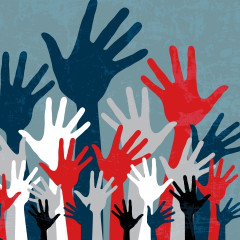
nirots, FreeDigitalPhotos
“[D]o nothing apart from the bishop. . . .”
— Ignatius of Antioch, Magnesians 7
One of the more intriguing narratives flowing out of the election concerns Roman Catholics bucking their bishops’ entreaties — some would say threats — to abstain from voting for candidates who support abortion and the HHS contraception mandate.
Regardless of the directive, a majority of Catholics punched the Obama/Biden ticket on November 6, acting as if the episcopal counsel counted for squat. This strikes me as an interesting development, demonstrating a significant breakdown in church authority. Apparently, we’re all Protestants now — each man his own magisterium, each person his own pope.
On Election Day, Archbishop Charles Chaput wrote about the importance of the contest and the gravity of the choice facing the faithful. “[E]lections are tough times for serious Catholics,” he wrote. “If we believe in the encyclical tradition — from Rerum Novarum to Evangelium Vitae; from Humanae Vitae to Caritas In Veritate — then we can’t settle comfortably in either political party.” Apparently it wasn’t that tough after all. Either the assumption proved wrong just hours after he wrote it, or the majority of Catholics aren’t “serious.” Either option bodes ill.
It’s not my intention to talk politics so much as point to something happening in our culture. It seems to me that individualism has become something of a universal solvent, corroding norms and institutions, including the church.
Chaput’s observation was couched in a larger argument about the aftereffects of the Reformation, and it’s worth reading closely.
The Protestant rejection of church authority stemmed primarily from the doctrine of sola scriptura, the idea that the Bible beats bishops when it comes to questions of doctrine and life.
Appealing to sola scriptura, Protestants dispensed with most of the church hierarchy and sacraments, scholasticism and the pre-scholastic patristic tradition. While simultaneously misunderstanding the role of tradition (in large measure because of Roman abuses of it), they jettisoned most aspects of it they couldn’t find in the two testaments, including those parts of the first testament they regarded as “Apocrypha” (though, curiously, some inexplicit things like Trinitarianism and Sunday worship were nonetheless retained, though there is no biblical warrant for them).
The problem is that if each individual or group of individuals is free to determine what stays and what goes, they will invariably arrive at differing — even mutually exclusive — lists. This is exactly what happened subsequent to Luther’s hammer strikes in Wittenberg. Hence the multitudinous Protestant denominations, churches, and roaming free agents.
“Sola scriptura changed everything for Western Christendom,” said Chaput. “The Church became the churches, and the process inadvertently, but relentlessly, fueled individual sovereignty and relativism.”
That individualistic ethic has cut its way thorough all of Western life, affecting more than questions of Christian doctrine. It now affects virtually all moral considerations, family dynamics, social norms, basically everything, all the way up and down the chain. No wonder Alister McGrath called it “Christianity’s dangerous idea,” alongside which term it is useful to employ C.S. Lewis’ phrase, “the poison of subjectivism.” And it affects Catholics now as well as Protestants.
The pre-Kennedy concern in American politics was that Catholics would support Rome instead of Washington. Rest easy. If it wasn’t evident before, the Election of 2012 showed that disregarding the authority of the church is no longer a worry for American Catholics.
This is only the beginning. If the influence of the bishops wanes in one area, why not others? Disregarded sociopolitical direction will soon seem like nothing when the faithful start choosing which doctrines they will or will not countenance. For Americans this is particularly likely, as we are a people who offer a notorious shrug of the shoulders to most theological concerns. Protestants have never solved this problem, and now it seems likely Catholics must deal with it as well, if not soon, then eventually. Authority means little if unheeded.
I wonder if Luther saw how deep that nail would pierce.
Previous Post
November 9, 2012
Where you go to meet with God
Next Post

November 13, 2012 The battle for your heart
Browse Our Archives
Select a Category Books Church Life Family Life Misc Prayer Quotes Society Spiritual Growth Theology Uncategorized Video
Select a Month April 2014 March 2014 January 2014 December 2013 November 2013 August 2013 July 2013 June 2013 May 2013 April 2013 March 2013 February 2013 January 2013 December 2012 November 2012 October 2012 September 2012 August 2012 July 2012 June 2012 May 2012 April 2012 March 2012 February 2012 December 2011 November 2011 October 2011 August 2011 July 2011 June 2011 March 2011 February 2011 January 2011 December 2010 October 2010 September 2010 August 2010 July 2010 June 2010 May 2010 September 2009 August 2009 July 2009 May 2009 April 2009 March 2009 November 2008 October 2008 July 2008 June 2008 April 2008 March 2008 February 2008 January 2008 August 2007 June 2007 October 2002 July 2002 November 1999 October 1999
Follow Us!
TAKE THE
Religious Wisdom Quiz
What animal did Samson kill with his bare hands?
Select your answer to see how you score.
Lion Leopard Bear Wolf
Related posts from Joel J. Miller
Christianity: Use only as directed

What's missing in our conversation about marriage decline

I guess they redid the math: World Vision...

What's so bad about incinerating 15,000 babies?
TRENDING AT PATHEOS Evangelical

When you hear the word riches, what comes to mind? For most...

Don’t Miss the Parents: A Creative Christmas Meditation
As we enter the Advent Season, I see many people trying to...

Making Stones Into Bread: Choosing the “Right” Work
I was on my online arts ministry Zoom meeting with the International...

Ukraine’s exhausted Christians face fifth winter of war
By Julian Lukins The full-scale war in Ukraine is taking “a serious...

Russell Brand's Conviction is not anti-Christian Persecution
How do we shed the reputation that the Church is OK with...

Have you ever caught yourself saying, “I’ll do it tomorrow,” or “Now...
view all Evangelical blogs
Ad-Free & Subscriber Log-In Subscription Support
- About Us
- 2026 Calendar
- Videos
- Podcasts
- Library of World Religions
- Faith In Media Tracker
- Advertise With Us
- Write for Us
- Privacy Policy
- Terms of Service
- Do Not Sell My Data
- Contact Us
- Radiant Digital
- Manage Newsletter Subscriptions
- Unsubscribe From Notifications
- Sitemap
Copyright 2008-2026, Patheos, part of the Radiant Digital network of media brands. All rights reserved.
Subscription Support Ad-Free & Subscriber Log-In
Follow Patheos