
BuddhistCatholicContemplativeEvangelicalGeneral ChristianHinduJewishLatter-day SaintMuslimNew VisionsProgressive Christian
Beliefs
- Buddhist
- Catholic
- Contemplative
- Evangelical
- General Christian
- Hindu
- Jewish
- Latter-day Saint
- More Voices
- Muslim
- New Visions
- Pagan
- Progressive Christian
Topics
- Religion News
- Food and Religion
- Sports and Religion
- Religious Art
- Religious Music and Entertainment
- Religious Events
- History and Religion
- Style and Religion
- Politics and Religion
- Women in Religion
- Recreation Outdoors and Religion
- Business Finance and Religion
- Careers Workplace and Religion
- Education and Religion
- Family Parenting and Religion
- Health Fitness and Religion
- Home and Religion
- Relationships and Religion
- Technology and Religion
- Travel and Religion
Columnists
- Buddhist Columnists
- Business Finance and Religion Columnists
- Careers Workplace and Religion Columnists
- Catholic Columnists
- Contemplative Columnists
- Education and Religion Columnists
- Evangelists Columnists
- Family Parenting and Religion Columnists
- General Christian Columnists
- Health Fitness and Religion Columnists
- Hindu Columnists
- History and Religion Columnists
- Home and Religion Columnists
- Jewish Columnists
- More Voices Columnists
- Latter Day Columnists
- Muslim Columnists
- New Visions Columnists
- Nonreligious Columnists
- Pagan Columnists
- Politics and Religion Columnists
- Progressive Columnists
- Recreation Outdoors and Religion Columnists
- Relationships and Religion Columnists
- Religion News Columnists
- Religious Art Columnists
- Religious Events Columnists
- Religious Music and Entertainment Columnists
- Sports and Religion Columnists
- Style and Religion Columnists
- Technology and Religion Columnists
- Travel and Religion Columnists
- Women in Religion Columnists
Resource Library
- 2026 Calendar
- Library of World Religions
- The 100 Most Holy Places on Earth
- Patheos Answers
- Podcasts
- Videos
- Faith Leaders Database
- Anglican Episcopalian
- Bahai
- Baptist
- Buddhism
- Christianity
- Confucianism
- Eastern Orthodoxy
- Hinduism
- Holiness and Pentecostal
- ISKCON
- Islam
- Judaism
- Lutheran
- Methodist
- The Church of Jesus Christ of Latter-day Saints
- New Age
- Paganism
- Presbytarian and Reformed
- Protestantism
- Religion Behind the Scenes
- Roman Catholic
- Scientology
- Shia Islam
- Sikhism
- Sufism
- Sunni Islam
- Taoism
- Zen
- See all religions
Research Tools
 Ad-Free & Subscriber Log-In Subscription Support
Ad-Free & Subscriber Log-In Subscription Support
Follow Patheos 

- Trending:
- Forgiveness
- |
- Marriage
- |
- Consciousness
- |
- Death Penalty
- |
- Election
- |
- Halloween
 Joel J. Miller
-
Joel's Books
-
Article Categories
- Home
- Evangelical
- ‘Proof of Heaven’ echoes ancient insights
‘Proof of Heaven’ echoes ancient insights
Last updated on: March 26, 2014 at 3:50 am by Joel J. Miller
‘Proof of Heaven’ echoes ancient insights 2014-03-26T03:50:02-06:00 Joel J. Miller
Patheos Explore the world's faith through different perspectives on religion and spirituality! Patheos has the views of the prevalent religions and spiritualities of the world.
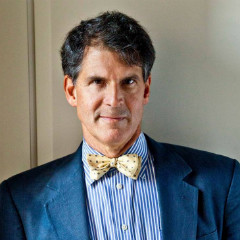
Dr. Eben Alexander
Since I originally posted this piece, Esquire has published an exposé of Eben Alexander, very much worth reading. However close his vision is at places with a traditional Christian vision, there are significant problems with his testimony.
When the neurosurgeon Dr. Eben Alexander slipped into a seven-day coma, he could scarcely imagine the visions that awaited him.
Bacterial meningitis had attacked his brain and shut down his neocortex, the part of the brain that enables consciousness. As he explains in a recent issue of Newsweek, his “higher-order brain functions [were] totally offline.”
But Alexander wasn’t offline. Against everything he understood and believed about the way the mind works, rather than losing all consciousness, he was transported.
He found himself amid clouds and gazed upward to see what he describes as “flocks of transparent, shimmering beings” that “arced across the sky, leaving long, streamerlike lines behind them.” They were, he says, “silvery” and “scintillating.” After coming out of the coma, Alexander wasn’t certain what to call these sparkling beings, but he did describe them as “winged” and “advanced. Higher forms.”
Nimble intelligences
Alexander has fully documented his experiences in a book entitled Proof of Heaven. I should say here that I’ve only read as deeply as the Newsweek feature, but I was intrigued because Alexander’s account mirrors several things I encountered while researching Lifted by Angels — particularly in reading what ancient Christian writers said when addressing the subject of angels.
Alexander’s encounter with these transparent, shimmering creatures happened as he was surrounded by clouds and then looked above himself. Compare that with some portions of a poem by Gregory Nazianzen, the fourth-century bishop of Constantinople:
[M]eeting the clouds with circulating reflection,
the sun’s ray unwinds a many-colored rainbow,
while, from above, all the ethereal element gleams. . . .(Concerning Spiritual Beings, lines 2-4)
Beings that sound similar to Alexander’s next swing into view. Gregory talks about “lights which radiate always from the highest light, illuminating lesser intellects with their beams.” These, Gregory says, are “dazzling angels” and “invisible.” He describes them as “nimble intelligences, fire and divine spirits coursing swiftly through the air . . . simple, noetic, translucent. . .” (lines 6-7, 13-15, 17).
Gregory’s angels sound remarkably similar to Alexander’s, and the witness of ancient Christian theologians, homilists, and poets say much the same.
In his book On The Holy Spirit, Gregory’s friend Basil the Great, calls angels the “pure, intelligent, and other-worldly powers.” Sometimes these ancient writers speak of angels as fiery, as did Basil, who identifies their substance as “an ethereal spirit . . . an immaterial fire.” That fire matches Alexander’s description of angels as shimmering and scintillating.
Recall that Gregory calls angels “invisible” and “translucent,” which ties back to Alexander’s description of their being transparent. Other ancient theologians echo the thought.
In his Hymns on Paradise, fourth-century hymnographer and theologian Ephraim the Syrian speaks of spirits as being made of “finer stuff and more subtle than the [human] soul itself.” He says angels “are so refined in substance that even thoughts cannot touch them!”
The monastic writer John Damascene, whose life crossed the seventh and eighth centuries, describes angels in his Exposition on the Orthodox Faith, as “an intelligent essence, in perpetual motion . . . incorporeal and immaterial.”
It’s interesting that both Gregory and John refer to movement, like Alexander’s reference to beings “arch[ing] across the sky.”
Echoing Ephraim, John says that the fullness of the angelic nature is ineffable. “[T]he Creator alone knows the form and limitation of its essence,” he says. This elusiveness of angels that Ephraim and John speak of calls to mind Alexander’s inability to pin a name on the beings he witnessed. There is something transcendent about the angels that the human mind cannot entirely comprehend.
More than molecules
It’s useful to remember that Alexander’s vision happened while his neocortex was shut off. Medically speaking, he shouldn’t have been able to experience or imagine any of the things he reports—a fact that, as a neurosurgeon, he acknowledges and at which he still puzzles and marvels.
For a scientist and former skeptic, Alexander’s impossible vision has changed his life. Despite the risk of losing professional standing, he’s radically altered his assumptions about the spiritual and the nature of human consciousness, going public with his experience.
I suspect that Alexander will face opposition from more than his skeptical colleagues. Fellow Christians, put off by superstition and the excesses and delusions of the New Age movement, will likewise resist his account.
I think they should be slow to judge. I cannot speak to all the aspects of Alexander’s vision, but what I know is that his vision of angels seems within the bounds of accepted Christian teaching and tradition.
What’s more, he’s staking out a position in an important battlefield in our day — defending the notion that our material existence is not our only existence. We are more than a complex of molecules, and his vision may well testify to the fact that the spiritual realm is real.
Again, I cannot speak to all of what Alexander claims to have seen. But strange as it might seem, if Alexander were able to convey his vision to the theologians, pastors, and poets of the early church, they likely would have nodded with recognition.
Previous Post
November 14, 2012
Pat Robertson, Petraeus, and sexual infidelity
Next Post

November 15, 2012 Preparing our hearts for the birth of Christ
Browse Our Archives
Select a Category Books Church Life Family Life Misc Prayer Quotes Society Spiritual Growth Theology Uncategorized Video
Select a Month April 2014 March 2014 January 2014 December 2013 November 2013 August 2013 July 2013 June 2013 May 2013 April 2013 March 2013 February 2013 January 2013 December 2012 November 2012 October 2012 September 2012 August 2012 July 2012 June 2012 May 2012 April 2012 March 2012 February 2012 December 2011 November 2011 October 2011 August 2011 July 2011 June 2011 March 2011 February 2011 January 2011 December 2010 October 2010 September 2010 August 2010 July 2010 June 2010 May 2010 September 2009 August 2009 July 2009 May 2009 April 2009 March 2009 November 2008 October 2008 July 2008 June 2008 April 2008 March 2008 February 2008 January 2008 August 2007 June 2007 October 2002 July 2002 November 1999 October 1999
Follow Us!
TAKE THE
Religious Wisdom Quiz
What was a biblical measurement of a span?
Select your answer to see how you score.
Full cubit Half a cubit Quarter cubit Third of a cubit
Related posts from Joel J. Miller

Is the Resurrection essential to Christian belief?

Christianity: Use only as directed

What Barton and Copeland get wrong about war...

George Orwell and bending the Bible for our...
TRENDING AT PATHEOS Evangelical

The REST of Your Life: A Creative Wrestles...
This week I had a conversation with a good friend from church....

How the author of the world's best hymn...
I've been working with John Newton for a while now. This makes...

Long before this Lectio Divina, Psalm 130 - the song - started...

What About the Trees? Another Living Parable
After I finished writing the last article about falling leaves as a...

Why Classical Education Is a Conversation, Not a...
Come and Read: Joy in Classical Education When I was a little...

Cornell University has received a great deal of negative publicity and intense...
view all Evangelical blogs
Ad-Free & Subscriber Log-In Subscription Support
- About Us
- 2026 Calendar
- Videos
- Podcasts
- Library of World Religions
- Faith In Media Tracker
- Advertise With Us
- Write for Us
- Privacy Policy
- Terms of Service
- Do Not Sell My Data
- Contact Us
- Radiant Digital
- Manage Newsletter Subscriptions
- Unsubscribe From Notifications
- Sitemap
Copyright 2008-2026, Patheos. All rights reserved.
Subscription Support Ad-Free & Subscriber Log-In
Follow Patheos