
BuddhistCatholicContemplativeEvangelicalGeneral ChristianHinduJewishLatter-day SaintMuslimNew VisionsProgressive Christian
Beliefs
- Buddhist
- Catholic
- Contemplative
- Evangelical
- General Christian
- Hindu
- Jewish
- Latter-day Saint
- More Voices
- Muslim
- New Visions
- Pagan
- Progressive Christian
Topics
- Religion News
- Food and Religion
- Sports and Religion
- Religious Art
- Religious Music and Entertainment
- Religious Events
- History and Religion
- Style and Religion
- Politics and Religion
- Women in Religion
- Recreation Outdoors and Religion
- Business Finance and Religion
- Careers Workplace and Religion
- Education and Religion
- Family Parenting and Religion
- Health Fitness and Religion
- Home and Religion
- Relationships and Religion
- Technology and Religion
- Travel and Religion
Columnists
- Buddhist Columnists
- Business Finance and Religion Columnists
- Careers Workplace and Religion Columnists
- Catholic Columnists
- Contemplative Columnists
- Education and Religion Columnists
- Evangelists Columnists
- Family Parenting and Religion Columnists
- General Christian Columnists
- Health Fitness and Religion Columnists
- Hindu Columnists
- History and Religion Columnists
- Home and Religion Columnists
- Jewish Columnists
- More Voices Columnists
- Latter Day Columnists
- Muslim Columnists
- New Visions Columnists
- Nonreligious Columnists
- Pagan Columnists
- Politics and Religion Columnists
- Progressive Columnists
- Recreation Outdoors and Religion Columnists
- Relationships and Religion Columnists
- Religion News Columnists
- Religious Art Columnists
- Religious Events Columnists
- Religious Music and Entertainment Columnists
- Sports and Religion Columnists
- Style and Religion Columnists
- Technology and Religion Columnists
- Travel and Religion Columnists
- Women in Religion Columnists
Resource Library
- 2026 Calendar
- Library of World Religions
- The 100 Most Holy Places on Earth
- Patheos Answers
- Podcasts
- Videos
- Faith Leaders Database
- Anglican Episcopalian
- Bahai
- Baptist
- Buddhism
- Christianity
- Confucianism
- Eastern Orthodoxy
- Hinduism
- Holiness and Pentecostal
- ISKCON
- Islam
- Judaism
- Lutheran
- Methodist
- The Church of Jesus Christ of Latter-day Saints
- New Age
- Paganism
- Presbytarian and Reformed
- Protestantism
- Religion Behind the Scenes
- Roman Catholic
- Scientology
- Shia Islam
- Sikhism
- Sufism
- Sunni Islam
- Taoism
- Zen
- See all religions
Research Tools
 Ad-Free & Subscriber Log-In Subscription Support
Ad-Free & Subscriber Log-In Subscription Support
Follow Patheos 

- Trending:
- Forgiveness
- |
- Marriage
- |
- Consciousness
- |
- Death Penalty
- |
- Election
- |
- Halloween
 Joel J. Miller
-
Joel's Books
-
Article Categories
- Home
- Evangelical
- The blessing and curse of liberty
The blessing and curse of liberty
Last updated on: July 3, 2012 at 12:05 am by Joel J. Miller
The blessing and curse of liberty 2012-07-03T00:05:43-05:00 Joel J. Miller
Patheos Explore the world's faith through different perspectives on religion and spirituality! Patheos has the views of the prevalent religions and spiritualities of the world.
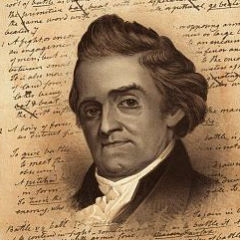
Noah Webster, Library of Congress
As we celebrate our nation’s Independence, some then-and-now is in order.
On July 4, 1793, Rev. Enos Hitchcock offered an oration at the Baptist Meeting House in Providence, Rhode Island. The speech was colored by personal experience. Hitchcock served as chaplain during the war, first at Crown Point and Ticonderoga and then later at Valley Forge and West Point, seeing the high cost of liberty and ministering to countless men who paid it in full.
As townsfolk gathered to celebrate that dear prize, Hitchcock directed their contemplations toward their immense blessings. With its fertile soil, various climates, broad rivers, and vast coastline, the new-won land promised every kind of produce and extensive commerce.
Hitchcock’s “sentimental effusions” — his phrase — included statements about the ongoing betterment of the people in which “[v]irtue and industry, talents and knowledge” would increase, while “opportunities for vice are rendered fewer.”
The mood was no less effusive when it came to politics. In America, he said, “the hereditary demagogue, and the cringing sycophant, are alike unknown. Protected by laws of their own framing, the people cannot be oppressed. Enjoying an equal government, which has no lucrative sinecures to bestow, there will be no great scope for ambitious intrigue.”
That was then. Now the demagogues and sycophants are back. Our laws are, more often than not, of nobody’s framing except that of unconstitutional bureaucracies, and the people are greatly put upon if not actually oppressed. There is no equal government, as special interests and their legions of lobbyists secure the bestowal of power, perks, and privileges one campaign donation at a time. And no great scope! For all appearances, ambitious intrigue is fundamental to American politics.
Hitchcock’s was a hopeful and certain vision, but one that went radically south. And quickly. There were concerns early on. A few years later, in 1802, Noah Webster offered a July 4 oration considerably more somber, one focused on the perils facing the young republic.
“Nations, like individuals, may be misled by an ardent enthusiasm, which allures them from the standard of practical wisdom, and commits them to the guidance of visionary projectors,” said Webster. These schemers, however well-intentioned, “delude themselves with the belief, that they have wisdom to elude or power to surmount the obstacles which have baffled the exertions of their predecessors.” But they don’t, as history ruefully instructs.
The Constitution supposedly hems the schemers in, but “[w]hen a magistrate becomes more popular than the constitution, he may ‘draw sin as it were with a cart-rope,'” said Webster, adding that “against men who command the current of popular confidence, the best constitution has not the strength of a cobweb.”
And so here we are these many years later, much the worse for wear. Unalloyed celebration is proper on the Fourth, but self-critical reflection is due before and after. How, after all, did we get here?
Human nature is the unimpressive answer, but it’s a fault line the founders identified at the beginning. They put great stock in religion to curb excesses and declinations of human nature both in politics and out. “The importance of religion to the peace and order of society, is unspeakably great,” said Hitchcock, for one ready example. Faith, as they saw it, would drive the impulse toward self-governance.
But don’t get your hopes up. Webster, for his part, showed a reasonable skepticism:
If there is a possibility of founding a perfectly free government, and giving it permanent duration, it must be raised upon the pure maxims, and supported by the undecaying practice, of that religion, which breathes “peace on earth, and good will to men.” That religion is perfectly republican . . . it is calculated to humble the pride and allay the discontents of men . . . it restrains the magistrate from oppression, and the subject from revolt . . . it secures a perfect equality of rights, by enjoining a discharge of all social duties, and a strict subordination to law. The universal prevalence of that religion, in its true spirit, would banish tyranny from the earth. Yet this religion has been perverted. . . .
Webster was primarily attacking the papacy and various European state churches, but there are other perversions that decay the practice of fruitful Christian faith and render self-governance more curse than blessing.
Now, as then, Americans are remarkably religious. But we are remarkably religious about things that don’t much matter. What about fasting, humility, and charity? What about asceticism? Virtues and practices that could curb our baser impulses are part of the Christian tradition but rarely cultivated or employed.
Uninterested in fasting, we are unable to check our material appetites and seek to accumulate possessions and power. Unimpressed with humility, we pursue individual interests with selfish vigor and curry favor and applause for all our self-aggrandizing efforts. Dismissive of charity, we put ourselves before our neighbors, and sometimes even our spouses and children. Are we surprised that politicians act the same? In a democracy, they are the same.
We’ve lost our national government because we’ve abandoned virtuous self-government. The very thought of ascetic restraint is baneful to the self-vaunting, proud American spirit. And yet it’s the one thing that might keep that spirit alive and honor the sacrifices made by those who freed it in the first place.
Originally published at RealClearReligion, July 2, 2011.
Previous Post

July 1, 2012
Fr. Peter Gillquist's angelic welcome
Next Post

July 4, 2012 America needs prophets
Browse Our Archives
Select a Category Books Church Life Family Life Misc Prayer Quotes Society Spiritual Growth Theology Uncategorized Video
Select a Month April 2014 March 2014 January 2014 December 2013 November 2013 August 2013 July 2013 June 2013 May 2013 April 2013 March 2013 February 2013 January 2013 December 2012 November 2012 October 2012 September 2012 August 2012 July 2012 June 2012 May 2012 April 2012 March 2012 February 2012 December 2011 November 2011 October 2011 August 2011 July 2011 June 2011 March 2011 February 2011 January 2011 December 2010 October 2010 September 2010 August 2010 July 2010 June 2010 May 2010 September 2009 August 2009 July 2009 May 2009 April 2009 March 2009 November 2008 October 2008 July 2008 June 2008 April 2008 March 2008 February 2008 January 2008 August 2007 June 2007 October 2002 July 2002 November 1999 October 1999
Follow Us!
TAKE THE
Religious Wisdom Quiz
Who was Jude?
Select your answer to see how you score.
The apostle who replaced Judas Brother of Jesus Brother of Peter The first martyred apostle
Related posts from Joel J. Miller

Christianity: Use only as directed

What's missing in our conversation about marriage decline

I guess they redid the math: World Vision...

What's so bad about incinerating 15,000 babies?
TRENDING AT PATHEOS Evangelical

The REST of Your Life: A Creative Wrestles...
This week I had a conversation with a good friend from church....

How the author of the world's best hymn...
I've been working with John Newton for a while now. This makes...

Long before this Lectio Divina, Psalm 130 - the song - started...

What About the Trees? Another Living Parable
After I finished writing the last article about falling leaves as a...

Why Classical Education Is a Conversation, Not a...
Come and Read: Joy in Classical Education When I was a little...

Cornell University has received a great deal of negative publicity and intense...
view all Evangelical blogs
Ad-Free & Subscriber Log-In Subscription Support
- About Us
- 2026 Calendar
- Videos
- Podcasts
- Library of World Religions
- Faith In Media Tracker
- Advertise With Us
- Write for Us
- Privacy Policy
- Terms of Service
- Do Not Sell My Data
- Contact Us
- Radiant Digital
- Manage Newsletter Subscriptions
- Unsubscribe From Notifications
- Sitemap
Copyright 2008-2026, Patheos. All rights reserved.
Subscription Support Ad-Free & Subscriber Log-In
Follow Patheos