
BuddhistCatholicContemplativeEvangelicalGeneral ChristianHinduJewishLatter-day SaintMuslimNew VisionsProgressive Christian
Beliefs
- Buddhist
- Catholic
- Contemplative
- Evangelical
- General Christian
- Hindu
- Jewish
- Latter-day Saint
- More Voices
- Muslim
- New Visions
- Pagan
- Progressive Christian
Topics
- Religion News
- Food and Religion
- Sports and Religion
- Religious Art
- Religious Music and Entertainment
- Religious Events
- History and Religion
- Style and Religion
- Politics and Religion
- Women in Religion
- Recreation Outdoors and Religion
- Business Finance and Religion
- Careers Workplace and Religion
- Education and Religion
- Family Parenting and Religion
- Health Fitness and Religion
- Home and Religion
- Relationships and Religion
- Technology and Religion
- Travel and Religion
Columnists
- Buddhist Columnists
- Business Finance and Religion Columnists
- Careers Workplace and Religion Columnists
- Catholic Columnists
- Contemplative Columnists
- Education and Religion Columnists
- Evangelists Columnists
- Family Parenting and Religion Columnists
- General Christian Columnists
- Health Fitness and Religion Columnists
- Hindu Columnists
- History and Religion Columnists
- Home and Religion Columnists
- Jewish Columnists
- More Voices Columnists
- Latter Day Columnists
- Muslim Columnists
- New Visions Columnists
- Nonreligious Columnists
- Pagan Columnists
- Politics and Religion Columnists
- Progressive Columnists
- Recreation Outdoors and Religion Columnists
- Relationships and Religion Columnists
- Religion News Columnists
- Religious Art Columnists
- Religious Events Columnists
- Religious Music and Entertainment Columnists
- Sports and Religion Columnists
- Style and Religion Columnists
- Technology and Religion Columnists
- Travel and Religion Columnists
- Women in Religion Columnists
Resource Library
- 2026 Calendar
- Library of World Religions
- The 100 Most Holy Places on Earth
- Patheos Answers
- Podcasts
- Videos
- Faith Leaders Database
- Anglican Episcopalian
- Bahai
- Baptist
- Buddhism
- Christianity
- Confucianism
- Eastern Orthodoxy
- Hinduism
- Holiness and Pentecostal
- ISKCON
- Islam
- Judaism
- Lutheran
- Methodist
- The Church of Jesus Christ of Latter-day Saints
- New Age
- Paganism
- Presbytarian and Reformed
- Protestantism
- Religion Behind the Scenes
- Roman Catholic
- Scientology
- Shia Islam
- Sikhism
- Sufism
- Sunni Islam
- Taoism
- Zen
- See all religions
Research Tools
 Ad-Free & Subscriber Log-In Subscription Support
Ad-Free & Subscriber Log-In Subscription Support
Follow Patheos 

- Trending:
- Forgiveness
- |
- Marriage
- |
- Consciousness
- |
- Death Penalty
- |
- Election
- |
- Halloween
 Joel J. Miller
-
Joel's Books
-
Article Categories
- Home
- Evangelical
- What the church calendar is for
What the church calendar is for
Last updated on: November 22, 2012 at 8:44 pm by Joel J. Miller
What the church calendar is for 2012-11-22T20:44:05-06:00 Joel J. Miller
Patheos Explore the world's faith through different perspectives on religion and spirituality! Patheos has the views of the prevalent religions and spiritualities of the world.
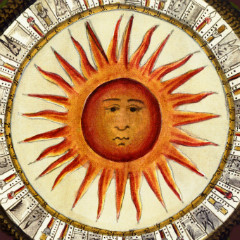
Calendar illustration, Wikimedia Commons
In these final days before Easter, it’s worth contemplating the church year. Why do Christians follow a liturgical calendar? People cannot help but follow some sort of calendar. The question is whether we do it consciously or unconsciously. Our spiritual health can depend on how we answer that question.
Consider the various schedules and agendas set for us; there’s an election calendar, an agricultural calendar, a sports calendar, a work calendar, a commercial calendar, etc.
Focus on the just the last of those. Drive past a shopping mall a week after Halloween. Everything is red and green, peppermint and fake snow. Kids are still working on their haul from Halloween, and we haven’t even experienced Thanksgiving, yet stores are hyping the so-called Holiday-shopping season. Who’s agenda drives that calendar — and how does that affect us?
It’s about priorities and values
We mark time with our priorities. Our calendars represent our values, and we conform our lives to our calendars. That’s why Jesus, as a Jew, celebrated all the Jewish feasts, Holy Days like Passover and Hanukkah. They were integral to the Jewish experience and identity, marking God’s saving activity on behalf of his people. To be Jewish was (and is) to celebrate Passover.
Events of the past compose our present. So to value and honor those events — and to allow them to more consciously shape our present — we make them present to us through observance. When it comes to God’s saving activity in human history, observance is all the more meaningful and spiritually transformative.
We are marked by how we mark time. Celebrating Easter makes present the power of the Resurrection and all of its transformative power in our lives. That’s why the early Christians observed Easter each year, and other Holy Days as well. They were identifying with those events, making them present, and transforming their lives in light of their significance.
Some Christians are unsure what to do with saints’ days on the calendar, days that commemorate the lives of people like Patrick of Ireland or the first Christian martyr Stephen. The key is to look at their lives and examples, the power of God’s grace manifest in their lives, and inventory our own lives. We can use their example as a prod. Am I sharing the faith like Patrick? Am I laying down my life like Stephen?
Redeeming the time
This calendar dynamic works unconsciously as well as consciously — and the results can vary significantly. The agendas that drive our commercial, corporate, or entertainment calendars are not bad in themselves. Neither are they good in themselves. Our priorities must be reordered so they serve our sanctification instead of becoming accidental obstacles to it. If we are not consciously doing that, we often react to the prompts and signals of the world’s many calendars with little awareness of how we are conforming our efforts and energies to their agendas.
I think of two verses when I consider this issue: “teach us to number our days that we may get a heart of wisdom” from Psalm 90, and “mak[e] the most of the time, because the days are evil” from Ephesians 5. The first tells me that we can number our days poorly or well, foolishly or wisely, by our standards or by God’s, and that our hearts are transformed by numbering our days well.
The second tells me that there’s something at stake here. If we do not redeem the time we’re given, we will suffer the consequences. The evil of our times will get a leg up on us. The church offers us seasons like Advent and Lent, days like Easter and Pentecost, Annunciation and Christmas to help us redeem the time and transform our hearts. That’s what calendars can do.
Calendars not only direct our time, they tell us what our time means. So the vital question for us is: Which calendar do we put first?
Previous Post

April 1, 2012
April fools for Christ
Next Post

April 4, 2012 The real crisis in Christianity
Browse Our Archives
Select a Category Books Church Life Family Life Misc Prayer Quotes Society Spiritual Growth Theology Uncategorized Video
Select a Month April 2014 March 2014 January 2014 December 2013 November 2013 August 2013 July 2013 June 2013 May 2013 April 2013 March 2013 February 2013 January 2013 December 2012 November 2012 October 2012 September 2012 August 2012 July 2012 June 2012 May 2012 April 2012 March 2012 February 2012 December 2011 November 2011 October 2011 August 2011 July 2011 June 2011 March 2011 February 2011 January 2011 December 2010 October 2010 September 2010 August 2010 July 2010 June 2010 May 2010 September 2009 August 2009 July 2009 May 2009 April 2009 March 2009 November 2008 October 2008 July 2008 June 2008 April 2008 March 2008 February 2008 January 2008 August 2007 June 2007 October 2002 July 2002 November 1999 October 1999
Follow Us!
TAKE THE
Religious Wisdom Quiz
What Christian group is known for avoiding modern technology?
Select your answer to see how you score.
Pentecostals Baptists Methodists Amish
Related posts from Joel J. Miller

Does the adulterous woman belong in your Bible?

Why you need the church to read your...

Windows to heaven: Icons in church

The problem with virtual communion
TRENDING AT PATHEOS Evangelical

The REST of Your Life: A Creative Wrestles...
This week I had a conversation with a good friend from church....

How the author of the world's best hymn...
I've been working with John Newton for a while now. This makes...

Long before this Lectio Divina, Psalm 130 - the song - started...

What About the Trees? Another Living Parable
After I finished writing the last article about falling leaves as a...

Why Classical Education Is a Conversation, Not a...
Come and Read: Joy in Classical Education When I was a little...

Cornell University has received a great deal of negative publicity and intense...
view all Evangelical blogs
Ad-Free & Subscriber Log-In Subscription Support
- About Us
- 2026 Calendar
- Videos
- Podcasts
- Library of World Religions
- Faith In Media Tracker
- Advertise With Us
- Write for Us
- Privacy Policy
- Terms of Service
- Do Not Sell My Data
- Contact Us
- Radiant Digital
- Manage Newsletter Subscriptions
- Unsubscribe From Notifications
- Sitemap
Copyright 2008-2026, Patheos. All rights reserved.
Subscription Support Ad-Free & Subscriber Log-In
Follow Patheos