
BuddhistCatholicContemplativeEvangelicalGeneral ChristianHinduJewishLatter-day SaintMuslimNew VisionsProgressive Christian
Beliefs
- Buddhist
- Catholic
- Contemplative
- Evangelical
- General Christian
- Hindu
- Jewish
- Latter-day Saint
- More Voices
- Muslim
- New Visions
- Pagan
- Progressive Christian
Topics
- Religion News
- Food and Religion
- Sports and Religion
- Religious Art
- Religious Music and Entertainment
- Religious Events
- History and Religion
- Style and Religion
- Politics and Religion
- Women in Religion
- Recreation Outdoors and Religion
- Business Finance and Religion
- Careers Workplace and Religion
- Education and Religion
- Family Parenting and Religion
- Health Fitness and Religion
- Home and Religion
- Relationships and Religion
- Technology and Religion
- Travel and Religion
Columnists
- Buddhist Columnists
- Business Finance and Religion Columnists
- Careers Workplace and Religion Columnists
- Catholic Columnists
- Contemplative Columnists
- Education and Religion Columnists
- Evangelists Columnists
- Family Parenting and Religion Columnists
- General Christian Columnists
- Health Fitness and Religion Columnists
- Hindu Columnists
- History and Religion Columnists
- Home and Religion Columnists
- Jewish Columnists
- More Voices Columnists
- Latter Day Columnists
- Muslim Columnists
- New Visions Columnists
- Nonreligious Columnists
- Pagan Columnists
- Politics and Religion Columnists
- Progressive Columnists
- Recreation Outdoors and Religion Columnists
- Relationships and Religion Columnists
- Religion News Columnists
- Religious Art Columnists
- Religious Events Columnists
- Religious Music and Entertainment Columnists
- Sports and Religion Columnists
- Style and Religion Columnists
- Technology and Religion Columnists
- Travel and Religion Columnists
- Women in Religion Columnists
Resource Library
- 2026 Calendar
- Library of World Religions
- The 100 Most Holy Places on Earth
- Patheos Answers
- Podcasts
- Videos
- Faith Leaders Database
- Anglican Episcopalian
- Bahai
- Baptist
- Buddhism
- Christianity
- Confucianism
- Eastern Orthodoxy
- Hinduism
- Holiness and Pentecostal
- ISKCON
- Islam
- Judaism
- Lutheran
- Methodist
- The Church of Jesus Christ of Latter-day Saints
- New Age
- Paganism
- Presbytarian and Reformed
- Protestantism
- Religion Behind the Scenes
- Roman Catholic
- Scientology
- Shia Islam
- Sikhism
- Sufism
- Sunni Islam
- Taoism
- Zen
- See all religions
Research Tools
 Ad-Free & Subscriber Log-In Subscription Support
Ad-Free & Subscriber Log-In Subscription Support
Follow Patheos 

- Trending:
- Forgiveness
- |
- Marriage
- |
- Consciousness
- |
- Death Penalty
- |
- Election
- |
- Halloween
 Joel J. Miller
-
Joel's Books
-
Article Categories
- Home
- Evangelical
- The real crisis in Christianity
The real crisis in Christianity
Last updated on: April 4, 2012 at 7:24 am by Joel J. Miller
The real crisis in Christianity 2012-04-04T07:24:20-05:00 Joel J. Miller
Patheos Explore the world's faith through different perspectives on religion and spirituality! Patheos has the views of the prevalent religions and spiritualities of the world.
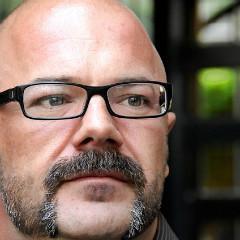
Andrew Sullivan. Trey Ratcliff, Flickr
Andrew Sullivan’s Newsweek cover story, “Christianity in Crisis,” admirably argues for a “simpler, purer, apolitical” version of the faith. He condemns a politicized Christianity that is concerned with prosperity and morality but dismissive of self-sacrifice and sanctification.
No surprise this Jesus-flavored civil religion increasingly alienates its own youth and becomes more shrill as the economy and culture deteriorate, but Sullivan’s analysis of the crisis misses on several points worth considering.
For Sullivan, the simple, pure, apolitical Jesus is the one that insists we “give up power over others, because power, if it is to be effective, ultimately requires the threat of violence. . . .”
Power is complex, and Sullivan’s simplistic approach automatically renders Jesus’ treatment of the temple moneychangers indecipherable. But focus on just one facet of power: authority. “If we return to what Jesus actually asked us to do and to be — rather than the unknowable intricacies of what we believe he was — he actually emerges more powerfully and more purely,” says Sullivan. His article’s promo copy (though Newsweek editors may be more to blame for this than Sullivan) amplifies the underlying message: “Forget the church. Follow Jesus.”
It’s a trendy thing to say, but how do we know what Jesus asks of us? Unlike Muhammad or L. Ron Hubbard, Jesus didn’t scratch out a word of Scripture. We only know what Jesus said because his followers wrote things down. These followers and their community — that is to say, the church — then curated that message. That means we have to understand Jesus’ words in a matrix that includes the thoughts and writings of the early church: its bishops, priests, poets, monks, theologians, and artists. Divorcing Jesus from the church is conceptually impossible.
This plays havoc with Sullivan’s simplistic idea of power, because we access Christ and his teachings by submitting to the authority of the church. This authority is no mere historical accretion. Despite the popular notion that the early church resembled a loose network hippies passing their Sundays at informal prayer meetings, significant and powerful church government is present in the first century. James, Jesus’ own brother and the first bishop of Jerusalem, exercised real authority. So did the Apostle John’s disciples Ignatius, bishop of Antioch, and Polycarp, bishop of Smyrna.
The reality of power and authority inevitably brings politics with it. Sullivan commends the example of Francis of Assisi as a Christian who determined to live peacefully and renounce power over others. Francis is a wonderful example of the complexity of the issue, as Sullivan himself notes, because he couldn’t escape politics. The more followers he amassed the greater his challenge.
Every monastic father before Francis faced the same problem: Anthony, Macarius, Pachomius, Benedict. People live in community, and politics is one of the tools people employ to negotiate those complex relationships.
It’s no good demonizing politics. You can (and should) point out its manifold bad uses, but there are good uses as well. Sullivan says that Christians must speak prophetically on occasions. Yes, but William Wilberforce required more than words to end the slave trade. It took laws. As necessary as nongovernment solutions are to the problem of abortion, defending the unborn ultimately requires laws as well.
Power is not evil, but evil uses power. The Christian conception of power on the other hand is service, modeled by Christ himself. The shepherd has power over the sheep. But the Good Shepherd also lays down his life for the sheep. Look to those early bishops, James, Ignatius, and Polycarp. Each was known as a tender and gracious leader of their communities. All three were martyred. All three laid down their the lives for the sheep.
Politicized Christianity does not often resemble that ethic of self-denial and self-sacrifice. Its leaders and followers seem to use power for their own perceived gain, ignoring the psalmist’s ancient warning: “Put not your trust in princes…in whom there is no salvation.”
Sullivan is exactly right that modern Christians turn to politics as if it has the answers. They grasp their wealth as if it can protect. But the renunciation that Sullivan sees in Jesus’ Sermon on the Mount and commends in Francis’ asceticism only make sense if the Resurrection is the anchor of Christian experience.
Though Sullivan confesses his belief in the Resurrection at the outset, he downplays its significance at the end, saying the true message of Christ was not in his Passion but “how he conducted himself through it all — calm, loving, accepting, radically surrendering even the basic control of his own body and telling us that this was what it means to truly transcend our world and be with God.”
That won’t do. If Christianity matters at all it is because of the Resurrection. We’re not Buddhists. Dying to self does not assume Nirvana. It assumes the Resurrection. Asceticism assumes the Resurrection. Using power of the sake of others assumes the Resurrection.
The real crisis of Christianity is that we no longer live in the reality of the Resurrection, an important thing to recognize as we stand just days from Easter.
Previous Post

April 2, 2012
What the church calendar is for
Next Post

April 5, 2012 Why pray the hours?
Browse Our Archives
Select a Category Books Church Life Family Life Misc Prayer Quotes Society Spiritual Growth Theology Uncategorized Video
Select a Month April 2014 March 2014 January 2014 December 2013 November 2013 August 2013 July 2013 June 2013 May 2013 April 2013 March 2013 February 2013 January 2013 December 2012 November 2012 October 2012 September 2012 August 2012 July 2012 June 2012 May 2012 April 2012 March 2012 February 2012 December 2011 November 2011 October 2011 August 2011 July 2011 June 2011 March 2011 February 2011 January 2011 December 2010 October 2010 September 2010 August 2010 July 2010 June 2010 May 2010 September 2009 August 2009 July 2009 May 2009 April 2009 March 2009 November 2008 October 2008 July 2008 June 2008 April 2008 March 2008 February 2008 January 2008 August 2007 June 2007 October 2002 July 2002 November 1999 October 1999
Follow Us!
TAKE THE
Religious Wisdom Quiz
Who dreamed of a ladder reaching to heaven?
Select your answer to see how you score.
Daniel Joseph Jacob Paul
Related posts from Joel J. Miller

Is the Resurrection essential to Christian belief?

What Barton and Copeland get wrong about war...

George Orwell and bending the Bible for our...

Doh! Archbishop of Canterbury forgets what it means...
TRENDING AT PATHEOS Evangelical

The REST of Your Life: A Creative Wrestles...
This week I had a conversation with a good friend from church....

How the author of the world's best hymn...
I've been working with John Newton for a while now. This makes...

Long before this Lectio Divina, Psalm 130 - the song - started...

What About the Trees? Another Living Parable
After I finished writing the last article about falling leaves as a...

Why Classical Education Is a Conversation, Not a...
Come and Read: Joy in Classical Education When I was a little...

Cornell University has received a great deal of negative publicity and intense...
view all Evangelical blogs
Ad-Free & Subscriber Log-In Subscription Support
- About Us
- 2026 Calendar
- Videos
- Podcasts
- Library of World Religions
- Faith In Media Tracker
- Advertise With Us
- Write for Us
- Privacy Policy
- Terms of Service
- Do Not Sell My Data
- Contact Us
- Radiant Digital
- Manage Newsletter Subscriptions
- Unsubscribe From Notifications
- Sitemap
Copyright 2008-2026, Patheos. All rights reserved.
Subscription Support Ad-Free & Subscriber Log-In
Follow Patheos