
BuddhistCatholicContemplativeEvangelicalGeneral ChristianHinduJewishLatter-day SaintMuslimNew VisionsProgressive Christian
Beliefs
- Buddhist
- Catholic
- Contemplative
- Evangelical
- General Christian
- Hindu
- Jewish
- Latter-day Saint
- More Voices
- Muslim
- New Visions
- Pagan
- Progressive Christian
Topics
- Religion News
- Food and Religion
- Sports and Religion
- Religious Art
- Religious Music and Entertainment
- Religious Events
- History and Religion
- Style and Religion
- Politics and Religion
- Women in Religion
- Recreation Outdoors and Religion
- Business Finance and Religion
- Careers Workplace and Religion
- Education and Religion
- Family Parenting and Religion
- Health Fitness and Religion
- Home and Religion
- Relationships and Religion
- Technology and Religion
- Travel and Religion
Columnists
- Buddhist Columnists
- Business Finance and Religion Columnists
- Careers Workplace and Religion Columnists
- Catholic Columnists
- Contemplative Columnists
- Education and Religion Columnists
- Evangelists Columnists
- Family Parenting and Religion Columnists
- General Christian Columnists
- Health Fitness and Religion Columnists
- Hindu Columnists
- History and Religion Columnists
- Home and Religion Columnists
- Jewish Columnists
- More Voices Columnists
- Latter Day Columnists
- Muslim Columnists
- New Visions Columnists
- Nonreligious Columnists
- Pagan Columnists
- Politics and Religion Columnists
- Progressive Columnists
- Recreation Outdoors and Religion Columnists
- Relationships and Religion Columnists
- Religion News Columnists
- Religious Art Columnists
- Religious Events Columnists
- Religious Music and Entertainment Columnists
- Sports and Religion Columnists
- Style and Religion Columnists
- Technology and Religion Columnists
- Travel and Religion Columnists
- Women in Religion Columnists
Resource Library
- 2026 Calendar
- Library of World Religions
- The 100 Most Holy Places on Earth
- Patheos Answers
- Podcasts
- Videos
- Faith Leaders Database
- Anglican Episcopalian
- Bahai
- Baptist
- Buddhism
- Christianity
- Confucianism
- Eastern Orthodoxy
- Hinduism
- Holiness and Pentecostal
- ISKCON
- Islam
- Judaism
- Lutheran
- Methodist
- The Church of Jesus Christ of Latter-day Saints
- New Age
- Paganism
- Presbytarian and Reformed
- Protestantism
- Religion Behind the Scenes
- Roman Catholic
- Scientology
- Shia Islam
- Sikhism
- Sufism
- Sunni Islam
- Taoism
- Zen
- See all religions
Research Tools
 Ad-Free & Subscriber Log-In Subscription Support
Ad-Free & Subscriber Log-In Subscription Support
Follow Patheos 

- Trending:
- Forgiveness
- |
- Marriage
- |
- Consciousness
- |
- Death Penalty
- |
- Election
- |
- Halloween
 Joel J. Miller
-
Joel's Books
-
Article Categories
- Home
- Evangelical
- Steve Jobs and the false hope of our time
Steve Jobs and the false hope of our time
Last updated on: January 1, 2013 at 4:05 am by Joel J. Miller
Steve Jobs and the false hope of our time 2013-01-01T04:05:06-06:00 Joel J. Miller
Patheos Explore the world's faith through different perspectives on religion and spirituality! Patheos has the views of the prevalent religions and spiritualities of the world.
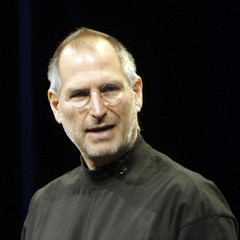
Steve Jobs (Flickr, acaben).
Two events happened last Monday that stand juxtaposed for me: Steve Jobs announced that he was taking a medical leave absence from Apple, and a priest at our parish, Fr. Seraphim, died.
While journalists and pundits frantically asked and answered questions about the health of Jobs and the future of his company, writer Andy Crouch reframed the entire story around the unlikely subject of hope. “As remarkable as Steve Jobs is in countless ways,” he said, “his most singular quality has been his ability to articulate a perfectly secular form of hope.”
That secular hope is a mix of progress and self-actualization, something evident from the rehearsal of Jobs’ achievements and his own public statements. Crouch quoted from his 2005 commencement address at Stanford:
[D]eath is very likely the single best invention of life. It’s life’s change agent; it clears out the old to make way for the new…. Your time is limited, so don’t waste it living someone else’s life. Don’t be trapped by dogma, which is living with the results of other people’s thinking. Don’t let the noise of others’ opinions drown out your own inner voice, heart and intuition. They somehow already know what you truly want to become.
Jobs is a brilliant businessman and innovator, but he makes a lousy philosopher and theologian. The John 3:16 of his secular gospel runs something like this: “The world—including you and your place in it—is what you make of it, and here at Apple we’ve made a lot of it.” It’s all very inspiring, for about a minute.
“You can be you,” it says. “I’m already me,” you reply. “Well, you can be your best you,” it says. “And then what?” Jobs gave the frankest possible answer at Stanford: “Right now, the new is you. But someday, not too long from now, you will gradually become the old and be cleared away.” In the face of death, the best Steve Jobs could tell graduates was that they should live each day as if it were their last. Sadly, that’s not hope. That’s resignation. Veiled disappointment is the best-case scenario.
This view of progress and self-actualization is not isolated to Jobs. It’s the false hope of our time.
And then there’s Fr. Seraphim.
When an Orthodox priest dies, a vigil is held before his funeral. Over his resting body, all through the night, readers stand and read the gospels, Matthew, Mark, Luke, and John, one after another in succession. Over the resting body, the readers confess the truth that death does not prevail. Over the resting body, they recite account after account of the resurrection, that Christ has risen from the grave.
In the funeral service that follows the gathered church confesses that what is true for Christ is true for all who are in him, that death has been defeated, that Christ has trampled it down, and that we will experience our own resurrection. Now, every time the liturgy is celebrated, Fr. Seraphim will be remembered as one who “await[s] the hope of the resurrection.”
That is hope, that our lives will be finally and ultimately redeemed in the resurrection, that Christ will make all things new. Anything else is settling for loss and decay. Being your best you doesn’t matter unless there is ultimately a renewed you. Living every day as if it’s your last only matters if your life is lived in Christ. That is not the false hope of the secular gospel, but it is central hope of the Gospel of Jesus Christ.
Previous Post

January 20, 2011
3 approaches to dealing with grief
Next Post
January 26, 2011 Into the hands of a loving God
Browse Our Archives
Select a Category Books Church Life Family Life Misc Prayer Quotes Society Spiritual Growth Theology Uncategorized Video
Select a Month April 2014 March 2014 January 2014 December 2013 November 2013 August 2013 July 2013 June 2013 May 2013 April 2013 March 2013 February 2013 January 2013 December 2012 November 2012 October 2012 September 2012 August 2012 July 2012 June 2012 May 2012 April 2012 March 2012 February 2012 December 2011 November 2011 October 2011 August 2011 July 2011 June 2011 March 2011 February 2011 January 2011 December 2010 October 2010 September 2010 August 2010 July 2010 June 2010 May 2010 September 2009 August 2009 July 2009 May 2009 April 2009 March 2009 November 2008 October 2008 July 2008 June 2008 April 2008 March 2008 February 2008 January 2008 August 2007 June 2007 October 2002 July 2002 November 1999 October 1999
Follow Us!
TAKE THE
Religious Wisdom Quiz
What is the Jewish "coming of age" ceremony?
Select your answer to see how you score.
Sabbath Circumcision Bar Mitzvah Passover
Related posts from Joel J. Miller

Is the Resurrection essential to Christian belief?

Christianity: Use only as directed

What's missing in our conversation about marriage decline

I guess they redid the math: World Vision...
TRENDING AT PATHEOS Evangelical

The REST of Your Life: A Creative Wrestles...
This week I had a conversation with a good friend from church....

How the author of the world's best hymn...
I've been working with John Newton for a while now. This makes...

Long before this Lectio Divina, Psalm 130 - the song - started...

What About the Trees? Another Living Parable
After I finished writing the last article about falling leaves as a...

Why Classical Education Is a Conversation, Not a...
Come and Read: Joy in Classical Education When I was a little...

Cornell University has received a great deal of negative publicity and intense...
view all Evangelical blogs
Ad-Free & Subscriber Log-In Subscription Support
- About Us
- 2026 Calendar
- Videos
- Podcasts
- Library of World Religions
- Faith In Media Tracker
- Advertise With Us
- Write for Us
- Privacy Policy
- Terms of Service
- Do Not Sell My Data
- Contact Us
- Radiant Digital
- Manage Newsletter Subscriptions
- Unsubscribe From Notifications
- Sitemap
Copyright 2008-2026, Patheos. All rights reserved.
Subscription Support Ad-Free & Subscriber Log-In
Follow Patheos