
BuddhistCatholicContemplativeEvangelicalGeneral ChristianHinduJewishLatter-day SaintMuslimNew VisionsProgressive Christian
Beliefs
- Buddhist
- Catholic
- Contemplative
- Evangelical
- General Christian
- Hindu
- Jewish
- Latter-day Saint
- More Voices
- Muslim
- New Visions
- Pagan
- Progressive Christian
Topics
- Religion News
- Food and Religion
- Sports and Religion
- Religious Art
- Religious Music and Entertainment
- Religious Events
- History and Religion
- Style and Religion
- Politics and Religion
- Women in Religion
- Recreation Outdoors and Religion
- Business Finance and Religion
- Careers Workplace and Religion
- Education and Religion
- Family Parenting and Religion
- Health Fitness and Religion
- Home and Religion
- Relationships and Religion
- Technology and Religion
- Travel and Religion
Columnists
- Buddhist Columnists
- Business Finance and Religion Columnists
- Careers Workplace and Religion Columnists
- Catholic Columnists
- Contemplative Columnists
- Education and Religion Columnists
- Evangelists Columnists
- Family Parenting and Religion Columnists
- General Christian Columnists
- Health Fitness and Religion Columnists
- Hindu Columnists
- History and Religion Columnists
- Home and Religion Columnists
- Jewish Columnists
- More Voices Columnists
- Latter Day Columnists
- Muslim Columnists
- New Visions Columnists
- Nonreligious Columnists
- Pagan Columnists
- Politics and Religion Columnists
- Progressive Columnists
- Recreation Outdoors and Religion Columnists
- Relationships and Religion Columnists
- Religion News Columnists
- Religious Art Columnists
- Religious Events Columnists
- Religious Music and Entertainment Columnists
- Sports and Religion Columnists
- Style and Religion Columnists
- Technology and Religion Columnists
- Travel and Religion Columnists
- Women in Religion Columnists
Resource Library
- 2026 Calendar
- Library of World Religions
- The 100 Most Holy Places on Earth
- Patheos Answers
- Podcasts
- Videos
- Faith Leaders Database
- Anglican Episcopalian
- Bahai
- Baptist
- Buddhism
- Christianity
- Confucianism
- Eastern Orthodoxy
- Hinduism
- Holiness and Pentecostal
- ISKCON
- Islam
- Judaism
- Lutheran
- Methodist
- The Church of Jesus Christ of Latter-day Saints
- New Age
- Paganism
- Presbytarian and Reformed
- Protestantism
- Religion Behind the Scenes
- Roman Catholic
- Scientology
- Shia Islam
- Sikhism
- Sufism
- Sunni Islam
- Taoism
- Zen
- See all religions
Research Tools
 Ad-Free & Subscriber Log-In Subscription Support
Ad-Free & Subscriber Log-In Subscription Support
Follow Patheos 

- Trending:
- Forgiveness
- |
- Marriage
- |
- Consciousness
- |
- Death Penalty
- |
- Election
- |
- Halloween
 Joel J. Miller
-
Joel's Books
-
Article Categories
- Home
- Evangelical
- Thanks for everything
Thanks for everything
Last updated on: June 17, 2013 at 8:59 pm by Joel J. Miller
Thanks for everything 2013-06-17T20:59:43-05:00 Joel J. Miller
Patheos Explore the world's faith through different perspectives on religion and spirituality! Patheos has the views of the prevalent religions and spiritualities of the world.
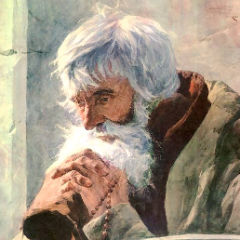
Detail from Praying Old Man by Julian Falat (National Museum, Warsaw; Wikimedia Commons)
Get this scene: A monk sits on a train. A fellow passenger approaches and offers him a cigarette. Monks aren’t much known to smoke, but this monk was once a soldier and gratefully accepts the gift.
Holding the slender item, the monk suggests to his benefactor that they should make the sign of the cross before they smoke. The man is torn. Isn’t it, he asks, improper to make the sign of the cross before smoking?
The monk answers that if an activity doesn’t square with the sign of the cross, then a person shouldn’t do it at all.
The statement of the monk (who, by the way, was St. Silouan the Athonite—it’s a true story) provides a helpful guide for quickly judging our actions.
Making the sign of the cross is a physical way to express thanks to God for something, to bless something, to offer it to God. It’s a prayer, as I’ve discussed before, and St. Silouan’s point should be read to include verbal prayers as well. Put it on a 3×5 card and keep it in your wallet:
If you can’t say grace over it, then you shouldn’t do it.
This is one of the things that underlies St. Paul’s discussion about the scruples and liberties of weaker and stronger believers.
“If I partake with thankfulness,” he says, “why am I denounced because of that for which I give thanks?” The main takeaway from these passages in Romans and 1 Corinthians is that a believer with greater freedom should abstain in love if exercising his freedom causes another brother to fall. (Side note: I think it is an odd occurrence of our time that we appeal to these passages to support our freedoms—“all things are lawful”—but not our commensurate responsibility to love our neighbor, but that’s another blog post).
The thing to note is that for Paul the act of thanking God is central either way. This is particularly obvious in the Romans passage. Whether we’re the weaker or stronger brother, we should only do that for which we can offer thanks.
If you feel like you cannot thank God for an activity you’re about to undertake, if you feel like you cannot ask God to bless a particular task, then you probably shouldn’t do it at all.
Here’s a challenge: Any time you consciously do something today, try to thank God for it or ask him to bless it. If you are about to do something you know is wrong or doubt is right, does this change anything for you?
Previous Post

September 17, 2010
One trait every Christian leader needs
Next Post
September 24, 2010 Orphans and the heart of God
Browse Our Archives
Select a Category Books Church Life Family Life Misc Prayer Quotes Society Spiritual Growth Theology Uncategorized Video
Select a Month April 2014 March 2014 January 2014 December 2013 November 2013 August 2013 July 2013 June 2013 May 2013 April 2013 March 2013 February 2013 January 2013 December 2012 November 2012 October 2012 September 2012 August 2012 July 2012 June 2012 May 2012 April 2012 March 2012 February 2012 December 2011 November 2011 October 2011 August 2011 July 2011 June 2011 March 2011 February 2011 January 2011 December 2010 October 2010 September 2010 August 2010 July 2010 June 2010 May 2010 September 2009 August 2009 July 2009 May 2009 April 2009 March 2009 November 2008 October 2008 July 2008 June 2008 April 2008 March 2008 February 2008 January 2008 August 2007 June 2007 October 2002 July 2002 November 1999 October 1999
Follow Us!
TAKE THE
Religious Wisdom Quiz
Which country has the largest number of Christians?
Select your answer to see how you score.
Brazil Germany United States Russia
Related posts from Joel J. Miller

Is the Resurrection essential to Christian belief?

What Barton and Copeland get wrong about war...

George Orwell and bending the Bible for our...

Doh! Archbishop of Canterbury forgets what it means...
TRENDING AT PATHEOS Evangelical

The REST of Your Life: A Creative Wrestles...
This week I had a conversation with a good friend from church....

How the author of the world's best hymn...
I've been working with John Newton for a while now. This makes...

Long before this Lectio Divina, Psalm 130 - the song - started...

What About the Trees? Another Living Parable
After I finished writing the last article about falling leaves as a...

Why Classical Education Is a Conversation, Not a...
Come and Read: Joy in Classical Education When I was a little...

Cornell University has received a great deal of negative publicity and intense...
view all Evangelical blogs
Ad-Free & Subscriber Log-In Subscription Support
- About Us
- 2026 Calendar
- Videos
- Podcasts
- Library of World Religions
- Faith In Media Tracker
- Advertise With Us
- Write for Us
- Privacy Policy
- Terms of Service
- Do Not Sell My Data
- Contact Us
- Radiant Digital
- Manage Newsletter Subscriptions
- Unsubscribe From Notifications
- Sitemap
Copyright 2008-2026, Patheos. All rights reserved.
Subscription Support Ad-Free & Subscriber Log-In
Follow Patheos