
BuddhistCatholicContemplativeEvangelicalGeneral ChristianHinduJewishLatter-day SaintMuslimNew VisionsProgressive Christian
Beliefs
- Buddhist
- Catholic
- Contemplative
- Evangelical
- General Christian
- Hindu
- Jewish
- Latter-day Saint
- More Voices
- Muslim
- New Visions
- Pagan
- Progressive Christian
Topics
- Religion News
- Food and Religion
- Sports and Religion
- Religious Art
- Religious Music and Entertainment
- Religious Events
- History and Religion
- Style and Religion
- Politics and Religion
- Women in Religion
- Recreation Outdoors and Religion
- Business Finance and Religion
- Careers Workplace and Religion
- Education and Religion
- Family Parenting and Religion
- Health Fitness and Religion
- Home and Religion
- Relationships and Religion
- Technology and Religion
- Travel and Religion
Columnists
- Buddhist Columnists
- Business Finance and Religion Columnists
- Careers Workplace and Religion Columnists
- Catholic Columnists
- Contemplative Columnists
- Education and Religion Columnists
- Evangelists Columnists
- Family Parenting and Religion Columnists
- General Christian Columnists
- Health Fitness and Religion Columnists
- Hindu Columnists
- History and Religion Columnists
- Home and Religion Columnists
- Jewish Columnists
- More Voices Columnists
- Latter Day Columnists
- Muslim Columnists
- New Visions Columnists
- Nonreligious Columnists
- Pagan Columnists
- Politics and Religion Columnists
- Progressive Columnists
- Recreation Outdoors and Religion Columnists
- Relationships and Religion Columnists
- Religion News Columnists
- Religious Art Columnists
- Religious Events Columnists
- Religious Music and Entertainment Columnists
- Sports and Religion Columnists
- Style and Religion Columnists
- Technology and Religion Columnists
- Travel and Religion Columnists
- Women in Religion Columnists
Resource Library
- 2026 Calendar
- Library of World Religions
- The 100 Most Holy Places on Earth
- Patheos Answers
- Podcasts
- Videos
- Faith Leaders Database
- Anglican Episcopalian
- Bahai
- Baptist
- Buddhism
- Christianity
- Confucianism
- Eastern Orthodoxy
- Hinduism
- Holiness and Pentecostal
- ISKCON
- Islam
- Judaism
- Lutheran
- Methodist
- The Church of Jesus Christ of Latter-day Saints
- New Age
- Paganism
- Presbytarian and Reformed
- Protestantism
- Religion Behind the Scenes
- Roman Catholic
- Scientology
- Shia Islam
- Sikhism
- Sufism
- Sunni Islam
- Taoism
- Zen
- See all religions
Research Tools
 Ad-Free & Subscriber Log-In Subscription Support
Ad-Free & Subscriber Log-In Subscription Support
Follow Patheos 

- Trending:
- Forgiveness
- |
- Marriage
- |
- Consciousness
- |
- Death Penalty
- |
- Election
- |
- Halloween
 Joel J. Miller
-
Joel's Books
-
Article Categories
- Home
- Evangelical
- Praying the Psalms
Praying the Psalms
Last updated on: August 4, 2010 at 11:18 am by Joel J. Miller
Praying the Psalms 2010-08-04T11:18:00-05:00 Joel J. Miller
Patheos Explore the world's faith through different perspectives on religion and spirituality! Patheos has the views of the prevalent religions and spiritualities of the world.
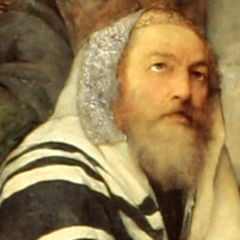
Detail from 'Jews Praying in the Synagogue,' Maurycy Gottlieb, Wikimedia Commons.
I wonder how often we find our prayers dead and lifeless. I wonder how often we come up dry and dumb with no words, no thoughts, no way of formulating the feelings, frustrations, and various shades of grief that we bear. Burdened and distracted, we can hardly remember to pray, and when we do we have nothing to say.
What if someone could guide you to God in those moments, could take you before the throne, lean over and whisper, “Just say it like this,” and then unfurl a stream of words that meant everything your heart was feeling but cannot communicate? That someone is Christ, and he whispers in the Psalms.
The church has always recognized the Psalter as its first tutor in prayer, just as it was for the saints of the Old Testament. Early Christians, ministers and laity alike, turned to the Psalms to learn what, when, and how to pray. Sts. Athanasius of Alexandria (293–373), John Cassian (360–435), and Benedict of Nursia (480–547) all, for example, wrote about using the Psalter in prayer. The latter two focused on monastic use, but Athanasius’s words apply to any believer.
Says that ancient defender of the faith, the Psalms not only enjoin us to be thankful, encourage us to endure tribulation, and point us to repentance, they also give us the words to use for those moments. And it’s not just these things; the Psalms provide words fitting for the myriad “movements of the human soul. . . . In fact, under all the circumstances of life, we shall find that these divine songs suit ourselves and meet our own souls’ need at every turn.”
And the supreme grace of it: God has provided the words. They are the words of Christ himself. Standing in total solidarity with us, Jesus, the New Adam, is in every way like us. He assumed our total human experience and thereby healed and redeemed it. But unlike us, Christ is without sin, and so has complete and perfect communion with the Father. Only he can truly pray, and for this reason we can only truly pray when we do so in his name, following his lead. One place he leads is in the Psalms.
Traditionally, the primary speaker of the Psalms is David. But Christ is in the shadows. “In the Psalms of David the promised Christ himself already speaks,” explains Dietrich Bonhoeffer. “The prayers of David were also prayed by Christ. Or better, Christ himself prayed them through his forerunner David.” This perspective on the Psalter is shaped and informed by two millennia of church tradition and interpretation—by men like Athanasius, Cassian, and Benedict—which sees Christ in the Psalms as our elder brother teaching us how to pray.
When we pray the words of the Psalter, we pray with Christ at our elbow. Again Bonhoeffer:
It is the incarnate Son of God, who has borne every human weakness in his own flesh, who pours out the heart of all humanity before God and stands in our place and prays for us. He has known torment and pain, guilt and death more deeply than we. Therefore it is the prayer of the human nature assumed by him which comes here before God. It is really our prayer, but since he knows us better than we know ourselves and since he himself was true man for our sakes, it is also really his prayer, and it can become our prayer only because it was his prayer.
When we open the Psalms and begin to read, begin to pray, we are often surprised at how fitting they are, how they capture our moment, whatever we feel (or want to feel). It should not surprise us that the Psalms speak our secrets. They know both the open spaces and dark corners of our heart because they are the words of the one who first fashioned our heart and then later took its joys, sufferings, hopes, and struggles upon himself for our sakes.
In his little book on praying the Psalms, Thomas Merton talks about people who “know by experience” that through the Psalter “Christ prays in the Christian soul uniting that soul to the Father in Himself.” I want to be one of those people. How about you?
Previous Post

August 2, 2010
The Psalms in Christian life
Next Post
August 5, 2010 Worshipping with the Psalms
Browse Our Archives
Select a Category Books Church Life Family Life Misc Prayer Quotes Society Spiritual Growth Theology Uncategorized Video
Select a Month April 2014 March 2014 January 2014 December 2013 November 2013 August 2013 July 2013 June 2013 May 2013 April 2013 March 2013 February 2013 January 2013 December 2012 November 2012 October 2012 September 2012 August 2012 July 2012 June 2012 May 2012 April 2012 March 2012 February 2012 December 2011 November 2011 October 2011 August 2011 July 2011 June 2011 March 2011 February 2011 January 2011 December 2010 October 2010 September 2010 August 2010 July 2010 June 2010 May 2010 September 2009 August 2009 July 2009 May 2009 April 2009 March 2009 November 2008 October 2008 July 2008 June 2008 April 2008 March 2008 February 2008 January 2008 August 2007 June 2007 October 2002 July 2002 November 1999 October 1999
Follow Us!
TAKE THE
Religious Wisdom Quiz
What teaching is behind Jesus washing his disciples' feet?
Select your answer to see how you score.
Never serve Serve others Seek power Rule over them
Related posts from Joel J. Miller

'Without embittering and embarrassing others'

Sinéad O’Connor, Anne Lamott, and the many names...

The monk who wanted to live in the...

God can handle your anger--and your confusion, fear...
TRENDING AT PATHEOS Evangelical

The REST of Your Life: A Creative Wrestles...
This week I had a conversation with a good friend from church....

How the author of the world's best hymn...
I've been working with John Newton for a while now. This makes...

Long before this Lectio Divina, Psalm 130 - the song - started...

What About the Trees? Another Living Parable
After I finished writing the last article about falling leaves as a...

Why Classical Education Is a Conversation, Not a...
Come and Read: Joy in Classical Education When I was a little...

Cornell University has received a great deal of negative publicity and intense...
view all Evangelical blogs
Ad-Free & Subscriber Log-In Subscription Support
- About Us
- 2026 Calendar
- Videos
- Podcasts
- Library of World Religions
- Faith In Media Tracker
- Advertise With Us
- Write for Us
- Privacy Policy
- Terms of Service
- Do Not Sell My Data
- Contact Us
- Radiant Digital
- Manage Newsletter Subscriptions
- Unsubscribe From Notifications
- Sitemap
Copyright 2008-2026, Patheos. All rights reserved.
Subscription Support Ad-Free & Subscriber Log-In
Follow Patheos