
BuddhistCatholicContemplativeEvangelicalGeneral ChristianHinduJewishLatter-day SaintMuslimNew VisionsProgressive Christian
Beliefs
- Buddhist
- Catholic
- Contemplative
- Evangelical
- General Christian
- Hindu
- Jewish
- Latter-day Saint
- More Voices
- Muslim
- New Visions
- Pagan
- Progressive Christian
Topics
- Religion News
- Food and Religion
- Sports and Religion
- Religious Art
- Religious Music and Entertainment
- Religious Events
- History and Religion
- Style and Religion
- Politics and Religion
- Women in Religion
- Recreation Outdoors and Religion
- Business Finance and Religion
- Careers Workplace and Religion
- Education and Religion
- Family Parenting and Religion
- Health Fitness and Religion
- Home and Religion
- Relationships and Religion
- Technology and Religion
- Travel and Religion
Columnists
- Buddhist Columnists
- Business Finance and Religion Columnists
- Careers Workplace and Religion Columnists
- Catholic Columnists
- Contemplative Columnists
- Education and Religion Columnists
- Evangelists Columnists
- Family Parenting and Religion Columnists
- General Christian Columnists
- Health Fitness and Religion Columnists
- Hindu Columnists
- History and Religion Columnists
- Home and Religion Columnists
- Jewish Columnists
- More Voices Columnists
- Latter Day Columnists
- Muslim Columnists
- New Visions Columnists
- Nonreligious Columnists
- Pagan Columnists
- Politics and Religion Columnists
- Progressive Columnists
- Recreation Outdoors and Religion Columnists
- Relationships and Religion Columnists
- Religion News Columnists
- Religious Art Columnists
- Religious Events Columnists
- Religious Music and Entertainment Columnists
- Sports and Religion Columnists
- Style and Religion Columnists
- Technology and Religion Columnists
- Travel and Religion Columnists
- Women in Religion Columnists
Resource Library
- 2026 Calendar
- Library of World Religions
- The 100 Most Holy Places on Earth
- Patheos Answers
- Podcasts
- Videos
- Faith Leaders Database
- Anglican Episcopalian
- Bahai
- Baptist
- Buddhism
- Christianity
- Confucianism
- Eastern Orthodoxy
- Hinduism
- Holiness and Pentecostal
- ISKCON
- Islam
- Judaism
- Lutheran
- Methodist
- The Church of Jesus Christ of Latter-day Saints
- New Age
- Paganism
- Presbytarian and Reformed
- Protestantism
- Religion Behind the Scenes
- Roman Catholic
- Scientology
- Shia Islam
- Sikhism
- Sufism
- Sunni Islam
- Taoism
- Zen
- See all religions
Research Tools
 Ad-Free & Subscriber Log-In Subscription Support
Ad-Free & Subscriber Log-In Subscription Support
Follow Patheos 

- Trending:
- Forgiveness
- |
- Marriage
- |
- Consciousness
- |
- Death Penalty
- |
- Election
- |
- Halloween
 Joel J. Miller
-
Joel's Books
-
Article Categories
- Home
- Evangelical
- Crooked men in a crooked world
Crooked men in a crooked world
Last updated on: July 7, 2008 at 4:49 am by Joel J. Miller
Crooked men in a crooked world 2008-07-07T04:49:55-05:00 Joel J. Miller
Patheos Explore the world's faith through different perspectives on religion and spirituality! Patheos has the views of the prevalent religions and spiritualities of the world.
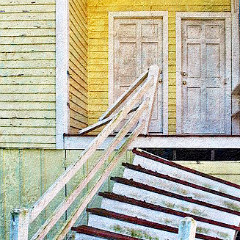
Paul Randall, Wikimedia Commons.
“There was a crooked man and he walked a crooked mile.” — British nursery rhyme
So I’m reading Alan Jacobs’ new book, Original Sin: A Cultural History, and several thoughts about human will and intention crisscross my mind:
1. The idea that our heart — in the classic sense, the seat of our intellect and will — is by nature corrupt or prone to corruption is not something that people easily accept. Jacobs covers the clashes generated by the idea since Augustine and even dips back into Paul’s epistles and a few Hebrew texts. As the story goes, every several generations in various locales someone says something about the cussedness of man and sparks start flying.
2. I am personally troubled by people’s difficulty here. Nothing rings truer to my own psychology, observations of others, and reading of memoir and history than this concept, especially the “divided self” aspect of it, that while I desire to the good on the one hand, another part of me desires the wrong, like there’s a joust ongoing in my heart and the lists never empty and the horses never tire and the riders just keep charging at each other forever.
3. The idea that the will is free is much harder for me to accept than that it is bound. Research seems to indicate that we make up our minds before we are strictly conscious that we’ve done so. Sidestepping (or perhaps stepping right into) semantic landmines here, let me just say that freely choosing implies awareness of choice. Without awareness, are we looking at something more like reflex than will?
4. In Fooled by Randomness, Nassim Nicholas Taleb makes the point that a good deal of what we think we know are just stories we construct and overlay on random data to make sense of them. If that’s not only true of how we see and remember our environments, how much more so ourselves? Perhaps free will is a construct we overlay on our experience, something with which we fool ourselves in an attempt to dignify our decisionmaking and shore up our perceptions about the integrity of our personhood.
5. I draw no firm conclusions here. I believe that we freely make choices, but I also believe that our choicemaking is corrupted and that corruption is fundamental to who we are as people. This doesn’t mean that we always make wrong choices, but like a poorly calibrated instrument our hearts work perfectly fine and still get things wrong. That analogy is insufficient, I’ll grant. Most of our categories here are insufficient.
Jacobs points out that the Eastern Orthodox tradition handles the issue differently than we do in the Western Church (and the secular society that emerges from it) and consequently does not back itself into the same intellectual cul-de-sacs. It has different ones.
Previous Post
June 14, 2008
Don't write edifying fiction
Next Post

October 31, 2008 What politics learned from pulpits
Browse Our Archives
Select a Category Books Church Life Family Life Misc Prayer Quotes Society Spiritual Growth Theology Uncategorized Video
Select a Month April 2014 March 2014 January 2014 December 2013 November 2013 August 2013 July 2013 June 2013 May 2013 April 2013 March 2013 February 2013 January 2013 December 2012 November 2012 October 2012 September 2012 August 2012 July 2012 June 2012 May 2012 April 2012 March 2012 February 2012 December 2011 November 2011 October 2011 August 2011 July 2011 June 2011 March 2011 February 2011 January 2011 December 2010 October 2010 September 2010 August 2010 July 2010 June 2010 May 2010 September 2009 August 2009 July 2009 May 2009 April 2009 March 2009 November 2008 October 2008 July 2008 June 2008 April 2008 March 2008 February 2008 January 2008 August 2007 June 2007 October 2002 July 2002 November 1999 October 1999
Follow Us!
TAKE THE
Religious Wisdom Quiz
What Christian tradition is associated with the seven sacraments?
Select your answer to see how you score.
Quakerism Protestantism Roman Catholicism Seventh-day Adventism
Related posts from Joel J. Miller

Is the Resurrection essential to Christian belief?

What Barton and Copeland get wrong about war...

George Orwell and bending the Bible for our...

Doh! Archbishop of Canterbury forgets what it means...
TRENDING AT PATHEOS Evangelical

The REST of Your Life: A Creative Wrestles...
This week I had a conversation with a good friend from church....

How the author of the world's best hymn...
I've been working with John Newton for a while now. This makes...

Long before this Lectio Divina, Psalm 130 - the song - started...

What About the Trees? Another Living Parable
After I finished writing the last article about falling leaves as a...

Why Classical Education Is a Conversation, Not a...
Come and Read: Joy in Classical Education When I was a little...

Cornell University has received a great deal of negative publicity and intense...
view all Evangelical blogs
Ad-Free & Subscriber Log-In Subscription Support
- About Us
- 2026 Calendar
- Videos
- Podcasts
- Library of World Religions
- Faith In Media Tracker
- Advertise With Us
- Write for Us
- Privacy Policy
- Terms of Service
- Do Not Sell My Data
- Contact Us
- Radiant Digital
- Manage Newsletter Subscriptions
- Unsubscribe From Notifications
- Sitemap
Copyright 2008-2026, Patheos. All rights reserved.
Subscription Support Ad-Free & Subscriber Log-In
Follow Patheos