
BuddhistCatholicContemplativeEvangelicalGeneral ChristianHinduJewishLatter-day SaintMuslimNew VisionsProgressive Christian
Beliefs
- Buddhist
- Catholic
- Contemplative
- Evangelical
- General Christian
- Hindu
- Jewish
- Latter-day Saint
- More Voices
- Muslim
- New Visions
- Pagan
- Progressive Christian
Topics
- Religion News
- Food and Religion
- Sports and Religion
- Religious Art
- Religious Music and Entertainment
- Religious Events
- History and Religion
- Style and Religion
- Politics and Religion
- Women in Religion
- Recreation Outdoors and Religion
- Business Finance and Religion
- Careers Workplace and Religion
- Education and Religion
- Family Parenting and Religion
- Health Fitness and Religion
- Home and Religion
- Relationships and Religion
- Technology and Religion
- Travel and Religion
Columnists
- Buddhist Columnists
- Business Finance and Religion Columnists
- Careers Workplace and Religion Columnists
- Catholic Columnists
- Contemplative Columnists
- Education and Religion Columnists
- Evangelists Columnists
- Family Parenting and Religion Columnists
- General Christian Columnists
- Health Fitness and Religion Columnists
- Hindu Columnists
- History and Religion Columnists
- Home and Religion Columnists
- Jewish Columnists
- More Voices Columnists
- Latter Day Columnists
- Muslim Columnists
- New Visions Columnists
- Nonreligious Columnists
- Pagan Columnists
- Politics and Religion Columnists
- Progressive Columnists
- Recreation Outdoors and Religion Columnists
- Relationships and Religion Columnists
- Religion News Columnists
- Religious Art Columnists
- Religious Events Columnists
- Religious Music and Entertainment Columnists
- Sports and Religion Columnists
- Style and Religion Columnists
- Technology and Religion Columnists
- Travel and Religion Columnists
- Women in Religion Columnists
Resource Library
- 2026 Calendar
- Library of World Religions
- The 100 Most Holy Places on Earth
- Patheos Answers
- Podcasts
- Videos
- Faith Leaders Database
- Anglican Episcopalian
- Bahai
- Baptist
- Buddhism
- Christianity
- Confucianism
- Eastern Orthodoxy
- Hinduism
- Holiness and Pentecostal
- ISKCON
- Islam
- Judaism
- Lutheran
- Methodist
- The Church of Jesus Christ of Latter-day Saints
- New Age
- Paganism
- Presbytarian and Reformed
- Protestantism
- Religion Behind the Scenes
- Roman Catholic
- Scientology
- Shia Islam
- Sikhism
- Sufism
- Sunni Islam
- Taoism
- Zen
- See all religions
Research Tools
 Ad-Free & Subscriber Log-In Subscription Support
Ad-Free & Subscriber Log-In Subscription Support
Follow Patheos 

- Trending:
- Forgiveness
- |
- Marriage
- |
- Consciousness
- |
- Death Penalty
- |
- Election
- |
- Halloween
 Joel J. Miller
-
Joel's Books
-
Article Categories
- Home
- Evangelical
- Prayer by the book
Prayer by the book
Last updated on: June 6, 2008 at 1:31 am by Joel J. Miller
Prayer by the book 2008-06-06T01:31:58-05:00 Joel J. Miller
Patheos Explore the world's faith through different perspectives on religion and spirituality! Patheos has the views of the prevalent religions and spiritualities of the world.
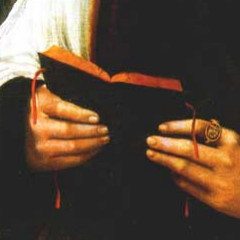
Portrait detail, Thomas Cranmer, author of Anglican 'Book of Common Prayer,' Wikimedia Commons.
“Pray without ceasing.” “The fervent prayers of a righteous man avails much.” In the church where I grew up, I heard these verses a lot. For those who bandied them about they were convenient summaries of their prayer life, or what they wanted it to be. For me they were like slogans for products not for sale in my city.
At best prayer was an uneven and elusive discipline. It was often triggered by a crisis: bad traffic, an upcoming test. “Heavenly Father,” I started, followed with a statement of something God already knew, to which I tacked a request for something else to fix the first something.
It wasn’t always desperation that drove my devotion. I thirsted for God, but seeking him in prayer proved a constant challenge. My mind wandered. The backs of my eyelids were movie screens. I could jump between praise and petition and planning a hiking trip all in the same moment, eyes still pinched like piety was my constant state of being. Such a prayer could hardly be called fervent. More like furtive, especially when I caught myself wandering. Was I availing jack? I had my doubts.
And here’s the bad news: All of this was when I actually tried. Increasingly I didn’t. I knew people who prayed for hours on end. With my scattershot supplications I could barely keep my mind on track for more than two minutes. It was frustrating. And it didn’t seem to accomplish anything. I got no victory in the areas of my life where I struggled with sin. I rarely felt close to God. It didn’t seem to matter. Prayer became an accident in my life, something occasional, more miss than hit.
I don’t know which came first: withdrawal from attempting meaningful prayer or the slow emaciation of my spirit. But they both happened. God became more an accusing thought than a person. I couldn’t stop thinking about him (though I wished desperately at times that I could), but I was at a loss for what to do about it. What to tell him? How to tell him? I could talk to the wall as easily as to God.
Then things changed. I wandered into the Anglican tradition. After years in the desert it was like stumbling into an oasis.
One of the restoratives I found was the daily office and the Book of Common Prayer. Wow. “Here’s what I needed,” I thought. And how.
For the first time in my Christian walk I felt as if I had a guide to prayer, an aid, a support. More than the endless encouragements to pray that I grew up with, here was a way to do it, a discipline to accomplish it. And as I began using the prayer book each day, I was awakened. Parts of me came alive.
I found I craved the discipline of the daily office, the act of bringing my time and schedule into conformity with something bigger and more meaningful. I’m easy for allowing the demands of the day to drive me every direction but before the throne. But the discipline of following the prayer book helps me turn those demands toward the throne instead. Because I am approaching God several times a day, confessing my sins, praising him, thanking him for his grace and provision, my faith has been strengthened and I am better able to keep perspective on the things that matter and those that do not.
It also helps me in my daily struggles. When lust starts itching my eyes, the words are already there: “Drive far from us all wrong desires, incline our hearts to keep your law. . . .” When life is unsure and unpredictable: “Be present, O merciful God, and protect us . . . so that we who are wearied by the changes and chances of this life may rest in your eternal changelessness. . . .” Because of the prayer book I have the right words — the right thoughts — when it counts.
My personal sense of incorporation into the church is greater as well. There is something powerful in the idea that millions of fellow believers are beseeching, praising, thanking God at all hours of the day using these same words. Pray without ceasing? Yeah, that’s how. And I find the unity created in our common prayers both humbling and invigorating.
I don’t know if these are fervent prayers or if they are accomplishing much, but I know a few things they’re accomplishing: I’m closer to God, my spirit’s alive, and my faith swells in places it used to shrink. I’ll take that. I thank God for that.
Previous Post

April 28, 2008
Running fool
Next Post
June 8, 2008 Prayer by the book (2)
Browse Our Archives
Select a Category Books Church Life Family Life Misc Prayer Quotes Society Spiritual Growth Theology Uncategorized Video
Select a Month April 2014 March 2014 January 2014 December 2013 November 2013 August 2013 July 2013 June 2013 May 2013 April 2013 March 2013 February 2013 January 2013 December 2012 November 2012 October 2012 September 2012 August 2012 July 2012 June 2012 May 2012 April 2012 March 2012 February 2012 December 2011 November 2011 October 2011 August 2011 July 2011 June 2011 March 2011 February 2011 January 2011 December 2010 October 2010 September 2010 August 2010 July 2010 June 2010 May 2010 September 2009 August 2009 July 2009 May 2009 April 2009 March 2009 November 2008 October 2008 July 2008 June 2008 April 2008 March 2008 February 2008 January 2008 August 2007 June 2007 October 2002 July 2002 November 1999 October 1999
Follow Us!
TAKE THE
Religious Wisdom Quiz
Before feeding 5,000 people with five loaves and two fish, what did Jesus do first?
Select your answer to see how you score.
Taught Gave thanks Blessed the Children Passed the food out
Related posts from Joel J. Miller

'Without embittering and embarrassing others'

Sinéad O’Connor, Anne Lamott, and the many names...

The monk who wanted to live in the...

God can handle your anger--and your confusion, fear...
TRENDING AT PATHEOS Evangelical

The REST of Your Life: A Creative Wrestles...
This week I had a conversation with a good friend from church....

How the author of the world's best hymn...
I've been working with John Newton for a while now. This makes...

Long before this Lectio Divina, Psalm 130 - the song - started...

What About the Trees? Another Living Parable
After I finished writing the last article about falling leaves as a...

Why Classical Education Is a Conversation, Not a...
Come and Read: Joy in Classical Education When I was a little...

Cornell University has received a great deal of negative publicity and intense...
view all Evangelical blogs
Ad-Free & Subscriber Log-In Subscription Support
- About Us
- 2026 Calendar
- Videos
- Podcasts
- Library of World Religions
- Faith In Media Tracker
- Advertise With Us
- Write for Us
- Privacy Policy
- Terms of Service
- Do Not Sell My Data
- Contact Us
- Radiant Digital
- Manage Newsletter Subscriptions
- Unsubscribe From Notifications
- Sitemap
Copyright 2008-2026, Patheos. All rights reserved.
Subscription Support Ad-Free & Subscriber Log-In
Follow Patheos