
BuddhistCatholicContemplativeEvangelicalGeneral ChristianHinduJewishLatter-day SaintMuslimNew VisionsProgressive Christian
Beliefs
- Buddhist
- Catholic
- Contemplative
- Evangelical
- General Christian
- Hindu
- Jewish
- Latter-day Saint
- More Voices
- Muslim
- New Visions
- Pagan
- Progressive Christian
Topics
- Religion News
- Food and Religion
- Sports and Religion
- Religious Art
- Religious Music and Entertainment
- Religious Events
- History and Religion
- Style and Religion
- Politics and Religion
- Women in Religion
- Recreation Outdoors and Religion
- Business Finance and Religion
- Careers Workplace and Religion
- Education and Religion
- Family Parenting and Religion
- Health Fitness and Religion
- Home and Religion
- Relationships and Religion
- Technology and Religion
- Travel and Religion
Columnists
- Buddhist Columnists
- Business Finance and Religion Columnists
- Careers Workplace and Religion Columnists
- Catholic Columnists
- Contemplative Columnists
- Education and Religion Columnists
- Evangelists Columnists
- Family Parenting and Religion Columnists
- General Christian Columnists
- Health Fitness and Religion Columnists
- Hindu Columnists
- History and Religion Columnists
- Home and Religion Columnists
- Jewish Columnists
- More Voices Columnists
- Latter Day Columnists
- Muslim Columnists
- New Visions Columnists
- Nonreligious Columnists
- Pagan Columnists
- Politics and Religion Columnists
- Progressive Columnists
- Recreation Outdoors and Religion Columnists
- Relationships and Religion Columnists
- Religion News Columnists
- Religious Art Columnists
- Religious Events Columnists
- Religious Music and Entertainment Columnists
- Sports and Religion Columnists
- Style and Religion Columnists
- Technology and Religion Columnists
- Travel and Religion Columnists
- Women in Religion Columnists
Resource Library
- 2026 Calendar
- Library of World Religions
- The 100 Most Holy Places on Earth
- Patheos Answers
- Podcasts
- Videos
- Faith Leaders Database
- Anglican Episcopalian
- Bahai
- Baptist
- Buddhism
- Christianity
- Confucianism
- Eastern Orthodoxy
- Hinduism
- Holiness and Pentecostal
- ISKCON
- Islam
- Judaism
- Lutheran
- Methodist
- The Church of Jesus Christ of Latter-day Saints
- New Age
- Paganism
- Presbytarian and Reformed
- Protestantism
- Religion Behind the Scenes
- Roman Catholic
- Scientology
- Shia Islam
- Sikhism
- Sufism
- Sunni Islam
- Taoism
- Zen
- See all religions
Research Tools
 Ad-Free & Subscriber Log-In Subscription Support
Ad-Free & Subscriber Log-In Subscription Support
Follow Patheos 

- Trending:
- Forgiveness
- |
- Marriage
- |
- Consciousness
- |
- Death Penalty
- |
- Election
- |
- Halloween
 Joel J. Miller
-
Joel's Books
-
Article Categories
- Home
- Evangelical
- Authors as entrepreneurs
Authors as entrepreneurs
Last updated on: March 28, 2008 at 1:01 am by Joel J. Miller
Authors as entrepreneurs 2008-03-28T01:01:31-06:00 Joel J. Miller
Patheos Explore the world's faith through different perspectives on religion and spirituality! Patheos has the views of the prevalent religions and spiritualities of the world.
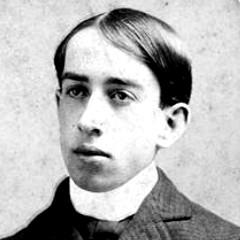
The sagacious Alfred Harcourt
Everyone wants to get published. It’s universal. Read this from Justin Martyr’s Second Apology:
And we therefore pray you to publish this little book, appending what you think right, that our opinions may be known to others, and that these persons may have a fair chance of being freed from erroneous notions and ignorance of good. . . .
It’s a query letter, a book proposal. It’s all there: the request and the rationale for publishing, the note of urgency about the topic, even the petition for help with the editing. For the sake of perspective, remember that this book proposal is over eighteen hundred years old. Justin Martyr died in A.D. 165. You know how it is: the more things change. . . .
I think I’ve got a book in me
A few years ago I spoke with a colleague who had just left the publishing industry. “What is it everybody always says?” he asked, then answered: “‘I think I’ve got a book in me.’” According to one survey in 2006, nearly 70 percent of Americans think their lives warrant a book. And it’s not just memoir and biography. The same survey also revealed that a big chunk of respondents desire to share advice, especially, it seemed from the survey, about sex tips. Everybody’s got a story (even if it’s kinky), and everybody wants to tell it. Everybody, in other words, wants to be published.
The good news is that getting published is easier than ever before. Technology has lowered many hurdles for aspiring authors. Everybody has an internet connection and a word processor. Plenty of other affordable tools make it possible to write and publish. And Web 2.0 social developments have even bridged some of the troubled water around marketing and distribution. As Clay Shirky puts it in Here Comes Everybody, “The future presented by the internet is the mass amateurization of publishing and a switch from ‘Why publish this?’ to ‘Why not?’” But bad news marbles the good. The easier it is to publish, the more people will do so—the more people are doing so. This poses problems for publishers and authors because of the relationship between scarcity and value:
Plentiful = cheap, worthless
Rare = valuable, prized
Think of it this way: A glut in books equates to a glut in dollars, and there’s a reason why the word “inflation” strikes fear in the hearts of economists. The more plentiful something is the less value it has and the less people are willing to pay for it. If you are an author, that could have a direct and ugly impact on your royalty statement. And if authors aren’t making money, neither are publishers. We’re literary lichen.
Thus a few questions: How to thrive in an environment where everybody wants to be published and virtually can be, where there are far more books than customers? How to distinguish yourself amid the deluge? How to make yourself rare, unique, valuable? I think the answers have a lot to do with how an author approaches his craft and how he envisions his work as it fits in the business of publishing.
Every book is a product
If you are, say, Maytag or Ford, you only roll out a small number of new products each year or every several years. Not so in publishing. I like how Alfred Harcourt presented the situation. He compared his troubles with those of a cosmetics maker.
The publisher’s problem, and the toothpaste manufacturer’s problem are quite different. During the course of a year some publishers issue several hundred new books, and many issue at least one hundred—that is, one every three business days. And besides there are already on their lists from several hundred to several thousand older titles, each requiring cataloguing and detailed attention.
One thing I like about this statement is that Harcourt said it in 1943, and he was describing a longstanding situation. Old problems are at least familiar ones. It’s more complicated today, but the upshot is the same.
“The cosmetic manufacturer,” said Harcourt, “would throw up his hands at the idea of a new product every three days.” Of course publishers can’t afford to throw up their hands. We have to get busy and release more books to make our sales projections for the month. And if publishers aren’t making money, neither are authors—that whole literary lichen thing again.
Not just authors, business partners too
Given the problem described by Harcourt, a quality in authors that I value equally with their smarts, skills, and diligence is the knack for seeing themselves as entrepreneurs. Historians, reporters, educators, experts, memoirists, gurus, pastors, pundits—authors can be any and all of these. But alongside these they are enterprisers and hopefully see themselves as such.
In Antipolitics, novelist György Konrád writes very romantically about “creative intellectuals,” people who “don’t want to be bosses; they want to be able to tinker, to invent, to create what they have imagined.” Konrád describes the creative intellectual as “all right if he can offer his abilities on his own terms, not on the buyer’s.” It’s a beautiful concept, but one he also describes as utopian. In a market setting such as ours the buyer always shadows the artist, the creator, the intellectual—even if the cast is diffused and distorted. You can dislike it, but the reality stands (for now).
There is no doubt that books contain the stories that capture our imaginations, philosophies that shape our lives, doctrines that impel our actions, humor that brightens our moods, and poetry that quickens our souls. Yet in addition to being vessels of instruction, entertainment, and enlightenment, books are also products, just as Harcourt said. (Recall that whole jugs-of-olive-oil spat in You’ve Got Mail.) So when authors partner with a publisher they are partners in more than a literary endeavor; they are partners in a business venture.
Even Konrád sees this pretty plainly. “The writer has to deal at times with a publishing executive,” he writes, “but it is not his goal to become a publishing executive himself. The writer’s goal is to have the publisher issue his book without changes in as many copies as possible, pay him the largest possible royalty for it, and try to sell as many copies as he can.” In an ideal world, there may be room for authors to operate with no concern for the desires of buyers, but as long as books are marketable goods they will have trouble achieving their goals east of Eden.
Tasks of the entrepreneur
So books are products and authors are entrepreneurs. Then what? The first task of every entrepreneur, in the words of economist Faustino Ballvé,
is to decide on the kind of thing he is going to trade in. . . . To come to such a decision, he must study the market. . . . He has to take into account what is already in abundant supply in the market and what therefore it is not advisable to offer for sale . . . and finally, what the future prospects of the market are, i.e., what will prove profitable, not now, but when he enters the market and even after that.
It’s a tall order, but it’s the closest thing to wisdom in publishing, an industry famously lacking anything bordering on the virtue.
For those of us in publishing, it boils down to several basic considerations: What do you want to publish? Who’s your audience? What are its needs, interests, and concerns? What does the competition look like? (You may have a great idea, but there might already be other books meeting the needs, feeding the interests, and matching the concerns that you address in your book. Can you do those things better or more uniquely than the competition?) How do you reach your audience? How effective are you at reaching it? Is your audience still going to need or care about your book when it’s finally made available?
If publishers desire success, we must keep Ballvé’s considerations in mind. The same is true for authors, and one of the most important tools for exploring these considerations is the book proposal.
Function of a book proposal
Fundamentally, a book proposal is a business plan. As with Justin Martyr’s, sometimes it is poor or incomplete, but it is a business plan nonetheless. It’s a description of what a product is and why there can be confidence regarding its success in the market—why it will make money for both the author and the publisher.
Think about it this way: The publisher is going to advance money for the book. That advance is an investment, like a business loan. Investors want a return on their money, and they’re not going to do so without a plan, something detailing how the money will be recouped and how the enterprise will fare. And this means an explicit, realistic, compelling, defensible, and self-critical explanation about a book’s potential in the marketplace.
Here’s another comparison: In a literary venture, the publisher serves as something of an insurance broker, a Lloyds of Libris. The proposal factors heavily into the risk evaluation made by the publisher. In comes a proposal, up fly the questions: Do I really want to back this ship? Based on the structural integrity of this vessel and the success of other ships heading into these waters, is backing this particular boat really prudent? The proposal helps answer the questions. It helps paint the risk-reward picture. It helps answer whether the investment will recoup.
Something important to bear in mind: Konrád may be exaggerating things a bit when he says that “the least” creative intellectuals “want is recognition that we are the shamans,” but some authors strike a similar pose and assume all the corollaries, that for instance their work has intrinsic value that the reading public should recognize and appreciate. Maybe it should, but markets are full of people misbehaving.
In a market setting, there is little validity to the idea of intrinsic value. Often it’s just a mask for sentimentality. As such, the commercial concerns covered above do not always neatly overlap with concerns about whether a book is important, useful, or interesting, or whether the author fervently believes in the value and truth of the work. Unless we’re discussing a collection of Finnish ethnic jokes, most authors believe strongly in their work, which they undoubtedly consider, like Justin Martyr before them, important, useful, or interesting. Taking it back to the concept of scarcity, it’s not enough to be a passionate author with an important, useful, or interesting subject. Shaman or not, everybody—almost literally today—is doing it, and consequently we need better gauges to evaluate the worth of a potential product.
6 key book-proposal criteria
There are several things to consider here, but return to the qualities of a good proposal—that it is explicit, realistic, compelling, defensible, and self-critical—and take those qualities in turn. To these I will add one more, that the plan is implementable.
1. Explicit. There can be no doubt about the nature, function, and value of the book or the author’s understanding about its potential. Without clarity of purpose and expectation, the publisher and the author will end up at odds, and the book will flounder as surely as their relationship.
2. Realistic. More than merely explicit, the goals have to be realistic and realizable. Knowing what is truly realistic in publishing is no easy chore, but when an author suggests that his book will sell a million copies or will leave Oprah in fits of breathlessness, red flags ought begin their ascent.
3. Compelling. The proposal has to be as convincing as it is clear and realistic. If the literary enterprise is to be undertaken with all its costs and risks there must be a solid, credible rationale for doing so.
4. Defensible. The argument for publishing and the plan explaining how success will come must bear up under scrutiny. Dreams are great, but they need a superstructure of facts, and as in any other area of life claims require data to back them up. If the proposal cannot stand scrutiny, then hopes for the book’s success are likely misplaced.
5. Self-critical. Being aware of all the weaknesses in the plan is the only way to ensure they can be properly addressed, remedied, or otherwise mitigated. It is always better for the author to demonstrate a knowledge of the weaknesses rather than to hope the publisher catches them—or, worse for all involved, be aware but hope that the publisher fails to detect them before the book is signed, believing that if the book is at least signed then the problems can be ironed out later.
6. Implementable. Assuming the foregoing is sewed up and nailed down, can you pull it off? If there is not a clear sense of how the plan will be put to action, then the warehouse might as well start making room for the returns.
Winning the lottery
Justin Martyr had no clear business plan, only a hope that his “little book” would be published and make a difference in the world. Considering that we can read it nearly two millennia after it was penned indicates that sometimes hope and a good message is enough. But not usually. “Publishing is a gross lottery,” writes book reviewer John Derbyshire, explaining that “Much gold sinks, much dung floats.”
In an environment with more books being published than ever before, that lottery is extra tricky, and there’s a lot of dung floating around out there. But such an environment also holds a lot of promise for authors and publishers because as more voices find avenues to readers, the amount of gold increases as well.
To get the better of Derbyshire’s gross lottery, I think that best chance for authors is to think more entrepreneurially about their work, and the discipline of examining a book’s potential market value and then validating that potential in a thorough and vigorous book proposal is one very important step toward thriving amid the glut.
Previous Post

February 28, 2008
God and man at last
Next Post

April 24, 2008 A source of innovation for publishers
Browse Our Archives
Select a Category Books Church Life Family Life Misc Prayer Quotes Society Spiritual Growth Theology Uncategorized Video
Select a Month April 2014 March 2014 January 2014 December 2013 November 2013 August 2013 July 2013 June 2013 May 2013 April 2013 March 2013 February 2013 January 2013 December 2012 November 2012 October 2012 September 2012 August 2012 July 2012 June 2012 May 2012 April 2012 March 2012 February 2012 December 2011 November 2011 October 2011 August 2011 July 2011 June 2011 March 2011 February 2011 January 2011 December 2010 October 2010 September 2010 August 2010 July 2010 June 2010 May 2010 September 2009 August 2009 July 2009 May 2009 April 2009 March 2009 November 2008 October 2008 July 2008 June 2008 April 2008 March 2008 February 2008 January 2008 August 2007 June 2007 October 2002 July 2002 November 1999 October 1999
Follow Us!
TAKE THE
Religious Wisdom Quiz
Who was Abraham's brother?
Select your answer to see how you score.
Nahor Jacob Lot Isaac
Related posts from Joel J. Miller

One resource every pastor, scholar, and student needs

Cormac McCarthy and all the broken children of...

One (hard) reason God gives us families

What is Christian literature? God's truth, wherever you...
TRENDING AT PATHEOS Evangelical

The REST of Your Life: A Creative Wrestles...
This week I had a conversation with a good friend from church....

How the author of the world's best hymn...
I've been working with John Newton for a while now. This makes...

Long before this Lectio Divina, Psalm 130 - the song - started...

What About the Trees? Another Living Parable
After I finished writing the last article about falling leaves as a...

Why Classical Education Is a Conversation, Not a...
Come and Read: Joy in Classical Education When I was a little...

Cornell University has received a great deal of negative publicity and intense...
view all Evangelical blogs
Ad-Free & Subscriber Log-In Subscription Support
- About Us
- 2026 Calendar
- Videos
- Podcasts
- Library of World Religions
- Faith In Media Tracker
- Advertise With Us
- Write for Us
- Privacy Policy
- Terms of Service
- Do Not Sell My Data
- Contact Us
- Radiant Digital
- Manage Newsletter Subscriptions
- Unsubscribe From Notifications
- Sitemap
Copyright 2008-2026, Patheos. All rights reserved.
Subscription Support Ad-Free & Subscriber Log-In
Follow Patheos