
BuddhistCatholicContemplativeEvangelicalGeneral ChristianHinduJewishLatter-day SaintMuslimNew VisionsProgressive Christian
Beliefs
- Buddhist
- Catholic
- Contemplative
- Evangelical
- General Christian
- Hindu
- Jewish
- Latter-day Saint
- More Voices
- Muslim
- New Visions
- Pagan
- Progressive Christian
Topics
- Religion News
- Food and Religion
- Sports and Religion
- Religious Art
- Religious Music and Entertainment
- Religious Events
- History and Religion
- Style and Religion
- Politics and Religion
- Women in Religion
- Recreation Outdoors and Religion
- Business Finance and Religion
- Careers Workplace and Religion
- Education and Religion
- Family Parenting and Religion
- Health Fitness and Religion
- Home and Religion
- Relationships and Religion
- Technology and Religion
- Travel and Religion
Columnists
- Buddhist Columnists
- Business Finance and Religion Columnists
- Careers Workplace and Religion Columnists
- Catholic Columnists
- Contemplative Columnists
- Education and Religion Columnists
- Evangelists Columnists
- Family Parenting and Religion Columnists
- General Christian Columnists
- Health Fitness and Religion Columnists
- Hindu Columnists
- History and Religion Columnists
- Home and Religion Columnists
- Jewish Columnists
- More Voices Columnists
- Latter Day Columnists
- Muslim Columnists
- New Visions Columnists
- Nonreligious Columnists
- Pagan Columnists
- Politics and Religion Columnists
- Progressive Columnists
- Recreation Outdoors and Religion Columnists
- Relationships and Religion Columnists
- Religion News Columnists
- Religious Art Columnists
- Religious Events Columnists
- Religious Music and Entertainment Columnists
- Sports and Religion Columnists
- Style and Religion Columnists
- Technology and Religion Columnists
- Travel and Religion Columnists
- Women in Religion Columnists
Resource Library
- 2026 Calendar
- Library of World Religions
- The 100 Most Holy Places on Earth
- Patheos Answers
- Podcasts
- Videos
- Faith Leaders Database
- Anglican Episcopalian
- Bahai
- Baptist
- Buddhism
- Christianity
- Confucianism
- Eastern Orthodoxy
- Hinduism
- Holiness and Pentecostal
- ISKCON
- Islam
- Judaism
- Lutheran
- Methodist
- The Church of Jesus Christ of Latter-day Saints
- New Age
- Paganism
- Presbytarian and Reformed
- Protestantism
- Religion Behind the Scenes
- Roman Catholic
- Scientology
- Shia Islam
- Sikhism
- Sufism
- Sunni Islam
- Taoism
- Zen
- See all religions
Research Tools
 Ad-Free & Subscriber Log-In Subscription Support
Follow Patheos 

- Trending:
- Advent
- |
- Forgiveness
- |
- Thanksgiving
- |
- Election
- |
- Seasonal Holidays
- |
- Marriage

- Home
- Evangelical
- Relationships and Religion
- God Restores What’s Broken
God Restores What’s Broken
Last updated on: November 28, 2026 at 11:12 pm by Jim Erwin
God Restores What’s Broken 2026-11-28T23:12:57-05:00 Jim Erwin
Patheos Explore the world's faith through different perspectives on religion and spirituality! Patheos has the views of the prevalent religions and spiritualities of the world.
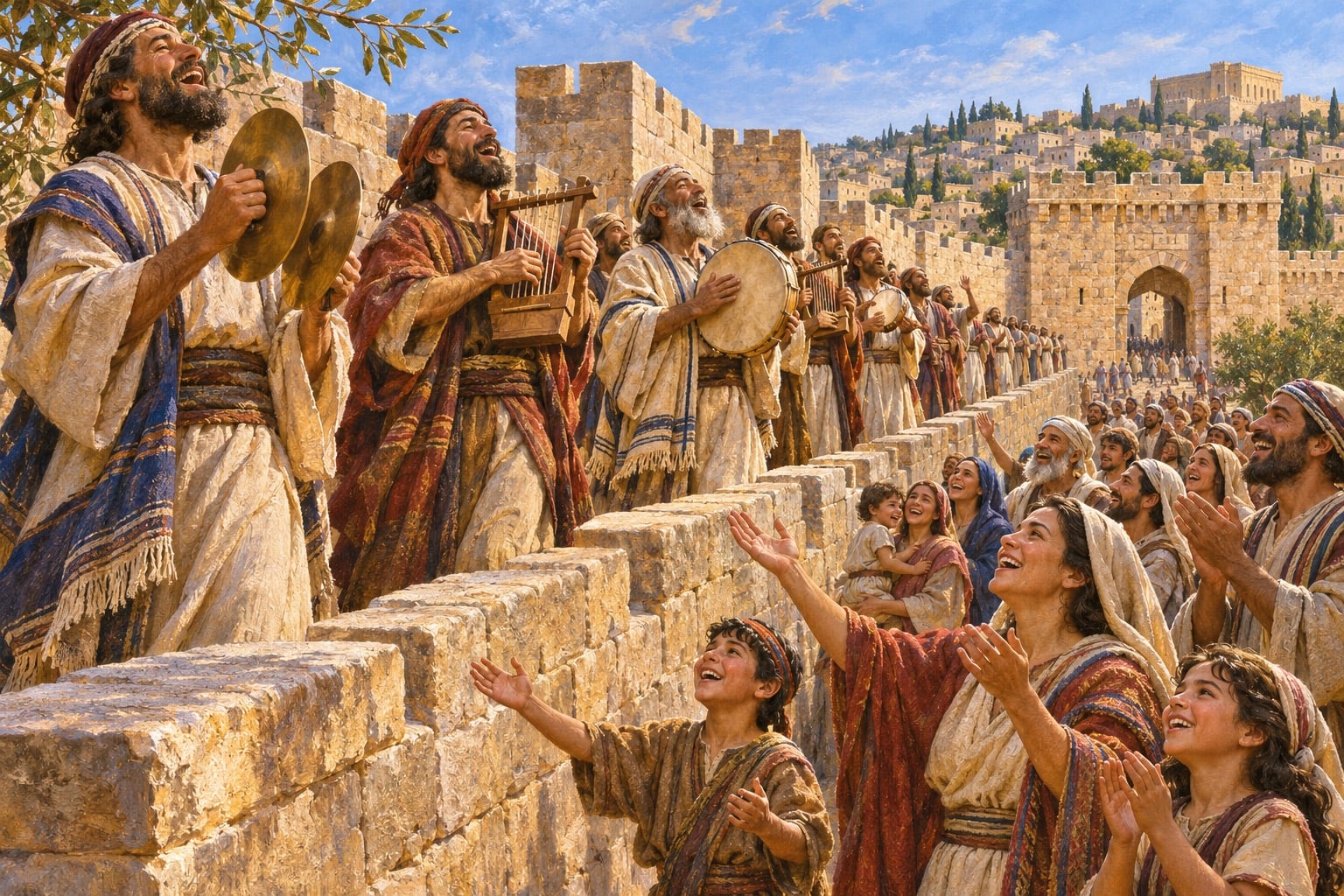
When God restores what’s broken, we can dedicate what he has renewed, celebrate his goodness, and sustain a faithful response. Nehemiah 12:27–47 shows Jerusalem gathering to dedicate its rebuilt wall with thanksgiving and joy.
The stones tell a story of work, opposition, prayer, and perseverance. Yet the people’s celebration turns their attention beyond the achievement. They worship the God who helped them rebuild.
We also need to consider what comes after a season of renewal. Restored hope, renewed faith, or progress in a relationship deserves more than a passing moment of relief. Gratitude can shape the way we live next.
This message in Return, Rebuild, Renew — A Journey Through Nehemiah offers three responses to God’s restoring work: dedicate, celebrate, and sustain.
I Dedicate What God Restores
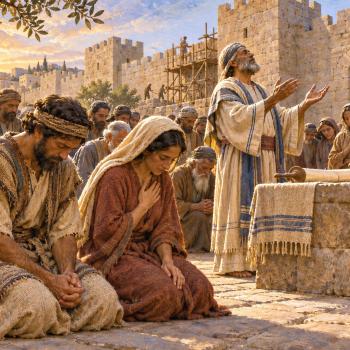
The people gather the Levites for the dedication of Jerusalem’s wall. They prepare a celebration with thanksgiving, singing, and musical instruments. Before the processions begin, the priests and Levites purify themselves, the people, the gates, and the wall (Nehemiah 12:27–30).
Dedication gives the occasion a clear purpose. This gathering involves more than admiring a successful construction project. The people place their restored city within their worship of God.
Think about restoring an old house. Repairs make the rooms usable again, but someone must decide how to live within them. A restored home becomes a place for hospitality, rest, and shared life.
Similarly, renewal invites a response. If God has helped you recover a sense of purpose, consider how you will use it. If a relationship has begun to heal, ask how your choices can support that progress.
Dedication does not mean that we control every outcome. Instead, we offer what is before us to God and seek to use it faithfully. We acknowledge that renewed strength carries an opportunity to serve.
Therefore, name one area where you have received help or experienced growth. Bring it before God in prayer. Ask what humility, integrity, and loving care should look like there.
What have you been treating as entirely your own that you need to entrust to God?
I Celebrate What God Restores
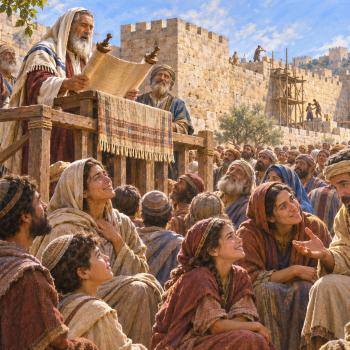
Nehemiah appoints two large thanksgiving choirs. The groups process along the wall and eventually take their places at God’s house. Music and thanksgiving become part of the community’s response (Nehemiah 12:31–42).
The celebration includes women and children. The people offer sacrifices and rejoice because God has given them great joy. The sound carries beyond the gathering (Nehemiah 12:43).
Notice who receives the credit. The people have labored, organized, and persevered. Nevertheless, their thanksgiving recognizes God’s help rather than turning the day into a tribute to themselves.
A city celebrating a championship offers a familiar picture of shared joy. Music fills the streets, and people remember the effort that brought them to that moment. Jerusalem’s celebration centers on a deeper reason for gratitude: God has helped restore what once lay in ruins.
Likewise, we can make room to acknowledge God’s goodness. Thank someone who supported you. Share a meal with people who prayed through a difficult season. Tell a truthful story of the help you received.
However, celebration does not require pretending that every wound has healed. People can carry grief while recognizing a real gift. Gratitude and sorrow may share the same room.
For that reason, speak about restoration with care. This passage does not promise that every loss will be reversed on our preferred timetable. It invites us to recognize God’s help and respond faithfully to what he has given.
Ask yourself: What goodness can I name today without denying what remains difficult?
I Sustain What God Restores
The chapter closes with arrangements for contributions and the support of those who serve. People oversee storerooms, gather portions, and provide for singers, gatekeepers, priests, and Levites (Nehemiah 12:44–47).
These practical details belong beside the music. A joyful dedication does not remove the need for ongoing care. Worship continues as people share responsibility and support those doing the work.
Consider a restored car. A careful restoration may return it to the road, but it still needs maintenance. Ignoring basic care would put the renewed vehicle at risk.
In the same way, spiritual growth needs practices that help it endure. Prayer, Scripture, honest relationships, and thoughtful service can support the renewal we have begun to experience.
Furthermore, a church needs more than appreciation for its ministries. It needs dependable people, wise planning, and resources used with care. Generosity helps sustain shared worship and service.
Give thoughtfully and within your means. Offer time and abilities that fit your present capacity. Receive help as well, especially when illness, caregiving, or exhaustion limits what you can do.
Sustaining what God restores is not a way to earn his grace. It is a grateful response to the help we have received. Small acts of faithfulness can give that gratitude a practical shape.
What habit, relationship, or act of stewardship will help you care for the progress God has made possible?
When God Restores What’s Broken
Nehemiah 12 connects dedication, celebration, and continuing care. Together, these responses help us move beyond relief toward a life of thanksgiving.
- Dedicate: Offer one renewed area of life to God in prayer.
- Celebrate: Name a specific reason for gratitude and share it with someone.
- Sustain: Choose one practice that supports faithful growth over time.
Finally, remember that restoration is a shared story. Others may have prayed, worked, listened, or given alongside you. Thank God for their care and consider how you can extend that care to someone else.
When God restores what’s broken, let gratitude guide your next step. Dedicate what you have received, celebrate his goodness, and care faithfully for the work that continues.
A Prayer of Gratitude and Dedication
Lord, thank you for meeting us in broken places and helping us rebuild. We offer our renewed hope, strength, and opportunities to you. Help us celebrate your goodness without hiding our remaining grief. Teach us to care for one another and sustain faithful habits. Let our lives express gratitude for your grace. In Jesus’ name, amen.
Related Sermons
Image is from OpenAI.
Relationships and Religion
Previous Post
September 25, 2026
Move-In Day
Next Post

November 26, 2026 Blue Christmas: Making Room for Grief at Church
Browse Our Archives
Select a Category 1 Chronicles 1 Corinthians 1 John 1 Kings 1 Peter 1 Samuel 1 Thessalonians 1 Timothy 2 Chronicles 2 Corinthians 2 John 2 Kings 2 Peter 2 Samuel 2 Thessalonians 2 Timothy 3 John Acts Advent Amos Book Review Colossians Comics Culture Watch Daniel Deuteronomy Ecclesiastes Ephesians Esther Exodus Ezekiel Ezra Galatians Genesis Guest Post Habakkuk Haggai Hebrews Hosea Humor Inspiritational Isaiah James Jeremiah Job Joel John Jonah Joshua Jude Judges Lamentations Lectionary Lent Leviticus Link Love Luke Malachi Mark Matthew Micah Movie Review Nahum Nehemiah Numbers Philippians Political Watch Prophecy Watch Proverbs Psalm Revelation Reviews Romans Ruth Sacratopia Science Watch Sermon Series Sermons Simple Thoughts Song of Solomon Titus Top Ten Uncategorized Video Review Zechariah Zephaniah
Select a Month November 2026 October 2026 September 2026 August 2026 July 2026 June 2026 May 2026 October 2025 September 2025 June 2025 February 2025 January 2025 November 2024 October 2024 September 2024 July 2024 June 2024 April 2024 March 2024 January 2024 November 2023 October 2023 September 2023 June 2023 May 2023 March 2023 February 2023 January 2023 December 2022 October 2022 September 2022 August 2022 July 2022 June 2022 May 2022 January 2022 June 2021 January 2021 October 2020 July 2020 May 2020 April 2020 March 2020 February 2020 January 2020 December 2019 November 2019 October 2019 September 2019 August 2019 July 2019 June 2019 May 2019 April 2019 March 2019 February 2019 January 2019 December 2018 November 2018 October 2018 September 2018 August 2018 July 2018 June 2018 May 2018 April 2018 March 2018 February 2018 January 2018 December 2017 November 2017 October 2017 September 2017 August 2017 July 2017 June 2017 May 2017 April 2017 March 2017 February 2017 January 2017 December 2016 November 2016 October 2016 September 2016 August 2016 July 2016 June 2016 May 2016 April 2016 March 2016 February 2016 January 2016 December 2015 November 2015 October 2015 September 2015 August 2015 July 2015 June 2015 May 2015 April 2015 March 2015 February 2015 January 2015 December 2014 November 2014 October 2014 September 2014 August 2014 July 2014 June 2014 May 2014 April 2014 March 2014 February 2014 January 2014 December 2013 November 2013 October 2013 September 2013 August 2013 July 2013 June 2013 May 2013 April 2013 February 2013 January 2013 December 2012 November 2012 October 2012 September 2012 August 2012 July 2012 June 2012 May 2012 April 2009 June 2008 October 2007 September 2007 August 2007 July 2007 June 2007 May 2007 April 2007 March 2007 February 2007 January 2007 December 2006 October 2006 September 2006 May 2006 April 2006 March 2006 February 2006 January 2006 December 2005 September 2005
Follow Us!
TAKE THE
Religious Wisdom Quiz
Which New Testament book has the most Old Testament quotes?
Select your answer to see how you score.
Romans Revelation Hebrews Matthew
Related posts from Jim Erwin
TRENDING AT PATHEOS Evangelical

As was predicted many years ago, the Interpreter Foundation's website is...

"Why Do Churches Talk So Much About Money?"
If you were inclined to do so, you could probably find any...

Watch and Pray: On Mark 13:33-37
Jesus said to his disciples: “Be watchful! Be alert! You do not...

Debate on Purgatory & Biblical Evidences for It
This is from a combox on my video channel, Catholic Bible Highlights....

Set the table for the coming King
On Thursday we visited my sister-in-law for Thanksgiving, and throughout the entire...

If I Stop Becoming, Will I Disappear?
(At our most recent half day Zen retreat, Dr Chris Hoff, a...
view all Evangelical blogs
Ad-Free & Subscriber Log-In Subscription Support
- About Us
- 2026 Calendar
- Videos
- Podcasts
- Library of World Religions
- Faith In Media Tracker
- Advertise With Us
- Write for Us
- Privacy Policy
- Terms of Service
- Do Not Sell My Data
- Contact Us
- Radiant Digital
- Manage Newsletter Subscriptions
- Unsubscribe From Notifications
- Sitemap
Copyright 2008-2026, Patheos, part of the Radiant Digital network of media brands. All rights reserved.
Subscription Support Ad-Free & Subscriber Log-In
Follow Patheos