
BuddhistCatholicContemplativeEvangelicalGeneral ChristianHinduJewishLatter-day SaintMuslimNew VisionsProgressive Christian
Beliefs
- Buddhist
- Catholic
- Contemplative
- Evangelical
- General Christian
- Hindu
- Jewish
- Latter-day Saint
- More Voices
- Muslim
- New Visions
- Pagan
- Progressive Christian
Topics
- Religion News
- Food and Religion
- Sports and Religion
- Religious Art
- Religious Music and Entertainment
- Religious Events
- History and Religion
- Style and Religion
- Politics and Religion
- Women in Religion
- Recreation Outdoors and Religion
- Business Finance and Religion
- Careers Workplace and Religion
- Education and Religion
- Family Parenting and Religion
- Health Fitness and Religion
- Home and Religion
- Relationships and Religion
- Technology and Religion
- Travel and Religion
Columnists
- Buddhist Columnists
- Business Finance and Religion Columnists
- Careers Workplace and Religion Columnists
- Catholic Columnists
- Contemplative Columnists
- Education and Religion Columnists
- Evangelists Columnists
- Family Parenting and Religion Columnists
- General Christian Columnists
- Health Fitness and Religion Columnists
- Hindu Columnists
- History and Religion Columnists
- Home and Religion Columnists
- Jewish Columnists
- More Voices Columnists
- Latter Day Columnists
- Muslim Columnists
- New Visions Columnists
- Nonreligious Columnists
- Pagan Columnists
- Politics and Religion Columnists
- Progressive Columnists
- Recreation Outdoors and Religion Columnists
- Relationships and Religion Columnists
- Religion News Columnists
- Religious Art Columnists
- Religious Events Columnists
- Religious Music and Entertainment Columnists
- Sports and Religion Columnists
- Style and Religion Columnists
- Technology and Religion Columnists
- Travel and Religion Columnists
- Women in Religion Columnists
Resource Library
- 2026 Calendar
- Library of World Religions
- The 100 Most Holy Places on Earth
- Patheos Answers
- Podcasts
- Videos
- Faith Leaders Database
- Anglican Episcopalian
- Bahai
- Baptist
- Buddhism
- Christianity
- Confucianism
- Eastern Orthodoxy
- Hinduism
- Holiness and Pentecostal
- ISKCON
- Islam
- Judaism
- Lutheran
- Methodist
- The Church of Jesus Christ of Latter-day Saints
- New Age
- Paganism
- Presbytarian and Reformed
- Protestantism
- Religion Behind the Scenes
- Roman Catholic
- Scientology
- Shia Islam
- Sikhism
- Sufism
- Sunni Islam
- Taoism
- Zen
- See all religions
Research Tools
 Ad-Free & Subscriber Log-In Subscription Support
Follow Patheos 

- Trending:
- Advent
- |
- Forgiveness
- |
- Thanksgiving
- |
- Election
- |
- Seasonal Holidays
- |
- Marriage

- Home
- Evangelical
- When the Battle Is Within
When the Battle Is Within
Last updated on: November 28, 2026 at 10:41 pm by Jim Erwin
When the Battle Is Within 2026-11-28T22:41:38-05:00 Jim Erwin
Patheos Explore the world's faith through different perspectives on religion and spirituality! Patheos has the views of the prevalent religions and spiritualities of the world.

When the battle is within, a community must face the harm its own people are causing. Nehemiah 5:1–19 shows that rebuilding Jerusalem requires more than strong walls. God’s people must also listen to suffering neighbors, confront injustice, and lead with integrity.
In the previous chapter, enemies threatened the builders from outside. Now the danger comes from inside the community. Families face hunger, debt, and the loss of their land. Meanwhile, some of their own countrymen benefit from their distress.
This message in Return, Rebuild, Renew — A Journey Through Nehemiah asks us to examine how we treat one another. I must confront injustice, lead with integrity, and care for others if I want to honor God in community.
I Must Listen When People Are Hurting
Nehemiah 5 begins with a widespread outcry. The people and their wives speak against their fellow Jews. Some families need grain to survive. Others mortgage their fields, vineyards, and homes during the famine. Still others borrow money to pay the king’s tax (Nehemiah 5:1–4).
The pressure reaches their children. Families describe sons and daughters entering servitude, and they feel powerless to change their situation because others hold their land (Nehemiah 5:5).
These people belong to the same community as those who lend to them. Yet shared ancestry and shared worship have not kept one neighbor from taking advantage of another. The wall may rise while relationships crumble.
First, we need to hear the outcry. It is easy to celebrate a church’s visible achievements while overlooking a family quietly struggling to buy food. We can admire a successful project without asking who bears its hidden costs.
Therefore, listening must go beyond a polite question. Make room for an honest answer. Ask what help would actually be useful. Listen before deciding that you already understand why someone is struggling.
Financial hardship has many causes. Some people need immediate relief, while others also need guidance or practical skills. We cannot know what care requires until we listen carefully.
Reflection: Do I notice the cries of people in my church, family, or community? Whose experience have I dismissed without hearing it?
When the Battle Is Within, I Must Confront What Is Wrong
Nehemiah becomes angry when he hears the people’s outcry. However, he takes time to consider the matter before confronting the nobles and officials. He names their practice of charging interest to their countrymen and calls the community together (Nehemiah 5:6–7).
His response joins concern with self-control. Anger alerts him to a serious wrong, but careful thought shapes his action. He speaks directly about the behavior that needs to change.
Then Nehemiah calls for concrete restitution. He tells the lenders to return the people’s property and what they have taken. The officials agree to restore these things and stop demanding more. Nehemiah also involves the priests in holding them to their promise (Nehemiah 5:9–13).
Repair requires more than reassuring words. When someone has suffered a loss through our actions, an apology should lead us to ask what we can restore.
Practice Both Compassion and Responsibility
The first question is personal: Have I used someone else’s hardship to benefit myself? Have I pressured a vulnerable person, ignored an unfair practice, or treated another family’s struggle as an opportunity for gain?
At the same time, honest community life includes responsibility for our own choices. We should seek help truthfully, acknowledge mistakes, and welcome guidance. Compassion and accountability can support each other.
However, a request for food, shelter, or help is not itself an act of manipulation. Nehemiah listens to the people’s actual circumstances. We should also avoid assuming that poverty reveals poor character.
Wise help can include a meal, a payment toward an urgent need, help making a plan, or a connection to someone with the right expertise. Likewise, clear boundaries can help a church serve fairly and sustainably.
Reflection: Is there a wrong I need to address with courage and grace? If I have caused harm, what practical step toward repair can I take?
I Must Lead With Sacrificial Integrity
Nehemiah next describes his own conduct as governor. He and his associates do not consume the food allowance available to the governor. He contrasts this choice with earlier governors who burdened the people (Nehemiah 5:14–15).
Furthermore, he continues the work on the wall and provides food for a large group of officials and guests. He explains that the people’s burden is already heavy, so he does not demand the governor’s allowance (Nehemiah 5:16–18).
Nehemiah applies the standard to himself. He asks others to stop exploiting their neighbors while choosing to bear a cost in his own leadership.
That example challenges us. A position may give us the right to claim a benefit. Yet love asks another question: What will this demand do to the people in my care?
We may lead a church, supervise a team, manage a household, or serve as a volunteer. In each setting, we can use our influence to ease burdens. We can share resources, take responsibility, and refuse to profit from someone else’s vulnerability.
Generosity also takes different forms. Some people can offer money. Others can offer time, skills, hospitality, or patient attention. The point is to serve with what God has entrusted to us.
Reflection: Do I use my position to bless others or mainly to serve myself?
Responding When the Battle Is Within
When the battle is within, blaming an outside enemy will not repair the damage. Nehemiah calls the community to listen, change its practices, and restore what it can.
This week, choose one action that makes those commitments visible:
- Listen: Give someone time to describe a burden without rushing to judge.
- Examine: Ask whether your choices add pressure to someone already struggling.
- Repair: Return what you owe, correct an unfair practice, or make a sincere apology with a practical next step.
- Serve: Use one resource or responsibility to lighten another person’s load.
Freedom without compassion becomes selfishness. Leadership without sacrifice can become a way to control others. Faith calls us to practice justice in the relationships closest to us.
Finally, remember that the people inside the walls matter as much as the walls themselves. A faithful community protects its neighbors through both its words and its actions.
A Prayer for Integrity and Compassion
Lord, help me hear those who are hurting. Give me courage to confront injustice and humility to recognize my own part in it. Show me what I can repair. Teach me to use my influence and resources to serve others with wisdom, honesty, and compassion. In Jesus’ name, amen.
Related Sermons
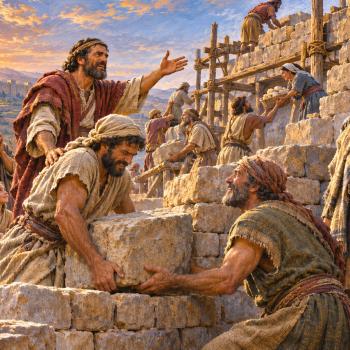
Image is from OpenAI.
Previous Post

August 7, 2026
Build Through the Battle
Next Post

August 21, 2026 Finish What God Called You to Start
Browse Our Archives
Select a Category 1 Chronicles 1 Corinthians 1 John 1 Kings 1 Peter 1 Samuel 1 Thessalonians 1 Timothy 2 Chronicles 2 Corinthians 2 John 2 Kings 2 Peter 2 Samuel 2 Thessalonians 2 Timothy 3 John Acts Advent Amos Book Review Colossians Comics Culture Watch Daniel Deuteronomy Ecclesiastes Ephesians Esther Exodus Ezekiel Ezra Galatians Genesis Guest Post Habakkuk Haggai Hebrews Hosea Humor Inspiritational Isaiah James Jeremiah Job Joel John Jonah Joshua Jude Judges Lamentations Lectionary Lent Leviticus Link Love Luke Malachi Mark Matthew Micah Movie Review Nahum Nehemiah Numbers Philippians Political Watch Prophecy Watch Proverbs Psalm Revelation Reviews Romans Ruth Sacratopia Science Watch Sermon Series Sermons Simple Thoughts Song of Solomon Titus Top Ten Uncategorized Video Review Zechariah Zephaniah
Select a Month November 2026 September 2026 August 2026 July 2026 June 2026 May 2026 October 2025 September 2025 June 2025 February 2025 January 2025 November 2024 October 2024 September 2024 July 2024 June 2024 April 2024 March 2024 January 2024 November 2023 October 2023 September 2023 June 2023 May 2023 March 2023 February 2023 January 2023 December 2022 October 2022 September 2022 August 2022 July 2022 June 2022 May 2022 January 2022 June 2021 January 2021 October 2020 July 2020 May 2020 April 2020 March 2020 February 2020 January 2020 December 2019 November 2019 October 2019 September 2019 August 2019 July 2019 June 2019 May 2019 April 2019 March 2019 February 2019 January 2019 December 2018 November 2018 October 2018 September 2018 August 2018 July 2018 June 2018 May 2018 April 2018 March 2018 February 2018 January 2018 December 2017 November 2017 October 2017 September 2017 August 2017 July 2017 June 2017 May 2017 April 2017 March 2017 February 2017 January 2017 December 2016 November 2016 October 2016 September 2016 August 2016 July 2016 June 2016 May 2016 April 2016 March 2016 February 2016 January 2016 December 2015 November 2015 October 2015 September 2015 August 2015 July 2015 June 2015 May 2015 April 2015 March 2015 February 2015 January 2015 December 2014 November 2014 October 2014 September 2014 August 2014 July 2014 June 2014 May 2014 April 2014 March 2014 February 2014 January 2014 December 2013 November 2013 October 2013 September 2013 August 2013 July 2013 June 2013 May 2013 April 2013 February 2013 January 2013 December 2012 November 2012 October 2012 September 2012 August 2012 July 2012 June 2012 May 2012 April 2009 June 2008 October 2007 September 2007 August 2007 July 2007 June 2007 May 2007 April 2007 March 2007 February 2007 January 2007 December 2006 October 2006 September 2006 May 2006 April 2006 March 2006 February 2006 January 2006 December 2005 September 2005
Follow Us!
TAKE THE
Religious Wisdom Quiz
This shortest book in the Old Testament prophesies judgment on Edom for violence against Judah. How many verses does it contain?
Select your answer to see how you score.
15 verses 21 verses 30 verses 12 verses
Related posts from Jim Erwin



Finish What God Called You to Start
TRENDING AT PATHEOS Evangelical

"Why Do Churches Talk So Much About Money?"
If you were inclined to do so, you could probably find any...

Watch and Pray: On Mark 13:33-37
Jesus said to his disciples: “Be watchful! Be alert! You do not...

Debate on Purgatory & Biblical Evidences for It
This is from a combox on my video channel, Catholic Bible Highlights....

Set the table for the coming King
On Thursday we visited my sister-in-law for Thanksgiving, and throughout the entire...

If I Stop Becoming, Will I Disappear?
(At our most recent half day Zen retreat, Dr Chris Hoff, a...

A Modest Proposal for President Trump
Trump should just quit the loser Republicans who failed him so badly...
view all Evangelical blogs
Ad-Free & Subscriber Log-In Subscription Support
- About Us
- 2026 Calendar
- Videos
- Podcasts
- Library of World Religions
- Faith In Media Tracker
- Advertise With Us
- Write for Us
- Privacy Policy
- Terms of Service
- Do Not Sell My Data
- Contact Us
- Radiant Digital
- Manage Newsletter Subscriptions
- Unsubscribe From Notifications
- Sitemap
Copyright 2008-2026, Patheos, part of the Radiant Digital network of media brands. All rights reserved.
Subscription Support Ad-Free & Subscriber Log-In
Follow Patheos