
BuddhistCatholicContemplativeEvangelicalGeneral ChristianHinduJewishLatter-day SaintMuslimNew VisionsProgressive Christian
Beliefs
- Buddhist
- Catholic
- Contemplative
- Evangelical
- General Christian
- Hindu
- Jewish
- Latter-day Saint
- More Voices
- Muslim
- New Visions
- Pagan
- Progressive Christian
Topics
- Religion News
- Food and Religion
- Sports and Religion
- Religious Art
- Religious Music and Entertainment
- Religious Events
- History and Religion
- Style and Religion
- Politics and Religion
- Women in Religion
- Recreation Outdoors and Religion
- Business Finance and Religion
- Careers Workplace and Religion
- Education and Religion
- Family Parenting and Religion
- Health Fitness and Religion
- Home and Religion
- Relationships and Religion
- Technology and Religion
- Travel and Religion
Columnists
- Buddhist Columnists
- Business Finance and Religion Columnists
- Careers Workplace and Religion Columnists
- Catholic Columnists
- Contemplative Columnists
- Education and Religion Columnists
- Evangelists Columnists
- Family Parenting and Religion Columnists
- General Christian Columnists
- Health Fitness and Religion Columnists
- Hindu Columnists
- History and Religion Columnists
- Home and Religion Columnists
- Jewish Columnists
- More Voices Columnists
- Latter Day Columnists
- Muslim Columnists
- New Visions Columnists
- Nonreligious Columnists
- Pagan Columnists
- Politics and Religion Columnists
- Progressive Columnists
- Recreation Outdoors and Religion Columnists
- Relationships and Religion Columnists
- Religion News Columnists
- Religious Art Columnists
- Religious Events Columnists
- Religious Music and Entertainment Columnists
- Sports and Religion Columnists
- Style and Religion Columnists
- Technology and Religion Columnists
- Travel and Religion Columnists
- Women in Religion Columnists
Resource Library
- 2026 Calendar
- Library of World Religions
- The 100 Most Holy Places on Earth
- Patheos Answers
- Podcasts
- Videos
- Faith Leaders Database
- Anglican Episcopalian
- Bahai
- Baptist
- Buddhism
- Christianity
- Confucianism
- Eastern Orthodoxy
- Hinduism
- Holiness and Pentecostal
- ISKCON
- Islam
- Judaism
- Lutheran
- Methodist
- The Church of Jesus Christ of Latter-day Saints
- New Age
- Paganism
- Presbytarian and Reformed
- Protestantism
- Religion Behind the Scenes
- Roman Catholic
- Scientology
- Shia Islam
- Sikhism
- Sufism
- Sunni Islam
- Taoism
- Zen
- See all religions
Research Tools
 Ad-Free & Subscriber Log-In Subscription Support
Follow Patheos 

- Trending:
- Advent
- |
- Forgiveness
- |
- Thanksgiving
- |
- Election
- |
- Seasonal Holidays
- |
- Marriage

- Home
- Evangelical
- Relationships and Religion
- God Opens Doors
God Opens Doors
Last updated on: November 24, 2026 at 9:56 am by Jim Erwin
God Opens Doors 2026-11-24T09:56:47-05:00 Jim Erwin
Patheos Explore the world's faith through different perspectives on religion and spirituality! Patheos has the views of the prevalent religions and spiritualities of the world.
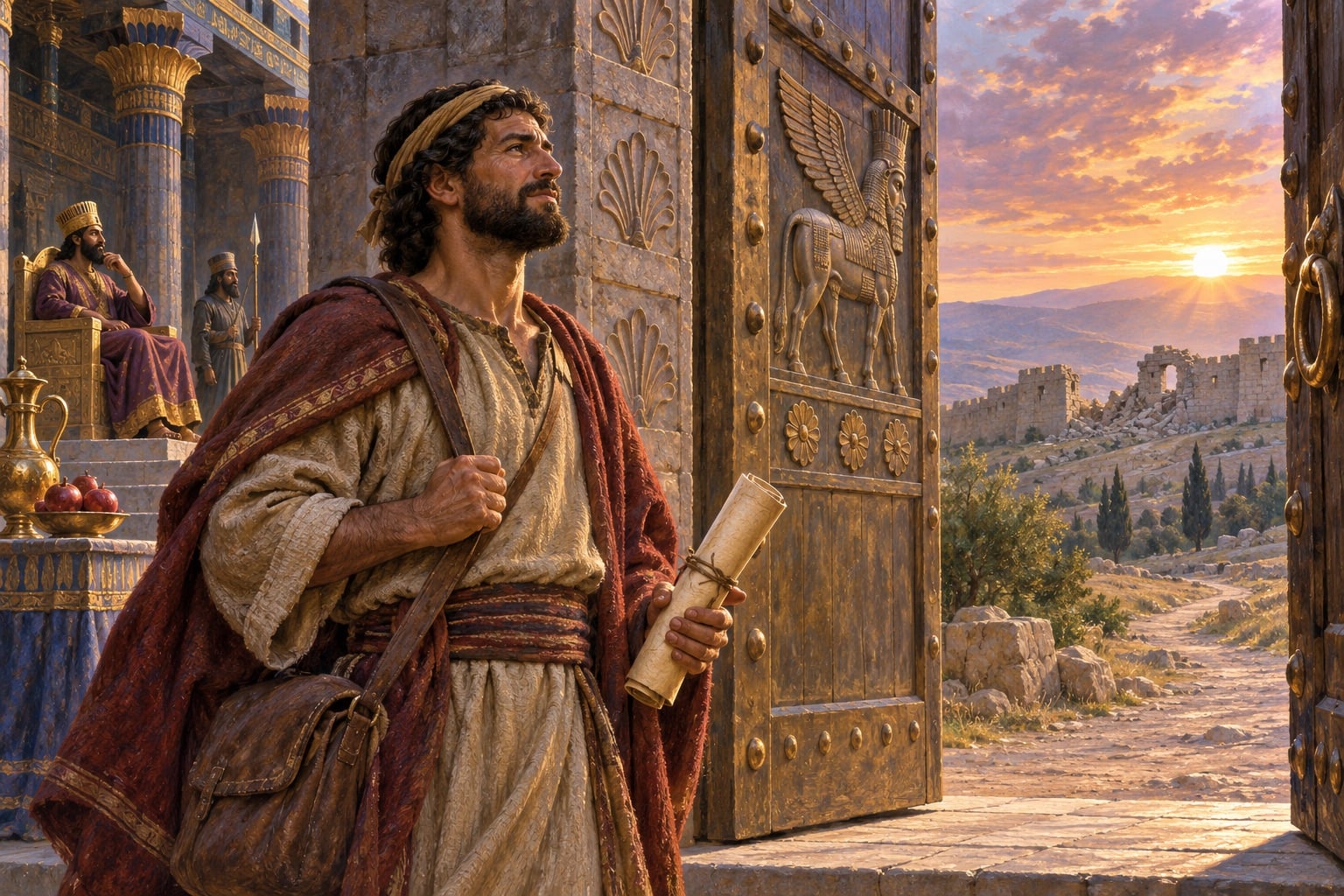
God opens doors, and Nehemiah 2:1–20 shows us how prayer and preparation help us respond. Nehemiah brings his concern for Jerusalem before the king, makes specific requests, examines the work ahead, and invites others to rebuild. His example joins faith with wise action.
Have you ever stood before a closed door, wondering whether it would open? Perhaps you hoped to serve in a new way, repair a relationship, or help your church meet a need. Waiting can test our patience. Yet waiting can also become a season of preparation.
In this second message in Return, Rebuild, Renew — A Journey Through Nehemiah, the burden of chapter 1 begins to take shape as a plan. God uses a cupbearer who prays, prepares, and proceeds with courage.
Boldness in Vision: See What Needs to Change
Nehemiah 2 opens in the month of Nisan, about four months after Nehemiah heard the news of Jerusalem’s broken walls. During that season, he continued serving the king while carrying his concern before God.
Then the king notices his sadness. Nehemiah admits that he is afraid, but he explains why his ancestral city’s condition troubles him. He asks for permission to go to Judah and rebuild it (Nehemiah 2:1–5).
Nehemiah sees both the damage and the possibility of restoration. His vision grows from concern for real people in a real place. He wants more than an impressive project. He wants to help a vulnerable community rebuild.
We can begin in the same way. Before asking how to launch something bigger, ask who needs care. What problem keeps coming to your attention? What would faithful service look like there?
Not every strong desire is a calling. Therefore, bring your concern to Scripture, prayer, and wise counsel. A vision worth pursuing should serve God’s purposes and the good of others.
Boldness in Prayer: Turn to God Under Pressure
“Then the king asked me, ‘What is your request?’ So I prayed to the God of the heavens.” — Nehemiah 2:4 (CSB)
The conversation moves quickly. The king asks a direct question, and Nehemiah prays before answering. A brief prayer in a tense moment grows out of a longer habit of seeking God.
We often want confidence before a difficult conversation. Nehemiah shows us that we can pray while we are still afraid. Courage can mean answering honestly with a trembling voice.
Think of a firefighter who trains long before an emergency. Preparation shapes the response when there is little time to think. Likewise, daily prayer helps turn our hearts toward God when pressure rises.
Before your next difficult conversation, set aside time to pray. Then, in the moment, you can offer a simple request: “Lord, give me wisdom.” “Help me speak truth with kindness.” “Show me how to listen.”
Prayer belongs in the meeting, the family conversation, and the decision. We do not have to leave God out of the moment when we most need his help.
Boldness in Planning: Prepare Before the Door Opens
When the king asks what he needs, Nehemiah has an answer. He gives a time for his return. He requests letters for safe passage and timber for the work. He credits the king’s favorable response to God’s gracious hand (Nehemiah 2:6–8).
Prayer and planning work together here. Nehemiah depends on God while thinking carefully about the task. His preparation turns a general burden into specific requests.
When God opens doors, preparation helps us recognize what responsible action requires. Nehemiah offers six useful practices.
1. Remain Faithful in Your Present Responsibilities
Nehemiah continues serving as cupbearer during the waiting season. His present work matters even while he hopes for a different assignment. Likewise, keep the commitments already in your care as you explore what comes next.
2. Practice Prayer Before the Pressure Comes
Make space to pray regularly. Name the need, examine your motives, and ask for wisdom. A steady prayer life gives you a place to return when an unexpected opportunity arrives.
3. Define the Request Clearly
Nehemiah asks for permission, letters, and timber. In the same way, identify what your next step actually requires. Write down the purpose, the people it will serve, and the resources you need.
4. Give the Work a Realistic Timeline
The king asks when Nehemiah will return, and Nehemiah gives him a definite time. A timeline makes a plan easier to assess. It also helps others understand the commitment you are asking them to support.
5. Consider Possible Resistance
Sanballat and Tobiah resent the effort to help the Israelites (Nehemiah 2:10). Nehemiah must face that opposition. However, resistance alone does not prove that a plan is right. Listen carefully, distinguish useful correction from hostility, and keep seeking wisdom.
6. Examine the Situation Before Announcing the Plan
After arriving in Jerusalem, Nehemiah quietly inspects the walls at night. He looks at the damage before gathering the people (Nehemiah 2:11–16). Good leadership takes time to understand the need.
Before making promises, ask questions. Learn what others have already tried. Look honestly at the cost, the risks, and the help available. Careful research can become an act of love for the people your plan will affect.
Boldness in Movement: Act With Others
Once Nehemiah understands the situation, he invites the people to rebuild. He tells them about God’s gracious hand and the king’s support. They respond by committing themselves to the work (Nehemiah 2:17–18).
The vision becomes shared work. Nehemiah cannot rebuild Jerusalem by himself, and he does not ask the people merely to applaud his dream. He invites them to take part.
Opposition soon follows. Sanballat, Tobiah, and Geshem mock the effort and question their motives. Nehemiah answers with confidence in God and a clear commitment to begin rebuilding (Nehemiah 2:19–20).
We also need courage to take a wise next step without universal approval. At the same time, humility keeps us open to counsel. Faithful action joins resolve with a willingness to learn.
How to Respond When God Opens Doors
Nehemiah’s story gives us four connected practices: see the need, pray for wisdom, prepare carefully, and act with courage. It does not promise that every request will receive a yes or that every project will succeed as we expect.
Instead, it calls us to faithful readiness. This week, choose one step you can take:
- Clarify the burden: Write one sentence describing the need and whom you hope to serve.
- Pray specifically: Ask God for wisdom, humility, and courage.
- Prepare a simple plan: Identify the next action, needed resources, and a realistic time.
- Invite wise support: Talk with someone who can offer honest counsel and practical help.
God opens doors in ways we cannot manufacture. Our part is to remain faithful, prepare responsibly, and respond when a wise opportunity to serve becomes clear.
A Prayer for Courage and Preparation
Lord, help me see the needs around me clearly. Teach me to pray before I act and to prepare while I wait. Give me humility to receive counsel and courage to take the next faithful step. Like Nehemiah, may I serve with a clear purpose and trust in your gracious hand. In Jesus’ name, amen.
Related Posts
- Lifelong Leadership Development
- How to Develop a Strategic Prayer Life
- How to Embrace the Call to “Go”
Image is from OpenAI.
Relationships and Religion
Previous Post

July 24, 2026
A Heart That Breaks
Browse Our Archives
Select a Category 1 Chronicles 1 Corinthians 1 John 1 Kings 1 Peter 1 Samuel 1 Thessalonians 1 Timothy 2 Chronicles 2 Corinthians 2 John 2 Kings 2 Peter 2 Samuel 2 Thessalonians 2 Timothy 3 John Acts Advent Amos Book Review Colossians Comics Culture Watch Daniel Deuteronomy Ecclesiastes Ephesians Esther Exodus Ezekiel Ezra Galatians Genesis Guest Post Habakkuk Haggai Hebrews Hosea Humor Inspiritational Isaiah James Jeremiah Job Joel John Jonah Joshua Jude Judges Lamentations Lectionary Lent Leviticus Link Love Luke Malachi Mark Matthew Micah Movie Review Nahum Nehemiah Numbers Philippians Political Watch Prophecy Watch Proverbs Psalm Revelation Reviews Romans Ruth Science Watch Sermon Series Sermons Simple Thoughts Song of Solomon Titus Top Ten Uncategorized Video Review Zechariah Zephaniah
Select a Month July 2026 June 2026 May 2026 October 2025 September 2025 June 2025 February 2025 January 2025 November 2024 October 2024 September 2024 July 2024 June 2024 April 2024 March 2024 January 2024 November 2023 October 2023 September 2023 June 2023 May 2023 March 2023 February 2023 January 2023 December 2022 October 2022 September 2022 August 2022 July 2022 June 2022 May 2022 January 2022 June 2021 January 2021 October 2020 July 2020 May 2020 April 2020 March 2020 February 2020 January 2020 December 2019 November 2019 October 2019 September 2019 August 2019 July 2019 June 2019 May 2019 April 2019 March 2019 February 2019 January 2019 December 2018 November 2018 October 2018 September 2018 August 2018 July 2018 June 2018 May 2018 April 2018 March 2018 February 2018 January 2018 December 2017 November 2017 October 2017 September 2017 August 2017 July 2017 June 2017 May 2017 April 2017 March 2017 February 2017 January 2017 December 2016 November 2016 October 2016 September 2016 August 2016 July 2016 June 2016 May 2016 April 2016 March 2016 February 2016 January 2016 December 2015 November 2015 October 2015 September 2015 August 2015 July 2015 June 2015 May 2015 April 2015 March 2015 February 2015 January 2015 December 2014 November 2014 October 2014 September 2014 August 2014 July 2014 June 2014 May 2014 April 2014 March 2014 February 2014 January 2014 December 2013 November 2013 October 2013 September 2013 August 2013 July 2013 June 2013 May 2013 April 2013 February 2013 January 2013 December 2012 November 2012 October 2012 September 2012 August 2012 July 2012 June 2012 May 2012 April 2009 June 2008 October 2007 September 2007 August 2007 July 2007 June 2007 May 2007 April 2007 March 2007 February 2007 January 2007 December 2006 October 2006 September 2006 May 2006 April 2006 March 2006 February 2006 January 2006 December 2005 September 2005
Follow Us!
TAKE THE
Religious Wisdom Quiz
True or False: Romans teaches that whoever calls on the name of the Lord will be saved.
Select your answer to see how you score.
TRUE FALSE
Related posts from Jim Erwin

Like a Tree: Living the Rooted and Fruitful...

TRENDING AT PATHEOS Evangelical

Are You a Scrooge or an Ebenezer?
A Call to Remember As the Christmas season rings in, will we...

Noah’s Ark Archaeologists: Gopher Wood or Should We...
Ancient wood, a boat-shaped formation and dates that invite a second look:...

Smart people saying smart things (11.24.26)
Please take time to listen to Perry Bacon, Sarah Posner, Adam Serwer,...

The Contingency of Our Technology
Last week we were hit with a raft of massive technology outages....

In 1939, President Franklin D. Roosevelt moved Thanksgiving from November 30 to...

Reasons for Restraint: Ricardo Gonzalez, Florida and Dec...
The Morning of January 3 I begin with the dead. On the...
view all Evangelical blogs
Ad-Free & Subscriber Log-In Subscription Support
- About Us
- 2026 Calendar
- Videos
- Podcasts
- Library of World Religions
- Faith In Media Tracker
- Advertise With Us
- Write for Us
- Privacy Policy
- Terms of Service
- Do Not Sell My Data
- Contact Us
- Radiant Digital
- Manage Newsletter Subscriptions
- Unsubscribe From Notifications
- Sitemap
Copyright 2008-2026, Patheos, part of the Radiant Digital network of media brands. All rights reserved.
Subscription Support Ad-Free & Subscriber Log-In
Follow Patheos