
BuddhistCatholicContemplativeEvangelicalGeneral ChristianHinduJewishLatter-day SaintMuslimNew VisionsProgressive Christian
Beliefs
- Buddhist
- Catholic
- Contemplative
- Evangelical
- General Christian
- Hindu
- Jewish
- Latter-day Saint
- More Voices
- Muslim
- New Visions
- Pagan
- Progressive Christian
Topics
- Religion News
- Food and Religion
- Sports and Religion
- Religious Art
- Religious Music and Entertainment
- Religious Events
- History and Religion
- Style and Religion
- Politics and Religion
- Women in Religion
- Recreation Outdoors and Religion
- Business Finance and Religion
- Careers Workplace and Religion
- Education and Religion
- Family Parenting and Religion
- Health Fitness and Religion
- Home and Religion
- Relationships and Religion
- Technology and Religion
- Travel and Religion
Columnists
- Buddhist Columnists
- Business Finance and Religion Columnists
- Careers Workplace and Religion Columnists
- Catholic Columnists
- Contemplative Columnists
- Education and Religion Columnists
- Evangelists Columnists
- Family Parenting and Religion Columnists
- General Christian Columnists
- Health Fitness and Religion Columnists
- Hindu Columnists
- History and Religion Columnists
- Home and Religion Columnists
- Jewish Columnists
- More Voices Columnists
- Latter Day Columnists
- Muslim Columnists
- New Visions Columnists
- Nonreligious Columnists
- Pagan Columnists
- Politics and Religion Columnists
- Progressive Columnists
- Recreation Outdoors and Religion Columnists
- Relationships and Religion Columnists
- Religion News Columnists
- Religious Art Columnists
- Religious Events Columnists
- Religious Music and Entertainment Columnists
- Sports and Religion Columnists
- Style and Religion Columnists
- Technology and Religion Columnists
- Travel and Religion Columnists
- Women in Religion Columnists
Resource Library
- 2026 Calendar
- Library of World Religions
- The 100 Most Holy Places on Earth
- Patheos Answers
- Podcasts
- Videos
- Faith Leaders Database
- Anglican Episcopalian
- Bahai
- Baptist
- Buddhism
- Christianity
- Confucianism
- Eastern Orthodoxy
- Hinduism
- Holiness and Pentecostal
- ISKCON
- Islam
- Judaism
- Lutheran
- Methodist
- The Church of Jesus Christ of Latter-day Saints
- New Age
- Paganism
- Presbytarian and Reformed
- Protestantism
- Religion Behind the Scenes
- Roman Catholic
- Scientology
- Shia Islam
- Sikhism
- Sufism
- Sunni Islam
- Taoism
- Zen
- See all religions
Research Tools
 Ad-Free & Subscriber Log-In Subscription Support
Ad-Free & Subscriber Log-In Subscription Support
Follow Patheos 

- Trending:
- Forgiveness
- |
- Marriage
- |
- Consciousness
- |
- Death Penalty
- |
- Election
- |
- Halloween

- Home
- Evangelical
- How to Respond to My Pro-Choice Friends
How to Respond to My Pro-Choice Friends
Last updated on: June 14, 2022 at 10:19 pm by Jim Erwin
How to Respond to My Pro-Choice Friends 2022-06-14T22:19:41-05:00 Jim Erwin
Patheos Explore the world's faith through different perspectives on religion and spirituality! Patheos has the views of the prevalent religions and spiritualities of the world.
How to Respond to My Pro-Choice Friends
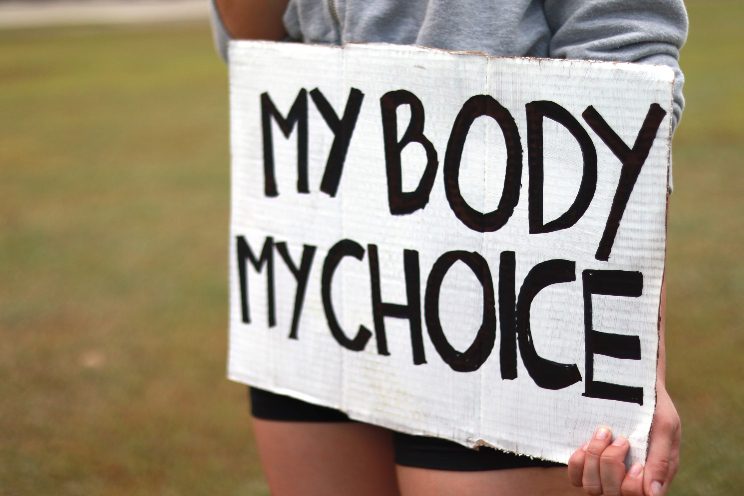
How to Respond to My Pro-Choice Friends (Psalm 139:13-16), is the first in a series of sermons on “How to Engage with My Spiritual Friends.” This sermon will deal with how to respond to those who are pro-choice and pro-abortion. Over the next couple of months, I am going to share with you a series about how to respond to different groups of people, people who may be different than you and me. I am going to share with you the idea of “apologetics.” Yes, the word comes from apology. However, the idea is to defend the faith.
Introduction
Let me say at the beginning of this series a theme that will run through this series. First, we will be encountering Christians who have different views than we are used to. I will be addressing these groups and how to approach them from a Biblical worldview. They will include pro-choice Christians, the LGBT Christian, the spiritual but not religious, for example.
Second, we live in a world that expects us to put up walls and fight one another, even within our own group, clan, and tribe. We are now at a time of our history where different kinds and stripes of Christians will be in opposition with one another. So, like the people I am going to address today. You will have Christian neighbors who think different than you do about certain ideas. You will disagree with them. How do you deal with them but stay faithful to the true calling that Christ has given us?
Third, we need to be people of compassion. Just because I disagree with someone, it doesn’t mean I don’t help them when they have a need. You are going to find that there are people, especially younger generations, who you will fundamentally disagree with. But when you see they have a need, you need to put your disagreements aside and help them. This is the thrust of the story of the “Good Samaritan.” You are different than other Christians, but you still show compassion to them.
Christian Civility
Your neighbors may think of Christians as always attacking others, like we are always on the offense. However, we are often going to be on the defense. If you are on the offense, you are going to been as offensive. If you take time listen first and then defend your faith, you will be in a better situation with others around you. I spent time praying and thinking about the groups of people I should use in this series, and decided to begin with those around us who are pro-choice. The terms pro-choice and pro-abortion will be used perhaps interchangeably. Let me make this clear. I am anti-abortion. However, as Christians we need to learn to be civil with others. Let me share with you the Biblical basis because Christians believe in anti-abortion or pro-life.
Let me clarify that God is the God of life. God is all about life, not death. He created Adam and Eve and told them to live and be fruitful. God loved you to save you and me for eternal life but before that He chose us to live life. He created us to live a life to the full. Jesus came to give us life and to live it to the full. As a result, Christians should be in favor of all the living. When we encounter people who may choose to say they are “pro-choice” or “pro-abortion” even if they say they are a Christian, how should you and I respond? Here, we see five related responses one can share with our pro-choice pro-abortion friends about the nature of the unborn.
FIVE RESPONSES TO MY PRO-CHOICE NEIGHBOR ABOUT THE LIFE OF THE UNBORN
God creates life (Psalm 139:13)
“For it was you who created my inward parts; you knit me together in my mother’s womb.” (Psalm 139:13, CSB)
Here we see the handiwork of God even before birth. Abortionists will say that life begins after the child exits the womb. The Bible teaches that life begins before that point. Creation begins in the womb. The reason that Eve means the mother of all the living is because the living would come from insider her. Here David is reflecting on the goodness of God. He recognizes that God created Him, even though his mother gave birth to him. God creates life.
One can emphasize the fact that Christians don’t murder which comes from Exodus 20. However, when you place it in the idea that the baby in the womb is life, you emphasize the positive nature of God’s work.
Every life is precious because God’s workmanship is a form of art. (Psalm 139:14)
“I will praise you because I have been remarkably and wondrously made. Your works are wondrous, and I know this very well.” (Psalm 139:14, CSB)
The emphasis in Psalm 139 is not simply on the quality of the workmanship (“fearfully and wonderfully made”), but instead on the mystery of human creation itself. The psalmist acknowledges that human creation, from its beginning, is a mystery and a wonder known only to God.[1]
God is the artist, and I am the art. God is often shown as the potter and we are described as the clay. The idea being that God forms us and establishes how we will be. Every person is unique, every canvas is different, every life is special.
God as the Artist in Creation
Contrast the creation of the first man according to Genesis 2 with the creation of the first human beings according to Mesopotamian tradition. Both start with dust or clay, but then the accounts vary.
In the Mesopotamian creation account, Enuma Elish, humanity’s dust is mixed with the blood of a demon god killed for his treachery against the second generation of gods. Humans are demons from the time they’re born. According to Atrahasis, the second ingredient is the spit of the gods, a far cry from the glorious breath of the biblical Creator!
The creation process according to Mesopotamian tradition fits well with the overall low view of humanity professed by that culture. According to Atrahasis, humans were created with the express purpose of relieving the lesser gods from the arduous labor of digging irrigation ditches.
By contrast, the Genesis account teaches that human beings, both male and female, were created in the image of God to rule over every living thing that has the breath of life in it (Genesis 1:30).[2]
Even if I can’t see the baby, the baby is still precious in God’s eyes. (Psalm 139:15)
“My bones were not hidden from you when I was made in secret, when I was formed in the depths of the earth.” (Psalm 139:15, CSB)
The verb “raqam” רָקַם is a technical term for embroidery used frequently in the directions for making the tabernacle in Exodus.[3] David is essentially being reminded that as a baby, we are a tapestry of life in God’s eyes. This imagery refers to Psalm 139:13 where David says that he was knit together.
The reference to being shaped in the lowest parts of the earth echoes the creation story in Genesis 2, where we read, “then the Lord God formed the human (ʾāḏām) from the dust of the ground (ʾadāmâ)” (Gen. 2:7).[4]
In the Hebrew, the word for depths of the earth would seem to be the mother’s womb in context. This “being formed” is like the words Jeremiah said about his call.
“I chose you before I formed you in the womb…set you apart before you were born…appointed you a prophet to the nations.” (Jeremiah 1:5, CSB)
God considers the unborn so special that He sets them apart for service even before they are born.
God sees me and knows me before I was born (Psalm 139:16)
“Your eyes saw me when I was formless…” (Psalm 139:16, CSB)
Here we see a progression in the life of a baby in the womb of the mother. In Psalm 139:13, the word “created/knit” is a picture of conception. In Psalm 139:14, the word “made,” evoking the imagery of a potter and clay, also is a picture of conception. The next stage of development is revealed in Psalm 139:15, where the phrase “my frame” illustrates the embryo/fetus. Finally, in Psalm 139:16, the word “formless” alludes to the microscopic nature of the embryo, which cannot be seen with the naked eye.
Golem
The Hebrew word golem, a hapax legomenon, appears only here in the Old Testament. In Babylonian Aramaic, the term refers to a formless mass or an incomplete vessel. The word’s later use in the Talmud suggests the term could be construed as meaning “embryo” or something that was formless or shapeless. In this context golem is better understood as parallel to “my frame” (‘otsem) in verse 15a, with both terms referring to a human in its embryonic state.[5]
While the Psalm was clearly written before modern science was invented, the words describe a process very similar to the nine months of gestation for a baby. In other words, the writers knew, even without the invention of ultrasound technology that the baby is alive in the mother’s womb.
The word “golem” that is used for “formless” is unique to this verse. It only occurs here in the Old Testament. Golem does not have the same meaning as you might be thinking. Modern uses come from legends related to the word’s use in Judaism. Many take golem today and remember the character from The Hobbit, or some may know it’s meaning about being a robot. Yet the original meaning of this word is what we would come to know as “embryo.”
The word literally means “substance that is yet unperfect.” In other words, a clean slate on which God is creating life. Before the genetic code that we think of in science takes hold of you and makes you who you are, God is there watching over you.
God knows the direction of my life (Psalm 139:16)
“…all my days were written in your book and planned before a single one of them began.” (Psalm 139:16, CSB)
This part of the verse may disturb some people. How can my child’s days be written before one began if my child dies in the womb? Miscarriage is a traumatic experience, and it is not one that people can dismiss easily. Some books are very thick, and some are only a page long. Some works of the New Testament are almost thirty chapters, and some are just a few paragraphs. Does that make the works insignificant? Absolutely not. The same is true with life. All life. Whether in the womb or after birth, are significant.
Conclusion
Let me end by sharing that the goal of sharing this message with you today is to recognize that on one hand, we need to stay true to our convictions as Christians, to the Christian faith as we see it. However, we need to recognize that our neighbors may not see it the same way. This will take understanding. In his book 7 Habits of Highly Effective People, Steven Covey (who is a Mormon) shared that the first habit of successful people is to first “seek to understand” then to “be understood.”
This means that when we encounter our neighbors, our goal is not immediately to go into conversion mode. We don’t work these people like a program. We don’t try to convert everyone to our way of thinking immediately. As I am going to share with every single one of these groups in the series, it will take us making the effort to understand our neighbors, even when we disagree with them. This will take learning to understand them as fellow human beings, even if they are fellow Christians. Our witness will never be effective if we are just trying to “get people on our side.” We can’t just dismiss people if they are different than us, culturally, politically, spiritually. We need to be ready to build relationships with them so that with understanding, we can truly be ready to share our faith and see God work.
[1] W. Dennis Tucker Jr., “Psalms 107–150,” in Psalms, ed. Terry Muck, vol. 2, The NIV Application Commentary (Grand Rapids, MI: Zondervan, 2018), 921.
[2] Craig Brian Larson and Phyllis Ten Elshof, 1001 Illustrations That Connect (Grand Rapids, MI: Zondervan Publishing House, 2008), 51. Originally from: Tremper Longman III, Immanuel in Our Place (P&R, 2001).
[3] Daniel J. Estes, Psalms 73–150, ed. E. Ray. Clendenen, vol. 13, New American Commentary (Nashville, TN: B&H Publishing Group, 2019). Originally from: Hossfeld and Zenger, Psalms 3, 542. observe that the verb רָקַם is a technical term for embroidery used frequently in the directions for making the tabernacle in Exodus.
[4] Nancy deClaissé-Walford, Rolf A. Jacobson, and Beth LaNeel Tanner, “The Songs of the Ascents: Psalms,” in The Book of Psalms, ed. E. J. Young, R. K. Harrison, and Robert L. Hubbard Jr., The New International Commentary on the Old Testament (Grand Rapids, MI; Cambridge, U.K.: William B. Eerdmans Publishing Company, 2014), 965.
[5] W. Dennis Tucker Jr., “Psalms 107–150,” in Psalms, ed. Terry Muck, vol. 2, The NIV Application Commentary (Grand Rapids, MI: Zondervan, 2018), 922. “גֹּלֶם,” HALOT 1:194. Hossfeld and Zenger, Psalms 3, 542.
Previous Post

January 9, 2022
How the Church Can Work Together Like a DREAM
Next Post

May 22, 2022 Sermon Preparation by Reflection
Browse Our Archives
Select a Category 1 Chronicles 1 Corinthians 1 John 1 Kings 1 Peter 1 Samuel 1 Thessalonians 1 Timothy 2 Chronicles 2 Corinthians 2 John 2 Kings 2 Peter 2 Samuel 2 Thessalonians 2 Timothy 3 John Acts Advent Amos Book Review Colossians Comics Culture Watch Daniel Deuteronomy Ecclesiastes Ephesians Esther Exodus Ezekiel Ezra Galatians Genesis Guest Post Habakkuk Haggai Hebrews Hosea Humor Inspiritational Isaiah James Jeremiah Job Joel John Jonah Joshua Jude Judges Lamentations Lectionary Lent Leviticus Link Love Luke Malachi Mark Matthew Micah Movie Review Nahum Nehemiah Numbers Philippians Political Watch Prophecy Watch Proverbs Psalm Revelation Reviews Romans Ruth Science Watch Sermon Series Sermons Simple Thoughts Song of Solomon Titus Top Ten Uncategorized Video Review Zechariah Zephaniah
Select a Month May 2026 October 2025 September 2025 June 2025 February 2025 January 2025 November 2024 October 2024 September 2024 July 2024 June 2024 April 2024 March 2024 January 2024 November 2023 October 2023 September 2023 June 2023 May 2023 March 2023 February 2023 January 2023 December 2022 October 2022 September 2022 August 2022 July 2022 June 2022 May 2022 January 2022 June 2021 January 2021 October 2020 July 2020 May 2020 April 2020 March 2020 February 2020 January 2020 December 2019 November 2019 October 2019 September 2019 August 2019 July 2019 June 2019 May 2019 April 2019 March 2019 February 2019 January 2019 December 2018 November 2018 October 2018 September 2018 August 2018 July 2018 June 2018 May 2018 April 2018 March 2018 February 2018 January 2018 December 2017 November 2017 October 2017 September 2017 August 2017 July 2017 June 2017 May 2017 April 2017 March 2017 February 2017 January 2017 December 2016 November 2016 October 2016 September 2016 August 2016 July 2016 June 2016 May 2016 April 2016 March 2016 February 2016 January 2016 December 2015 November 2015 October 2015 September 2015 August 2015 July 2015 June 2015 May 2015 April 2015 March 2015 February 2015 January 2015 December 2014 November 2014 October 2014 September 2014 August 2014 July 2014 June 2014 May 2014 April 2014 March 2014 February 2014 January 2014 December 2013 November 2013 October 2013 September 2013 August 2013 July 2013 June 2013 May 2013 April 2013 February 2013 January 2013 December 2012 November 2012 October 2012 September 2012 August 2012 July 2012 June 2012 May 2012 April 2009 June 2008 October 2007 September 2007 August 2007 July 2007 June 2007 May 2007 April 2007 March 2007 February 2007 January 2007 December 2006 October 2006 September 2006 May 2006 April 2006 March 2006 February 2006 January 2006 December 2005 September 2005
Follow Us!
TAKE THE
Religious Wisdom Quiz
What happened when Jesus touched the coffin of the widow's son at Nain?
Select your answer to see how you score.
The son came back to life The crowd dispersed The coffin broke Rain fell
Related posts from Jim Erwin


The Obedient Servant in Suffering


The Global Mission of the Servant
TRENDING AT PATHEOS Evangelical

'Super Scam Me' Exposes AI Jon Bon Jovi...
Leslie Pickett believed she was in a relationship with Jon Bon Jovi....

The Brazilian Remake of Kendricks' 'Flywheel' Opens in...
“Flywheel,” the story that launched the Kendrick Brothers’ filmmaking career is getting...

The Dangers of Gradual Accommodation (Winking at Sin)
Recently, the “law of gradualness” resurfaced during the opening of a weeklong,...

The Iron Gates and the Lion of the...
Yesterday, I didn't finish my report about, well, yesterday. So I'll...

The Image: On the Horror of Capitalism and...
The Image Then went the Pharisees, and took counsel how they might...

We are approaching the date of our new American national holiday: October...
view all Evangelical blogs
Ad-Free & Subscriber Log-In Subscription Support
- About Us
- 2026 Calendar
- Videos
- Podcasts
- Library of World Religions
- Faith In Media Tracker
- Advertise With Us
- Write for Us
- Privacy Policy
- Terms of Service
- Do Not Sell My Data
- Contact Us
- Radiant Digital
- Manage Newsletter Subscriptions
- Unsubscribe From Notifications
- Sitemap
Copyright 2008-2026, Patheos. All rights reserved.
Subscription Support Ad-Free & Subscriber Log-In
Follow Patheos