
BuddhistCatholicContemplativeEvangelicalGeneral ChristianHinduJewishLatter-day SaintMuslimNew VisionsProgressive Christian
Beliefs
- Buddhist
- Catholic
- Contemplative
- Evangelical
- General Christian
- Hindu
- Jewish
- Latter-day Saint
- More Voices
- Muslim
- New Visions
- Pagan
- Progressive Christian
Topics
- Religion News
- Food and Religion
- Sports and Religion
- Religious Art
- Religious Music and Entertainment
- Religious Events
- History and Religion
- Style and Religion
- Politics and Religion
- Women in Religion
- Recreation Outdoors and Religion
- Business Finance and Religion
- Careers Workplace and Religion
- Education and Religion
- Family Parenting and Religion
- Health Fitness and Religion
- Home and Religion
- Relationships and Religion
- Technology and Religion
- Travel and Religion
Columnists
- Buddhist Columnists
- Business Finance and Religion Columnists
- Careers Workplace and Religion Columnists
- Catholic Columnists
- Contemplative Columnists
- Education and Religion Columnists
- Evangelists Columnists
- Family Parenting and Religion Columnists
- General Christian Columnists
- Health Fitness and Religion Columnists
- Hindu Columnists
- History and Religion Columnists
- Home and Religion Columnists
- Jewish Columnists
- More Voices Columnists
- Latter Day Columnists
- Muslim Columnists
- New Visions Columnists
- Nonreligious Columnists
- Pagan Columnists
- Politics and Religion Columnists
- Progressive Columnists
- Recreation Outdoors and Religion Columnists
- Relationships and Religion Columnists
- Religion News Columnists
- Religious Art Columnists
- Religious Events Columnists
- Religious Music and Entertainment Columnists
- Sports and Religion Columnists
- Style and Religion Columnists
- Technology and Religion Columnists
- Travel and Religion Columnists
- Women in Religion Columnists
Resource Library
- 2026 Calendar
- Library of World Religions
- The 100 Most Holy Places on Earth
- Patheos Answers
- Podcasts
- Videos
- Faith Leaders Database
- Anglican Episcopalian
- Bahai
- Baptist
- Buddhism
- Christianity
- Confucianism
- Eastern Orthodoxy
- Hinduism
- Holiness and Pentecostal
- ISKCON
- Islam
- Judaism
- Lutheran
- Methodist
- The Church of Jesus Christ of Latter-day Saints
- New Age
- Paganism
- Presbytarian and Reformed
- Protestantism
- Religion Behind the Scenes
- Roman Catholic
- Scientology
- Shia Islam
- Sikhism
- Sufism
- Sunni Islam
- Taoism
- Zen
- See all religions
Research Tools
 Ad-Free & Subscriber Log-In Subscription Support
Follow Patheos 

- Trending:
- Advent
- |
- Forgiveness
- |
- Thanksgiving
- |
- Election
- |
- Seasonal Holidays
- |
- Marriage

- Home
- Evangelical
- Submitting to the Authority of Jesus Christ in My Life
Submitting to the Authority of Jesus Christ in My Life
Last updated on: July 9, 2018 at 9:31 am by Jim Erwin
Submitting to the Authority of Jesus Christ in My Life 2018-07-09T09:31:42-05:00 Jim Erwin
Patheos Explore the world's faith through different perspectives on religion and spirituality! Patheos has the views of the prevalent religions and spiritualities of the world.
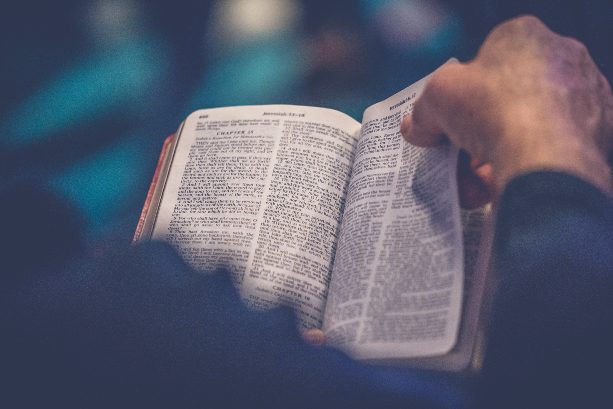
Submitting to the Authority of Jesus Christ in My Life
Mark 1:12-28
We talk about following Jesus and we use the phrase “Savior and Lord.” We talk about this as Baptists as if it were a two-step process. First, Jesus saves me and then I submit to Him as my leader for eternity. We talk about this submission as if it were a process. In some ways, it is a process. It is a process of growth. At the same time, a Christian has to learn to submit to Jesus in every area of their lives as they grow.
In these verses, we see three ARENAS in which Jesus shows authority that He has in my life. As I describe these arenas, perhaps there will be an arena in your life that you have not yet realized that you need to submit to Jesus.
Directly following the glorious experience of hearing the voice of His Father, the Spirit led Jesus into the wilderness. Why? Not to do Him in, but to show Him off. Jon Courson notes how with the following illustration:
Suppose you go to the local Jeep dealer and say, “I’m thinking about buying a Jeep.” After opening the door of his latest model, a salesman would say, “Hop in”—and proceed to drive you to some rough terrain, where he would shift into four-wheel drive and take you off-road—flying over hills, splashing through rivers. Why? Not to damage the car, but to show you what it can do.
So, too, in driving Jesus to the wilderness, the Father was saying, “Watch My Son. No matter what Satan throws at Him, He will come through beautifully.” And the same thing is true of you and me. You see, only what the Father allows can come into our lives. Therefore, when temptations, trials, difficulties, wilderness experiences, hard times come our way, it is because the Father has allowed them in order to silence Satan’s accusation that you only serve God in easy times and to show you off to a doubting world.1
THE AUTHORITY OF JESUS OVER THREE SPIRITUAL ARENAS IN LIFE
The authority of Jesus in the arena of temptation (Mark 1:12-13)
“Immediately the Spirit drove him into the wilderness. He was in the wilderness forty days, being tempted by Satan. He was with the wild animals, and the angels were serving him.” (Mark 1:12–13, CSB)
Even before Internet pornography, rampant materialism, and online gambling, there was temptation. Even Jesus faced it, and in studying His example, we can learn a lot about being victors.
DEALING WITH TEMPTATION2
1. Temptation can come to us immediately.
Two truths reminds us of the immediate nature of temptation. (1) Living a life that pleases God does not exempt us from temptation. No sooner had God said, “You are My beloved Son, in whom I am well pleased,” than we read, “Immediately the Spirit drove Him into the wilderness.” (2) Being led by the Spirit doesn’t exempt us from temptation. None of us are exempt. As long as we’re in this body of flesh, we’re going to struggle. The good news is that if we allow the Spirit to lead us, He will empower us to overcome temptation.
“I say then, walk by the Spirit and you will certainly not carry out the desire of the flesh.” (Galatians 5:16, CSB)
2. Temptation is initiated by Satan.
The word tempted has two ideas: An attraction toward sin, and a test or trial. In this case, it was temptation toward sin. Suppose you were given the assignment to expose someone to the temptations of Satan in their most potent form. Where would you take that person? Las Vegas? Hollywood? In the ancient world, the place would have been the city of Corinth, a pagan place full of sensuality and materialism. But the devil took Christ to the desert—no people, no buildings, no activity. Why? To remind us that temptation is not so much outward “stuff,” but first and foremost an inward struggle.
“For from within, out of people’s hearts, come evil thoughts, sexual immoralities, thefts, murders,” (Mark 7:21, CSB)
“No one undergoing a trial should say, “I am being tempted by God,” since God is not tempted by evil, and he himself doesn’t tempt anyone.” (James 1:13, CSB)
My problem with temptation is not the attractive stuff around me; it is a heart problem. My problem is my own evil desire.
3. I am strengthened by God’s servants
Jesus was led by the Spirit and tempted by Satan, but He was not abandoned by God. Perhaps the angels did for Jesus what they had done for Elijah, bringing him bread and water. Somehow they took care of Him. We may wonder if God really cares about our struggles. Yes, He cares and He provides all the assistance we need to be victors over temptation, trials, and troubles.
In this brief snapshot of the temptation of Jesus, we see that He encountered temptation by Satan. Yet, Jesus overcame temptation.
“For we do not have a high priest who is unable to sympathize with our weaknesses, but one who has been tempted in every way as we are, yet without sin.” (Hebrews 4:15, CSB)
Jesus didn’t succumb to Satan’s tricks. He stood against them and overcame them. Because of his sin, the first Adam lost the dominion over nature given to him.
“God blessed them, and God said to them, “Be fruitful, multiply, fill the earth, and subdue it. Rule the fish of the sea, the birds of the sky, and every creature that crawls on the earth.”” (Genesis 1:28, CSB)
Contrast this with the Last Adam, Jesus Christ, to whom dominion is returned as evidenced by the wild beasts that surrounded Him in the wilderness—a sneak preview of the coming kingdom wherein the wolf shall lie down by the lamb.
“The wolf will dwell with the lamb, and the leopard will lie down with the goat. The calf, the young lion, and the fattened calf will be together, and a child will lead them.” (Isaiah 11:6, CSB)
Where Adam failed in the garden, Jesus came through in the desert.3
The authority of Jesus in the arena of sharing the Gospel (Mark 1:14-22)
“After John was arrested, Jesus went to Galilee, proclaiming the good news of God: “The time is fulfilled, and the kingdom of God has come near. Repent and believe the good news!”” (Mark 1:14–15, CSB)
Dallas Willard, in his book The Divine Conspiracy, recalls the following story:
As a child I lived in an area of southern Missouri where electricity was available only in the form of lightning. We had more of that than we could use. But in my senior year of high school, the REA (Rural Electrification Administration) extended its lines into the area where we lived, and electrical power became available to households and farms.
When those lines came by our farm, a very different way of living presented itself. Our relationships to fundamental aspects of life—daylight and dark, hot and cold, clean and dirty, work and leisure, preparing food and preserving it—could then be vastly changed for the better. But we still had to believe in the electricity—and take the practical steps involved in relying on it.
You may think the comparison rather crude, and in some respects it is. But it will help us to understand Jesus’ basic message about the kingdom of heaven if we pause to reflect on those farmers who, in effect, heard the message “Repent, for electricity is at hand.” Repent, or turn from their kerosene lamps and lanterns, their iceboxes and cellars, their scrub-boards and rug beaters, their woman-powered sewing machines and their radios with dry-cell batteries.
The power that could make their lives far better was right there near them where, by making relatively simple arrangements, they could utilize it. Strangely, a few did not accept it. They did not enter the kingdom of electricity. Some just didn’t want to change. Others could not afford it, or so they thought.
To be sure, that kingdom has been here as long as we humans have been here, and longer. But it has been available to us through simple confidence in Jesus, the Anointed, only from the time he became a public figure.4
That simple confidence in Jesus and His message is another arena in which you and I as Christians, we must trust. Like the first disciples, we are asked to change from takers to givers, from self-centered people who look out for “number one” to servants who reach out for God. A major aspect of Mark’s theology centers on the theme of discipleship, and we will be coming back to it again and again.5
Jim Elliot was only twenty-five years old when he went to Ecuador to bring the gospel to the Waodani tribe, a group that had never had any contact with the outside world. He and his companions made contact with the Waodani, but on January 8, 1956, Jim Elliot and four other missionaries were brutally killed by members of the tribe. They were willing to sacrifice everything for Jesus, even their own lives. Elliot once wrote, “He is no fool who gives what he cannot keep to gain that which he cannot lose.”6 When we really know Jesus and the power of the gospel, we are willing to sacrifice everything to be his faithful witnesses in the world. How much are you willing to sacrifice for Jesus?
Notice that in both cases, when Jesus calls people out to be witnesses, to share the Gospel, there is an immediacy to it.
““Follow me,” Jesus told them, “and I will make you fish for people.” Immediately they left their nets and followed him. Going on a little farther, he saw James the son of Zebedee and his brother John in a boat putting their nets in order. Immediately he called them, and they left their father Zebedee in the boat with the hired men and followed him.” (Mark 1:17–20, CSB)
Jesus calls His people to follow Him. He says that He will make them “fish for people.” in other words, He will teach them how to share the Gospel. In both cases in Mark, there is an immediate response. The discipleship process is long, but the decision to follow Jesus is immediate.
Mark is full of urgency. Things happen immediately. Jesus walks beside the Sea of Galilee and people leave their nets to become disciples. One theme of Mark’s Gospel is a readiness to follow Jesus. This opening story perfectly illustrates what is expected in response to the good news.7
In his book Discipleship, Dietrich Bonhoeffer explains the nature of this gracious call from Jesus:
“It comes to us as a gracious call to follow Jesus; it comes as a forgiving word to the fearful spirit and the broken heart. Grace is costly, because it forces people under the yoke of following Jesus Christ; it is grace when Jesus says, “My yoke is easy, and my burden is light.””8
The authority of Jesus in the arena of spirit world (Mark 1:23-28)
The authority of Jesus gives me power in the spirit world. Yet, many times, these come in the form of interruptions.
A minister once observed that sometimes “interruptions are the ministry.” In the book, Before Burnout, the authors point out that Mark’s Gospel provides many examples of Jesus handling interruptions well. After he healed a man with an unclean spirit (Mark 1:21–26), Jesus was suddenly interrupted by an entire city who demanded his attention (1:33). He was then interrupted in the midst of his teaching by four men carrying a paralyzed man (2:1–5). Later Jesus was pursued and interrupted by a large multitude (3:7–9). At one point, after being interrupted by Jairus, Christ was almost immediately interrupted again by a woman with a long-term illness. The Savior compassionately handled all of those interruptions well.9
The way Jesus handled these interruptions gives us a clue to the authority of Jesus over the spirit world. In Mark, the authority of Jesus comes up often. His spiritual authority is challenged, questioned, and then proven throughout the Gospel of Mark.
1. The demonic spirit recognized Jesus’ authority.
“Just then a man with an unclean spirit was in their synagogue. He cried out, “What do you have to do with us, Jesus of Nazareth? Have you come to destroy us? I know who you are—the Holy One of God!”” (Mark 1:23–24, CSB)
2. The scribes and leaders speak with no authority.
“They went into Capernaum, and right away he entered the synagogue on the Sabbath and began to teach. They were astonished at his teaching because he was teaching them as one who had authority, and not like the scribes.” (Mark 1:21–22, CSB)
Yet, Jesus’ authority will continually be questioned, even He will express it in various ways.
For example, Larry Hurtado notes10:
Jesus is shown (a) exhibiting authority in his teaching, (b) exercising authority over the demons, (c) demonstrating his authority to forgive sins, (d) taking authority over the temple and its administration, and (e) conferring authority upon his apostles to expand his attack upon demonic power.
3. The authority of Jesus over the spirit world will amaze people.
“They were all amazed, and so they began to ask each other: “What is this? A new teaching with authority! He commands even the unclean spirits, and they obey him.” At once the news about him spread throughout the entire vicinity of Galilee.” (Mark 1:27–28, CSB)
At the same time, this authority forces us to make a choice. Will we just enjoy the show that Jesus presents? Or will we submit to His authority that He displays?
Are you going to be like the people who are amazed? Or will you be like the demon who knew he had to submit? Which reaction will you have to Jesus’ authority in your life?
1 Jon Courson, Jon Courson’s Application Commentary (Nashville, TN: Thomas Nelson, 2003), 224.
2 Robert J. Morgan, Nelson’s Annual Preacher’s Sourcebook, 2002 Edition. (Nashville: Thomas Nelson Publishers, 2001), 288–289.
3 Jon Courson, Jon Courson’s Application Commentary (Nashville, TN: Thomas Nelson, 2003), 225.
4 Craig Brian Larson and Phyllis Ten Elshof, 1001 Illustrations That Connect (Grand Rapids, MI: Zondervan Publishing House, 2008), 73–74. Originally from Dallas Willard, The Divine Conspiracy (Harper, 1997).
5 Grant R. Osborne, Mark, ed. Mark L. Strauss and John H. Walton, Teach the Text Commentary Series (Grand Rapids, MI: Baker Books, 2014), 27.
6 Quoted in Elisabeth Elliot, The Shadow of the Almighty: The Life and Testament of Jim Elliot (1958; reprint, Peabody, MA: Hendrickson, 2008), 11. The quote comes from a journal entry by Jim Elliot on October 28, 1949. The journal page can be viewed on the website of the Billy Graham Center at Wheaton College, http://www2.wheaton.edu/bgc/archives/faq/20.htm. Found in: Grant R. Osborne, Mark, ed. Mark L. Strauss and John H. Walton, Teach the Text Commentary Series (Grand Rapids, MI: Baker Books, 2014).
7 Phillip McFadyen, Open Door on Mark: His Gospel Explored (London: Triangle, 1997), 4.
8 Dietrich Bonhoeffer, Discipleship, ed. Martin Kuske et al., trans. Barbara Green and Reinhard Krauss, vol. 4, Dietrich Bonhoeffer Works (Minneapolis, MN: Fortress Press, 2003), 45.
9 Robert J. Morgan, Nelson’s Complete Book of Stories, Illustrations, and Quotes, electronic ed. (Nashville: Thomas Nelson Publishers, 2000), 474.
10 Larry W. Hurtado, Mark, Understanding the Bible Commentary Series (Grand Rapids, MI: Baker Books, 2011), 26.
Other Posts:
How to Be a True Christian Witness
The 5 Don’t of the Call of God
Previous Post

June 20, 2018
How to Be a True Christian Witness
Next Post

June 22, 2018 How a Servant Shows Compassion
Browse Our Archives
Select a Category 1 Chronicles 1 Corinthians 1 John 1 Kings 1 Peter 1 Samuel 1 Thessalonians 1 Timothy 2 Chronicles 2 Corinthians 2 John 2 Kings 2 Peter 2 Samuel 2 Thessalonians 2 Timothy 3 John Acts Advent Amos Book Review Colossians Comics Culture Watch Daniel Deuteronomy Ecclesiastes Ephesians Esther Exodus Ezekiel Ezra Galatians Genesis Guest Post Habakkuk Haggai Hebrews Hosea Humor Inspiritational Isaiah James Jeremiah Job Joel John Jonah Joshua Jude Judges Lamentations Lectionary Lent Leviticus Link Love Luke Malachi Mark Matthew Micah Movie Review Nahum Nehemiah Numbers Philippians Political Watch Prophecy Watch Proverbs Psalm Revelation Reviews Romans Ruth Sacratopia Science Watch Sermon Series Sermons Simple Thoughts Song of Solomon Titus Top Ten Uncategorized Video Review Zechariah Zephaniah
Select a Month November 2026 August 2026 July 2026 June 2026 May 2026 October 2025 September 2025 June 2025 February 2025 January 2025 November 2024 October 2024 September 2024 July 2024 June 2024 April 2024 March 2024 January 2024 November 2023 October 2023 September 2023 June 2023 May 2023 March 2023 February 2023 January 2023 December 2022 October 2022 September 2022 August 2022 July 2022 June 2022 May 2022 January 2022 June 2021 January 2021 October 2020 July 2020 May 2020 April 2020 March 2020 February 2020 January 2020 December 2019 November 2019 October 2019 September 2019 August 2019 July 2019 June 2019 May 2019 April 2019 March 2019 February 2019 January 2019 December 2018 November 2018 October 2018 September 2018 August 2018 July 2018 June 2018 May 2018 April 2018 March 2018 February 2018 January 2018 December 2017 November 2017 October 2017 September 2017 August 2017 July 2017 June 2017 May 2017 April 2017 March 2017 February 2017 January 2017 December 2016 November 2016 October 2016 September 2016 August 2016 July 2016 June 2016 May 2016 April 2016 March 2016 February 2016 January 2016 December 2015 November 2015 October 2015 September 2015 August 2015 July 2015 June 2015 May 2015 April 2015 March 2015 February 2015 January 2015 December 2014 November 2014 October 2014 September 2014 August 2014 July 2014 June 2014 May 2014 April 2014 March 2014 February 2014 January 2014 December 2013 November 2013 October 2013 September 2013 August 2013 July 2013 June 2013 May 2013 April 2013 February 2013 January 2013 December 2012 November 2012 October 2012 September 2012 August 2012 July 2012 June 2012 May 2012 April 2009 June 2008 October 2007 September 2007 August 2007 July 2007 June 2007 May 2007 April 2007 March 2007 February 2007 January 2007 December 2006 October 2006 September 2006 May 2006 April 2006 March 2006 February 2006 January 2006 December 2005 September 2005
Follow Us!
TAKE THE
Religious Wisdom Quiz
What does "Elohim" mean in Hebrew?
Select your answer to see how you score.
Holy One Creator God The Almighty
Related posts from Jim Erwin
Finish What God Called You to Start
TRENDING AT PATHEOS Evangelical

Jesus is Coming with Glory and Power
https://www.youtube.com/watch?v=_lt60EDHOQ4&list=RD_lt60EDHOQ4&start_radio=1

The Late Francis Frangipane & the Failure Too...
I learned today that another one of my heroes has gone to...

Thomas Paine, the Smiths, the apostles in England,...
I'm pleased to announce that the Becoming Brigham Black Friday Sale,...

CatholicTV Series: Six Black Catholics on Path to...
WATERTOWN, Mass., November 9, 2026 – In recognition of Black Catholic History...

New Advent Journal Invites Catholics to Be Pilgrims
Florissant, MO, November 16, 2026— What if Advent were more than a...

INNER CIRCLE: John's Quantum Gospel
INTRODUCTION In this next Inner Circle series, which I anticipate will...
view all Evangelical blogs
Ad-Free & Subscriber Log-In Subscription Support
- About Us
- 2026 Calendar
- Videos
- Podcasts
- Library of World Religions
- Faith In Media Tracker
- Advertise With Us
- Write for Us
- Privacy Policy
- Terms of Service
- Do Not Sell My Data
- Contact Us
- Radiant Digital
- Manage Newsletter Subscriptions
- Unsubscribe From Notifications
- Sitemap
Copyright 2008-2026, Patheos, part of the Radiant Digital network of media brands. All rights reserved.
Subscription Support Ad-Free & Subscriber Log-In
Follow Patheos