
BuddhistCatholicContemplativeEvangelicalGeneral ChristianHinduJewishLatter-day SaintMuslimNew VisionsProgressive Christian
Beliefs
- Buddhist
- Catholic
- Contemplative
- Evangelical
- General Christian
- Hindu
- Jewish
- Latter-day Saint
- More Voices
- Muslim
- New Visions
- Pagan
- Progressive Christian
Topics
- Religion News
- Food and Religion
- Sports and Religion
- Religious Art
- Religious Music and Entertainment
- Religious Events
- History and Religion
- Style and Religion
- Politics and Religion
- Women in Religion
- Recreation Outdoors and Religion
- Business Finance and Religion
- Careers Workplace and Religion
- Education and Religion
- Family Parenting and Religion
- Health Fitness and Religion
- Home and Religion
- Relationships and Religion
- Technology and Religion
- Travel and Religion
Columnists
- Buddhist Columnists
- Business Finance and Religion Columnists
- Careers Workplace and Religion Columnists
- Catholic Columnists
- Contemplative Columnists
- Education and Religion Columnists
- Evangelists Columnists
- Family Parenting and Religion Columnists
- General Christian Columnists
- Health Fitness and Religion Columnists
- Hindu Columnists
- History and Religion Columnists
- Home and Religion Columnists
- Jewish Columnists
- More Voices Columnists
- Latter Day Columnists
- Muslim Columnists
- New Visions Columnists
- Nonreligious Columnists
- Pagan Columnists
- Politics and Religion Columnists
- Progressive Columnists
- Recreation Outdoors and Religion Columnists
- Relationships and Religion Columnists
- Religion News Columnists
- Religious Art Columnists
- Religious Events Columnists
- Religious Music and Entertainment Columnists
- Sports and Religion Columnists
- Style and Religion Columnists
- Technology and Religion Columnists
- Travel and Religion Columnists
- Women in Religion Columnists
Resource Library
- 2026 Calendar
- Library of World Religions
- The 100 Most Holy Places on Earth
- Patheos Answers
- Podcasts
- Videos
- Faith Leaders Database
- Anglican Episcopalian
- Bahai
- Baptist
- Buddhism
- Christianity
- Confucianism
- Eastern Orthodoxy
- Hinduism
- Holiness and Pentecostal
- ISKCON
- Islam
- Judaism
- Lutheran
- Methodist
- The Church of Jesus Christ of Latter-day Saints
- New Age
- Paganism
- Presbytarian and Reformed
- Protestantism
- Religion Behind the Scenes
- Roman Catholic
- Scientology
- Shia Islam
- Sikhism
- Sufism
- Sunni Islam
- Taoism
- Zen
- See all religions
Research Tools
 Ad-Free & Subscriber Log-In Subscription Support
Ad-Free & Subscriber Log-In Subscription Support
Follow Patheos 

- Trending:
- Forgiveness
- |
- Marriage
- |
- Consciousness
- |
- Death Penalty
- |
- Election
- |
- Halloween

- Home
- Evangelical
- How to Be a True Christian Witness
How to Be a True Christian Witness
Last updated on: July 9, 2018 at 9:26 am by Jim Erwin
How to Be a True Christian Witness 2018-07-09T09:26:40-05:00 Jim Erwin
Patheos Explore the world's faith through different perspectives on religion and spirituality! Patheos has the views of the prevalent religions and spiritualities of the world.
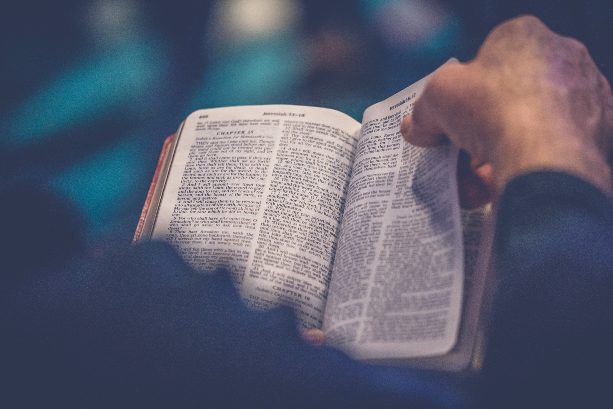
How to Be a True Christian Witness
We begin a new series of the Gospel of Mark. Mark is written with a fast action-packed pace. It’s the Gospel for the attention deficit disorder generation. Mark is written with quick transitions and moves along very quickly. Here, in these verses, we see that Mark quickly reminds us that there are seven traits to being a true Christian witness.
SEVEN TRAITS OF A TRUE CHRISTIAN WITNESS
1. Slave – Bondservant – (Mark 1:1)
“The beginning of the gospel of Jesus Christ, the Son of God.” (Mark 1:1, CSB)
The beginning of the story of Jesus in the Gospel of Mark is absent a family history. In Matthew, He is presented as the true King of Israel and the family tree goes back to Abraham. In Luke, He is presented as the true Man and the family tree goes back to Eve. In John, Jesus is presented as the true God-Man and the family tree is a heavenly description. John emphasizes His deity.
In Mark, there is no family tree. There is no beginning. The reason is that Mark presents Jesus as a slave. Jesus is first and foremost the ultimate example of a slave to God.
Jesus is God’s Son. But in Mark, He acts as God’s Slave. Slaves have no family history. Their history is insignificant. So a true Christian witness will not be concerned about family history. The first allegiance is to Jesus Christ.
In the Gospel of Mark, Jesus is presented as the ultimate example of being a servant of God. In order to be a true Christian witness, one needs to be a servant. Sonship comes with privileges. Servanthood comes with priorities.
2. Self-confidence – Boldness – The author John Mark (Mark 1:1)
“The beginning of the gospel of Jesus Christ, the Son of God.” (Mark 1:1, CSB)
Because I am a slave to God and not to the world. I need to be bold. The first verse reminds us that this book is about the good news of Jesus Christ. Mark wrote this book.
Authorship: Who was Mark?
This Gospel, like Matthew, Luke, and John, does not contain the name of the author.
The internal evidence may suggest a person who wrote the Gospel of Mark:
“Now a certain young man, wearing nothing but a linen cloth, was following him. They caught hold of him, but he left the linen cloth behind and ran away naked.” (Mark 14:51–52, CSB)
Early Christian tradition and modern scholarship hold the author to be John Mark, referred to in Acts 12:12 and Acts 13:13.
“As soon as he realized this, he went to the house of Mary, the mother of John Mark, where many had assembled and were praying.” (Acts 12:12, CSB)
“Paul and his companions set sail from Paphos and came to Perga in Pamphylia, but John left them and went back to Jerusalem.” (Acts 13:13, CSB)
“Aristarchus, my fellow prisoner, sends you greetings, as does Mark, Barnabas’s cousin (concerning whom you have received instructions: if he comes to you, welcome him),” (Colossians 4:10, CSB)
“Only Luke is with me. Bring Mark with you, for he is useful to me in the ministry.” (2 Timothy 4:11, CSB)
“She who is in Babylon, chosen together with you, sends you greetings, as does Mark, my son.” (1 Peter 5:13, CSB)
Since Peter called Mark “my son” (1 Peter 5:13), it is probable that it was Peter who led Mark to faith in Jesus Christ.1
As was frequently done in that day, John had both a Jewish name and a Roman name. John is Jewish, and Mark or Marcus is Roman.2
Because of reference to the destruction of the Temple in Jerusalem (Mark 13:2), the date of composition may be around the time this event occurred, A.D. 70. Because it was written in Greek and interprets phrases in Aramaic (5:41; 7:34; 15:34), the language of Palestine, the original readers were not Palestinians. Explanation of Jewish customs (7:3-4) makes it equally likely that the original readers were Gentiles.3
Purpose: Why did Mark write the letter?
Mark wrote to preserve the story of Jesus after the deaths of first-generation Christians such as Peter.4 Many scholars agree that the Gospel of Mark is actually the Gospel of Peter. By that, I mean that Mark records many of the events that Peter experiences.
3. Scripture – Biblical authority – the Old Testament (Mark 1:2-3)
“As it is written in Isaiah the prophet: See, I am sending my messenger ahead of you; he will prepare your way. A voice of one crying out in the wilderness: Prepare the way for the Lord; make his paths straight!” (Mark 1:2–3, CSB)
Mark begins the Gospel here with a quote from the Old Testament. Mark knew his Old Testament. He even quotes two Old Testament verses but attributes them to Isaiah. Why did he do that? Does that mean that Mark made a mistake? Does it make the Old Testament untrustworthy?
You know how you remember things, don’t you? You merge what you remember together into units. Let me explain. When I talk about movies, I will group them into categories: westerns, comics, science fiction. Within science fiction, I may talk about different sources and merge them. I may talk about Star Wars and refer to any of the eight movies now in the franchise. I may quote Star Wars in general, but the exact quote comes from two different “source” movies.
Mark is doing the same thing. He knows that the Old Testament prophesies about John the Baptist. He knows that they come from two or three sourcebooks. But Mark attributes these quotes to the prophet Isaiah. (In some Bibles, there. is a footnote stating that this comes “from the prophets.”) In other words, its coming from the prophets. He quotes three:
““I am going to send an angel before you to protect you on the way and bring you to the place I have prepared.” (Exodus 23:20, CSB)
“A voice of one crying out: Prepare the way of the Lord in the wilderness; make a straight highway for our God in the desert.” (Isaiah 40:3, CSB)
““See, I am going to send my messenger, and he will clear the way before me. Then the Lord you seek will suddenly come to his temple, the Messenger of the covenant you delight in—see, he is coming,” says the Lord of Armies.” (Malachi 3:1, CSB)
Mark probably quotes three references to show that he believes in the validity of the Old Testament. By quoting these verses, Mark certifies that the Torah (Exodus), the Major Prophets (Isaiah), and the Minor Prophets (Malachi) confirm what he is about to tell.5
Since Isaiah wrote the larger work, Mark attributes the source from Isaiah’s set of prophecies. Malachi was also a prophet. His source is just not as famous as Isaiah. The point of quoting these verses was to tie the salvation prophesied in the Old Testament with John the Baptist and Jesus.
4. Salvation – Baptism – People saved by John’s preaching (Mark 1:4-5)
“John came baptizing in the wilderness and proclaiming a baptism of repentance for the forgiveness of sins. The whole Judean countryside and all the people of Jerusalem were going out to him, and they were baptized by him in the Jordan River, confessing their sins.” (Mark 1:4–5, CSB)
John was preaching the need for repentance. His baptism was for preparation of the coming Messiah.
As Grant Osborne states: John’s “task is to prepare the highway so that Jesus can lead lost humankind to Zion, bringing redemption to all.”6
As Jon Courson notes: “The baptism of John—this one who came to prepare the way for Jesus Christ—was not for salvation, but for preparation. It was for the one who knew he had missed the mark, the one who knew he was a sinner, the one who knew he needed a Redeemer. Thus, John’s baptism was preparatory, but not complete, for Jesus had not yet died for their sins.”7
5. Sharing/Sowing – Broadcast – John’s evangelistic work (Mark 1:6-7)
“John wore a camel-hair garment with a leather belt around his waist and ate locusts and wild honey. He proclaimed, “One who is more powerful than I am is coming after me. I am not worthy to stoop down and untie the strap of his sandals.” (Mark 1:6–7, CSB)
John prepared people and he also shared with people. In a world that believes that they themselves are number one, John told people that Jesus was Number One.
John the Baptist had all of the opportunities to be Number One. Luke tells us that John is conceived by a miracle, announced by Gabriel, the archangel, and filled with the Holy Spirit while still in his mother’s womb. John the Baptist also has the preparation to be Number One. Scholars identify him as a member of the Nazirites, the Essenes, or the Qumran society. Each group is synonymous with rigid disciplines, such as eating no meat and drinking no wine.
John has the image to go with those disciplines. He appears in a hair shirt tied down with a leather belt, and he subsists on a diet of locusts and wild honey. What a character—fitting for a biblical Bigfoot or a spiritual Sasquatch! Imagine flaming hair, steely eyes, chiseled face, and a wiry body wound as tightly as a coiled spring. What an image—fitting for a prophet and magnetic with a crowd! John the Baptist is perfect for a media age when style is all-important.8
Despite all this, John pointed other people to Jesus. John the Baptist says that Jesus is “Number One.” He broadcasted that message to everyone.
6. Spirit-filled – Believing – Jesus’ baptism (Mark 1:8-10)
“I baptize you with water, but he will baptize you with the Holy Spirit.” In those days Jesus came from Nazareth in Galilee and was baptized in the Jordan by John. As soon as he came up out of the water, he saw the heavens being torn open and the Spirit descending on him like a dove.” (Mark 1:8–10, CSB)
We shift to the baptism account. Here, we see that John the Baptist prophesied that Jesus would baptize people with the Holy Spirit. Jesus was baptized to symbolize what would happen to Himself and to the believer who follows Him. God the Father, the Son, and the Holy Spirit are all identified in this baptism. This is why when we baptize people, we baptize them in the name of God the Father, God the Son, and God the Holy Spirit. They are all part of the identity of God.
As part of God’s identity, when a person comes to Christ and believes in Him, they identify and connect with this new spiritual family name. A Christian is Spirit-filled because Christ was Spirit-filled. In the Old Testament, the Spirit descended and left the prophets for short periods of time. Here, and in the future, the Spirit inhabits Christ and Christ’s followers forever.
7. Steady – Beloved – Jesus baptism (Mark 1:11)
“And a voice came from heaven: “You are my beloved Son; with you I am well-pleased.”” (Mark 1:11, CSB)
The sixth trait of a true Christian witness is a form of steadiness. Jesus was consistent and steady in His witness. This came because He knew Who His Father was. He was loved by God the Father. He had a positive relationship with His Father and that gave Jesus the steadiness He needed to accomplish the mission God sent Him out to do.
God calls out and says that Jesus is His Son. God shows that He loves His Son. One sees here that the Spirit descends upon Jesus to help Him. Jesus is loved by God and at the same time submits to God the Father. The three People of the Trinity are all equal but have different roles.
In the Gospel of Mark, Jesus is presented as the ultimate example of being a servant of God. In order to be a true Christian witness, one needs to be a servant. Sonship comes with privileges. Servanthood comes with priorities.
Through Athens, Greece runs one of the world’s refugee highways, on which millions of desperate people travel after being forced from their homelands by violence, terror, and persecution. These refugees seek a safe place to end their journey and begin new lives in freedom and silence. In May 2006, a missionary in Athens, Kallie Skaife, reported what happened to an Iranian man identified as “M”:
In 2003, everything M knew was destroyed by an earthquake measuring 7.45 on the Richter scale. He was tortured by the question of why something like this would happen. He went to live with relatives in Afghanistan, was married, and had a daughter. But he was still filled with despair.
Leaving his family behind, M headed west and ended up in Athens, staying with other relatives. Though he and all his family were Muslims, M became interested in Christianity, finding himself strangely drawn to the crosses he saw decorating the Orthodox churches in the city. M was given a Bible and started reading. Since his relatives forbade such a thing, M used a tiny flashlight to read during the night after his uncles were asleep.
He studied the Bible this way for two years. Finally, M realized God was calling him to be born again. He contacted the refugee ministry center, declared his faith in Christ, and asked for more information.
On Sunday, May 7, 2006, M set his alarm for 6:00 a.m. He wanted to spend time reading his Bible and praying because on that day he was to be baptized at a fellowship with other Iranian believers. But M’s cousin had discovered the plan. Before M’s alarm went off, the cousin boiled water in a saucepan and poured it on M while he slept, scalding both thighs and one arm.
M came to the baptism anyway. Standing before those gathered, the burn on his arm clearly visible, M declared, “No matter what they do to me, I will love Jesus.”9
1 Warren W. Wiersbe, The Bible Exposition Commentary, vol. 1 (Wheaton, IL: Victor Books, 1996), 110.
2 Landrum P. Leavell, “Mark,” in The Teacher’s Bible Commentary, ed. H. Franklin Paschall and Herschel H. Hobbs (Nashville: Broadman and Holman Publishers, 1972), 617.
3 Paul J. Achtemeier, Harper & Row and Society of Biblical Literature, Harper’s Bible Dictionary (San Francisco: Harper & Row, 1985), 605–606.
4 Christopher L. Church, “Mark,” in Holman Concise Bible Commentary, ed. David S. Dockery (Nashville, TN: Broadman & Holman Publishers, 1998), 429.
5 David E. Garland, Mark, The NIV Application Commentary (Grand Rapids, MI: Zondervan Publishing House, 1996), 44.
6 Grant R. Osborne, Mark, ed. Mark L. Strauss and John H. Walton, Teach the Text Commentary Series (Grand Rapids, MI: Baker Books, 2014), 17.
7 Jon Courson, Jon Courson’s Application Commentary (Nashville, TN: Thomas Nelson, 2003), 223–224.
8 David L. McKenna and Lloyd J. Ogilvie, Mark, vol. 25, The Preacher’s Commentary Series (Nashville, TN: Thomas Nelson Inc, 1982), 28.
9 Craig Brian Larson and Phyllis Ten Elshof, 1001 Illustrations That Connect (Grand Rapids, MI: Zondervan Publishing House, 2008), 444.
Other Posts:
Revelation 11:1-14 Our Gospel Witness
Previous Post

June 18, 2018
A Christian's Response to the Culture
Next Post
June 21, 2018 Submitting to the Authority of Jesus Christ in My Life
Browse Our Archives
Select a Category 1 Chronicles 1 Corinthians 1 John 1 Kings 1 Peter 1 Samuel 1 Thessalonians 1 Timothy 2 Chronicles 2 Corinthians 2 John 2 Kings 2 Peter 2 Samuel 2 Thessalonians 2 Timothy 3 John Acts Advent Amos Book Review Colossians Comics Culture Watch Daniel Deuteronomy Ecclesiastes Ephesians Esther Exodus Ezekiel Ezra Galatians Genesis Guest Post Habakkuk Haggai Hebrews Hosea Humor Inspiritational Isaiah James Jeremiah Job Joel John Jonah Joshua Jude Judges Lamentations Lectionary Lent Leviticus Link Love Luke Malachi Mark Matthew Micah Movie Review Nahum Nehemiah Numbers Philippians Political Watch Prophecy Watch Proverbs Psalm Revelation Reviews Romans Ruth Science Watch Sermon Series Sermons Simple Thoughts Song of Solomon Titus Top Ten Uncategorized Video Review Zechariah Zephaniah
Select a Month May 2026 October 2025 September 2025 June 2025 February 2025 January 2025 November 2024 October 2024 September 2024 July 2024 June 2024 April 2024 March 2024 January 2024 November 2023 October 2023 September 2023 June 2023 May 2023 March 2023 February 2023 January 2023 December 2022 October 2022 September 2022 August 2022 July 2022 June 2022 May 2022 January 2022 June 2021 January 2021 October 2020 July 2020 May 2020 April 2020 March 2020 February 2020 January 2020 December 2019 November 2019 October 2019 September 2019 August 2019 July 2019 June 2019 May 2019 April 2019 March 2019 February 2019 January 2019 December 2018 November 2018 October 2018 September 2018 August 2018 July 2018 June 2018 May 2018 April 2018 March 2018 February 2018 January 2018 December 2017 November 2017 October 2017 September 2017 August 2017 July 2017 June 2017 May 2017 April 2017 March 2017 February 2017 January 2017 December 2016 November 2016 October 2016 September 2016 August 2016 July 2016 June 2016 May 2016 April 2016 March 2016 February 2016 January 2016 December 2015 November 2015 October 2015 September 2015 August 2015 July 2015 June 2015 May 2015 April 2015 March 2015 February 2015 January 2015 December 2014 November 2014 October 2014 September 2014 August 2014 July 2014 June 2014 May 2014 April 2014 March 2014 February 2014 January 2014 December 2013 November 2013 October 2013 September 2013 August 2013 July 2013 June 2013 May 2013 April 2013 February 2013 January 2013 December 2012 November 2012 October 2012 September 2012 August 2012 July 2012 June 2012 May 2012 April 2009 June 2008 October 2007 September 2007 August 2007 July 2007 June 2007 May 2007 April 2007 March 2007 February 2007 January 2007 December 2006 October 2006 September 2006 May 2006 April 2006 March 2006 February 2006 January 2006 December 2005 September 2005
Follow Us!
TAKE THE
Religious Wisdom Quiz
How many Psalms are attributed to David?
Select your answer to see how you score.
100 73 40 50
Related posts from Jim Erwin


The Obedient Servant in Suffering


The Global Mission of the Servant
TRENDING AT PATHEOS Evangelical

The Dangers of Gradual Accommodation (Winking at Sin)
Recently, the “law of gradualness” resurfaced during the opening of a weeklong,...

The Iron Gates and the Lion of the...
Yesterday, I didn't finish my report about, well, yesterday. So I'll...

Dolly Parton’s Last Song Wins Dove Award with...
Bluegrass band The Grascals, speaking on the red carpet at the 57th...

The Image: On the Horror of Capitalism and...
The Image Then went the Pharisees, and took counsel how they might...

We are approaching the date of our new American national holiday: October...

Letters on Living the Faith by C.S. Lewis
Most of us met C.S. Lewis as a public intellectual. Mere Christianity....
view all Evangelical blogs
Ad-Free & Subscriber Log-In Subscription Support
- About Us
- 2026 Calendar
- Videos
- Podcasts
- Library of World Religions
- Faith In Media Tracker
- Advertise With Us
- Write for Us
- Privacy Policy
- Terms of Service
- Do Not Sell My Data
- Contact Us
- Radiant Digital
- Manage Newsletter Subscriptions
- Unsubscribe From Notifications
- Sitemap
Copyright 2008-2026, Patheos. All rights reserved.
Subscription Support Ad-Free & Subscriber Log-In
Follow Patheos