
BuddhistCatholicContemplativeEvangelicalGeneral ChristianHinduJewishLatter-day SaintMuslimNew VisionsProgressive Christian
Beliefs
- Buddhist
- Catholic
- Contemplative
- Evangelical
- General Christian
- Hindu
- Jewish
- Latter-day Saint
- More Voices
- Muslim
- New Visions
- Pagan
- Progressive Christian
Topics
- Religion News
- Food and Religion
- Sports and Religion
- Religious Art
- Religious Music and Entertainment
- Religious Events
- History and Religion
- Style and Religion
- Politics and Religion
- Women in Religion
- Recreation Outdoors and Religion
- Business Finance and Religion
- Careers Workplace and Religion
- Education and Religion
- Family Parenting and Religion
- Health Fitness and Religion
- Home and Religion
- Relationships and Religion
- Technology and Religion
- Travel and Religion
Columnists
- Buddhist Columnists
- Business Finance and Religion Columnists
- Careers Workplace and Religion Columnists
- Catholic Columnists
- Contemplative Columnists
- Education and Religion Columnists
- Evangelists Columnists
- Family Parenting and Religion Columnists
- General Christian Columnists
- Health Fitness and Religion Columnists
- Hindu Columnists
- History and Religion Columnists
- Home and Religion Columnists
- Jewish Columnists
- More Voices Columnists
- Latter Day Columnists
- Muslim Columnists
- New Visions Columnists
- Nonreligious Columnists
- Pagan Columnists
- Politics and Religion Columnists
- Progressive Columnists
- Recreation Outdoors and Religion Columnists
- Relationships and Religion Columnists
- Religion News Columnists
- Religious Art Columnists
- Religious Events Columnists
- Religious Music and Entertainment Columnists
- Sports and Religion Columnists
- Style and Religion Columnists
- Technology and Religion Columnists
- Travel and Religion Columnists
- Women in Religion Columnists
Resource Library
- 2026 Calendar
- Library of World Religions
- The 100 Most Holy Places on Earth
- Patheos Answers
- Podcasts
- Videos
- Faith Leaders Database
- Anglican Episcopalian
- Bahai
- Baptist
- Buddhism
- Christianity
- Confucianism
- Eastern Orthodoxy
- Hinduism
- Holiness and Pentecostal
- ISKCON
- Islam
- Judaism
- Lutheran
- Methodist
- The Church of Jesus Christ of Latter-day Saints
- New Age
- Paganism
- Presbytarian and Reformed
- Protestantism
- Religion Behind the Scenes
- Roman Catholic
- Scientology
- Shia Islam
- Sikhism
- Sufism
- Sunni Islam
- Taoism
- Zen
- See all religions
Research Tools
 Ad-Free & Subscriber Log-In Subscription Support
Ad-Free & Subscriber Log-In Subscription Support
Follow Patheos 

- Trending:
- Forgiveness
- |
- Marriage
- |
- Consciousness
- |
- Death Penalty
- |
- Election
- |
- Halloween

- Home
- Evangelical
- Ecclesiastes 3:1-22 What Is the Point of Life?
Ecclesiastes 3:1-22 What Is the Point of Life?
Last updated on: February 21, 2017 at 10:18 pm by Jim Erwin
Ecclesiastes 3:1-22 What Is the Point of Life? 2017-02-21T22:18:11-05:00 Jim Erwin
Patheos Explore the world's faith through different perspectives on religion and spirituality! Patheos has the views of the prevalent religions and spiritualities of the world.
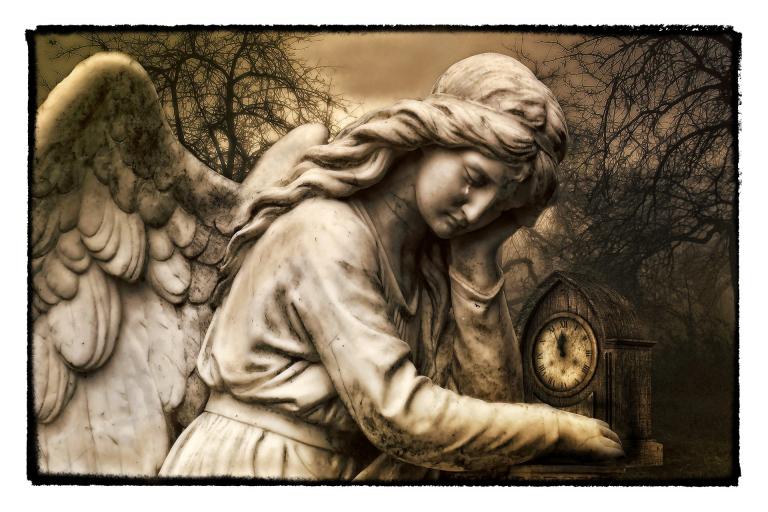
Ecclesiastes 3:1-22 What Is the Point of Life?
We come to a section of Ecclesiastes that is often quoted. As a matter of fact, the first eight verses were the lyrics to a top charting song by The Byrds in the 1970s. I have the song here to play for you. Just listen to the song – Ecclesiastes 3:1-8 set to music. Some say the reason that the word “turn” is so often used in the song is because of the seasons turning. However, I believe that it also means that one must turn to Jesus because that is the point of life. The Teacher opens up with the purpose statement.
“There is an occasion for everything, and a time for every activity under heaven:” (Ecclesiastes 3:1, HCSB)
There is a purpose to everything that happens in life. Things happen, even when we don’t know why.
1. Look up – God orders time (Ecclesiastes 3:1-8)
Here in these first eight verses, we have the idea of balance. Each verse lists a set of contrasting couplets. There is an order to things. God has established that order. From before our birth to the moment of our death, God is accomplishing His divine purposes, even though we may not always understand what He is doing.1
Aside from the placement of this first pair, however, there is no discernible purpose to the overall order in which the opposites are placed; they simply represent various aspects of human life between the two poles of birth and death, although they are often clustered together in groups in suggestive ways.2
Time matters. God gives us enough time to do what He wants us to do. We have time for all kinds of experiences – good and bad. God gives us time to make memories. He gave us time to enjoy life. Some say time is the fire in which we burn (as if it were an enemy.) Others say that time is a friend that goes along with you on the journey. I say that time is the currency of life. Once it is spent, it can’t be bought again. How should I use my time? Should I waste it on idle pursuits? God wants me to use my time wisely for Him. Because time matters to God, it should matter to me. Because time matters to God, I should use it for His glory and use it wisely.3 This brings me to the next section. The point of life is that time is precious and God (Who is outside of time) controls my life.
2. Look within: eternity is in your heart (Ecclesiastes 3:9-14)
THREE WAYS GOD ENRICHES MY LIFE
These verses show three different ways God enriches my life:
1. God gives me work
When one walks through life, one may think that life is pointless. Solomon asks this question and then answers it Ecclesiastes 3:9-10:
“What does the worker gain from his struggles? I have seen the task that God has given people to keep them occupied.” (Ecclesiastes 3:9–10, HCSB)
One may say that I do my own work. But ultimately it is God who provides you work. He did it for Adam and He does it for you and me.
“The Lord God took the man and placed him in the garden of Eden to work it and watch over it.” (Genesis 2:15, HCSB)
Why did God place Adam in the garden to work it and watch over it? Because God values work. It is part of the process of time. To borrow an analogy from Charles Dicken’s novel A Christmas Carol, work is about the present. So God gives us time to work today.
2. God gives me a desire to know the future
God also gives me time to have a desire to know the future.
“He has made everything appropriate in its time. He has also put eternity in their hearts, but man cannot discover the work God has done from beginning to end.” (Ecclesiastes 3:11, HCSB)
God has put eternity in our hearts, to remind us that there will be a time in the future. We can’t know it all. We won’t know it all because we are time-bound. But God has given us a spark in our souls to recognize that there is more than just this life.
Every great story has a beginning. Whether it begins with “Once upon a time,” or “a long time ago” – we see that great stories start somewhere, somehow, and with someone. Your great story started with God. God has been working in your life before you were born. Because before you were born, God knew you.
“Your eyes saw me when I was formless; all my days were written in Your book and planned before a single one of them began.” (Psalm 139:16, HCSB)
God prepared the pages of your life long before you were born. For God to take the time to prepare you for your life before you were born says lots about His love for you. Because God has loved you from the beginning. And He continues to show you His love when each day begins.
“Because of the Lord’s faithful love we do not perish, for His mercies never end. They are new every morning; great is Your faithfulness!” (Lamentations 3:22–23, HCSB)
Today, you are going to do good things, and you are going to mess up. But you know what? When you go to sleep, God is there for you. He is waiting and ready for you when you wake up to begin your new day. He is faithful with His love. Even though He has put eternity into our hearts, you and I are not going to know every loving thing that God will do for us. But we can be certain that He will be faithful with His love. He will make everything beautiful in its time. Why? Because He loved us from the very beginning.4
God gives us just a glimpse of what that future can be. He doesn’t tell us everything. He just gives us a hint – to remind us that God us the gift of life.
3. God gives me the gift of life to enjoy today.
“I know that there is nothing better for them than to rejoice and enjoy the good life. It is also the gift of God whenever anyone eats, drinks, and enjoys all his efforts. I know that all God does will last forever; there is no adding to it or taking from it. God works so that people will be in awe of Him.” (Ecclesiastes 3:12–14, HCSB)
Enjoy life
There are two parts to the gift of life. The first is to enjoy God’s gifts today. This satisfaction with life is the gift of God to those who make virtue a priority.5 Focusing our attention on doing good and enjoying the good things around us can help us to see the bitter realities of life in more balanced ways that make it easier to enjoy life.6
Respect God
God intervenes in our time to remind us that we need to respect Him. This word “fear” means to be in awe of him. The awe of God should balance the enjoyment of life. Just as the earlier verses gave two different couplets to describe the immensity of time, these verses show the entirety of life. Enjoy life and respect God. Some Christians have called this hedonism – the idea that life is all about enjoyment. The problem is that life is not all that enjoyable. Edward Curtis shares the following thought:
“Solomon is encouraging not pagan hedonism, but rather the practice of enjoying God’s gifts as the fruit of one’s labor, no matter how difficult life may be. Life appears to be transitory, but whatever God does is forever, so when we live for Him and let Him have His way, life is meaningful and manageable. Instead of complaining about what we don’t have, let’s enjoy what we do have and thank God for it.”7
3. Look ahead: death is coming to all (Ecclesiastes 3:15–22)
“Whatever is, has already been, and whatever will be, already is. God repeats what has passed.” (Ecclesiastes 3:15, HCSB)
This seems like a summary of the previous verses. However, it is a summary of later verses. Solomon is saying that the present will be like the past and the future. There is repetition and what repeats is death. This is not about reincarnation. Solomon is transitioning his thoughts about time to the future.
“I also observed under the sun: there is wickedness at the place of judgment and there is wickedness at the place of righteousness.” (Ecclesiastes 3:16, HCSB)
This is the John 3:16 of Ecclesiastes. You see here that when Solomon observes with his natural senses, even he realizes that there is going to a judgment.
God lets things repeat for me to learn from Him.
“I said to myself, “God will judge the righteous and the wicked, since there is a time for every activity and every work.” I said to myself, “This happens concerning people, so that God may test them and they may see for themselves that they are like animals.”” (Ecclesiastes 3:17–18, HCSB)
God uses unfairness in life to test me (Ecclesiastes 3:18). Life is a test. The ultimate grade I make is not just in the good works I do. The ultimate grade is whether I know Jesus. Here, we see that God is going to judge the world. We know from the New Testament that the works of the wicked will count against them. In Ecclesiastes, we see that we are no different than the animal kingdom.
COMPARISON BETWEEN HUMANITY AND THE ANIMAL KINGDOM
Ecclesiastes 3:9-22 have been a commentary of the first eight verses. In this last section, we see an expansion of the phrase “time to die.”
“a time to give birth and a time to die; a time to plant and a time to uproot;” (Ecclesiastes 3:2, HCSB)
“I said to myself, “God will judge the righteous and the wicked, since there is a time for every activity and every work.” I said to myself, “This happens concerning people, so that God may test them and they may see for themselves that they are like animals.”” (Ecclesiastes 3:17–18, HCSB)
Ecclesiastes 2:12-26 describes a summary of comparing the wise and the fool. In Ecclesiastes 3:18-22, the comparison and contrast is between human and animal. Here in 3:18–22, however, the emphasis falls on the apparent lack of distinction between humans and animals, rather than between the wise and the foolish, in death. God enables human beings to see that, in respect of their ultimate fate, “they are like the animals” (3:18).8
How are we like the animals?
“For the fate of people and the fate of animals is the same. As one dies, so dies the other; they all have the same breath. People have no advantage over animals since everything is futile. All are going to the same place; all come from dust, and all return to dust.” (Ecclesiastes 3:19–20, HCSB)
The physical fate for humans and animals in the same. We have the same fate as the animals. Our bodies die. Death comes to everyone. Our bodies will die and go to dust.
“Who knows if the spirit of people rises upward and the spirit of animals goes downward to the earth?” (Ecclesiastes 3:21, HCSB)
Here, we have a distinction between the spirit of people and the spirit of animals. The point of this verse is that there is an eternity.
Their bodies return to the dust of the earth in the same manner. Insofar as the body is concerned, man has little or no advantage over the beasts of the field. A dog has a keener sense of smell, a leopard can run faster, a turtle lives longer, and an eagle has better eyesight. It is in the realm of the mind and the spirit that man has superiority. Only man is made in the image of God.9
One who has “eternity” in his heart cannot ignore the higher purpose of life and still find satisfaction in this world. The spirit of the beast does not survive death nor escape the earth. It is, as it were, absorbed back into the earth. The spirit of the beast is merely a life force. It is then qualitatively inferior to that of man. The verse is not intended to be a definitive statement of personal eschatology, but it does set forth the ultimate hope of eternal life with the creator.10
Summary
“I have seen that there is nothing better than for a person to enjoy his activities because that is his reward. For who can enable him to see what will happen after he dies?” (Ecclesiastes 3:22, HCSB)
A well-known slogan associated with this way of looking at the world is carpe diem, a Latin phrase translated as “seize the day.” Although it is an ancient saying, it has been given wider currency than it perhaps would otherwise have had in modern times by the movie Dead Poets Society, in which the comedian and actor Robin Williams plays the role of a new teacher at a traditional private school.
In an important scene early in the movie, he gathers his pupils around a cabinet in the school hallway that displays photographs of sporting heroes and trophies from the past, many of them now dead. Inviting his students to imagine what these ancient heroes, whose moment of glory has passed, would have to say to them, he moves among them whispering carpe diem. The scene is thus set for the remainder of the movie, in which the boys set out to squeeze all the life out of their schooldays that they can, with humorous and ultimately tragic consequences.11
1 Warren W. Wiersbe, Be Satisfied, “Be” Commentary Series (Wheaton, IL: Victor Books, 1996), 44–45.
2 Iain Provan, Ecclesiastes, Song of Songs, The NIV Application Commentary (Grand Rapids, MI: Zondervan, 2001), 87.
3 Jim Erwin, “Time Matters,” Ecclesiastes 3:1-8, 25 December 2014, Year B (Christmas), Lectionary Reflections Year B (2014-2015), Logos Bible Software, Internet, http://www.patheos.com/blogs/jimerwin/2014/12/25/time-matters/, accessed on 18 February 2017.
4 Jim Erwin, “God Has Loved Me From the Beginning,” Thought for Thursday, Facebook Live, Ecclesiastes 3:11, 26 January 2017. Internet, Facebook, https://www.facebook.com/jim.erwin/videos/vb.1350387159/10211963572428572/?type=2&theater, accessed on 18 February 2017.
5 James E. Smith, The Wisdom Literature and Psalms, Old Testament Survey Series (Joplin, MO: College Press Pub. Co., 1996), Ec 3:12–13.
6 Edward M. Curtis, Ecclesiastes and Song of Songs, ed. Mark L. Strauss and John H. Walton, Teach the Text Commentary Series (Grand Rapids, MI: Baker Books, 2013), 28.
7 Warren W. Wiersbe, Be Satisfied, “Be” Commentary Series (Wheaton, IL: Victor Books, 1996), 48.
8 Iain Provan, Ecclesiastes, Song of Songs, The NIV Application Commentary (Grand Rapids, MI: Zondervan, 2001), 92.
9 Conrad R. Willard, “Ecclesiastes,” in The Teacher’s Bible Commentary, ed. H. Franklin Paschall and Herschel H. Hobbs (Nashville: Broadman and Holman Publishers, 1972), 379.
10 James E. Smith, The Wisdom Literature and Psalms, Old Testament Survey Series (Joplin, MO: College Press Pub. Co., 1996), Ec 3:21.
11 Iain Provan, Ecclesiastes, Song of Songs, The NIV Application Commentary (Grand Rapids, MI: Zondervan, 2001), 98–99.
Previous Post

February 19, 2017
Jack Graham Should Stop Hurting the SBC
Next Post

February 24, 2017 7 Proofs of God's Promises When I Trust Him
Browse Our Archives
Select a Category 1 Chronicles 1 Corinthians 1 John 1 Kings 1 Peter 1 Samuel 1 Thessalonians 1 Timothy 2 Chronicles 2 Corinthians 2 John 2 Kings 2 Peter 2 Samuel 2 Thessalonians 2 Timothy 3 John Acts Advent Amos Book Review Colossians Comics Culture Watch Daniel Deuteronomy Ecclesiastes Ephesians Esther Exodus Ezekiel Ezra Galatians Genesis Guest Post Habakkuk Haggai Hebrews Hosea Humor Inspiritational Isaiah James Jeremiah Job Joel John Jonah Joshua Jude Judges Lamentations Lectionary Lent Leviticus Link Love Luke Malachi Mark Matthew Micah Movie Review Nahum Nehemiah Numbers Philippians Political Watch Prophecy Watch Proverbs Psalm Revelation Reviews Romans Ruth Science Watch Sermon Series Sermons Simple Thoughts Song of Solomon Titus Top Ten Uncategorized Video Review Zechariah Zephaniah
Select a Month May 2026 October 2025 September 2025 June 2025 February 2025 January 2025 November 2024 October 2024 September 2024 July 2024 June 2024 April 2024 March 2024 January 2024 November 2023 October 2023 September 2023 June 2023 May 2023 March 2023 February 2023 January 2023 December 2022 October 2022 September 2022 August 2022 July 2022 June 2022 May 2022 January 2022 June 2021 January 2021 October 2020 July 2020 May 2020 April 2020 March 2020 February 2020 January 2020 December 2019 November 2019 October 2019 September 2019 August 2019 July 2019 June 2019 May 2019 April 2019 March 2019 February 2019 January 2019 December 2018 November 2018 October 2018 September 2018 August 2018 July 2018 June 2018 May 2018 April 2018 March 2018 February 2018 January 2018 December 2017 November 2017 October 2017 September 2017 August 2017 July 2017 June 2017 May 2017 April 2017 March 2017 February 2017 January 2017 December 2016 November 2016 October 2016 September 2016 August 2016 July 2016 June 2016 May 2016 April 2016 March 2016 February 2016 January 2016 December 2015 November 2015 October 2015 September 2015 August 2015 July 2015 June 2015 May 2015 April 2015 March 2015 February 2015 January 2015 December 2014 November 2014 October 2014 September 2014 August 2014 July 2014 June 2014 May 2014 April 2014 March 2014 February 2014 January 2014 December 2013 November 2013 October 2013 September 2013 August 2013 July 2013 June 2013 May 2013 April 2013 February 2013 January 2013 December 2012 November 2012 October 2012 September 2012 August 2012 July 2012 June 2012 May 2012 April 2009 June 2008 October 2007 September 2007 August 2007 July 2007 June 2007 May 2007 April 2007 March 2007 February 2007 January 2007 December 2006 October 2006 September 2006 May 2006 April 2006 March 2006 February 2006 January 2006 December 2005 September 2005
Follow Us!
TAKE THE
Religious Wisdom Quiz
After healing a leper, Jesus sternly warned him to tell no one but show himself to the priest. Did the man obey?
Select your answer to see how you score.
No, he spread the news widely Yes, he told only the priest Yes, he remained silent Partially, he told his family only
Related posts from Jim Erwin


The Obedient Servant in Suffering


The Global Mission of the Servant
TRENDING AT PATHEOS Evangelical

Methodist Central Hall and Westminster Abbey
Situated on the same square is Methodist Central Hall and Westminster Abbey. ...

57th Dove Awards Honor Dolly Parton, Crown New...
On gospel music’s biggest night, the 57th annual GMA Dove Awards honored...

The First Eucharistic Controversy: Christ’s Real Presence
For Catholics, the Eucharist is the source and summit of the Christian...

What a Stop Sign Can Teach Us About...
How to Make a Decision When You Can't Hear God Main point:...

Archdiocese Hosts Military Marriage Retreat in Germany
RASTATT, Germany — The transient military lifestyle, with its frequent deployments and...

Nearly every morning, I make the drive to Detroit with my high-school-age...
view all Evangelical blogs
Ad-Free & Subscriber Log-In Subscription Support
- About Us
- 2026 Calendar
- Videos
- Podcasts
- Library of World Religions
- Faith In Media Tracker
- Advertise With Us
- Write for Us
- Privacy Policy
- Terms of Service
- Do Not Sell My Data
- Contact Us
- Radiant Digital
- Manage Newsletter Subscriptions
- Unsubscribe From Notifications
- Sitemap
Copyright 2008-2026, Patheos. All rights reserved.
Subscription Support Ad-Free & Subscriber Log-In
Follow Patheos