
BuddhistCatholicContemplativeEvangelicalGeneral ChristianHinduJewishLatter-day SaintMuslimNew VisionsProgressive Christian
Beliefs
- Buddhist
- Catholic
- Contemplative
- Evangelical
- General Christian
- Hindu
- Jewish
- Latter-day Saint
- More Voices
- Muslim
- New Visions
- Pagan
- Progressive Christian
Topics
- Religion News
- Food and Religion
- Sports and Religion
- Religious Art
- Religious Music and Entertainment
- Religious Events
- History and Religion
- Style and Religion
- Politics and Religion
- Women in Religion
- Recreation Outdoors and Religion
- Business Finance and Religion
- Careers Workplace and Religion
- Education and Religion
- Family Parenting and Religion
- Health Fitness and Religion
- Home and Religion
- Relationships and Religion
- Technology and Religion
- Travel and Religion
Columnists
- Buddhist Columnists
- Business Finance and Religion Columnists
- Careers Workplace and Religion Columnists
- Catholic Columnists
- Contemplative Columnists
- Education and Religion Columnists
- Evangelists Columnists
- Family Parenting and Religion Columnists
- General Christian Columnists
- Health Fitness and Religion Columnists
- Hindu Columnists
- History and Religion Columnists
- Home and Religion Columnists
- Jewish Columnists
- More Voices Columnists
- Latter Day Columnists
- Muslim Columnists
- New Visions Columnists
- Nonreligious Columnists
- Pagan Columnists
- Politics and Religion Columnists
- Progressive Columnists
- Recreation Outdoors and Religion Columnists
- Relationships and Religion Columnists
- Religion News Columnists
- Religious Art Columnists
- Religious Events Columnists
- Religious Music and Entertainment Columnists
- Sports and Religion Columnists
- Style and Religion Columnists
- Technology and Religion Columnists
- Travel and Religion Columnists
- Women in Religion Columnists
Resource Library
- 2026 Calendar
- Library of World Religions
- The 100 Most Holy Places on Earth
- Patheos Answers
- Podcasts
- Videos
- Faith Leaders Database
- Anglican Episcopalian
- Bahai
- Baptist
- Buddhism
- Christianity
- Confucianism
- Eastern Orthodoxy
- Hinduism
- Holiness and Pentecostal
- ISKCON
- Islam
- Judaism
- Lutheran
- Methodist
- The Church of Jesus Christ of Latter-day Saints
- New Age
- Paganism
- Presbytarian and Reformed
- Protestantism
- Religion Behind the Scenes
- Roman Catholic
- Scientology
- Shia Islam
- Sikhism
- Sufism
- Sunni Islam
- Taoism
- Zen
- See all religions
Research Tools
 Ad-Free & Subscriber Log-In Subscription Support
Ad-Free & Subscriber Log-In Subscription Support
Follow Patheos 

- Trending:
- Forgiveness
- |
- Marriage
- |
- Consciousness
- |
- Death Penalty
- |
- Election
- |
- Halloween

- Home
- Evangelical
- #OrganicJesus by Scott Douglas
#OrganicJesus by Scott Douglas
Last updated on: September 27, 2016 at 10:42 pm by Jim Erwin
#OrganicJesus by Scott Douglas 2016-09-27T22:42:30-05:00 Jim Erwin
Patheos Explore the world's faith through different perspectives on religion and spirituality! Patheos has the views of the prevalent religions and spiritualities of the world.
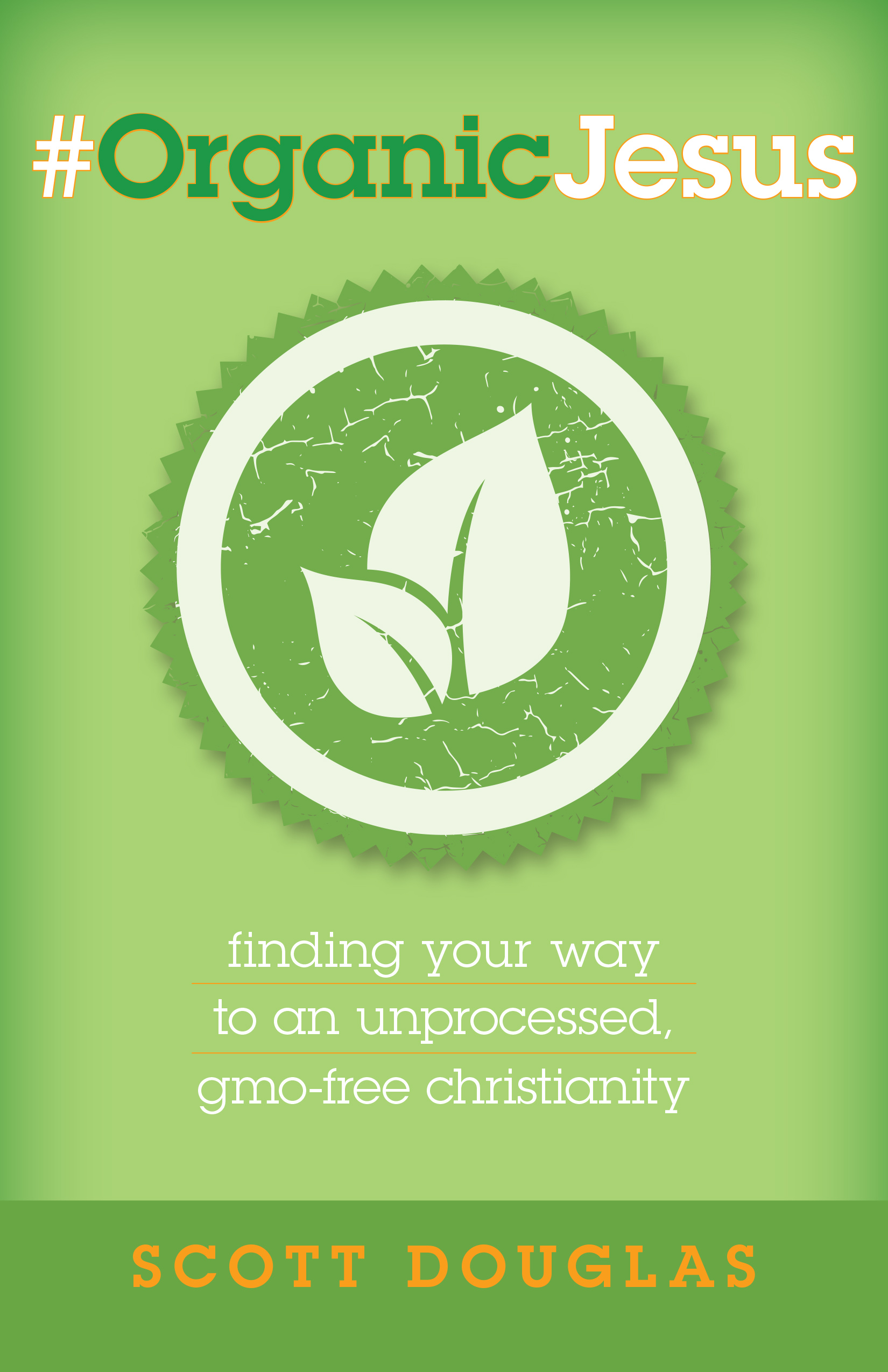
#OrganicJesus by Scott Douglas
#OrganicJesus by Scott Douglas is a book that the author states is about “finding your way to an unprocessed, gmo-free Christianity.” The book is divided into two parts: (1) “Not Yo Mama’s Christianity,” and (2) “Not Yo Mama’s Faith.”
Douglas writes like he has a short-attention span. His book is organized for people of the digital generation who are easily distracted. While I appreciate what he says, I found the additional forms he used very distracting. Whether it was writing the sentence backwards, upside-down, useless polls, “getting social”, “Bible hero quizzes,” “WikiBreaks,” or inserted with tidbits of information, the point of the book gets lost (unless that was his point – that the message gets lost because people are easily distracted.)
Douglas says that he wants to find the real Jesus, the real Christianity. He wants it organic in the sense that it is pure, stripped from traditions and ideas inserted by churches and time. Yet, his book is filled with so many extra things that it makes it hard to find the organic point that he is trying to make.
Douglas claims that if we really want to find the true Jesus, what he calls the “Organic Jesus,” then we need to doubt everything (63). Essentially, Douglas uses a postmodern hermeneutic of suspicion. Douglas clearly believes in Jesus, and shows the historical reliability of Jesus’s existence (31-34). Like Descartes, Douglas uses doubt as a way to come to faith in Jesus (37). However, at times, Douglas makes claims that seem strange for Christians to make:
- He claims that Christianity created atheism (61).
- He suggests that Christianity is a journey, not a lifestyle (65).
- He claims that the Bible is a myth (69-80).
- He dismisses the rapture (173).
In the midst of all these claims, Douglas makes the central thesis of the book as he makes the transition between parts one and two. He presents the hypocrisy of Christianity that makes the Christian life seem cheap (97):
“If Christianity is so great that the very Spirit of God indwells believers, then why are so many Christians so flawed? There’s a popular slogan: “I’m not perfect. I’m just saved.” It’s what many Christians use to excuse their unrighteous behavior. Under this theory, Christians can essentially do anything and then shrug their shoulders and say, “I’m not perfect. I’m just saved.””
At times, Douglas presents interesting Biblical analysis. For example, he shows that Genesis was clearly written with a series of patterns (70-72). He gives a great study into the Holy Spirit and the Trinitarian nature of God (185-193). He shares about worship (163-172), prayer (193-207), and He mentions that the best place to learn about other religions is not at a Christian university. The reason Douglas suggests is that he wanted to learn from someone who’s not trying to disprove other religions. He was never trying to disprove anything. He only wanted to have a better understanding (90). His best statement is in the center of the book. He makes a very clear statement about understanding the truth of Christianity (100):
“Here’s the thing: if you really want to understand Christianity, you can’t look to see who all the sinners are, and you can’t look to see who all the saints are. You can only look at who Jesus Christ is. When we look at the church for answers, we see those who have fallen; when we look at God, we see the relationship he wants to have with us.”
Douglas shares his personal experience with bad events that happened in his life and which shook his faith. These included: losing a child (138-143) and growing up as an acolyte in the Methodist church (145-146). These experiences have taught him to be critical of the church. In summary, Douglas promotes a postmodern Progressive Christian theology. He honestly believes in Jesus, but he is disappointed with the church.
Jesus created the church (Matthew 16:18). It’s His idea. As a result, I wish Douglas had provided more positive examples of the way in which the church lives out the Christian faith. Yet, if you have questions about the disconnection between the church and the Christian faith, then this book might be helpful.
Douglas provides more resources as well as opportunities to connect with him. For example, you can visit the OrganicJesus website, or get bonus content download the free app.
You can also connect with Scott Douglas on social media: Twitter, Instagram, Pinterest, Facebook, LinkedIn, as well as everywhere else.
Disclosure of Material Connection: I received this book free from the author and/or publisher through the Speakeasy blogging book review network. I was not required to write a positive review. The opinions I have expressed are my own. I am disclosing this in accordance with the Federal Trade Commission’s 16 CFR,Part 255.
Previous Post

September 26, 2016
Patmos by C. Baxter Kruger
Next Post

September 29, 2016 7 Characteristics of the Celebration of God’s People
Browse Our Archives
Select a Category 1 Chronicles 1 Corinthians 1 John 1 Kings 1 Peter 1 Samuel 1 Thessalonians 1 Timothy 2 Chronicles 2 Corinthians 2 John 2 Kings 2 Peter 2 Samuel 2 Thessalonians 2 Timothy 3 John Acts Advent Amos Book Review Colossians Comics Culture Watch Daniel Deuteronomy Ecclesiastes Ephesians Esther Exodus Ezekiel Ezra Galatians Genesis Guest Post Habakkuk Haggai Hebrews Hosea Humor Inspiritational Isaiah James Jeremiah Job Joel John Jonah Joshua Jude Judges Lamentations Lectionary Lent Leviticus Link Love Luke Malachi Mark Matthew Micah Movie Review Nahum Nehemiah Numbers Philippians Political Watch Prophecy Watch Proverbs Psalm Revelation Reviews Romans Ruth Science Watch Sermon Series Sermons Simple Thoughts Song of Solomon Titus Top Ten Uncategorized Video Review Zechariah Zephaniah
Select a Month May 2026 October 2025 September 2025 June 2025 February 2025 January 2025 November 2024 October 2024 September 2024 July 2024 June 2024 April 2024 March 2024 January 2024 November 2023 October 2023 September 2023 June 2023 May 2023 March 2023 February 2023 January 2023 December 2022 October 2022 September 2022 August 2022 July 2022 June 2022 May 2022 January 2022 June 2021 January 2021 October 2020 July 2020 May 2020 April 2020 March 2020 February 2020 January 2020 December 2019 November 2019 October 2019 September 2019 August 2019 July 2019 June 2019 May 2019 April 2019 March 2019 February 2019 January 2019 December 2018 November 2018 October 2018 September 2018 August 2018 July 2018 June 2018 May 2018 April 2018 March 2018 February 2018 January 2018 December 2017 November 2017 October 2017 September 2017 August 2017 July 2017 June 2017 May 2017 April 2017 March 2017 February 2017 January 2017 December 2016 November 2016 October 2016 September 2016 August 2016 July 2016 June 2016 May 2016 April 2016 March 2016 February 2016 January 2016 December 2015 November 2015 October 2015 September 2015 August 2015 July 2015 June 2015 May 2015 April 2015 March 2015 February 2015 January 2015 December 2014 November 2014 October 2014 September 2014 August 2014 July 2014 June 2014 May 2014 April 2014 March 2014 February 2014 January 2014 December 2013 November 2013 October 2013 September 2013 August 2013 July 2013 June 2013 May 2013 April 2013 February 2013 January 2013 December 2012 November 2012 October 2012 September 2012 August 2012 July 2012 June 2012 May 2012 April 2009 June 2008 October 2007 September 2007 August 2007 July 2007 June 2007 May 2007 April 2007 March 2007 February 2007 January 2007 December 2006 October 2006 September 2006 May 2006 April 2006 March 2006 February 2006 January 2006 December 2005 September 2005
Follow Us!
TAKE THE
Religious Wisdom Quiz
Who predicted Babylon's fall?
Select your answer to see how you score.
Daniel Isaiah Jeremiah Ezekiel
Related posts from Jim Erwin


Using ChatGPT in Sermon Preparation

Five Challenges Postmodernism Presents for the Church
TRENDING AT PATHEOS Evangelical

When Halloween Unmasks Married Hearts
Written by Dr. David K. Ewen from Eternal Truth Bible College Behind...

Aristotle. He’s been called the father of logic, the father of the...

Methodist Central Hall and Westminster Abbey
Situated on the same square is Methodist Central Hall and Westminster Abbey. ...

57th Dove Awards Honor Dolly Parton, Crown New...
On gospel music’s biggest night, the 57th annual GMA Dove Awards honored...

The First Eucharistic Controversy: Christ’s Real Presence
For Catholics, the Eucharist is the source and summit of the Christian...

What a Stop Sign Can Teach Us About...
How to Make a Decision When You Can't Hear God Main point:...
view all Evangelical blogs
Ad-Free & Subscriber Log-In Subscription Support
- About Us
- 2026 Calendar
- Videos
- Podcasts
- Library of World Religions
- Faith In Media Tracker
- Advertise With Us
- Write for Us
- Privacy Policy
- Terms of Service
- Do Not Sell My Data
- Contact Us
- Radiant Digital
- Manage Newsletter Subscriptions
- Unsubscribe From Notifications
- Sitemap
Copyright 2008-2026, Patheos. All rights reserved.
Subscription Support Ad-Free & Subscriber Log-In
Follow Patheos