
BuddhistCatholicContemplativeEvangelicalGeneral ChristianHinduJewishLatter-day SaintMuslimNew VisionsProgressive Christian
Beliefs
- Buddhist
- Catholic
- Contemplative
- Evangelical
- General Christian
- Hindu
- Jewish
- Latter-day Saint
- More Voices
- Muslim
- New Visions
- Pagan
- Progressive Christian
Topics
- Religion News
- Food and Religion
- Sports and Religion
- Religious Art
- Religious Music and Entertainment
- Religious Events
- History and Religion
- Style and Religion
- Politics and Religion
- Women in Religion
- Recreation Outdoors and Religion
- Business Finance and Religion
- Careers Workplace and Religion
- Education and Religion
- Family Parenting and Religion
- Health Fitness and Religion
- Home and Religion
- Relationships and Religion
- Technology and Religion
- Travel and Religion
Columnists
- Buddhist Columnists
- Business Finance and Religion Columnists
- Careers Workplace and Religion Columnists
- Catholic Columnists
- Contemplative Columnists
- Education and Religion Columnists
- Evangelists Columnists
- Family Parenting and Religion Columnists
- General Christian Columnists
- Health Fitness and Religion Columnists
- Hindu Columnists
- History and Religion Columnists
- Home and Religion Columnists
- Jewish Columnists
- More Voices Columnists
- Latter Day Columnists
- Muslim Columnists
- New Visions Columnists
- Nonreligious Columnists
- Pagan Columnists
- Politics and Religion Columnists
- Progressive Columnists
- Recreation Outdoors and Religion Columnists
- Relationships and Religion Columnists
- Religion News Columnists
- Religious Art Columnists
- Religious Events Columnists
- Religious Music and Entertainment Columnists
- Sports and Religion Columnists
- Style and Religion Columnists
- Technology and Religion Columnists
- Travel and Religion Columnists
- Women in Religion Columnists
Resource Library
- 2026 Calendar
- Library of World Religions
- The 100 Most Holy Places on Earth
- Patheos Answers
- Podcasts
- Videos
- Faith Leaders Database
- Anglican Episcopalian
- Bahai
- Baptist
- Buddhism
- Christianity
- Confucianism
- Eastern Orthodoxy
- Hinduism
- Holiness and Pentecostal
- ISKCON
- Islam
- Judaism
- Lutheran
- Methodist
- The Church of Jesus Christ of Latter-day Saints
- New Age
- Paganism
- Presbytarian and Reformed
- Protestantism
- Religion Behind the Scenes
- Roman Catholic
- Scientology
- Shia Islam
- Sikhism
- Sufism
- Sunni Islam
- Taoism
- Zen
- See all religions
Research Tools
 Ad-Free & Subscriber Log-In Subscription Support
Ad-Free & Subscriber Log-In Subscription Support
Follow Patheos 

- Trending:
- Forgiveness
- |
- Marriage
- |
- Consciousness
- |
- Death Penalty
- |
- Election
- |
- Halloween

- Home
- Evangelical
- The Atonement of God by J.D. Myers
The Atonement of God by J.D. Myers
Last updated on: September 13, 2016 at 9:00 pm by Jim Erwin
The Atonement of God by J.D. Myers 2016-09-13T21:00:27-05:00 Jim Erwin
Patheos Explore the world's faith through different perspectives on religion and spirituality! Patheos has the views of the prevalent religions and spiritualities of the world.
The Atonement of God by J.D. Myers
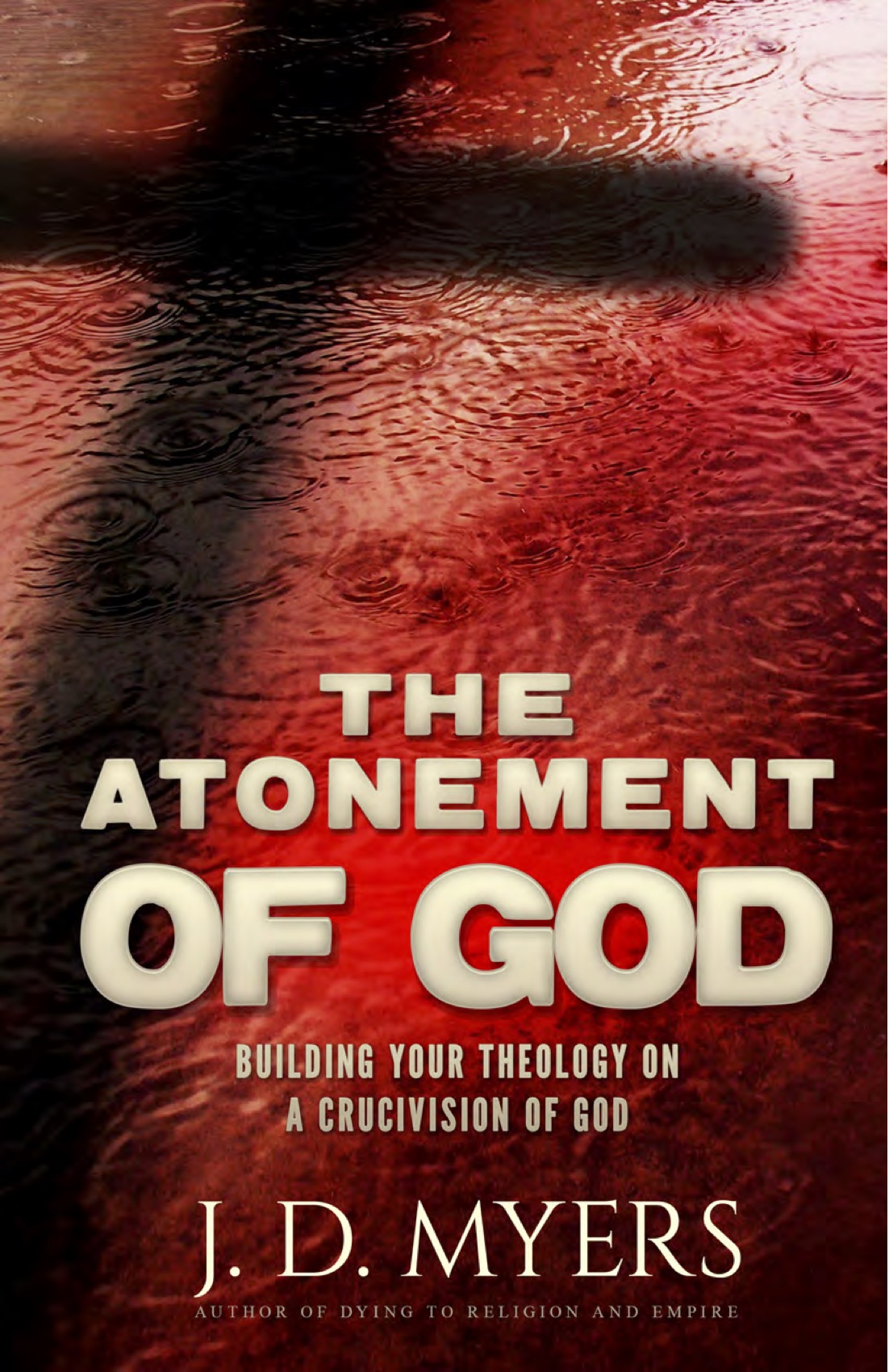
The Atonement of God by J.D. Myers is a book that shows how to build your theology on the crucivision of God. Myers promotes a non-violent view of the atonement. He promotes a form of the Christus Victor view. He analyzes the penal substitution, the moral influence, and the ransom views of the atonement. He rejects all three and then promotes his own view.
In summary, Myers contends that God did not kill Jesus, we did (43). Myers shares a very good explanation of sin, fear, and God’s presence in Genesis 3:7-10. (45). We have been taught that sin makes us fear God (45). Myers explains that guilt causes us to fear God, not sin (45).
THE THREE GREAT LIES OF SIN
The three great lies of sin are (49):
1. God is angry with us for our sin.
2. Sin disgusts and offends God so God stays away from us.
3. God demands a repayment for a debt of sin.
God is angry of our sin. It does disgust God. He does demand repayment. Yet, Myers makes the case that Jesus exposed these lies (49):
Jesus defeated sin by emptying it of its deceitful power over humanity. He taught us and showed us that God is not angry with us about our sin, but has always loved us. He showed us that the reason God wants us not to sin is not because God is disgusted by sin, but because we are damaged and hurt by sin, and God does not want those He loves to be hurt. Furthermore, God showed us in Jesus Christ that there is nothing we can do and nothing He wants us to do in order to repay Him for our sin. There is no debt of sin which is owed to God. He forgives us, loves us, and accepts us freely, by His grace.
The primary thought that Myers suggests that comes from his non-violent view of the atonement is (55): “Sin leads to death, specifically the death of others at our hands.”
Myers shares his definition of the Gospel (57): “The gospel…is not ultimately about the exchange of victims, but about the ending of bloodshed.”
Myer gives a valid psychological explanation for blaming God about His violence (57). We want people dead, but we blame it on God. Jesus revealed the heart of God and the heart of man on the cross (58). Myers correctly links Satan’s work of accusation with eventual blame and violence (60).The impulse to kill others comes from Satan and not God. Myers provides an excellent explanation as to why God forbade Adam and Eve from eating the fruit of the Tree of Good and Evil: we don’t know everything like God does. We don’t have omniscience. This lack of knowing gives way to mistakes that God would never make (60). We make bad judgments. God does not. When humans make bad judgments, there are serious consequences.
Myers claims that it is Satan, not God, who demands punishment for sin (61). Satan tells us the lie of sin which is that God is angry at us because of our sin (64). Myers states that the lies we believed were exposed by Jesus through the crucifixion and resurrection. This reveals that we are victims of these lies as well as victimizers (66).
Myers then makes an important statement about the role of the church as challengers and critics of the governments of the world. To the degree that we accomplish this effort, the salvation becomes less military and more corporate. If Christianity loses its influence to critique the government’s actions, individualistic salvation becomes the norm. (68)
Myers gives the best reason why one can subscribe to the non-violent theory and still have the benefits of the penal substitutionary view. I like the way he has presented this (71):
Since, in Non-Violent views, all of humanity is a victim to the lies about sin, God, and justice, Jesus entered into the role of victim so that He might become one of us and also expose to us our tendency to accuse and blame innocent victims. Jesus substituted Himself for every victim, to show us that He is with us when we are victims and also to show us the illegitimacy of victimizing others.
Yet in contrast to Penal Substitution, a Non-Violent view is able to say that Jesus died in our place, not to satisfy the demands of an angry God, but rather to reveal God’s complete love and solidarity with mankind by allowing the full outpouring of wrath from sin, death, and the devil to fall upon His back instead of upon ours. In this way, we still get the substitutionary offering of Jesus—which is the strength of Penal Substitution—but are able to avoid the objectionable idea that the wrath which came upon Jesus was from God.
While Jesus was our “substitute,” He did not die to satisfy God’s wrath. His death was not penal, that is, there was no punishment involved. God was not angry. God was not demanding blood. God was not withholding forgiveness until He got paid for sin. A Non-Violent view of the atonement embraces the strengths of Penal Substitution while avoiding its weaknesses.
Myers presents issues that will come up when one adopts the non-violent view of the atonement and how it will change one’s theology (76). He lists ten benefits of the non-violent view of the atonement in the next ten chapters.
TEN BENEFITS OF THE NON-VIOLENT VIEW OF THE ATONEMENT
1. Brings continuity to the life of Jesus (77).
2. Reveals the truth about God. (80).
3. Reveals the truth about Scripture (88).
4. Reveals the truth about sacrifice.
5. Reveals the truth about humans (98).
6. Reveals the truth about sin. (108)
7. Reveals the truth about forgiveness (118).
8. Reveals the truth about justice. (124)
9. Reveals the truth about violence. (136)
10. Reveals the way to peace (150).
Myers addresses the wrath of God in Appendix 1. He has to address this doctrine because the Bible promotes this doctrine as essential to the nature of God, especially upon the return of Jesus and the beginning of eternity (162). Myers admits that there are legitimate objections to the non-violent theory of atonement from Romans, the view of hell and the violence of Revelation. However, he states that he plans to answer them in another future volume (162). I look forward to his answers.
Myers also answers the question “Does forgiveness require the shedding of blood?” In Appendix 2. He analyzes Hebrews 9:22 and makes the case that Hebrews 9:22 does not require bloodshed for forgiveness (190). The death of Jesus on the cross was not to purchase forgiveness from God for humanity. Instead, it was to show that God was forgiving to us from the beginning (190).
Myers makes it clear that just because God forgives everyone, it does not mean that he is a universalist. In other words, one must still receive the righteous of God in Jesus, even if God forgave everyone (191).
CLOSING THOUGHTS CONCERNING THE BOOK
Here are some closing thoughts I have concerning this book:
If Genesis 6:13 says that the world was filled with violent and Myers states that God is not violent, but that we are, then why does God decide to destroy the world by a flood in Genesis 6:5? If the flood is not God’s violent redemption for eight people, then my question is: what was the purpose of the flood? Why did it happen? (140) Myers poses the problem, but can never provide satisfying answers to these kinds of dilemmas in the Bible. Is this perhaps a limitation of the non-violent theory of atonement?
Myers shows that God continues to show violent tendencies in the Old Testament that cannot be explained under his non-violent theory of atonement. For example, Sodom and Gomorrah, the Plagues upon Egypt, and removing the evil Canaanites from the Promised Land by violence (140). His “myth of redemptive violence” that he says others promotes cannot be explained away.
The most serious critique of this non-violent view is that Romans 3:25 teaches that Jesus died on the cross and took God’s wrath upon Himself. The stories of the temptation, the flood, the fire and brimstone happened and were directed by God, even if they show humanity’s desire for violence (141).
Myers never states that Hell should be restorative. However, he clearly questions whether God (who Myers clearly shows earlier is forgiving even when Jesus is on the cross) can send everyone to a Hell that punishes people because of their sin (141). Even Myers does not have all the answers with this non-violent theory of atonement. Is it because he cannot explain away Hell because of the Scriptural evidence of such a hell? (141).
Again, Myers can only explain the violence in the Old Testament as something that says more about humanity than something that God does. (What about the time when God commanded Saul to kill everyone and destroy everything in 2 Samuel 16?) Is God not violent then? Is He not the Father of potential genocide against the Amalekites? Myers never addresses this portion of Scripture (143).
Does the “God told us” argument justify the violence against the Amalekites in 2 Samuel 16? Myers seems to conclude that the “God told us” comes from violent, sinful imagination of humanity (146).
I would recommend this book for Christians who are bothered by the penal substitution view. I also recommend this book to get another way to look at the violence in the Old Testament. The non-violent view is not perfect, but it does help to explain the contrast between the violence of the Old Testament and the more peaceful nature of the New Testament.
Disclosure of Material Connection: I received this book free from the author and/or publisher through the Speakeasy blogging book review network. I was not required to write a positive review. The opinions I have expressed are my own. I am disclosing this in accordance with the Federal Trade Commission’s 16 CFR,Part 255.
Previous Post

September 11, 2016
We Need Fewer Superstars and More Servants
Next Post
September 18, 2016 Genesis 18:1-33 Prayer and God's Blessing
Browse Our Archives
Select a Category 1 Chronicles 1 Corinthians 1 John 1 Kings 1 Peter 1 Samuel 1 Thessalonians 1 Timothy 2 Chronicles 2 Corinthians 2 John 2 Kings 2 Peter 2 Samuel 2 Thessalonians 2 Timothy 3 John Acts Advent Amos Book Review Colossians Comics Culture Watch Daniel Deuteronomy Ecclesiastes Ephesians Esther Exodus Ezekiel Ezra Galatians Genesis Guest Post Habakkuk Haggai Hebrews Hosea Humor Inspiritational Isaiah James Jeremiah Job Joel John Jonah Joshua Jude Judges Lamentations Lectionary Lent Leviticus Link Love Luke Malachi Mark Matthew Micah Movie Review Nahum Nehemiah Numbers Philippians Political Watch Prophecy Watch Proverbs Psalm Revelation Reviews Romans Ruth Science Watch Sermon Series Sermons Simple Thoughts Song of Solomon Titus Top Ten Uncategorized Video Review Zechariah Zephaniah
Select a Month May 2026 October 2025 September 2025 June 2025 February 2025 January 2025 November 2024 October 2024 September 2024 July 2024 June 2024 April 2024 March 2024 January 2024 November 2023 October 2023 September 2023 June 2023 May 2023 March 2023 February 2023 January 2023 December 2022 October 2022 September 2022 August 2022 July 2022 June 2022 May 2022 January 2022 June 2021 January 2021 October 2020 July 2020 May 2020 April 2020 March 2020 February 2020 January 2020 December 2019 November 2019 October 2019 September 2019 August 2019 July 2019 June 2019 May 2019 April 2019 March 2019 February 2019 January 2019 December 2018 November 2018 October 2018 September 2018 August 2018 July 2018 June 2018 May 2018 April 2018 March 2018 February 2018 January 2018 December 2017 November 2017 October 2017 September 2017 August 2017 July 2017 June 2017 May 2017 April 2017 March 2017 February 2017 January 2017 December 2016 November 2016 October 2016 September 2016 August 2016 July 2016 June 2016 May 2016 April 2016 March 2016 February 2016 January 2016 December 2015 November 2015 October 2015 September 2015 August 2015 July 2015 June 2015 May 2015 April 2015 March 2015 February 2015 January 2015 December 2014 November 2014 October 2014 September 2014 August 2014 July 2014 June 2014 May 2014 April 2014 March 2014 February 2014 January 2014 December 2013 November 2013 October 2013 September 2013 August 2013 July 2013 June 2013 May 2013 April 2013 February 2013 January 2013 December 2012 November 2012 October 2012 September 2012 August 2012 July 2012 June 2012 May 2012 April 2009 June 2008 October 2007 September 2007 August 2007 July 2007 June 2007 May 2007 April 2007 March 2007 February 2007 January 2007 December 2006 October 2006 September 2006 May 2006 April 2006 March 2006 February 2006 January 2006 December 2005 September 2005
Follow Us!
TAKE THE
Religious Wisdom Quiz
Who said, "Choose for yourselves this day whom you will serve"?
Select your answer to see how you score.
Solomon Joshua Gideon Moses
Related posts from Jim Erwin


Using ChatGPT in Sermon Preparation


Can I Ask You a Question by Preston...
TRENDING AT PATHEOS Evangelical

Emotion in Early Christianity by Andrew Crislip
Andrew Crislip’s Emotion in Early Christianity examines an often overlooked dimension of...

16 Spiritual Touchstones for a More Grounded Life
After decades of spiritual study, here are 16 principles I try...

Catholic Evangelization: Sharing Your Faith Every Day
Welcome back to the Graceful Awakening mini-series called, “From Faith to Mission.” ...

The Pillar of the Boatmen: the Ancient Monument...
The Pillar of the Boatmen is a Romano-Gaulish sculpture that dates from...

In one sense walking into Westminster Abbey is like walking down the...

'Super Scam Me' Exposes AI Jon Bon Jovi...
Leslie Pickett believed she was in a relationship with Jon Bon Jovi....
view all Evangelical blogs
Ad-Free & Subscriber Log-In Subscription Support
- About Us
- 2026 Calendar
- Videos
- Podcasts
- Library of World Religions
- Faith In Media Tracker
- Advertise With Us
- Write for Us
- Privacy Policy
- Terms of Service
- Do Not Sell My Data
- Contact Us
- Radiant Digital
- Manage Newsletter Subscriptions
- Unsubscribe From Notifications
- Sitemap
Copyright 2008-2026, Patheos. All rights reserved.
Subscription Support Ad-Free & Subscriber Log-In
Follow Patheos