
BuddhistCatholicContemplativeEvangelicalGeneral ChristianHinduJewishLatter-day SaintMuslimNew VisionsProgressive Christian
Beliefs
- Buddhist
- Catholic
- Contemplative
- Evangelical
- General Christian
- Hindu
- Jewish
- Latter-day Saint
- More Voices
- Muslim
- New Visions
- Pagan
- Progressive Christian
Topics
- Religion News
- Food and Religion
- Sports and Religion
- Religious Art
- Religious Music and Entertainment
- Religious Events
- History and Religion
- Style and Religion
- Politics and Religion
- Women in Religion
- Recreation Outdoors and Religion
- Business Finance and Religion
- Careers Workplace and Religion
- Education and Religion
- Family Parenting and Religion
- Health Fitness and Religion
- Home and Religion
- Relationships and Religion
- Technology and Religion
- Travel and Religion
Columnists
- Buddhist Columnists
- Business Finance and Religion Columnists
- Careers Workplace and Religion Columnists
- Catholic Columnists
- Contemplative Columnists
- Education and Religion Columnists
- Evangelists Columnists
- Family Parenting and Religion Columnists
- General Christian Columnists
- Health Fitness and Religion Columnists
- Hindu Columnists
- History and Religion Columnists
- Home and Religion Columnists
- Jewish Columnists
- More Voices Columnists
- Latter Day Columnists
- Muslim Columnists
- New Visions Columnists
- Nonreligious Columnists
- Pagan Columnists
- Politics and Religion Columnists
- Progressive Columnists
- Recreation Outdoors and Religion Columnists
- Relationships and Religion Columnists
- Religion News Columnists
- Religious Art Columnists
- Religious Events Columnists
- Religious Music and Entertainment Columnists
- Sports and Religion Columnists
- Style and Religion Columnists
- Technology and Religion Columnists
- Travel and Religion Columnists
- Women in Religion Columnists
Resource Library
- 2026 Calendar
- Library of World Religions
- The 100 Most Holy Places on Earth
- Patheos Answers
- Podcasts
- Videos
- Faith Leaders Database
- Anglican Episcopalian
- Bahai
- Baptist
- Buddhism
- Christianity
- Confucianism
- Eastern Orthodoxy
- Hinduism
- Holiness and Pentecostal
- ISKCON
- Islam
- Judaism
- Lutheran
- Methodist
- The Church of Jesus Christ of Latter-day Saints
- New Age
- Paganism
- Presbytarian and Reformed
- Protestantism
- Religion Behind the Scenes
- Roman Catholic
- Scientology
- Shia Islam
- Sikhism
- Sufism
- Sunni Islam
- Taoism
- Zen
- See all religions
Research Tools
 Ad-Free & Subscriber Log-In Subscription Support
Ad-Free & Subscriber Log-In Subscription Support
Follow Patheos 

- Trending:
- Forgiveness
- |
- Marriage
- |
- Consciousness
- |
- Death Penalty
- |
- Election
- |
- Halloween

- Home
- Evangelical
- Abba's Child by Brennan Manning
Abba's Child by Brennan Manning
Last updated on: August 18, 2015 at 11:24 am by Jim Erwin
Abba's Child by Brennan Manning 2015-08-18T11:24:47-05:00 Jim Erwin
Patheos Explore the world's faith through different perspectives on religion and spirituality! Patheos has the views of the prevalent religions and spiritualities of the world.
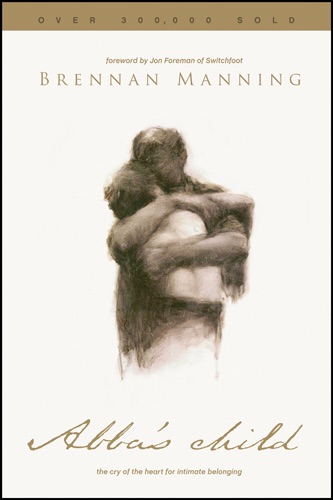
Abba’s Child by Brennan Manning
Abba’s Child by Brennan Manning is a wonderful look into the love of God. The subtitle: The cry of the heart for intimate belonging, tells us very openly what Manning wants to achieve with this work. Manning takes us on a journey to this intimate belonging and the way to achieve it. His point is that God loves us and we should enjoy that love intimately. Manning describes his journey in the first chapter entitled “Coming Out of Hiding,” sharing how difficult it was for him to discover the intimacy that can be found in God’s love. Then Manning describes “The Imposter” in the second chapter. This chapter alone is worth the purchase of the book. He describes in this chapter how we have allowed ourselves to be loved by the wrong things.
Manning contrasts this with “The Beloved” in the third chapter, where the author makes the proper claim of our purpose (34): “God created us for union with Himself. This is the original purpose of our lives. God is defined as love (1 John 4:16).” Brennan shows that the best way to develop this love relationship (36): “The indispensable condition for developing and maintaining the awareness of our belovedness is time alone with God,” Solitude is the way to grow our love relationship with God. Manning’s illustration of the hurried executive and the hermit is an excellent example of the need for solitude (38-39).
In the next chapter, “Abba’s Child,” Manning explains that the heart and soul of God is compassion and tenderness (46-47). In this chapter, Manning seeks to provide one possible Christian posture to the homosexual community (52-53). Manning doesn’t state it, but I believe he would say that while homosexuality is a sin, it is a sin like any other sin. He believes that as God’s children, we should not be homophobic. Instead of the “anything goes” morality of the Left, or the sanctimonious moralism of the Right, Manning suggests a third option. This third option is God’s Word alone and it leads to indiscriminate compassion (56-57).
In the fifth chapter, known “The Pharisee and the Child,” Manning contrasts how we live a fake life while wanting to be genuine. He defines how a Christian can be a Pharisee, through viewing the Bible as a manual of directions instead of a love story (59), and the use of legalism (62). Pointing back to the chapter about “The Imposter,” Manning names the Pharisee as a “spiritual terrorist” and a religious imposter (66). The two tell-tale signs of a Pharisee are: (1) He admires himself, and (2) he despises others (67). The Pharisee is the fake, and the Child is my true self (69) – who exhibits all of the positive qualities which God wants us to show (76).
In the sixth chapter, Manning explains the value of “Present Risenness.” He explains that Christians usually think of the resurrection as past or a future event. He suggests that both of these approaches limits the presence of Christ in our lives to another time period. The alternative is to consider the resurrection as what Manning calls a “present risenness” (81). We should see the power of the resurrection during both good and bad days. This view of life helps us cope with the difficulties of life, helps us deal with tragedy, and helps us to see that everything in life has significance (82-89). An awareness of present risenness allows us to better share the Gospel (94) and it is linked to recovering our passion as Christians (95).
Manning links the sixth and seventh chapter entitled “The Recovery of Passion,” by sharing the problem that Manning calls the agnosticism of inattention.” As Christians, we lose our passion for Jesus Christ because so many things crowd out the voice of God in our lives (95, 100). In the seventh chapter, Manning defines passion, and how to recover it. When a Christian leans on Jesus and His love, he learns primary spirituality. However, most Christians have “derivative spirituality.’ We borrow from someone else’s spirituality when we should learn by leaning on Jesus for our faith (106-107).
Manning continues in the eighth chapter describing “Fortitude and Fantasy.” He explains that for people who want to stand up for Jesus, they will experience a “poverty of uniqueness” (117-119). He advocates for a holistic view of Christianity by explaining that a Christian is not just a Christian by what one does, or says, or is, but also by what one has (120-125). He explains that we must live out our faith by doing. Manning is not advocating a works salvation. Instead, he stresses the importance of the Christian’s actions which define one’s faith. You are Christian not just by what you have, what you say, or what you believe, but also by what you do. He appeals to Luke 12:37 and the fact that Jesus was a “doing” servant/God. “Jesus remains Lord by being a servant” (123).
Manning explains that we will only be able to follow Jesus with our entire life only when we lean onto Jesus and listen to “The Rabbi’s Heartbeat.” In the concluding chapter, Manning summarizes five responses to the love of God (133-134) and then follows that up with four ways to listen to the heartbeat of Jesus (145-148). He concludes the book by saying that the more you learn about Jesus, the more you learn about yourself (148), effectively tying personal growth to spiritual growth.
The book includes a study guide and includes an extensive endnotes. I personally enjoyed reading this book. Manning effectively speaks to the emotional realities in my own spiritual journey. I was quickly able to identify the impostor, the pharisee, the child and the beloved in my own life. Essentially, Manning calls for a Christian to continue developing his personal walk with Jesus Christ. This essential relationship needs to be cultivated. But what makes Abba’s Child a great resource is the recognition that God wants a relationship with me. God wants to be your Father. He wants to spend time with you. He wants you to lean on Him, and to seek His heart. This is not a book that prescribes a ritual for that relationship. Instead, Manning provides the emotional value for a Christian to build that relationship. I would highly recommend this book for Christians who think that their spirituality is very dry, difficult, and falling on deaf ears. This book will help you listen to God again.
Disclosure of Material Connection: I received this book free from the author and/or publisher through the Tyndale House Publishers blogging book review network. I was not required to write a positive review. The opinions I have expressed are my own. I am disclosing this in accordance with the Federal Trade Commission’s 16 CFR,Part 255.
Previous Post

August 16, 2015
Ezra 9:1-15 Preparing for a Spiritual Awakening
Next Post
August 21, 2015 I Am Happy When I Am With God
Browse Our Archives
Select a Category 1 Chronicles 1 Corinthians 1 John 1 Kings 1 Peter 1 Samuel 1 Thessalonians 1 Timothy 2 Chronicles 2 Corinthians 2 John 2 Kings 2 Peter 2 Samuel 2 Thessalonians 2 Timothy 3 John Acts Advent Amos Book Review Colossians Comics Culture Watch Daniel Deuteronomy Ecclesiastes Ephesians Esther Exodus Ezekiel Ezra Galatians Genesis Guest Post Habakkuk Haggai Hebrews Hosea Humor Inspiritational Isaiah James Jeremiah Job Joel John Jonah Joshua Jude Judges Lamentations Lectionary Lent Leviticus Link Love Luke Malachi Mark Matthew Micah Movie Review Nahum Nehemiah Numbers Philippians Political Watch Prophecy Watch Proverbs Psalm Revelation Reviews Romans Ruth Science Watch Sermon Series Sermons Simple Thoughts Song of Solomon Titus Top Ten Uncategorized Video Review Zechariah Zephaniah
Select a Month May 2026 October 2025 September 2025 June 2025 February 2025 January 2025 November 2024 October 2024 September 2024 July 2024 June 2024 April 2024 March 2024 January 2024 November 2023 October 2023 September 2023 June 2023 May 2023 March 2023 February 2023 January 2023 December 2022 October 2022 September 2022 August 2022 July 2022 June 2022 May 2022 January 2022 June 2021 January 2021 October 2020 July 2020 May 2020 April 2020 March 2020 February 2020 January 2020 December 2019 November 2019 October 2019 September 2019 August 2019 July 2019 June 2019 May 2019 April 2019 March 2019 February 2019 January 2019 December 2018 November 2018 October 2018 September 2018 August 2018 July 2018 June 2018 May 2018 April 2018 March 2018 February 2018 January 2018 December 2017 November 2017 October 2017 September 2017 August 2017 July 2017 June 2017 May 2017 April 2017 March 2017 February 2017 January 2017 December 2016 November 2016 October 2016 September 2016 August 2016 July 2016 June 2016 May 2016 April 2016 March 2016 February 2016 January 2016 December 2015 November 2015 October 2015 September 2015 August 2015 July 2015 June 2015 May 2015 April 2015 March 2015 February 2015 January 2015 December 2014 November 2014 October 2014 September 2014 August 2014 July 2014 June 2014 May 2014 April 2014 March 2014 February 2014 January 2014 December 2013 November 2013 October 2013 September 2013 August 2013 July 2013 June 2013 May 2013 April 2013 February 2013 January 2013 December 2012 November 2012 October 2012 September 2012 August 2012 July 2012 June 2012 May 2012 April 2009 June 2008 October 2007 September 2007 August 2007 July 2007 June 2007 May 2007 April 2007 March 2007 February 2007 January 2007 December 2006 October 2006 September 2006 May 2006 April 2006 March 2006 February 2006 January 2006 December 2005 September 2005
Follow Us!
TAKE THE
Religious Wisdom Quiz
What part of the body does the Breastplate of Righteousness protect?
Select your answer to see how you score.
The head The stomach The heart The back
Related posts from Jim Erwin


Using ChatGPT in Sermon Preparation


Can I Ask You a Question by Preston...
TRENDING AT PATHEOS Evangelical

The Iron Gates and the Lion of the...
Yesterday, I didn't finish my report about, well, yesterday. So I'll...

Dolly Parton’s Last Song Wins Dove Award with...
Bluegrass band The Grascals, speaking on the red carpet at the 57th...

The Image: On the Horror of Capitalism and...
The Image Then went the Pharisees, and took counsel how they might...

We are approaching the date of our new American national holiday: October...

Letters on Living the Faith by C.S. Lewis
Most of us met C.S. Lewis as a public intellectual. Mere Christianity....

When Halloween Unmasks Married Hearts
Written by Dr. David K. Ewen from Eternal Truth Bible College Behind...
view all Evangelical blogs
Ad-Free & Subscriber Log-In Subscription Support
- About Us
- 2026 Calendar
- Videos
- Podcasts
- Library of World Religions
- Faith In Media Tracker
- Advertise With Us
- Write for Us
- Privacy Policy
- Terms of Service
- Do Not Sell My Data
- Contact Us
- Radiant Digital
- Manage Newsletter Subscriptions
- Unsubscribe From Notifications
- Sitemap
Copyright 2008-2026, Patheos. All rights reserved.
Subscription Support Ad-Free & Subscriber Log-In
Follow Patheos