
BuddhistCatholicContemplativeEvangelicalGeneral ChristianHinduJewishLatter-day SaintMuslimNew VisionsProgressive Christian
Beliefs
- Buddhist
- Catholic
- Contemplative
- Evangelical
- General Christian
- Hindu
- Jewish
- Latter-day Saint
- More Voices
- Muslim
- New Visions
- Pagan
- Progressive Christian
Topics
- Religion News
- Food and Religion
- Sports and Religion
- Religious Art
- Religious Music and Entertainment
- Religious Events
- History and Religion
- Style and Religion
- Politics and Religion
- Women in Religion
- Recreation Outdoors and Religion
- Business Finance and Religion
- Careers Workplace and Religion
- Education and Religion
- Family Parenting and Religion
- Health Fitness and Religion
- Home and Religion
- Relationships and Religion
- Technology and Religion
- Travel and Religion
Columnists
- Buddhist Columnists
- Business Finance and Religion Columnists
- Careers Workplace and Religion Columnists
- Catholic Columnists
- Contemplative Columnists
- Education and Religion Columnists
- Evangelists Columnists
- Family Parenting and Religion Columnists
- General Christian Columnists
- Health Fitness and Religion Columnists
- Hindu Columnists
- History and Religion Columnists
- Home and Religion Columnists
- Jewish Columnists
- More Voices Columnists
- Latter Day Columnists
- Muslim Columnists
- New Visions Columnists
- Nonreligious Columnists
- Pagan Columnists
- Politics and Religion Columnists
- Progressive Columnists
- Recreation Outdoors and Religion Columnists
- Relationships and Religion Columnists
- Religion News Columnists
- Religious Art Columnists
- Religious Events Columnists
- Religious Music and Entertainment Columnists
- Sports and Religion Columnists
- Style and Religion Columnists
- Technology and Religion Columnists
- Travel and Religion Columnists
- Women in Religion Columnists
Resource Library
- 2026 Calendar
- Library of World Religions
- The 100 Most Holy Places on Earth
- Patheos Answers
- Podcasts
- Videos
- Faith Leaders Database
- Anglican Episcopalian
- Bahai
- Baptist
- Buddhism
- Christianity
- Confucianism
- Eastern Orthodoxy
- Hinduism
- Holiness and Pentecostal
- ISKCON
- Islam
- Judaism
- Lutheran
- Methodist
- The Church of Jesus Christ of Latter-day Saints
- New Age
- Paganism
- Presbytarian and Reformed
- Protestantism
- Religion Behind the Scenes
- Roman Catholic
- Scientology
- Shia Islam
- Sikhism
- Sufism
- Sunni Islam
- Taoism
- Zen
- See all religions
Research Tools
 Ad-Free & Subscriber Log-In Subscription Support
Ad-Free & Subscriber Log-In Subscription Support
Follow Patheos 

- Trending:
- Forgiveness
- |
- Marriage
- |
- Consciousness
- |
- Death Penalty
- |
- Election
- |
- Halloween

- Home
- Evangelical
- The Esther Blessing by Deborah P. Brunt
The Esther Blessing by Deborah P. Brunt
Last updated on: February 28, 2015 at 8:55 pm by Jim Erwin
The Esther Blessing by Deborah P. Brunt 2015-02-28T20:55:41-05:00 Jim Erwin
Patheos Explore the world's faith through different perspectives on religion and spirituality! Patheos has the views of the prevalent religions and spiritualities of the world.
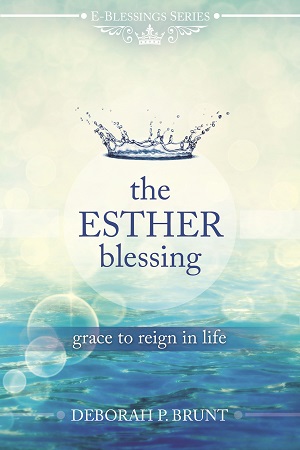
The Esther Blessing by Deborah P. Brunt
The Esther Blessing by Deborah P. Brunt is a study of the book of Esther. The book does not give a complete verse-by-verse study of the book. However, Brunt does a great job showing how grace flows through the book. She spends the first couple of chapters critiquing the traditional interpretations of the book. She shows how King Xerxes and Haman are really narcissists and that Esther is not in a Godly marriage.
After the initial chapters, Brunt shifts the emphasis of her interpretation of the book from how a woman wins a beauty contest to how God uses a woman to save her people. Brunt suggests that the book is about grace. She uses the water cycle (revealed in Ecclesiastes 1:7) as an illustration to suggest that there is also a grace cycle. Graces comes down, then flows out and then flows up. Brunt contends that the book of Esther illustrates this principle.
As one reads through the book, Brunt shows how Esther receives favor from men and then grace – which she defines as favor from God. Esther uses this favor from the men, and God uses Esther, to save the people of Israel.
Brunt explains that the sin of narcissism is what enslaved the people of Israel in Persia. She identifies Xerxes and Haman as the two main enemies of the Jewish people. She explains a valid way in which Haman may have descended from the Amalekite king Agag who was originally killed by the prophet Samuel. Brunt compares the events in the book of Esther and suggests that a culture of narcissism is just as epidemic today in the United States as it was in the days of Xerxes. In fact, this culture of narcissism has gone virally worldwide. She quotes heavily from the books The Self-Seekers, The Narcissistic Epidemic, and The Mirror Effect: How Celebrity Narcissism Is Seducing America. There may some truth to the challenges that she concludes from these sources. Namely, that a few narcissistic and self-absorbed people can influence an entire nation of people. Haman did it, Hitler did it, and someone could easily do it today. Our culture today is just as easily able to be enslaved by the sin of narcissism as the people of Israel were in the days of Esther. Brunt warns the reader about spiritual schizophrenia – narcissism mixed with compassion and humility in the church. She suggests that this dangerous mixture can prevent God’s people in the church from making an influence like they should.
What is Brunt’s solution to the sin of narcissism? Living and reigning in this life by grace. Mordecai and Esther are our examples to follow.
Another theme which Brunt addresses the how prominent royalty is addressed in the book of Esther. The book of Esther is filled with references to royalty in one way or another. The word royal and related words are used over 250 times in the book of Esther. There is the royalty in the book which is seen (fake royalty) and then there is the royalty which is unseen (true royalty). What is not seen conquers what is seen, and what is not said speaks louder than what is said. God is never mentioned in the book, but one can read that God is working in the unseen realm to accomplish His purposes.
As part of that royal nature, Brunt calls the reader to live out the aforementioned grace cycle. She explains in practical ways how this grace cycle (found in 2 Corinthians 9) can flow from God through you to other people. Grace-flowing down, conducting out, and then flowing back up in praise and thanksgiving to God. I found it interesting how the grace cycle in 2 Corinthians 9:19 parallels the water cycle in Ecclesiastes 1:7. Through the rest of the book, Brunt shows how Esther and Mordecai are examples of this grace cycle which we call can encounter and live out in our lives.
Overall, I enjoyed reading this book. I discovered some insights which I may be able to share with others in the future. While not an exact commentary on the book of Esther, The Esther Blessing could be used as a resource to supplement the study of the life of Esther. Clearly, the book had insights that would not have not come out had it not been written by a woman. A woman’s perspective was helpful in interpreting some texts in the book of Esther. I would recommend this book to those who want to study the book of Esther and need a guide.
Disclosure of Material Connection: I received this book free from the author and/or publisher through the Speakeasy blogging book review network. I was not required to write a positive review. The opinions I have expressed are my own. I am disclosing this in accordance with the Federal Trade Commission’s 16 CFR,Part 255.
Next Post

March 1, 2015 1 Timothy 3:8-13 Godly Servants
Browse Our Archives
Select a Category 1 Chronicles 1 Corinthians 1 John 1 Kings 1 Peter 1 Samuel 1 Thessalonians 1 Timothy 2 Chronicles 2 Corinthians 2 John 2 Kings 2 Peter 2 Samuel 2 Thessalonians 2 Timothy 3 John Acts Advent Amos Book Review Colossians Comics Culture Watch Daniel Deuteronomy Ecclesiastes Ephesians Esther Exodus Ezekiel Ezra Galatians Genesis Guest Post Habakkuk Haggai Hebrews Hosea Humor Inspiritational Isaiah James Jeremiah Job Joel John Jonah Joshua Jude Judges Lamentations Lectionary Lent Leviticus Link Love Luke Malachi Mark Matthew Micah Movie Review Nahum Nehemiah Numbers Philippians Political Watch Prophecy Watch Proverbs Psalm Revelation Reviews Romans Ruth Science Watch Sermon Series Sermons Simple Thoughts Song of Solomon Titus Top Ten Uncategorized Video Review Zechariah Zephaniah
Select a Month May 2026 October 2025 September 2025 June 2025 February 2025 January 2025 November 2024 October 2024 September 2024 July 2024 June 2024 April 2024 March 2024 January 2024 November 2023 October 2023 September 2023 June 2023 May 2023 March 2023 February 2023 January 2023 December 2022 October 2022 September 2022 August 2022 July 2022 June 2022 May 2022 January 2022 June 2021 January 2021 October 2020 July 2020 May 2020 April 2020 March 2020 February 2020 January 2020 December 2019 November 2019 October 2019 September 2019 August 2019 July 2019 June 2019 May 2019 April 2019 March 2019 February 2019 January 2019 December 2018 November 2018 October 2018 September 2018 August 2018 July 2018 June 2018 May 2018 April 2018 March 2018 February 2018 January 2018 December 2017 November 2017 October 2017 September 2017 August 2017 July 2017 June 2017 May 2017 April 2017 March 2017 February 2017 January 2017 December 2016 November 2016 October 2016 September 2016 August 2016 July 2016 June 2016 May 2016 April 2016 March 2016 February 2016 January 2016 December 2015 November 2015 October 2015 September 2015 August 2015 July 2015 June 2015 May 2015 April 2015 March 2015 February 2015 January 2015 December 2014 November 2014 October 2014 September 2014 August 2014 July 2014 June 2014 May 2014 April 2014 March 2014 February 2014 January 2014 December 2013 November 2013 October 2013 September 2013 August 2013 July 2013 June 2013 May 2013 April 2013 February 2013 January 2013 December 2012 November 2012 October 2012 September 2012 August 2012 July 2012 June 2012 May 2012 April 2009 June 2008 October 2007 September 2007 August 2007 July 2007 June 2007 May 2007 April 2007 March 2007 February 2007 January 2007 December 2006 October 2006 September 2006 May 2006 April 2006 March 2006 February 2006 January 2006 December 2005 September 2005
Follow Us!
TAKE THE
Religious Wisdom Quiz
What is the distinctive cup used in receiving communion in many traditions?
Select your answer to see how you score.
Chalice Plate Jug Bowl
Related posts from Jim Erwin


Using ChatGPT in Sermon Preparation


Can I Ask You a Question by Preston...
TRENDING AT PATHEOS Evangelical

When Halloween Unmasks Married Hearts
Written by Dr. David K. Ewen from Eternal Truth Bible College Behind...

Aristotle. He’s been called the father of logic, the father of the...

Methodist Central Hall and Westminster Abbey
Situated on the same square is Methodist Central Hall and Westminster Abbey. ...

57th Dove Awards Honor Dolly Parton, Crown New...
On gospel music’s biggest night, the 57th annual GMA Dove Awards honored...

The First Eucharistic Controversy: Christ’s Real Presence
For Catholics, the Eucharist is the source and summit of the Christian...

What a Stop Sign Can Teach Us About...
How to Make a Decision When You Can't Hear God Main point:...
view all Evangelical blogs
Ad-Free & Subscriber Log-In Subscription Support
- About Us
- 2026 Calendar
- Videos
- Podcasts
- Library of World Religions
- Faith In Media Tracker
- Advertise With Us
- Write for Us
- Privacy Policy
- Terms of Service
- Do Not Sell My Data
- Contact Us
- Radiant Digital
- Manage Newsletter Subscriptions
- Unsubscribe From Notifications
- Sitemap
Copyright 2008-2026, Patheos. All rights reserved.
Subscription Support Ad-Free & Subscriber Log-In
Follow Patheos